SMANOW’s 4-inch carbon steel 4Runner running boards fit 2010–2024 models without side skirts—trim exclusions matter more than width.
These Toyota 4Runner running boards are aimed at a very specific buyer: someone with a 5th gen 4Runner who wants an affordable, bolt-on step for daily entry, not a body-protection part for rocks. The defining detail is not "carbon steel" or "4 inch." It is the fitment line that says "without side skirts," plus the long list of trims that are excluded. Get that wrong and everything else—finish, traction, even the best hardware—stops mattering.
- Confirm the truck has no side skirts/lower cladding that blocks the mounting line before ordering.
- Treat trim exclusions as hard stops; do not assume "2010–2024" means universal fit.
- Expect a step that trades some ground clearance for easier entry and cleaner everyday use.
Choosing 4Runner running boards: who SMANOW suits best
SMANOW’s approach makes the most sense for a stock-height or mildly lifted Toyota 4Runner that needs a reliable stepping surface for kids, shorter passengers, or anyone carrying gear. The boards are positioned as conventional side steps: they sit where feet naturally search when climbing in, and the 4-inch platform hints at a "step first" priority rather than maximum clearance.
The main trade-off is baked into the category. Many running boards for Toyota 4Runner reduce breakover and side clearance compared with no step at all, and they can become the first contact point in ruts, snow berms, or rocky two-tracks. That does not automatically make them wrong; it just defines the use case. If the vehicle regularly sees off-road lines where the rocker area is dragged, a true slider-style solution is typically the more appropriate tool, and a board like this can feel like a compromise.
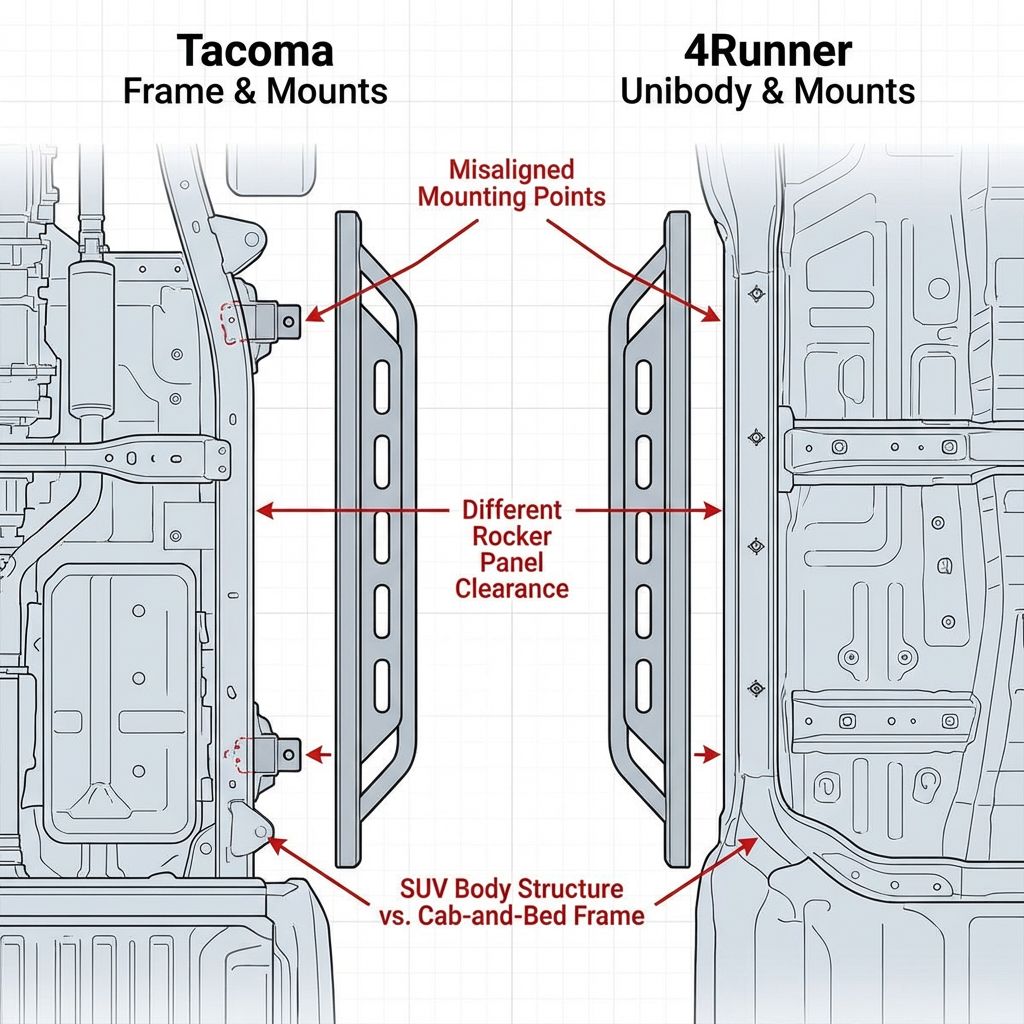
Fitment is the gatekeeper. The title itself calls out "Without Side Skirts" and then lists multiple excluded trims (including 2010–2013 SR5, 2010–2024 Limited, 2020–2022 Nightshade Edition, and 2022–2024 TRD Sport). That is not marketing fluff; it is the manufacturer warning that the rocker cladding/skirts on certain trims change the mounting geometry or interfere with the step’s brackets. Treat those exclusions as non-negotiable.
Fitment reality for Toyota 4Runner running boards (trim and cladding)
Most wrong orders in the 4Runner running board world come from one assumption: that "5th gen 4Runner" is a single body configuration. It is not. Rocker panel cladding, "side skirt" pieces, and trim-specific lower molding can shift where brackets land and whether the board can sit tight to the body without rubbing.
Before committing to this style of running boards for Toyota 4Runner, the practical check is simple and visual. Look under the rocker area between the front and rear wheels and identify what is actually there:
- Plain rocker seam / exposed pinch weld area: usually the friendliest scenario for bracketed boards that bolt to factory points.
- Pronounced lower cladding / skirt-like molding: often the reason a listing says "without side skirts," because the molding can block bracket access or force the step too low.
- Existing OEM-style steps: removal can reveal whether the truck has mounting provisions in the expected locations or if spacers/alternate brackets were used.
The exclusion list in the SMANOW title is unusually explicit, which is helpful. It signals that the product is not trying to "fit everything," and it also signals what to double-check when shopping for Toyota running boards for a 4Runner: the trim badge on the tailgate is not enough. A previous owner can add cladding, swap rocker pieces, or install aftermarket skirts that create the same interference as an excluded trim.
Does "without side skirts" mean the truck must be modified?
Not necessarily. It usually means the board is shaped and bracketed for a rocker area that is not covered by skirt-like cladding. If the truck has that cladding, the board may not mount at all, may sit crooked, or may require removing parts that the owner intended to keep. When a listing is this specific, plan around the stated configuration instead of expecting "minor trimming" to be trivial.
For shoppers also searching "2025 4Runner running boards," be cautious about carryover assumptions. A listing that explicitly states 2010–2024 is centered on 5th gen fitment language and exclusions. New-generation body geometry and rocker plastics can change fast, and the safest move is to treat 2025 fitment as its own verification task rather than an automatic extension of 2010–2024 coverage.
What to expect from a 4-inch carbon steel running board in daily use
Recommended Toyota 4Runner running boards
This listing covers specified 4Runner model years. Confirm the exact year and body configuration on the product page.
On paper, "carbon steel" and "4 inch" can sound like spec-sheet noise. In practice, those two details shape how these boards feel every single day: how confident the step is under a foot, how much it telegraphs road grime to pants, and how it holds up to winter.
A 4-inch stepping surface is a middle ground. It is wide enough to be a real step rather than a token tube, but it is not so wide that it always looks like an add-on platform. That width tends to work best when the 4Runner is used like an SUV—school runs, commuting, loading cargo—because it gives a predictable landing zone even when stepping in at an angle.
Carbon steel is about strength and cost control, but the ownership story is really about coating quality and edge protection. Steel boards live in the blast zone: tire spray, salt brine, gravel impact. Any exposed edge, poorly sealed weld area, or hardware that holds moisture can become the first place corrosion starts. The right expectation is not "steel never rusts." It is "steel survives when the coating and maintenance are treated seriously."
Three practical anchors help set expectations without pretending to have lab data for this specific unit:
- Platform width (4 inches): favors everyday stepping comfort over maximum ground clearance.
- Model-year claim (2010–2024): broad year coverage does not override trim/cladding exclusions.
- Two-piece board format: typical for side steps; alignment and bracket squareness matter during install.
Traction is the other daily-use variable. Many boards in this segment rely on textured pads or stamped patterns. The relevant question is not whether the texture looks aggressive in photos; it is whether it sheds mud and snow rather than packing smooth. On a Toyota 4Runner with running boards, the first winter storm is often the real test, because a step that holds slush becomes a slip surface. The safe approach is to assume periodic cleaning is part of ownership, especially if road salt is common.
SMANOW also sells a very similar "Black Side Steps Step Bar" variant for the same "without side skirts" fitment language. The differences between close siblings like these often come down to cosmetic surface and step-pad layout rather than a truly different fit. That can be fine, but it makes it even more important to anchor the purchase decision on the hard requirements (trim exclusions, skirt/cladding presence, mounting points) rather than the photo angle.
The product page is the right place to verify the exact listing language and included hardware for the specific SKU being considered. For reference, the main model discussed here is available via SMANOW Running Boards Compatible With 2010-2024 Toyota 4Runner (Without Side Skirts), (Excl. 10-13 Sr5 & 10-24 Limited & 20-22 Nightshade Edition & 22-24 TRD Sport), Carbon Steel, 4 Inch.
Installation and hardware reality: where "bolt-on" still goes wrong
With 4Runner running boards in this price band, "bolt-on" describes the intent, not the outcome. The truck’s factory threaded points and the board’s brackets can still fight each other if the brackets arrive slightly out of square, if the hardware stack-up is wrong, or if the installer tightens everything before the board is aligned to the body line.
A practical way to reduce surprises is to treat the install as two phases. First phase: get every bracket started and every fastener threaded by hand, leaving enough slack for the board to float. Second phase: only after the board sits straight—parallel to the rocker and consistent in height front to rear—start tightening in a predictable sequence. This is less about perfectionism and more about preventing the common "one bracket binds, the next bracket won’t start" spiral that leads to cross-threaded bolts.
Install time varies a lot by experience, tool access, and whether any factory threads need cleaning. If you’re doing a first-time driveway install, plan extra time so you’re not tempted to tighten brackets before the board is aligned.
There are a few failure points that show up repeatedly on running boards for Toyota 4Runner even when the correct trim is chosen:
- Thread damage at the factory mount: bolts that do not spin freely for several turns by hand are a warning sign; forcing them risks stripping the truck’s captive nut.
- Bracket orientation errors: left and right brackets can look similar; a flipped bracket can push the board outward or tilt the step surface.
- Uneven gap to the body: if one end sits tight and the other end flares, the board may be preloaded; that stress can loosen fasteners over time.
- Hardware that does not match the mount depth: a bolt that bottoms out before clamping is not "tight," even if it feels tight.
After installation, it’s smart to recheck fasteners after some real driving and again later if you notice any new noise or movement. Early settling and vibration can change clamping force, especially if the board was aligned under tension.
When the listing includes all necessary brackets and hardware, the product page is still the place to verify the exact kit contents for the exact SKU. For example, the related variant SMANOW Running Boards Compatible With 2010-2024 Toyota 4Runner (Without Side Skirts), Excl. 2010-2013 Sr5, 2010-2024 Limited, 2020-2022 Nightshade Edition, 22-24 TRD Sport, Black Side Steps Step Bar is positioned similarly but may differ in surface layout or included pieces depending on batch and listing updates.
Traction, step geometry, and why "4 inch" is only part of the story
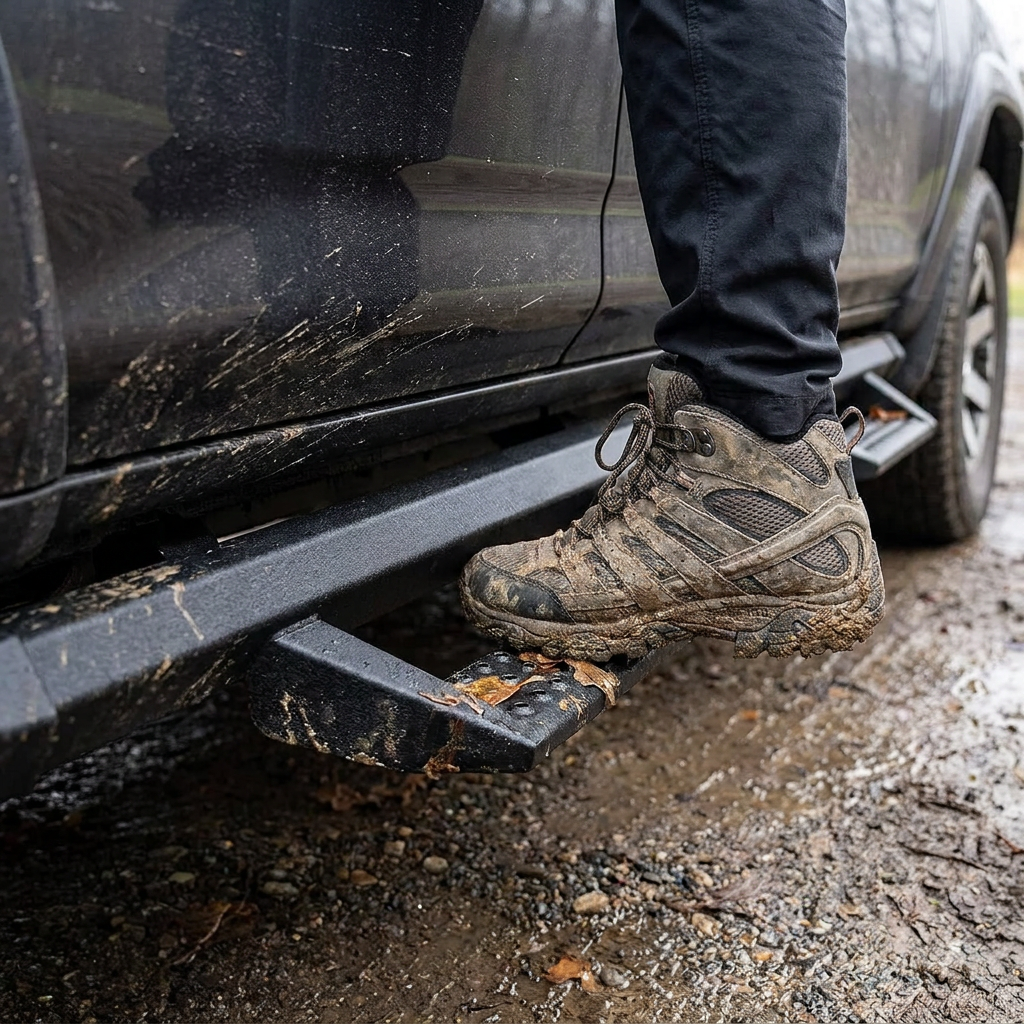
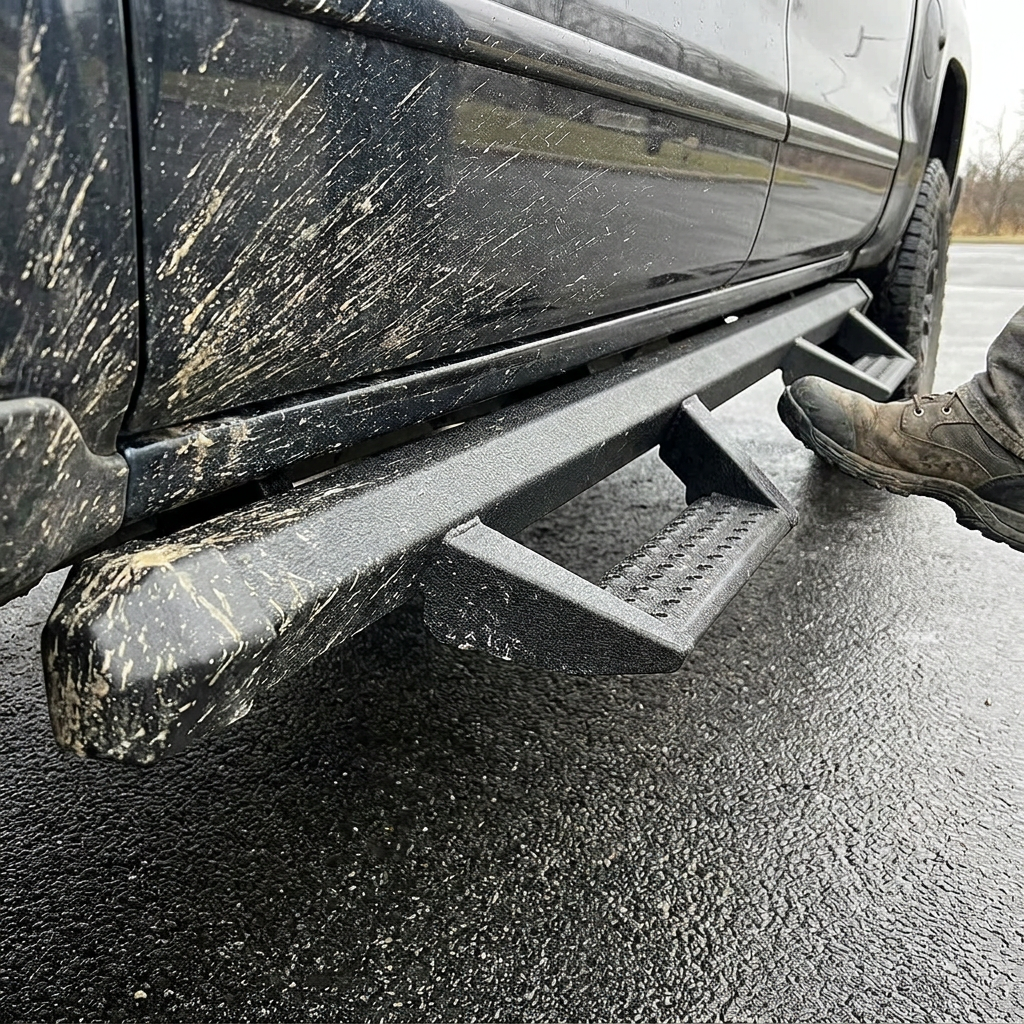
The daily feel of 4Runner running boards is defined by where a foot lands and what happens when that sole is wet, muddy, or packed with snow. Width matters, but so do edge shape, surface texture, and how far the board sits from the rocker. A board that is comfortable in sneakers can become awkward in bulky winter boots if the usable flat area is reduced by a rounded outer edge or prominent raised patterns.
On a 4Runner with running boards, mud and slush management separates "looks grippy" from "stays grippy." Deep textures can hold debris; shallow textures can turn slick when coated. The most usable patterns tend to be those that give multiple points of bite but still leave channels that can be cleared with a quick kick or rinse. In practice, the key question is not maximum aggressiveness; it is whether the surface sheds.
Step placement relative to the door opening also changes comfort. If the board sits too far outboard, it can help shorter passengers but it also invites pant-leg contact and can throw more spray onto the step surface. If it sits tucked inboard, it can look cleaner and preserve clearance, but some passengers will "miss" it when they step down. That is why two boards with similar "running boards 4Runner" descriptions can feel different in real use even when both are marketed as standard side steps.
There is also a quiet trade-off that shows up when the truck is used for hauling. Loading a roof box, strapping kayaks, or reaching a cargo basket often turns the running board into a stable working platform. In that scenario, a wider board can feel safer because it gives margin for foot placement while leaning toward the roof. The downside arrives off pavement: the same width and drop that helps reach can become a snag point in ruts or deep snow.
For buyers comparing similar fitment-limited options, the differences often come down to step surface design rather than bracket concept. A separate listing such as Side Steps Compatible With 2010-2024 Toyota 4Runner (Without Side Skirts) (Exclude 10-13 Sr5 & 10-24 Limited & 20-22 Nightshade Edition & 22-24 TRD Sport Models) 3" Black Running Boards 2pcs signals a narrower 3-inch format; that tends to favor a slightly cleaner look and potentially less "hang" below the rocker, but it can feel more like a balance beam than a platform for some passengers.
Running boards vs nerf bars vs sliders: what changes on a Toyota 4Runner
Shoppers looking for Toyota 4Runner running boards often end up cross-shopping three different solutions without realizing they are buying different priorities. The confusing part is that listings sometimes mix the terms. The useful distinction is functional: step comfort, clearance, and body protection do not peak in the same design.
Running boards prioritize a predictable stepping surface. They tend to be flatter, easier for kids and older passengers, and more forgiving when entering at an angle. Nerf bars are commonly round or oval tubes with step pads; they can work fine for entry, but the step landing zone is smaller and more position-dependent. Sliders aim at impact protection and jacking strength; some include a top plate or "step" area, but the design is built around taking hits rather than being a comfortable stair.
The decision becomes clearer when tied to actual use. The table below frames the choice as a scenario question rather than a feature list.
| Real-World Scenario | Best-Matching Option | Why It Fits (And What It Costs You) |
|---|---|---|
| Daily entry with kids, shorter passengers, or frequent loading | 4Runner running boards | Largest, easiest landing zone; usually trades some ground clearance and can catch snow berms |
| Mostly street use, preference for lighter visual footprint | Nerf bar style step | Less "platform" look; step pad placement matters and can feel less stable in boots |
| Regular rocky trails or risk of rocker contact | Slider-style protection | Designed to take impacts and support the vehicle; often heavier and may sit higher but can be harder for some passengers to use as a step |
The SMANOW boards being evaluated sit firmly in the running board lane: a step-first solution for running boards for Toyota 4Runner shoppers who are not trying to use the part as armor. That is not a weakness; it is scope control. Problems start when a step is expected to do a slider’s job, or when a slider is expected to feel like a wide stair.
Lift height and tire size influence this choice in a way that is easy to underestimate. A taller 4Runner increases the value of a true step, but it also increases the chance that the board becomes the lowest point. If the truck is lifted for looks and stays on pavement, the clearance penalty is mostly theoretical. If the lift is used to access rougher lines, the board’s position can become a real constraint.
Corrosion, coatings, and long-term upkeep for steel 4Runner running boards
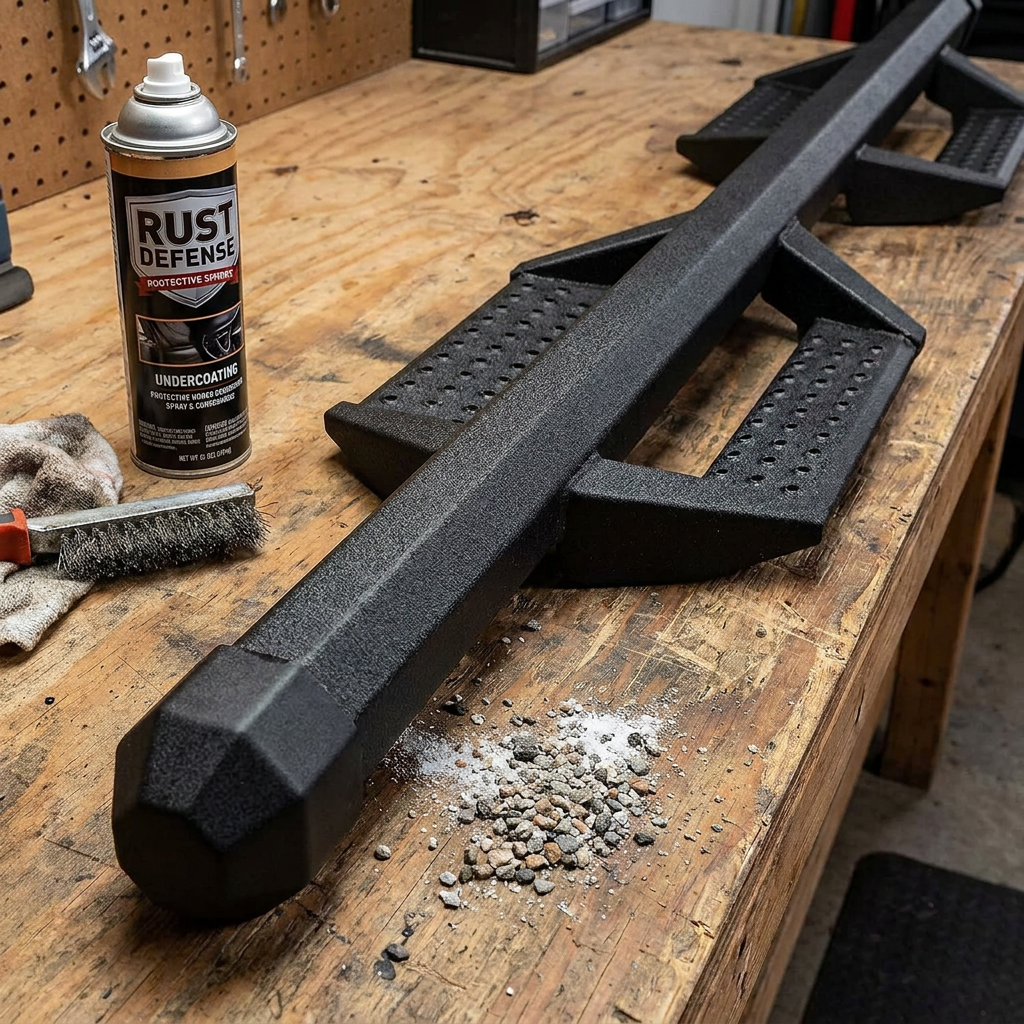
Carbon steel can be a sensible material for 4Runner running boards, but only if the owner treats the finish as a wear layer, not a permanent shield. The underbody environment is abrasive: gravel impact, tire spray, salt brine, and repeated wet-dry cycles. Corrosion usually starts where the coating is compromised—edges, weld zones, and hardware interfaces—then creeps.
The most effective maintenance is simple and boring. Rinse the boards regularly in winter and after off-road mud, paying attention to bracket pockets where wet debris can sit. A quick visual check after washing is enough to catch chips before they bloom into rust. Touch-up paint is not glamorous, but it changes the lifespan story for steel side steps.
Hardware deserves its own attention because galvanic corrosion can show up when dissimilar metals stay wet together. If the kit uses mixed fasteners, protecting the interfaces and keeping the area clean matters more than debating coatings in the abstract. When a running board begins to show orange staining around fasteners, it is often telling the truth about trapped moisture rather than "bad steel."
In snowbelt regions, cleaning cadence matters. During periods of heavy salt use, rinsing often enough to remove brine from seams and bracket pockets can make a noticeable difference over time.
One more ownership reality: running boards are impact collectors. Parking-lot door dings, curb kisses, and gravel rash happen. The right expectation is that cosmetic wear is normal, but structural looseness is not. If the board ever feels like it flexes relative to the body, that is a prompt to check fasteners and bracket condition rather than waiting for the next service interval.
For readers who want a general reference on how road salt accelerates vehicle corrosion and why underbody rinsing changes outcomes, a clear overview is available from the National Highway Traffic Safety Administration in its vehicle rust and corrosion guidance.
Fitment verification before ordering: a fast way to avoid the wrong kit
Most frustration with 4Runner running boards is avoidable, but only if the order is treated like a fitment exercise rather than a styling choice. The hard part is that listings can be "right" at the year level and still wrong for the truck sitting in the driveway. The cleanest approach is to verify three things in a row: the truck’s exact trim and model year, the presence or absence of rocker cladding/side skirts, and whether anything has been changed by a previous owner.
A quick garage check that actually catches the common mistakes:
- Open both doors on one side and look along the rocker area: if there is bulky lower cladding that covers where brackets would land, treat "without side skirts" language as a stop sign, not a suggestion.
- Look for evidence of prior steps: missing clips, extra holes, or disturbed undercoating can mean the truck’s current setup is not factory, which can make "it should fit" assumptions unreliable.
- Match the trim to the exclusion list as written. If the trim is excluded, the safest move is to switch to a kit designed around that trim’s rocker plastics rather than hoping for a "close enough" mount.
One more detail that saves time: verify the return window and the condition requirements before any test-fit. With running boards for Toyota 4Runner, the first scratch often happens during alignment, and some retailers treat a scuffed step surface as "used." Keeping the packaging intact until fitment is confirmed is not paranoia; it is just practical risk control.
Where this fits
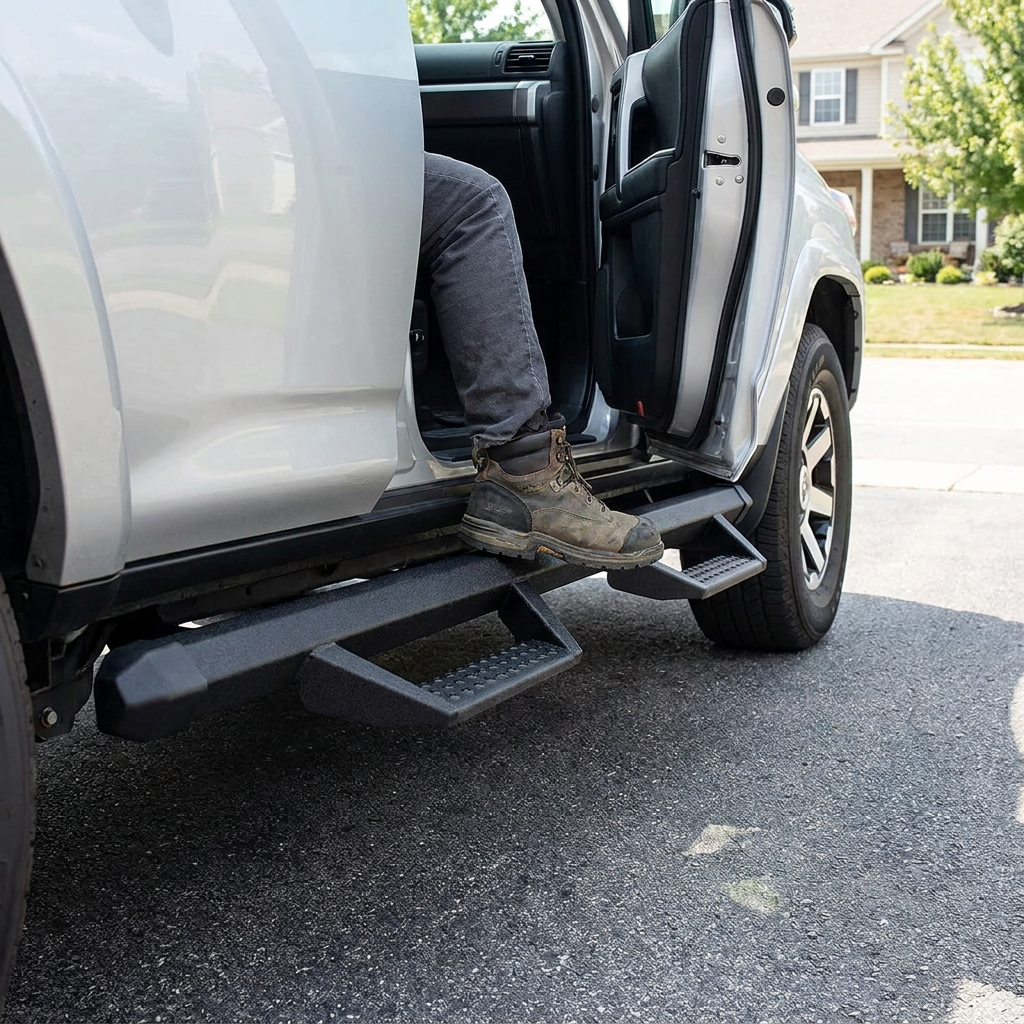
This style of 4Runner running boards makes the most sense for a 2010–2024 Toyota 4Runner without side skirts where the priority is daily entry comfort: frequent passengers, shorter drivers, kids climbing in, or regular roof access for cargo. The 4-inch platform approach is best when the truck spends most of its time on pavement or graded roads, and the owner wants a predictable landing zone rather than a minimal step pad.
It is a poor match for trims that fall into the stated exclusions, or for trucks where rocker cladding/skirts are part of the look that must stay. It also does not suit a 4Runner that regularly drags through deep ruts, rocks, or snow berms where the lowest side-mounted part becomes a contact point; in that use, a step-first board turns into a limitation rather than a convenience.
SMANOW’s 4Runner running boards: the honest verdict in one pass
For the right truck configuration, SMANOW’s approach is straightforward: an affordable, step-first solution that solves the "awkward climb" problem without pretending to be trail armor. The confident editorial position is simple: if the 4Runner matches the "without side skirts" requirement and does not fall into the excluded trims, this is a sensible buy for normal life; if either fitment gate fails, it is not worth gambling on, even if the price looks appealing.
The most realistic expectation is not a dramatic transformation of the vehicle. It is a consistent, stable step that feels natural day after day—especially when hands are full—paired with the normal ownership chores of keeping the step surface clean and checking fasteners after the initial settling period. In other words, these boards are a practical convenience part, and they should be judged on whether they fit cleanly and stay tight, not on whether they can take hard impacts.
For readers who want to verify the exact listing language and the current SKU details, the relevant product page is SMANOW Running Boards Compatible With 2010-2024 Toyota 4Runner (Without Side Skirts), (Excl. 10-13 Sr5 & 10-24 Limited & 20-22 Nightshade Edition & 22-24 TRD Sport), Carbon Steel, 4 Inch.
Frequently asked questions
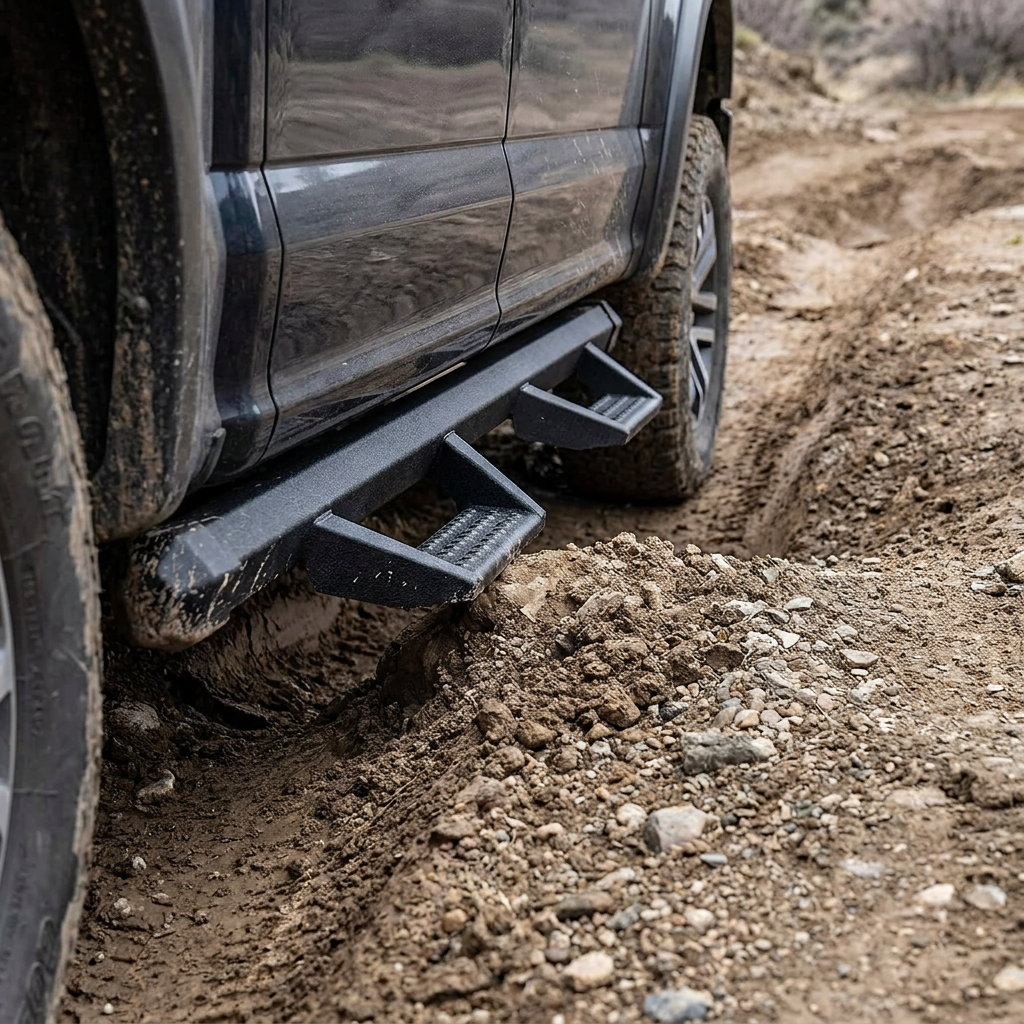
Do 4Runner running boards reduce ground clearance in a way that matters?
They can, because many boards sit lower than the rocker seam and become an early contact point. It matters most in deep ruts, bermed snow, and uneven trail exits; on pavement it is mostly a non-issue.
Is "without side skirts" a minor detail, or a true fitment requirement?
It should be treated as a true requirement. If side skirts or bulky rocker cladding cover the mounting line, the board can end up misaligned, forced outward, or not mountable without removing parts the owner may want to keep.
Will these Toyota 4Runner running boards work with a lift?
A lift does not automatically prevent fitment, but it changes the practical trade-off. The step becomes more valuable for entry, while the chance of the board becoming the lowest point can increase depending on how the kit sits and how the truck is driven.
What is the most common mistake people make when buying running boards for Toyota 4Runner?
Assuming "2010–2024" means universal fit across trims and rocker plastics. Trim exclusions and cladding differences are the real gatekeepers; ignoring them leads to wrong orders and messy test-fits.
Bottom line
If the truck matches the no-skirt configuration and avoids the excluded trims, these 4Runner running boards are a practical, everyday step; if not, the correct move is choosing a kit built for that rocker setup instead of forcing the fit.