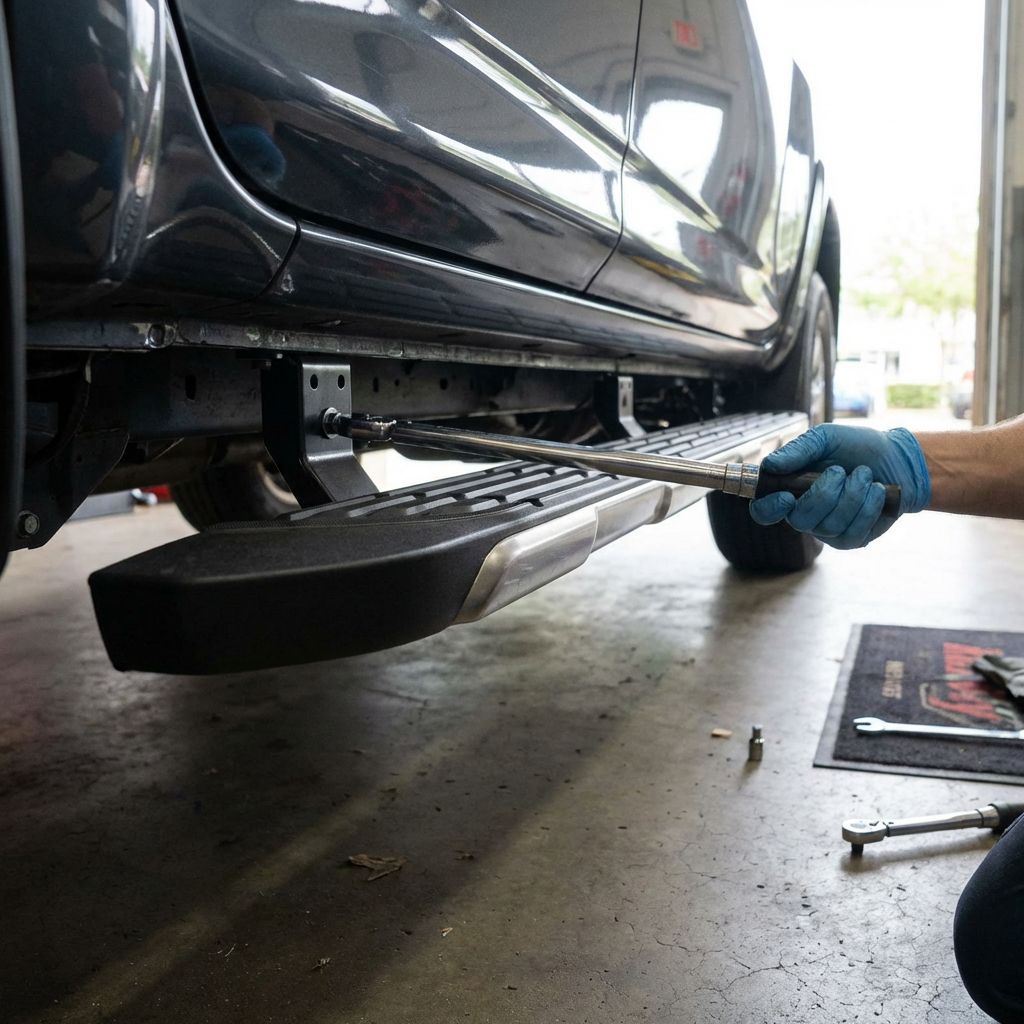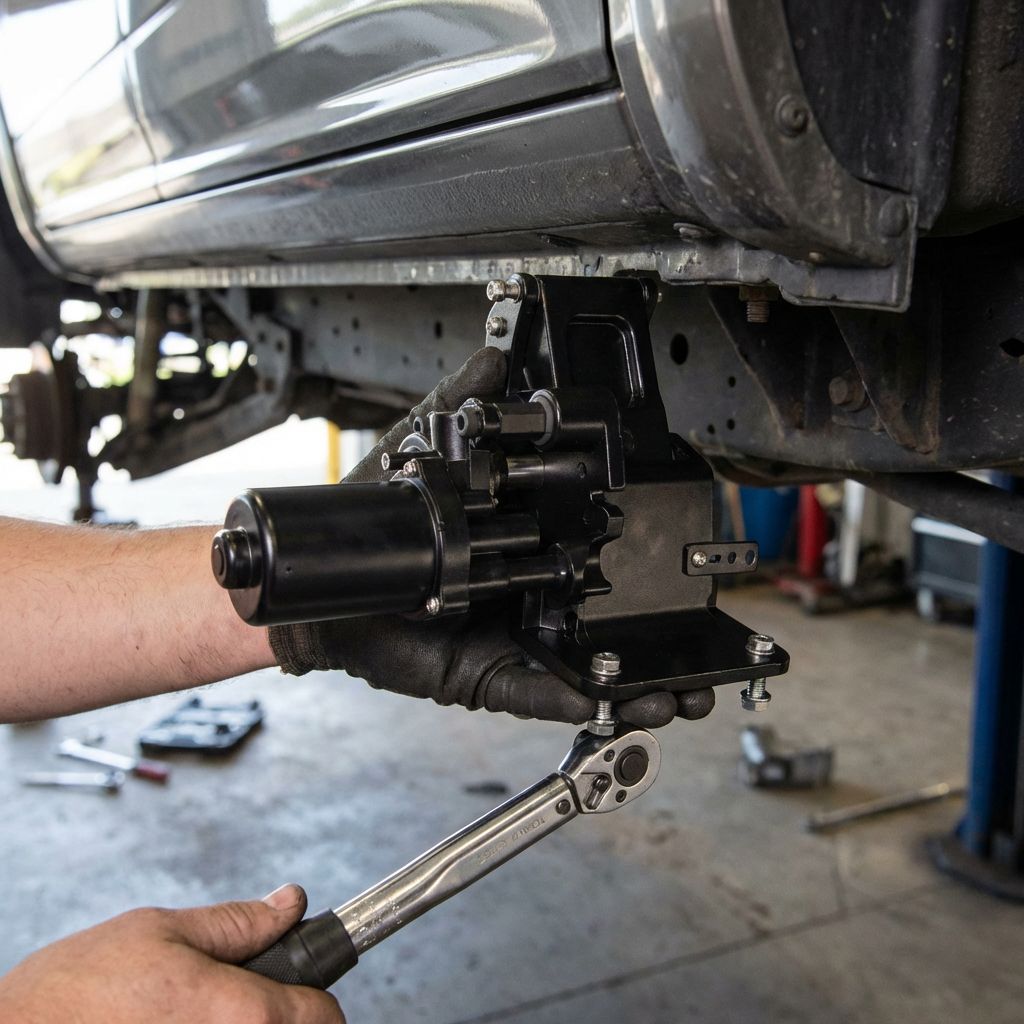
For 2014 Jeep Wrangler running boards, confirm JK/JKU fitment (not JL), then choose drop-down, flat boards, or nerf bars based on step height and.
A 2014 Wrangler is in the JK generation, which sounds simple until listings mix "JK/JKU" with "2018" and then add warnings like "exclude JL." That single detail drives most buying mistakes: the vehicle year can be right while the platform family is wrong. After that, the real decision is not brand—it is geometry. A step that hangs lower can feel perfect around town and feel annoying off-road. A higher, tighter step preserves clearance but can be awkward for shorter passengers.
- Confirm JK vs JL first; "2018" listings can still be wrong for a 2014.
- Pick the step shape for the job: easy entry, protection, or ground clearance.
- Plan for corrosion and re-torque; hardware matters as much as the board.
What works best for 2014 Jeep Wrangler running boards
For most daily-driven 2014 Jeep Wrangler Unlimited (4-door) setups, a drop-down style running board is the easiest to live with because it reduces the first step height. The trade-off is clearance: anything that "drops" below the pinch seam is more likely to contact rocks, deep ruts, or tall curbs. If the Jeep sees regular trail use, a tighter, higher-profile step (or a true slider-style solution) often makes more sense, even if entry takes more effort.
Two-door JK owners typically feel this trade-off more sharply. The door opening is shorter, passengers step in at a different angle, and the wrong board can feel like it is either too far back or too narrow where the foot naturally lands. On a 4-door JKU, the longer step area is more forgiving, but rear-passenger usability becomes more important, especially with kids or older family members.
As a concrete starting point for this page’s review focus, SMANOW Drop Down Running Boards Compatible With Vehicle 2007-2018 Jeep Wrangler JK JKU Unlimited 4 Doors is positioned as an entry-friendly option with a 4-inch step surface and a dual-stage (two-level) stepping layout. That "dual-stage" idea is not cosmetic; it is a geometry decision intended to give a lower first step without needing an oversized, full-width board.
Fitment first: how to avoid JK/JL and year-range traps
Fitment language is where shopping for 2014 Jeep Wrangler running boards goes sideways. Listings commonly bundle 2007–2018 together because that span covers the Wrangler JK generation. The catch: 2018 is a split year. The Wrangler JL also appears in 2018, and many steps explicitly say "not for JL model." For a 2014, the platform is JK, so the "exclude JL" warning is fine—but it is still worth verifying the seller is actually describing JK mounting points, not just a generic "Wrangler" fit claim.
Fast checks that prevent returns:
- Doors and wheelbase: confirm 2-door JK vs 4-door JKU (Unlimited). Many products here are 4-door only.
- Mounting method: "bolt-on" is common for JK steps, but verify brackets match factory holes and do not require drilling unless stated.
- Interference notes: check for compatibility statements about factory rails, Rubicon rock rails, or aftermarket armor already installed.
- Lift and tire changes: larger tires and lifts increase step-in height; drop steps become more valuable, but clearance loss becomes more noticeable.
One practical expectation: even when a running board is "compatible," slight bracket-to-frame variation, prior corrosion, or cross-threaded body fasteners can turn a simple install into a hardware chase. That matters because JKs in salt states often have compromised threads or seized bolts. A "simple bolt-on" claim is only true when the Jeep’s mounting points are still healthy.
Corrosion is not just appearance. Rust around brackets can lead to looseness, noise, and movement under load. For a general, non-commercial reference on winter road salt and corrosion mechanisms, the Federal Highway Administration explains how deicing salts accelerate corrosion and why rinsing matters: Federal Highway Administration guidance on the real cost of road salt
Running board styles on a 2014 Wrangler: entry comfort vs clearance
Jeep Wrangler boards by generation
For a 2014 Wrangler, the JK/JKU listing is the relevant generation. The JL product is shown only to make the generation split clear.
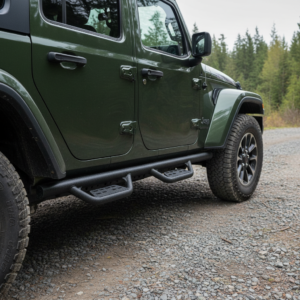
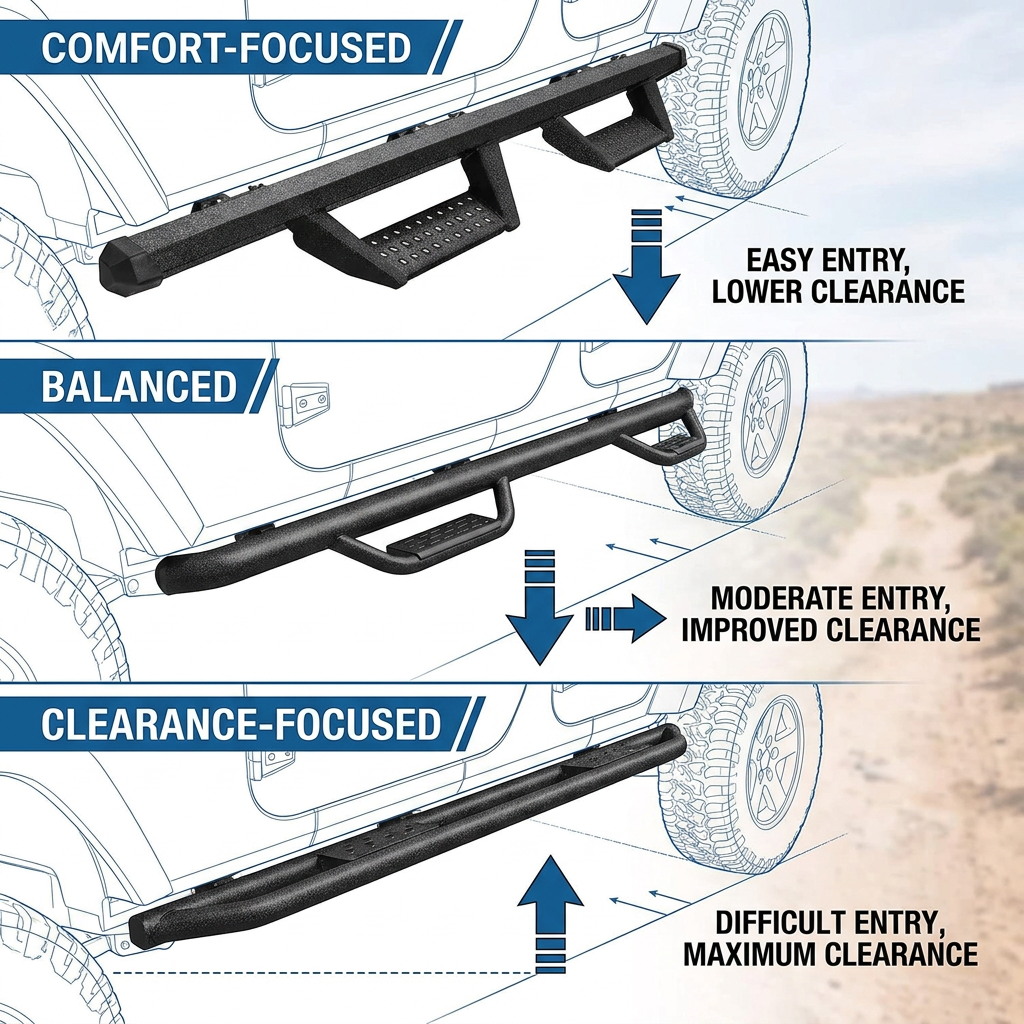
Running boards for a Jeep Wrangler are less about "looks" than about where the foot lands relative to the door opening and how much hardware hangs below the body. Three shapes dominate the 2014 Wrangler JK market, and each solves a different problem.
Drop-down steps lower the first step. They are a common answer when the Jeep is stock height but feels tall, and they become more relevant with 33–35 inch tires and a lift. The flip side is predictable: the "drop" reduces breakover and can be the first contact point in a rut. For a daily driver that only sees mild trails, many owners accept that trade because passenger comfort is constant, while the clearance penalty is occasional.
Flat running boards (a wider, level step) can be comfortable for families because the foot has room and the stepping motion is stable. They can also act as mild splash protection. But width can become a liability in narrow, rocky terrain, and a wider platform can collect mud and ice. Traction pattern matters here; a smooth surface becomes slick when wet, especially with worn shoes.
Nerf bars (round or oval tubes) tend to sit tighter and can improve clearance compared with wide boards. They often feel "narrow" underfoot, though, especially for rear passengers stepping in at an angle. In winter, a narrow tube can be easier to knock snow off, but it can also be easier to miss with the foot if the step is positioned too far inboard.
The "right" style depends on who uses the Jeep most. A tall driver hopping into a two-door may prefer tighter clearance. A shorter passenger climbing into a 4-door could hate anything that does not drop. The best 2014 Jeep Wrangler running boards choice is often decided by the least agile passenger, not the owner.
A simple way to sanity-check the choice is to picture the foot path:
- If the knee has to lift high and the foot searches for the step, a drop-down design reduces daily annoyance.
- If the Jeep frequently straddles rocks or deep ruts, a tighter step reduces contact and damage.
- If the Jeep is used in rain, snow, or mud, the traction pattern and drainage become as important as width.
First look at SMANOW drop down running boards for a 2014 JKU
SMANOW Drop Down Running Boards Compatible With Vehicle 2007-2018 Jeep Wrangler JK JKU Unlimited 4 Doors targets the most common 2014 Wrangler use case: a 4-door JK that needs a more natural step-in without turning the side of the Jeep into a full-width platform. The listed 4-inch step area and the dual-stage layout point toward a "two-level" approach—one section acting like a rail, another acting like the lower step.
In practical terms, this design choice tends to help three situations:
- Rear passengers: the lower step reduces the awkward climb into the back seats of a Wrangler Unlimited.
- Lifted daily drivers: the step drop can offset the extra height from larger tires or mild lifts.
- Wet-weather usability: textured, powder-coated finishes generally aim for more shoe grip than smooth painted metal.
Where it can feel limiting is also predictable. Any drop-down step increases the chance of contact with trail obstacles, and the lower step becomes a lever point if it hits hard. For owners who expect frequent rock contact, this is the point where "running boards" and "sliders" stop being interchangeable words. A drop-down step is primarily an entry aid, not a dedicated armor component.
It is still a reasonable candidate for many 2014 Jeep Wrangler Unlimited owners because it stays within the common JK/JKU 2007–2018 fitment window and focuses on day-to-day ergonomics. To verify the exact listing details, included brackets, and the latest fitment notes, use the product page: SMANOW Drop Down Running Boards Compatible With Vehicle 2007-2018 Jeep Wrangler JK JKU Unlimited 4 Doors.
One detail worth checking before committing: whether the step’s bracket positions line up cleanly on a Jeep with any existing underbody protection, and whether the lower step protrudes enough to catch on curbs in tight parking. Those are not spec-sheet problems; they show up in the first week of use.
Step geometry that changes daily use (and why "4 inch" matters)
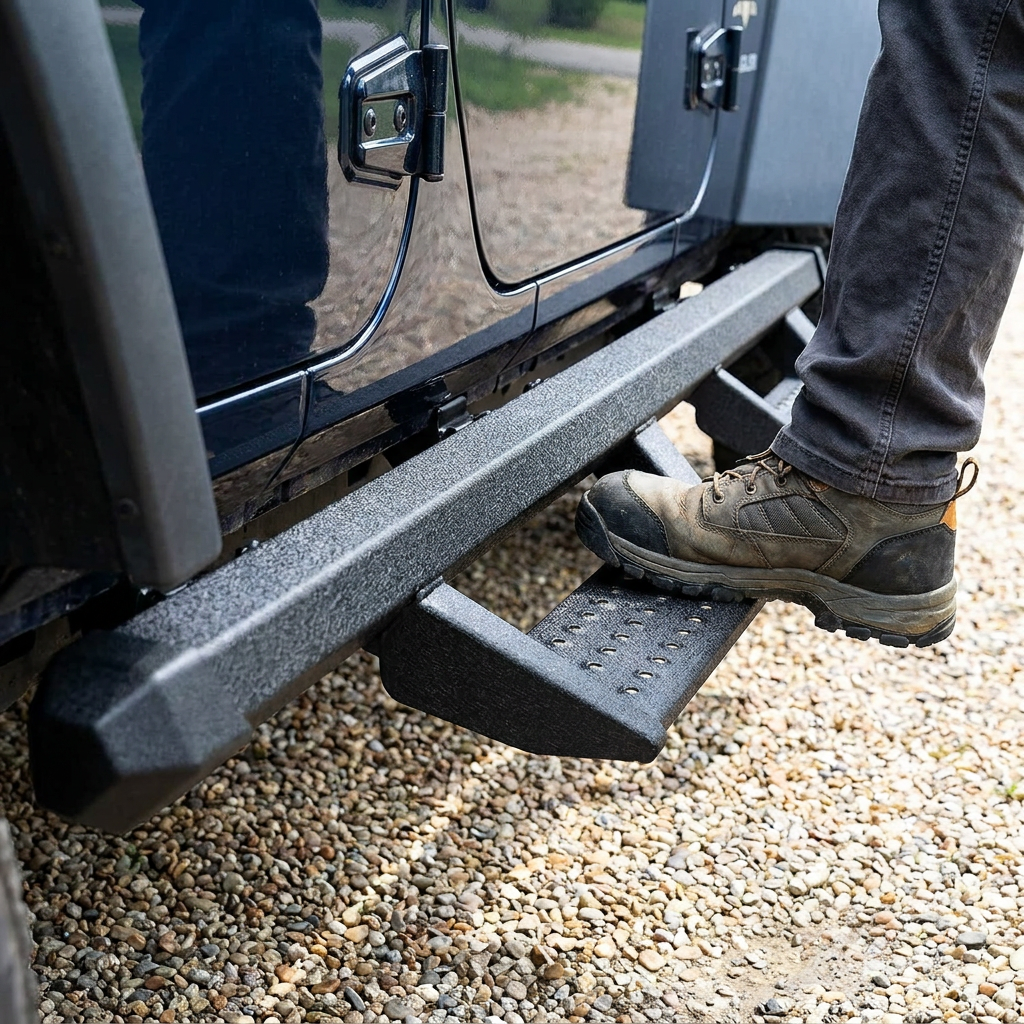
After fitment is confirmed, the day-to-day experience of 2014 Jeep Wrangler running boards comes down to geometry more than brand. The SMANOW Drop Down Running Boards uses a stated 4-inch step surface, and that single measurement drives two practical outcomes: how easy it is to land the foot without looking, and how stable the shoe feels when weight transfers into the cabin.
A narrow step can still work if it sits in the right place relative to the door opening, but it becomes less forgiving when passengers step in at an angle (rear doors on a JKU, or anyone carrying a bag). With a 4-inch stepping area, the "target" underfoot is bigger than a round tube, yet not as wide as a full board. That middle ground tends to suit owners who do not want a platform that collects slush, but still need something more confidence-inspiring than a slim bar.
Dual-stage layouts change the stepping sequence. Instead of one flat plane, the foot can choose a lower contact point first, then a higher rail or secondary surface as the body rotates inward. That matters for shorter passengers because the first move is not a high knee lift; it is a controlled climb. It also matters for tall drivers—ironically—because a lower first step can reduce the "drop" into the seat, which is where many people feel they twist their back in a lifted JK.
Where geometry causes surprises is not on the spec sheet. The step can be low enough to feel great, then become a nuisance in tight parking because it is the first thing to meet a curb. It can also change how the Jeep sheds mud. A wider, flatter step tends to hold more grime; a narrower drop step tends to fling less onto the rocker area but can still trap debris around the brackets. None of this makes one style universally better, but it explains why owners can love the same idea in one climate and dislike it in another.
- Frequent rear passengers: a more generous step surface and a lower first step reduce the "searching" foot motion at the back doors.
- Snow and slush: narrower stepping zones are easier to clear, but textured surfaces still need periodic rinsing to keep traction consistent.
- Urban curbs: a lower step is more likely to take the first hit; the real annoyance is repeated contact, not one dramatic impact.
How to read the coating and hardware claims without guessing
Listings for 2014 Jeep Wrangler running boards lean heavily on "powder coated" and "textured" language. Those terms help, but they are not a guarantee of long-term durability. Powder coating is a process family, not a single recipe. Two products can both be "powder coated" and behave very differently once chips expose bare steel.
The useful way to evaluate these claims is to look for what the listing does not say: surface preparation, coating thickness, and how edges and welds are handled. Corrosion often starts at edges, bolt holes, and weld seams because those are stress points and common places for thin coverage. If a step is marketed as "textured," that texture can improve shoe grip, but it also creates micro-pockets where salt residue can sit if the Jeep is not rinsed periodically.
Hardware is the quiet failure mode. A running board can feel solid on day one and then develop a creak or a slight "shift" because bolts loosen, washers compress, or a bracket seats imperfectly against the frame. The practical signal is not whether the kit includes bolts—it always does—but whether the design spreads load across multiple mounting points and uses brackets that resist twisting. When the lower step hangs below the body, impacts create leverage; a bracket that flexes will translate that leverage into movement, and movement is what starts noise and accelerates coating damage.
When a listing mentions carbon steel (as BINARY STAR does) or a specific finish, it is still worth treating it as the starting point, not the conclusion. Carbon steel is strong, but it is also fully dependent on coating integrity for rust resistance. If the Jeep lives where roads are salted, the best "material upgrade" is often a maintenance habit: rinse the underside, especially around bracket pockets, and touch up chips early instead of letting them creep under the coating.
Installation reality on a JK: time, thread condition, and re-torque windows
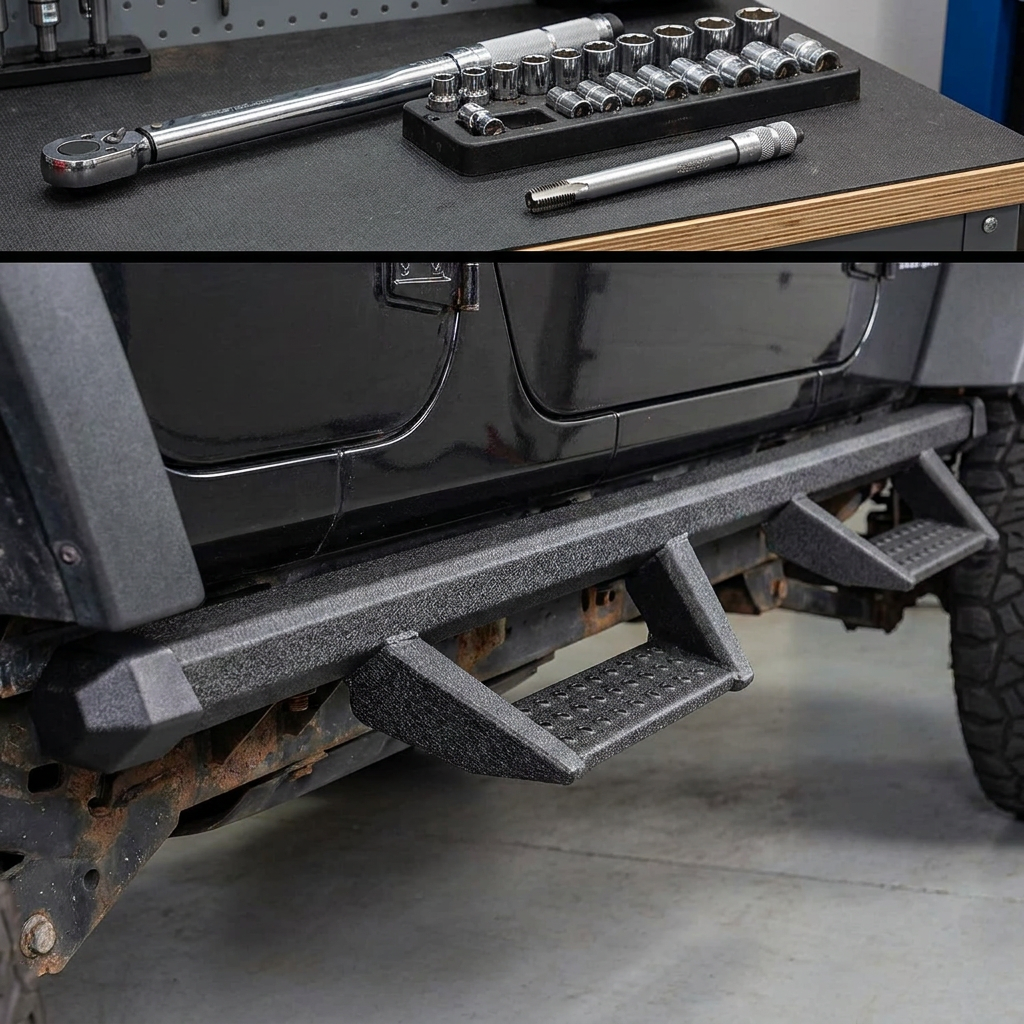
Even bolt-on 2014 Jeep Wrangler running boards can install in two radically different experiences depending on the Jeep’s age and exposure. A clean, low-rust JK can feel straightforward. A JK that has seen winters can turn the same job into broken clips, seized bolts, or threads that need chasing.
A realistic timeframe for a first-time installer is often 1–3 hours for a pair, assuming basic tools and no serious corrosion surprises. That range is not about skill alone; it is about whether factory mounting points accept bolts easily or force stop-and-go alignment. If a bracket needs to be held in place while bolts are started, a second set of hands can shorten the job significantly.
After installation, the most overlooked step is re-torque. Hardware can settle as brackets seat fully, coatings compress slightly at contact points, and the step sees its first real load cycles. A practical window is to re-check fasteners after 50–100 miles of driving or after a week of normal use, then again after the first off-road day if the Jeep sees trail vibration. The goal is not to constantly tighten; it is to catch the early settling before it becomes movement.
Door clearance is another "install day" check that prevents long-term annoyance. Steps with drop-down sections can sit close enough to the body that a slightly rotated bracket causes a rub point, especially when the body flexes over uneven ground. This is one reason to loosely fit all brackets first, then align and tighten in sequence rather than locking one side down immediately.
- Thread health matters: if bolts resist early, forcing them can cross-thread factory inserts and turn a simple install into a repair.
- Bracket alignment is not cosmetic: small rotational errors can create squeaks, door interference, or uneven step height side-to-side.
- Plan for follow-up: a quick re-torque after the first week is often the difference between "solid" and "mysteriously noisy."
Positioning SMANOW against other JK 4-door options in this set
This page’s product set sits in the mainstream "JK 4-door, 2007–2018, not JL" lane, but the designs solve different problems. The SMANOW Drop Down Running Boards is clearly oriented toward easier entry with a lower stepping motion. In contrast, a simpler nerf-bar style can preserve a cleaner underbody line, while wider or more complex step layouts aim to give more foot placement confidence.
To verify the exact configuration and fitment notes for each option, the product pages are the safest reference point because listings sometimes change images or bundle different bracket revisions under the same title. The following table keeps the comparison practical—scenario first, not specification theater.
| Real-World Situation | Model In This Set | Why It Fits That Situation |
|---|---|---|
| Daily driver where shorter passengers use the Jeep often | SMANOW Drop Down Running Boards Compatible With Vehicle 2007-2018 Jeep Wrangler JK JKU Unlimited 4 Doors | Drop-down geometry prioritizes a lower first step; the stated 4-inch step area targets stable foot placement. |
| Owner wants a simpler step with fewer "levels" to clean | AUTOSAVER88 Running Boards Compatible With 2007-2018 Jeep Wrangler JK 4 Door, Nerf Bars, Black Side Steps (Not For JL Model) | Nerf-bar style typically sheds mud and snow more easily, but can feel narrow underfoot for rear-door entry angles. |
| More emphasis on a wider stepping zone and visual coverage | oEdRo 6 Inch Running Boards Compatible With 2007-2018 Jeep Wrangler JK 4 Door, Bolt-On Drop Side Steps Rails, Powder Coated Black And High Gloss Red Nerf Bar | A 6-inch class step generally offers more landing area; it can be more comfortable for families but may carry a bigger clearance/width penalty. |
| Two-step "stair" feel to reduce the climb without a full board | BINARY STAR Running Boards Compatible With Vehicle 2007-2018 Jeep Wrangler JK 4 Doors, 6 Inch Two-Stair Side Steps Nerf Bars, Wrangler Step Bars JKU Step Rails, Carbon Steel Running Boards & Steps | Two-stair layouts help break the climb into smaller moves; they can be friendlier for kids, but add structure that can catch debris. |
| Drop-step rail approach with a focus on traction texture | Tyger Auto Trax Side Steps Compatible With 2007-2018 Jeep Wrangler JK 4-Door (Exclude JL) | TG-TX7J27608 | Textured Black Drop Step Rail Running Board | Drop-step plus textured contact points tends to favor wet-weather footing; still carries the usual drop-step clearance trade-off. |
The key distinction is not which brand name is louder; it is how each design handles the same three pressures on a JK: entry height, clearance, and long-term bracket stability. For a 2014 Wrangler Unlimited used primarily on-road, the SMANOW-style drop step is often the most immediately noticeable comfort change. If the Jeep is used in ruts and rocks often enough that contact is expected, the "lower is nicer" logic starts to collide with reality.
For readers who want to confirm the exact listings being discussed here, these are the corresponding product pages: AUTOSAVER88 Running Boards Compatible With 2007-2018 Jeep Wrangler JK 4 Door, Nerf Bars, Black Side Steps (Not For JL Model), oEdRo 6 Inch Running Boards Compatible With 2007-2018 Jeep Wrangler JK 4 Door, Bolt-On Drop Side Steps Rails, Powder Coated Black And High Gloss Red Nerf Bar, BINARY STAR Running Boards Compatible With Vehicle 2007-2018 Jeep Wrangler JK 4 Doors, 6 Inch Two-Stair Side Steps Nerf Bars, Wrangler Step Bars JKU Step Rails, Carbon Steel Running Boards & Steps, and Tyger Auto Trax Side Steps Compatible With 2007-2018 Jeep Wrangler JK 4-Door (Exclude JL) | TG-TX7J27608 | Textured Black Drop Step Rail Running Board.
One caution that applies across the set: because these are all aimed at JK/JKU, the phrase "Jeep Wrangler 2018 running boards" can still mislead shoppers when it is used loosely online. The safe interpretation is platform-based: JK and JKU share the 2007–2018 span, while JL is a different mounting ecosystem even when the calendar year overlaps.
The real compromise with 2014 Jeep Wrangler running boards: comfort you notice, clearance you pay for
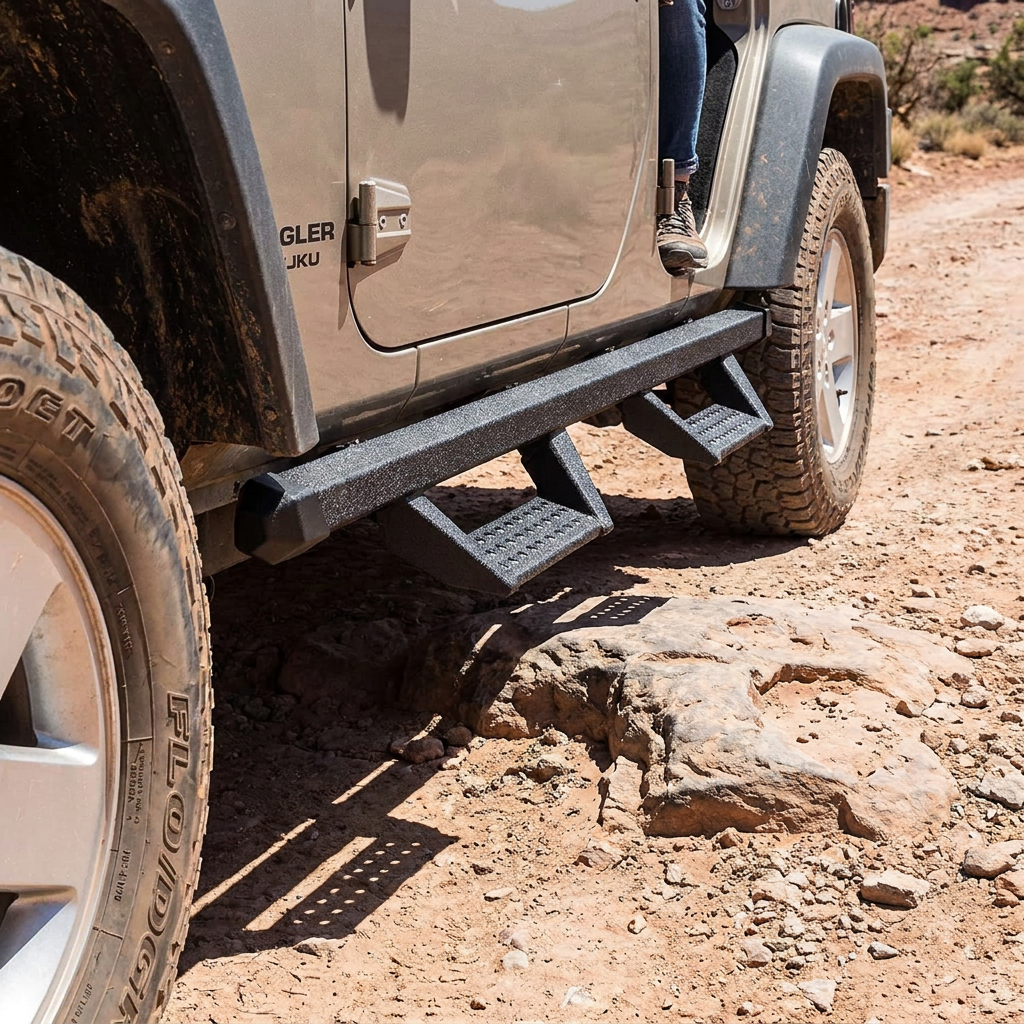
With 2014 Jeep Wrangler running boards, the most honest way to judge a drop-down design is to separate what happens every day from what happens occasionally. The everyday win is obvious: a lower, more natural entry that reduces awkward climbs for rear passengers in a 4-door JKU. The occasional cost is also predictable: anything that hangs lower becomes a candidate for curb taps, deep ruts, and the kind of off-road contact that turns "step" into "lever."
A clear editorial position fits here: for a 2014 Wrangler Unlimited that spends most of its time on pavement, a drop-down step is the most meaningful comfort upgrade per dollar in this category. It changes every entry, every exit, every grocery run. But if trail contact is expected often enough that the step will be hit on purpose or by accident, the smarter move is not to hunt for a "tougher" drop step; it is to reconsider the whole idea of a low-hanging design. That is where many owners end up disappointed, not because the coating was wrong, but because the geometry was.
One practical way to keep expectations realistic is to think in time horizons. In the first month, what matters is whether the step feels natural and whether it stays quiet. Over the first season, what matters is whether brackets stay tight and whether the finish starts to show chips at edges and bolt areas. Over multiple winters, what matters is whether cleaning habits and touch-ups keep corrosion from creeping under the coating. Those are boring factors, but they are what decide whether running boards feel like a permanent improvement or a project that keeps returning.
When it works – and when it doesn’t
This style makes the most sense for a 2014 Jeep Wrangler JKU that is a daily driver, carries shorter passengers, or has mild lift and larger tires where step-in height becomes annoying. It also suits owners who value a defined stepping "target" and are willing to do small follow-ups like re-checking fasteners after early settling and rinsing grime out of bracket pockets.
This is a poor match for a 2014 Wrangler that regularly drags its belly over obstacles, runs deep ruts, or treats side hardware as armor. It also tends to frustrate drivers who frequently parallel park against tall curbs, or who want the cleanest possible underbody line; a lower step can become the first contact point long before tires touch anything.
Small checks that prevent the most common regrets
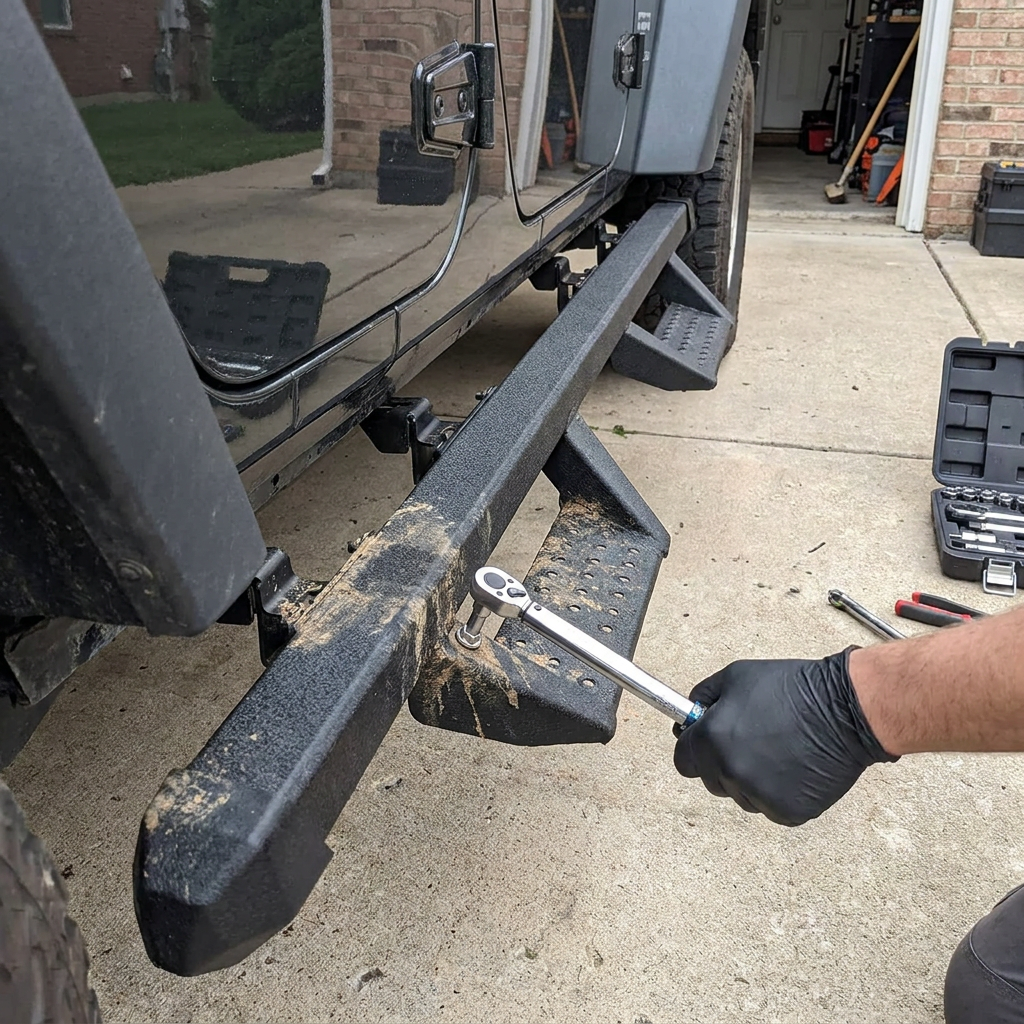
Most "regret" with 2014 Jeep Wrangler running boards is not caused by one catastrophic failure. It is repetitive friction: a step that catches a curb twice a week, a bracket that develops a creak, a surface that gets slick when packed with slush. A few quick checks right after installation and during normal use do more than obsessing over spec-sheet adjectives.
These checks stay practical and fast, and they map to the issues that show up in real ownership:
- Door swing and body flex clearance: open all doors on level ground, then re-check after a few days of driving. Minor bracket rotation can reveal itself as a faint rub only after the first settling.
- Step placement for rear passengers: watch where a passenger’s foot actually lands. If the foot keeps searching, the step is either too narrow in the wrong spot or too far inboard for the natural entry angle.
- Noise as an early warning: a new creak or click under load is usually bracket movement, not "normal Jeep sounds." Catching it early prevents elongated holes, damaged coating at contact points, and a cycle of loosening.
- Finish damage triage: chips at edges and near fasteners are the places that start rust first. Touching up early matters more than the brand name on the box.
There is also one buying-side reality that deserves blunt treatment: listings for Jeep Wrangler steps are often revised without notice. Photos, bracket revisions, and included hardware can change while the title stays nearly identical. For that reason, the product page is the only reliable place to verify what is actually being shipped today, not what an older review photo showed last year.
For readers specifically considering the main option discussed on this page, the most direct way to confirm the current configuration is the listing itself: SMANOW Drop Down Running Boards Compatible With Vehicle 2007-2018 Jeep Wrangler JK JKU Unlimited 4 Doors. Focus on door count, the "exclude JL" language, bracket photos, and any notes about existing rails or armor.
Frequently asked questions
Do 2014 Jeep Wrangler running boards for a "2007–2018 JK" fit my Jeep automatically?
A 2014 Wrangler is a JK, so the year span is usually pointing in the right direction, but "automatic" is too strong. Door count (2-door vs 4-door) and bracket photos are the most reliable quick checks when listings are vague.
Why do so many listings say "exclude JL" even when I’m shopping for a 2014?
Because 2018 is a split year where both JK and JL exist, and sellers try to cover the whole JK range with one title. The warning is still relevant for a 2014 because it signals the mounting system is JK/JKU-based, not JL-based.
Is a drop-down step a mistake if the Jeep goes off-road sometimes?
Not necessarily; "sometimes" can mean gravel roads and mild trails where contact is unlikely. It becomes the wrong tool when the Jeep regularly encounters ruts, rocks, or ledges where a low step is expected to hit and take leverage loads.
Are Jeep Wrangler stock running boards better than aftermarket options?
Stock steps can be a decent baseline for fit and quietness, but they are not automatically the best match for entry height or traction in bad weather. The real comparison is geometry and placement: where the foot lands and how much clearance is lost.
Can 2014 Jeep Wrangler running boards be used on "running boards for Jeep Wrangler Unlimited 2015" listings?
A 2015 Wrangler Unlimited is also a JK/JKU platform, so many listings overlap and use the same bracket approach. The safest approach is to treat year-range claims as a filter, then confirm 4-door compatibility and bracket layout visually.
Bottom line for SMANOW drop down running boards on a 2014 JKU
This is a strong pick when the Jeep needs easier daily entry more than it needs maximum clearance; the right use-case is a 4-door JK that lives on-road and wants a lower, more confident first step.