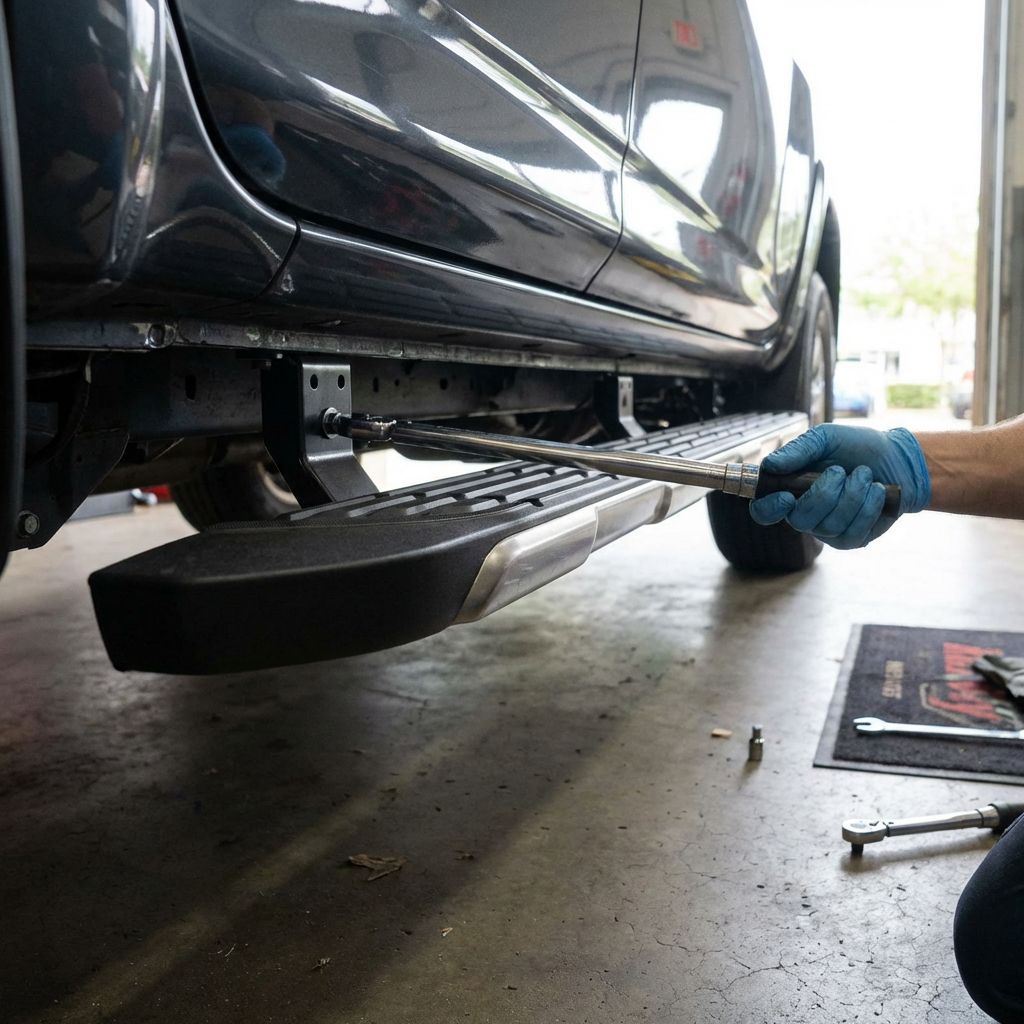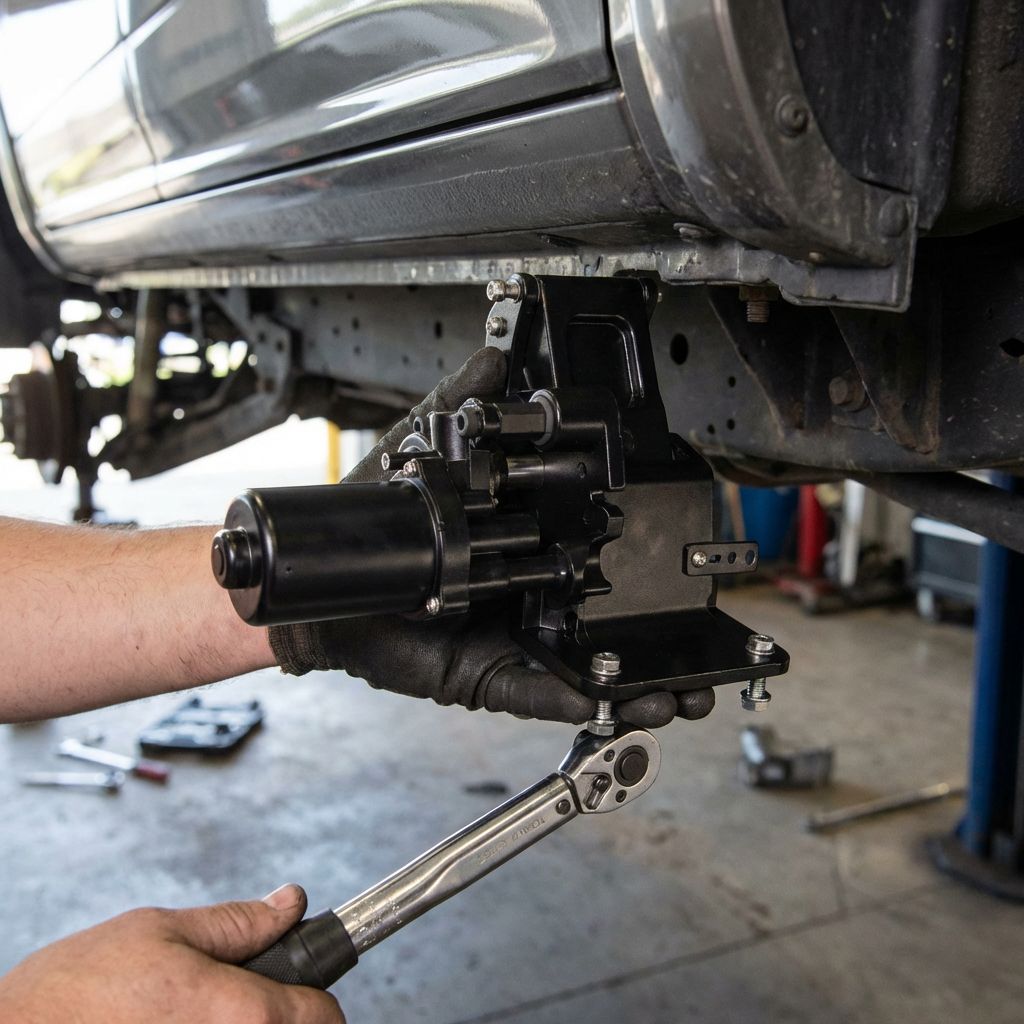
COMNOVA’s 6-inch stainless running boards are built for 2019–2026 Ram 1500 Crew Cab (new body style), prioritizing easy entry with vehicle-specific.
It’s the kind of setup that makes sense for daily entry, kids, and shorter drivers. It’s less about off-road clearance and more about predictable footing. The fitment filter matters more than the finish.
- Confirm "Crew Cab" and "new body style" before buying. "Classic" is a different truck underneath.
- Expect a comfort-first step. Wider boards trade some ground clearance for easier entry.
- Plan for a careful install. Alignment and re-torque decide long-term satisfaction.
Choosing a Ram 1500 running board: where COMNOVA fits
This running board choice is aimed at a specific use case: a 2019–2026 Ram 1500 Crew Cab in the new body style, where a 6-inch stepping surface is the priority. COMNOVA leans toward a straightforward, fixed board rather than a retracting step or a rock-slider style piece. That sets expectations fast.
Entry height drives most purchases. Stock ride height is already a climb for many drivers, and it gets more noticeable with larger tires or a mild leveling kit. A wider board reduces the "toe-on-a-tube" feeling common with narrow nerf bars.
COMNOVA’s listing positioning is also very clear about exclusions: it calls out that it doesn’t fit Ram 2500/3500 and doesn’t fit "Classic." That’s not nitpicking. "Classic" trucks share older architecture and often use different bracket geometry. Fitment mistakes usually come from that single word.
One practical expectation helps: a 6-inch board tends to feel stable in work boots and in winter. It can also collect slush and road grime. That’s normal for any flat-ish step.
A natural place to verify the exact fit notes, photos, and included hardware is the product page for COMNOVA 6 Inches Running Boards. It’s worth checking before committing to an install window.
Fitment isn’t "Ram 1500": it’s year, cab, and body style
Most wrong purchases happen because "Ram 1500" sounds specific. It isn’t. A running board mounts to the truck’s underside and rocker area with brackets that assume a certain frame layout, cab length, and mounting points. Small differences become big headaches.
Start with model year and generation. Shoppers often search 2015 Ram 1500 running boards or 2016 Ram 1500 running boards and assume those patterns carry forward. They don’t. Many listings spell this out with "Not Fit Classic" language for a reason.
Cab configuration is the next gate. "Running boards for Ram 1500 Crew Cab" is a common search because Crew Cab boards are longer than Quad Cab boards. A Crew Cab board on a Quad Cab can leave odd gaps, and a Quad Cab board on a Crew Cab can look short and land the step in the wrong place.
Two quick checks prevent most mistakes:
- Door count and rear door size: Crew Cab rear doors are larger than Quad Cab rear doors.
- Listing exclusions: watch for "Classic," "2500/3500," and "previous generation build" notes.
Bed length matters less for most board kits than cab length, but it still affects how the truck looks side-on. A short bed Crew Cab can make any running board look longer relative to the body. That’s cosmetic, not structural.
One more nuance: trucks with factory mud flaps, certain wheel-to-wheel liners, or aftermarket splash guards sometimes need small adjustments at the ends. That’s not unique to COMNOVA. It’s a common install reality across this category.
What the 6-inch board changes in daily driving
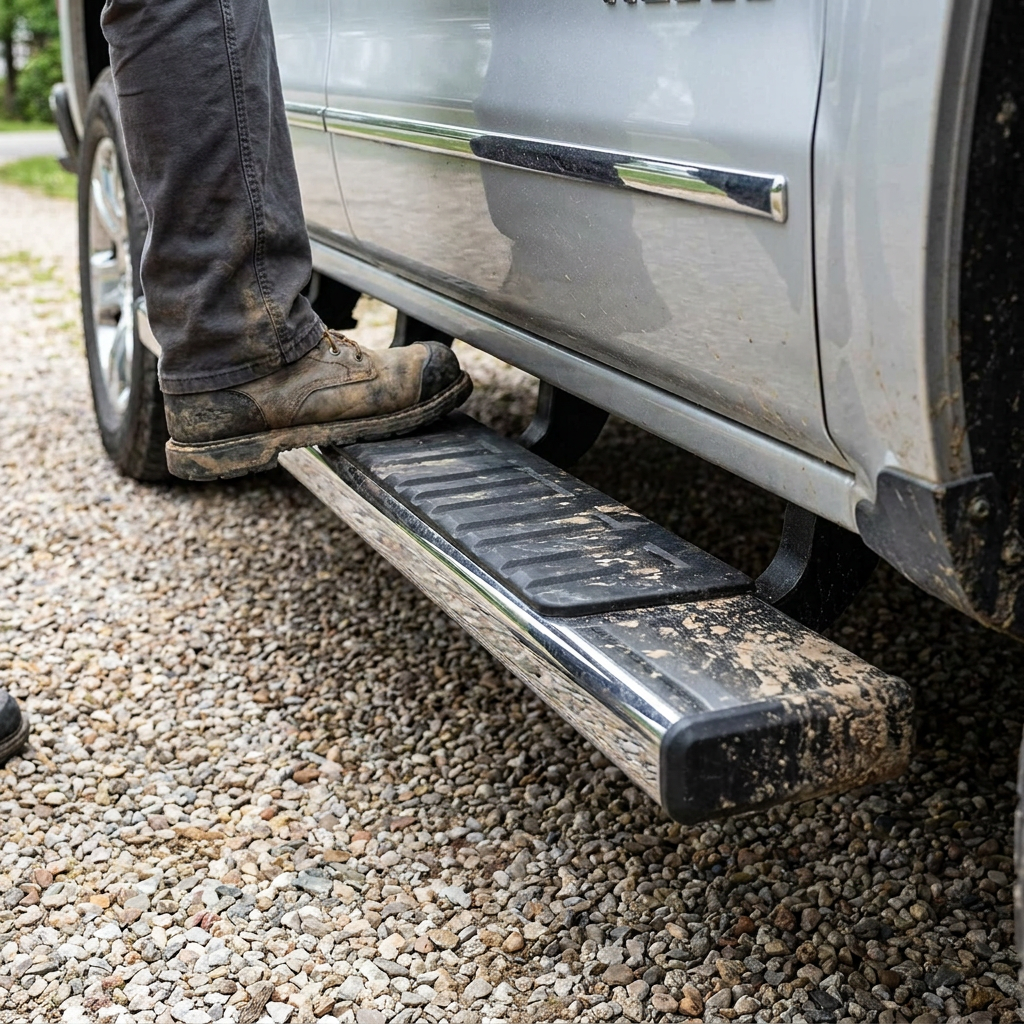
Ram 1500 running boards to compare
These are Ram 1500 alternatives with different cab and year requirements; they are not presented as COMNOVA equivalents. Verify the exact configuration.
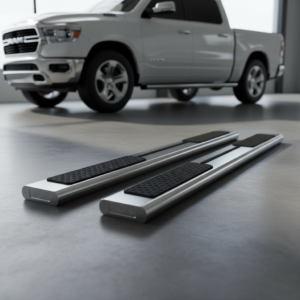
A 6-inch step is a comfort decision. It changes how feet land, how stable the step feels, and how forgiving it is when carrying a bag or stepping in at an angle.
Compared with narrow tube steps (often around 3 to 4 inches of usable footing), a wider board gives more room for the whole foot in sneakers or boots. That’s noticeable for kids climbing into a Crew Cab and for anyone who tends to step in while turning their body toward the seat.
But the width has a cost. A wider board usually sits closer to the ground and can reduce the "tuck" near the rocker panel. For street use, that trade is easy to live with. For rutted trails, deep snow, or steep driveways, the board becomes a more frequent contact point. It’s not automatically a deal-breaker. It just shifts the truck’s practical clearance in the middle, where boards live.
Winter use is its own scenario. Flat-ish steps can pack with slush, then refreeze. Traction comes down to surface texture and how easily the board sheds snow. A textured top surface helps, but it also holds grime. Regular rinsing becomes part of ownership in salt-belt states.
And there’s the door-swing factor. A board that sits too far outward can catch shins in tight parking lots. A board tucked too far inward can feel like a half-step. The "sweet spot" depends on seat height and how the driver enters, not on marketing photos.
Materials and corrosion: stainless steel isn’t a magic shield
COMNOVA positions these boards as stainless steel. That’s a meaningful material choice for appearance and for long-term resistance to surface rust, but it doesn’t erase corrosion risk across the whole system. Running boards are a mixed-material assembly: boards, brackets, bolts, washers, and the truck’s own mounting points.
Corrosion tends to start where coatings are thin or where dissimilar metals meet and stay wet. Brackets are often coated steel even when the board itself is stainless. Hardware can be the weak link too. A single season of salted roads can turn low-grade fasteners into a maintenance problem when it’s time to re-torque or remove the boards.
Three practical details matter more than broad material labels:
- Finish consistency at edges and welds: chips and thin spots invite rust first.
- Hardware quality: bolts that round off easily become a long-term nuisance.
- Drainage and cleaning access: trapped debris keeps metal wet for longer.
Maintenance isn’t complicated. A rinse after winter storms helps. So does checking the mounting points during oil changes. Many installers also add a light anti-seize on bolt threads in rust-prone regions, but it needs to be used carefully and kept off surfaces where friction is required.
For general guidance on fastener torque practices and why re-checking matters after initial installation, SAE’s overview pages on standards and recommended practices are a useful starting point, even though exact torque values still come from the kit instructions and the truck’s service information: SAE Standards And Recommended Practices
Stability and noise after installation: what changes after 30 days
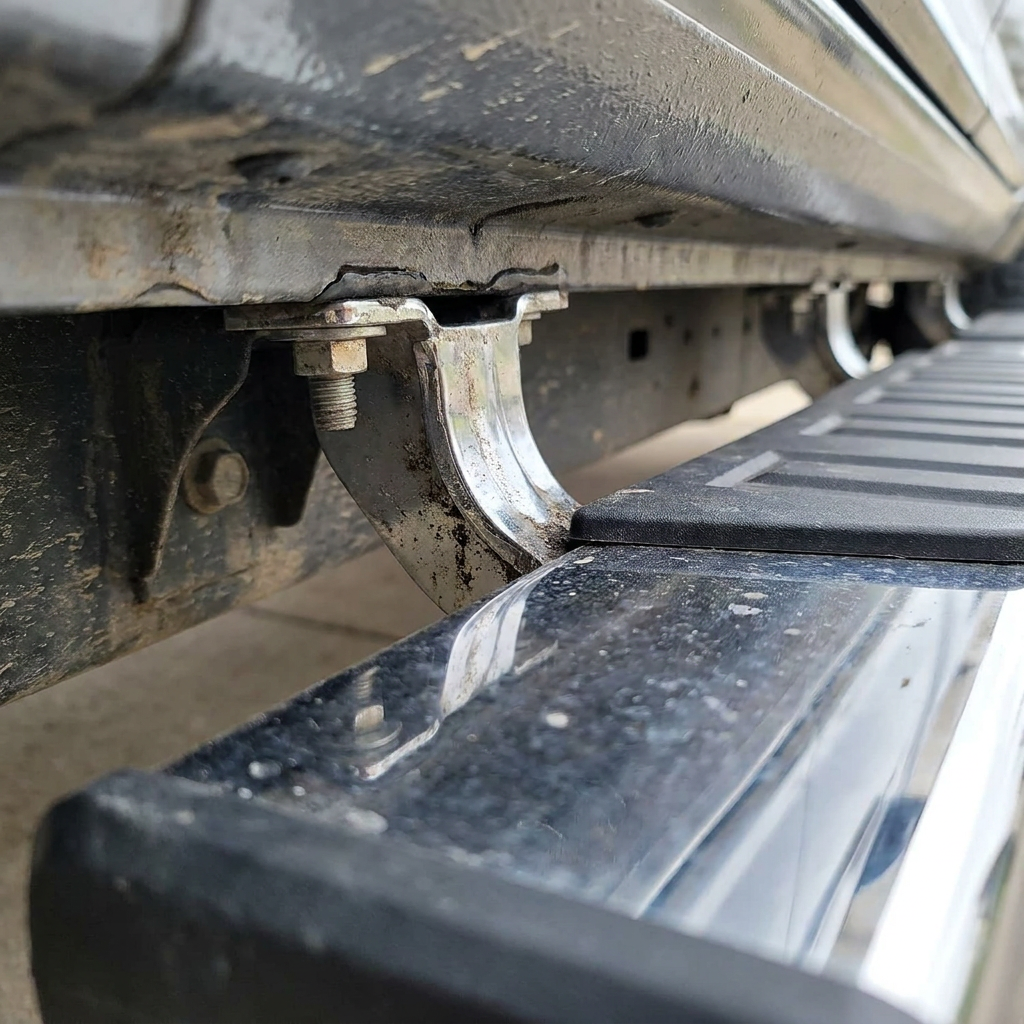
Most satisfaction with a Ram 1500 running board gets decided after the first few weeks, not on install day. Brackets settle. Paint compresses slightly under washers. A board that felt rock-solid in the driveway can develop a faint tick or creak once the truck sees heat cycles, rain, and a few hard entries.
Thirty days is a useful checkpoint. It’s long enough for the hardware to "find its seat," and short enough that small corrections are still easy.
COMNOVA’s wide step tends to feel stable underfoot because the contact area encourages a flatter, centered step. But stability isn’t only about the board. It’s about the bracket triangle between the frame mounts and the outer edge of the step. If one bracket sits a few millimeters off, the board can flex just enough to make noise when weight hits the outermost edge.
Noise patterns usually point to a specific cause:
- Single click when stepping down: a fastener that wasn’t fully seated, or a washer biting through coating.
- Creak while shifting weight: slight bracket twist, often from uneven tightening order.
- Rattle over bumps: a loose interface at a mount point, or a bracket contacting another component.
Re-torque is the boring fix that works. It also needs restraint. Over-tightening can deform thin bracket material or damage threads in a factory mount point. COMNOVA’s stainless board doesn’t change that risk.
For buyers comparing options like a 2019 Ram 1500 running board for daily use, the practical takeaway is simple. A fixed board can stay quiet for years, but only if the initial alignment and the first re-check are treated as part of the install, not as extra effort.
Width versus clearance: where a 6-inch step helps and where it gets in the way
A 6-inch running board changes the truck’s "usable envelope." That’s felt in two places: the driveway and anything that compresses the suspension. A wide step makes entry easier in work boots and for shorter passengers. It also becomes a more frequent touch point on steep ramps or uneven terrain.
Clearance loss isn’t a fixed number across all trucks. Mount height depends on bracket design and how the board is tucked. But the geometry is predictable. A wider platform usually sits lower than a narrow tube because it needs more structure under it, and it often extends outward a bit more to give the foot real space.
That matters in a few specific situations:
- Steep driveway transitions: the board can scrape before the tire climbs the breakover point, especially on lowered or leveled setups.
- Deep ruts or crowned trails: the middle of the truck is where boards live, and that’s where contact tends to happen.
- Snow berms and plow ridges: packed snow can hit the step edge before it hits the rocker area.
COMNOVA’s comfort-first layout fits street trucks best. That includes most 2020 Ram 1500 running boards shoppers who want predictable entry and don’t want the cost or complexity of powered steps. It becomes a less clean fit for drivers who regularly use two-tracks, rocky access roads, or job sites with uneven debris. In those cases, a narrower rail like the Tyger Auto 3.5" Rider Running Boards can reduce contact while still adding a step. The trade is a smaller landing zone.
Even within street use, width can affect how often shins find the board in tight parking lots. A board that sits farther out helps shorter passengers. It also increases "walk-by" contact. That’s not a defect. It’s a layout choice.
Hardware and coatings: what to look for before the first winter
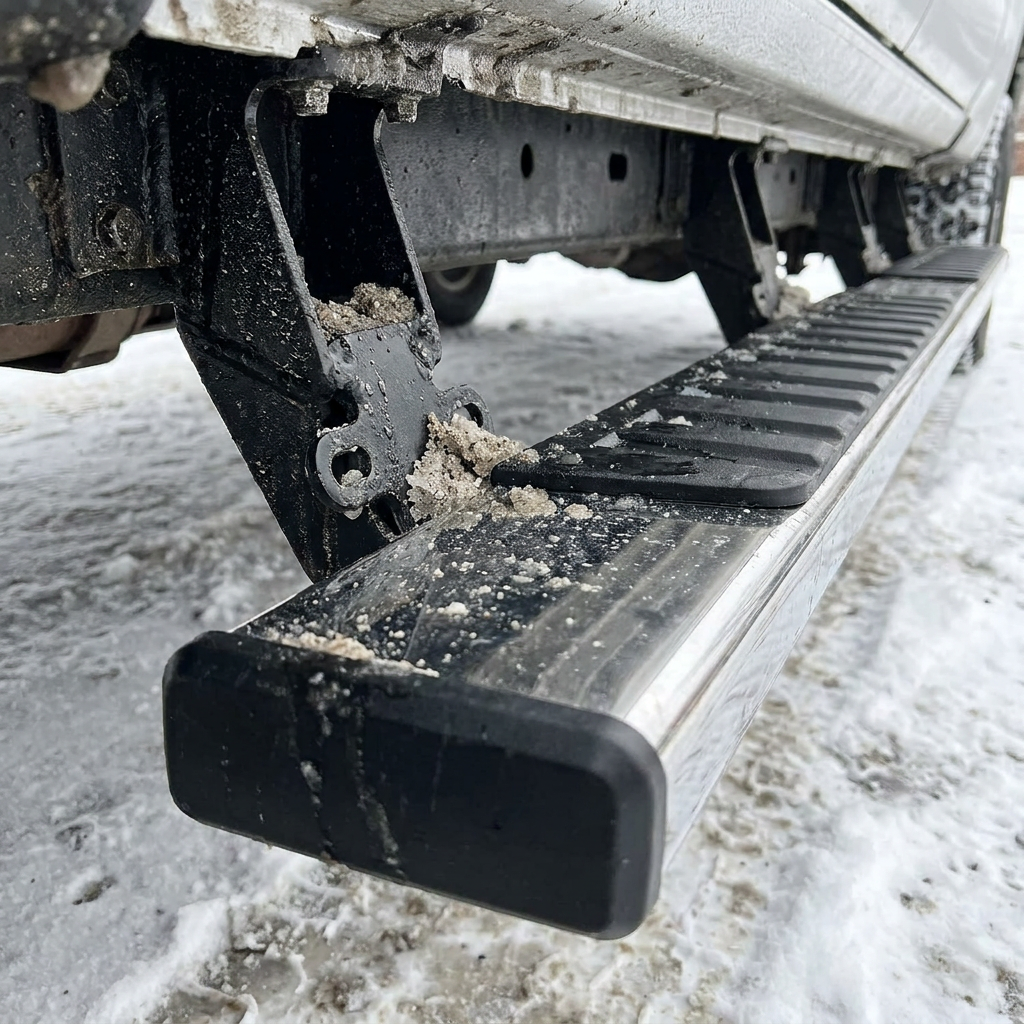
Stainless steel on the visible step doesn’t end the corrosion story. The hidden parts matter more: brackets, weld areas, and fasteners. That’s where winter road salt and trapped grit do their work.
Two coatings show up often in this category: powder coat on brackets and textured top coatings on step surfaces. Powder coat can be durable, but only if coverage is consistent at edges and bolt holes. Those are the first places to chip during shipping or installation. Once bare steel is exposed, rust can creep under the coating.
Fastener material is the other make-or-break detail. A running board kit can look great out of the box and still turn into a headache if the bolts corrode and seize. That’s when a simple re-torque becomes a drilling job. Stainless fasteners help, but they must be matched correctly to avoid galling. Zinc-plated hardware can be fine too, but it needs decent plating thickness and clean threads.
Three pre-winter checks reduce surprises:
- Inspect bracket edges and bolt holes: touch up obvious chips with a rust-inhibiting paint before salt season.
- Rinse behind the board: debris trapped between bracket and frame stays wet longer than the outer surfaces.
- Verify drain paths: avoid leaving mud packed against the step’s underside after off-pavement use.
For buyers also considering a textured powder-coated option like SMANOW Running Boards, the coating can provide grip and hide grime, but it can also hold salt residue in the texture if it’s not rinsed. Smoother stainless surfaces can clean faster. They can also show scratches more easily.
One useful reference for corrosion terminology and why chloride exposure matters for metals is AMPP’s educational material: AMPP Corrosion Resources
Positioning COMNOVA against close alternatives for a 5th gen Ram 1500 Crew Cab
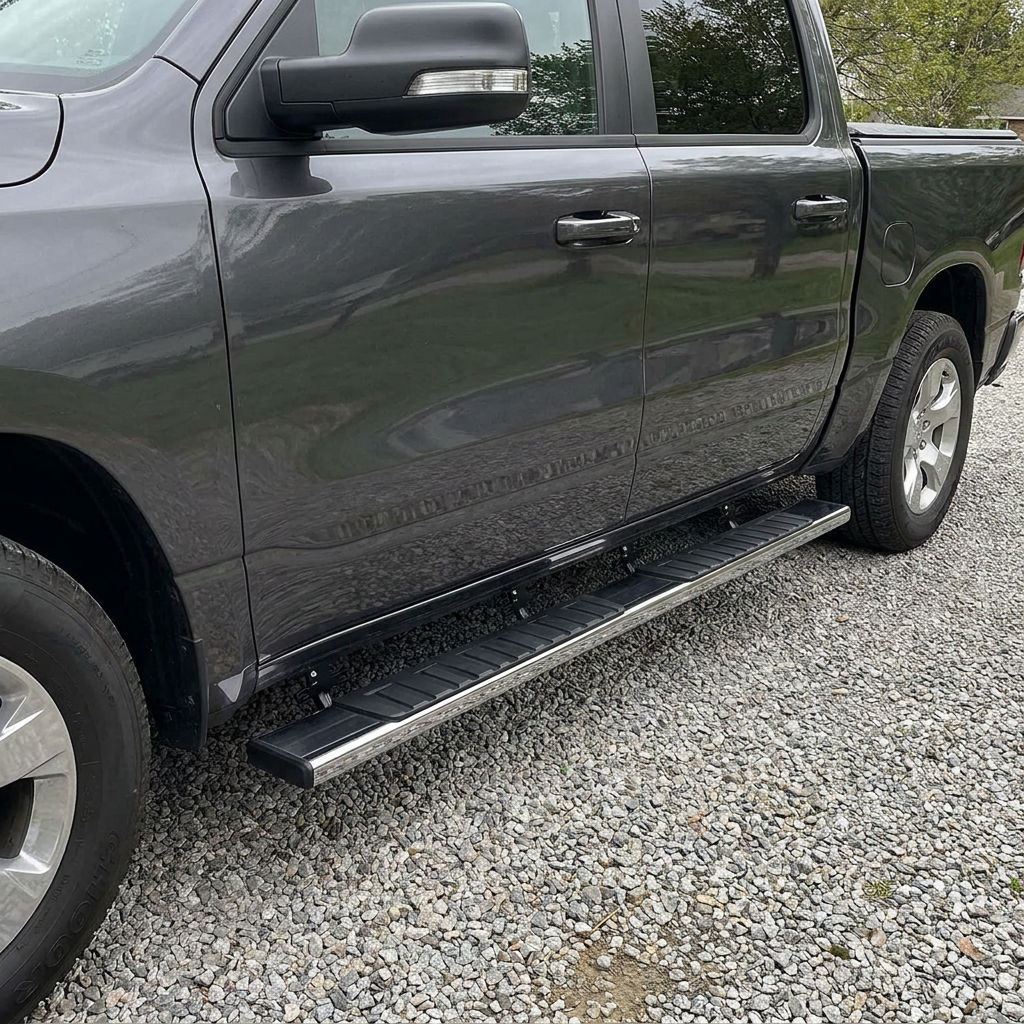
This running board option sits in a crowded middle ground. COMNOVA emphasizes a wide 6-inch stainless step for the 2019–2026 Crew Cab new body style. Alternatives often change one variable: width, surface style, or the way the step is broken into smaller landing zones.
A quick scenario view keeps the comparison honest without turning it into a catalog.
| Use Case | Option | Why It Fits That Scenario |
|---|---|---|
| Daily entry, kids, shorter passengers | COMNOVA 6-inch stainless boards | Wider landing area feels stable and forgiving when stepping in at an angle. |
| Less protrusion, fewer scrapes on ramps | Tyger Auto 3.5" Rider boards | Narrower step rail can tuck closer and reduce contact points in mild off-pavement use. |
| Flat board look with darker finish | APS 6-inch black stainless flat boards | Similar width to COMNOVA, but black stainless styling suits trucks where chrome stands out too much. |
| Frequent rear-seat entry, defined step zones | BINARY STAR 4-step design | Multiple step pads can guide foot placement, helpful when passengers enter from varied angles. |
COMNOVA’s main advantage in this group is the straightforward "wide step" feel without moving into powered-step complexity. It’s a comfort pick. That’s also where the limitations live. A wide board is easier to use in winter boots, but it brings more surface area to collect slush and road film.
For readers cross-shopping, it’s worth verifying the listing notes on generation splits. Many searches start from older trucks like 2014 Ram 1500 running boards or 2018 Ram 1500 running boards and then drift into 2019+ new body style listings. APS is explicit that it won’t fit the previous generation build. Tyger Auto is explicit about not fitting Classic. Those warnings exist because the wrong purchase is common.
To check photos, bracket layout, and current seller details for the closest alternative in this set, the product listing for Tyger Auto 3.5" Rider Running Boards is the cleanest reference point.
What you still should verify before choosing this Ram 1500 running board
Most returns on running boards for a Ram 1500 Crew Cab don’t happen because of the finish. They happen because the truck wasn’t verified carefully enough. For 2019–2026, listings often separate "new body style" from "Classic." They can look similar from the outside, but they don’t buy the same underneath.
A quick but serious check avoids the expensive mistake. First, confirm "Crew Cab" and not "Quad Cab." Second, confirm the listing’s "Classic" exclusion matches your truck. Third, check for add-ons that can interfere at the ends: mud flaps, splash guards, liners, or aftermarket rocker trim.
Usage matters too. A wide running board works well for daily entry, kids, older passengers, and work boots. But if the truck sees ruts, deep snow, or aggressive ramps, the plan changes. Then the decision isn’t "nicer or less nice." It’s "more comfortable or more clearance."
One detail people miss: step placement relative to the doors. On a Crew Cab, the landing zone should sit where your foot naturally drops when you get in, not where it looks centered in a photo. If the driver enters while turning or carrying something, that difference shows up every day.
Who this Ram 1500 running board fits, and who it doesn’t
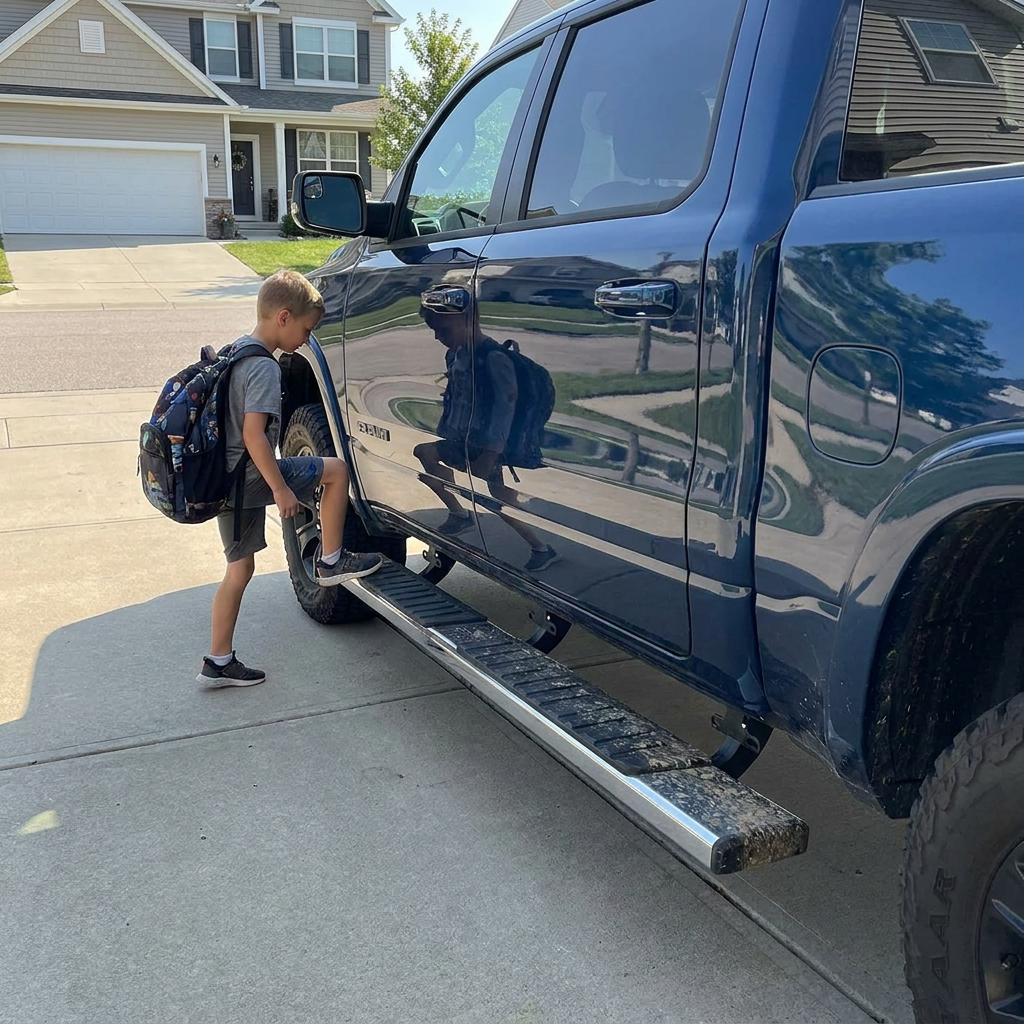
This running board fits a 2019–2026 Ram 1500 Crew Cab (new body style) used mainly on pavement for family or daily work, when you want a wide, predictable step. It makes sense for anyone who wants to get in and out without hunting for footing, for kids climbing in on their own, and for drivers running slightly larger tires or a mild lift that increases entry height.
It doesn’t fit drivers who need maximum mid-truck clearance or who regularly drive on trails with crowns, rocks, or sharp breakovers. It’s also a poor match for anyone who hates cleaning. A wide platform exposes more surface area to salt, mud, and slush, and rinsing becomes part of ownership in hard-winter regions.
Common questions about running boards on the Ram 1500
Does a "Ram 1500 running board" fit any Ram 1500?
No. The model name isn’t enough. Model year, cab type, and whether it’s "Classic" or new body style change mounting points and overall length.
How do you avoid buying running boards for a Ram 1500 Crew Cab that look short or "off" from the side?
Cab length matters more than bed length. A Crew Cab needs a longer set than a Quad Cab. Compare the listing’s cab-specific photos and fit notes, not just the headline.
Do "2015 Ram 1500 running boards" or "2016 Ram 1500 running boards" fit a 2019–2026 truck?
Don’t assume it. Those years often map to a different generation, and "Classic" adds another layer of confusion. If a listing doesn’t clearly state 2019–2026 plus the body style, it isn’t a safe buy.
What usually becomes annoying over time: noise, rust, or step wear?
Most headaches come from the full system, not just the board. Corroded hardware, small looseness after settling, and salt buildup in hidden areas cause more frustration than the step surface wearing out. A re-check after a few weeks and another before winter helps.
Is it worth paying more for a design with defined step zones instead of a continuous platform?
It depends on who uses the rear seats and how they enter. Defined step pads guide foot placement, which helps kids and quick entries. A continuous platform feels more flexible when you step in at an angle.
Verdict and a realistic use case
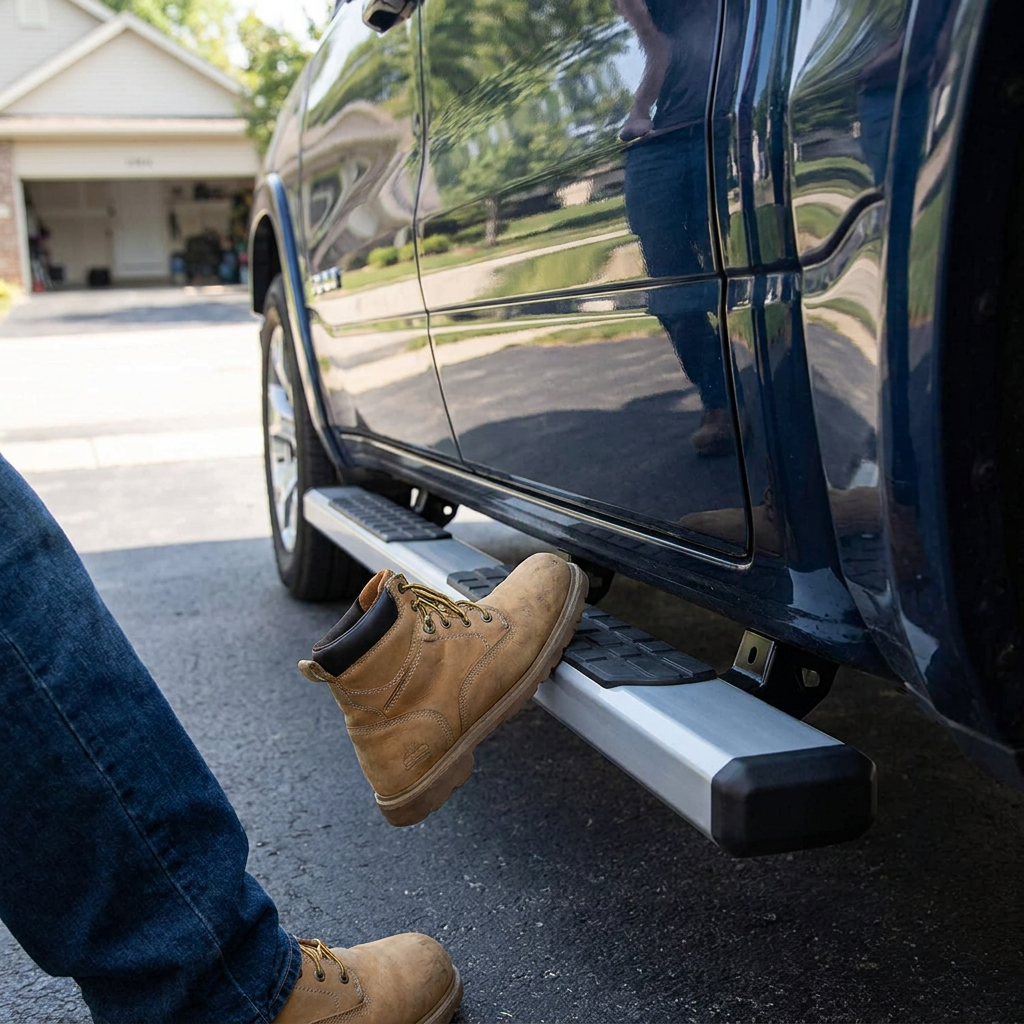
COMNOVA 6 Inches Running Boards is a coherent choice when the main goal is easier entry on a 2019–2026 Ram 1500 Crew Cab new body style, without the complexity of retractable steps. It isn’t a "do everything" part. It’s a part that makes getting in and out easier.
The clearest use case is a daily truck for family or work, where you climb in many times a day and a wide step reduces awkward entries in boots, rain, or with hands full. That’s where the purchase makes sense, as long as the cab and body-style verification is exact.