
The question will f150 running boards fit f250 keeps showing up because the trucks look similar at a glance, yet the underbody details that actually carry the load are rarely visible in photos. Running boards are simple to stand on. The mounting architecture is not.
Most confusion starts with the assumption that “Ford is Ford,” so parts should interchange across the lineup. In practice, Ford platforms share design language more often than they share identical attachment points. A running board is only as compatible as its brackets, its bolt pattern, and the geometry of the cab and rocker area it is trying to follow.
Quick Orientation
This fitment question usually comes down to a few non-obvious realities:
- The board itself may physically span the door openings, but the brackets may not land on the same frame or body holes.
- Cab configuration matters as much as model name (regular, extended, crew), because door spacing and rocker length change.
- Model-year changes can shift mounting points even when the truck looks “the same generation” from the outside.
What “Fit” Means When Asking Will F150 Running Boards Fit F250
In running-board terms, “fit” is not a single claim. It can mean any of the following, and each can be true while the others fail.
- Physical Fit: the board clears the sheet metal, doors, and wheel-arch trim without interference.
- Mounting Fit: the bracketry aligns to existing threaded holes or studs without drilling, slotting, or adapters.
- Functional Fit: the step sits at a usable height and distance from the rocker so it is comfortable and does not become a shin-catcher.
- Durability Fit: the load path is correct so the assembly does not flex, loosen, or stress fasteners over time.
That is why will f150 running boards fit f250 can receive confident “yes” answers in one context (a board can be held up and it looks right) and confident “no” answers in another (the brackets do not match, or the step ends up too tucked or too far out).
Why F-150 And F-250 Interchangeability Is Often Limited
F-150 and F-250 are built around different duty targets, and that tends to show up underneath. Even when both are four-door trucks, differences in frame section, cab mount positions, and factory provisions for steps can change bracket placement. The Super Duty line also tends to carry different clearances and packaging priorities around fuel tanks, exhaust routing, and underbody shields.
From a safety standpoint, running boards are a structural accessory: they introduce leverage loads into the mounting points every time someone steps on the outer edge. The U.S. National Highway Traffic Safety Administration’s equipment and vehicle-safety materials are a useful reference for how seriously vehicle modifications and attachment integrity should be treated in general, even when the change seems minor: https://www.nhtsa.gov/vehicle-safety
Where The Question Usually Gets Tricky: Cab Style, Wheelbase, And Year
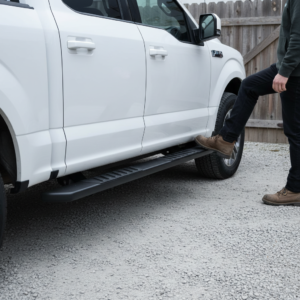
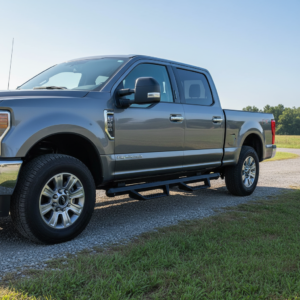
F-150 and F-250 boards to compare
One listing covers selected F-150 and Super Duty Crew Cab applications, while the other is F-250-specific. Confirm year and cab before choosing.
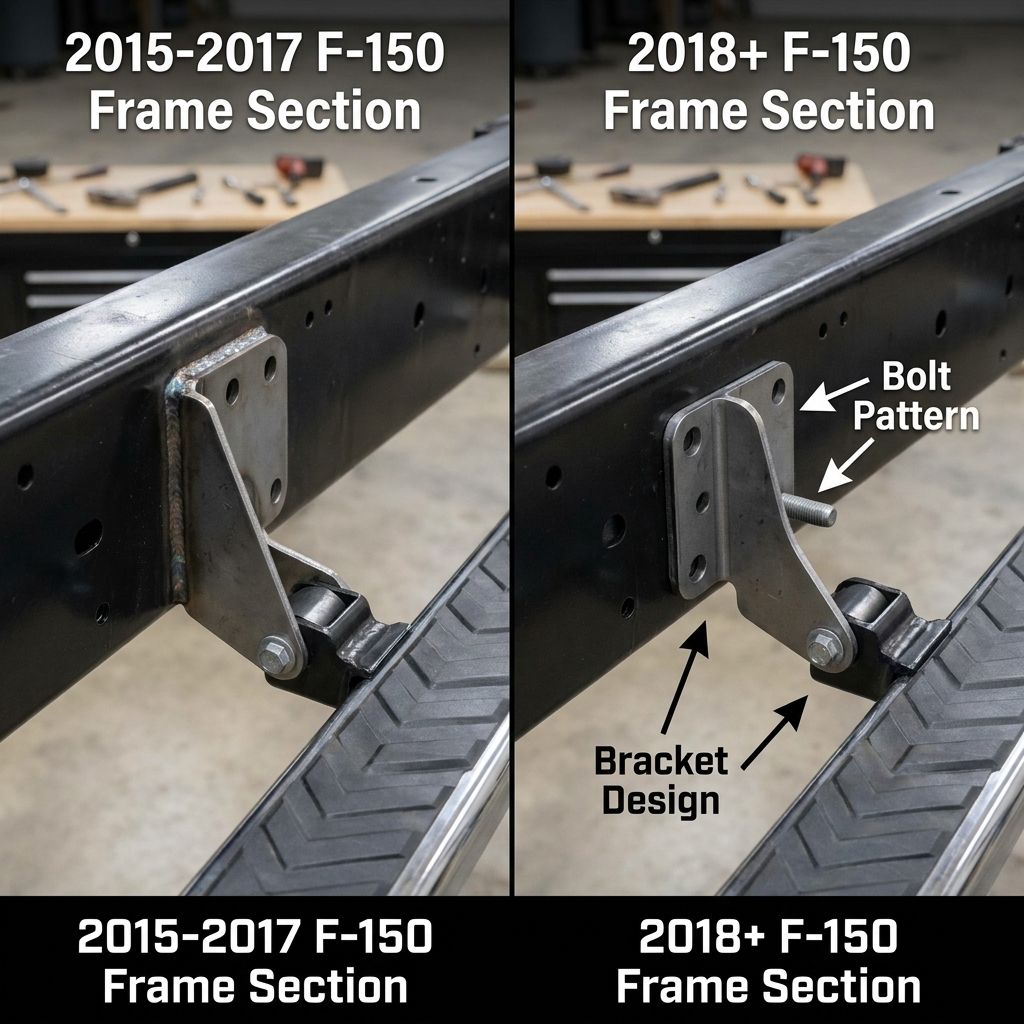
The most common “almost fits” situations come from mixing cab styles or model years. Someone may ask a version like: will 2018 f250 running boards fit a 2015 f150. That is a good example of why the year matters: manufacturers revise cab stampings, relocate studs, or change bracket designs across refresh cycles.
Even within the same nameplate, “crew cab” does not guarantee identical door spacing or rocker length across lines. When the board length is close but not exact, the ends may land awkwardly relative to the wheel openings, or the rear door may open close to the step edge—issues that feel small until they cause repeated contact.
How To Think About Compatibility Without Turning It Into A Product Hunt
The cleanest way to frame will f150 running boards fit f250 is to treat it as an interface question: body and frame attachment points, plus geometry. If the mounting points match and the bracket offsets place the step where it should be, interchangeability can be straightforward. If either is off, the “fit” becomes conditional and may rely on drilling, custom brackets, or compromises in step position.
As a neutral illustration of how listings are often phrased, some aftermarket running boards are advertised as compatible with a specific F-150 year range and cab layout, which signals how tightly fitment is typically constrained.
For broader context on why modifications should be approached with attention to safe attachment and load-bearing design, the Federal Highway Administration’s vehicle and heavy-vehicle safety resources are a credible starting point: https://highways.dot.gov/safety
Why “Will F150 Running Boards Fit F250” Is Usually A Hardware Question
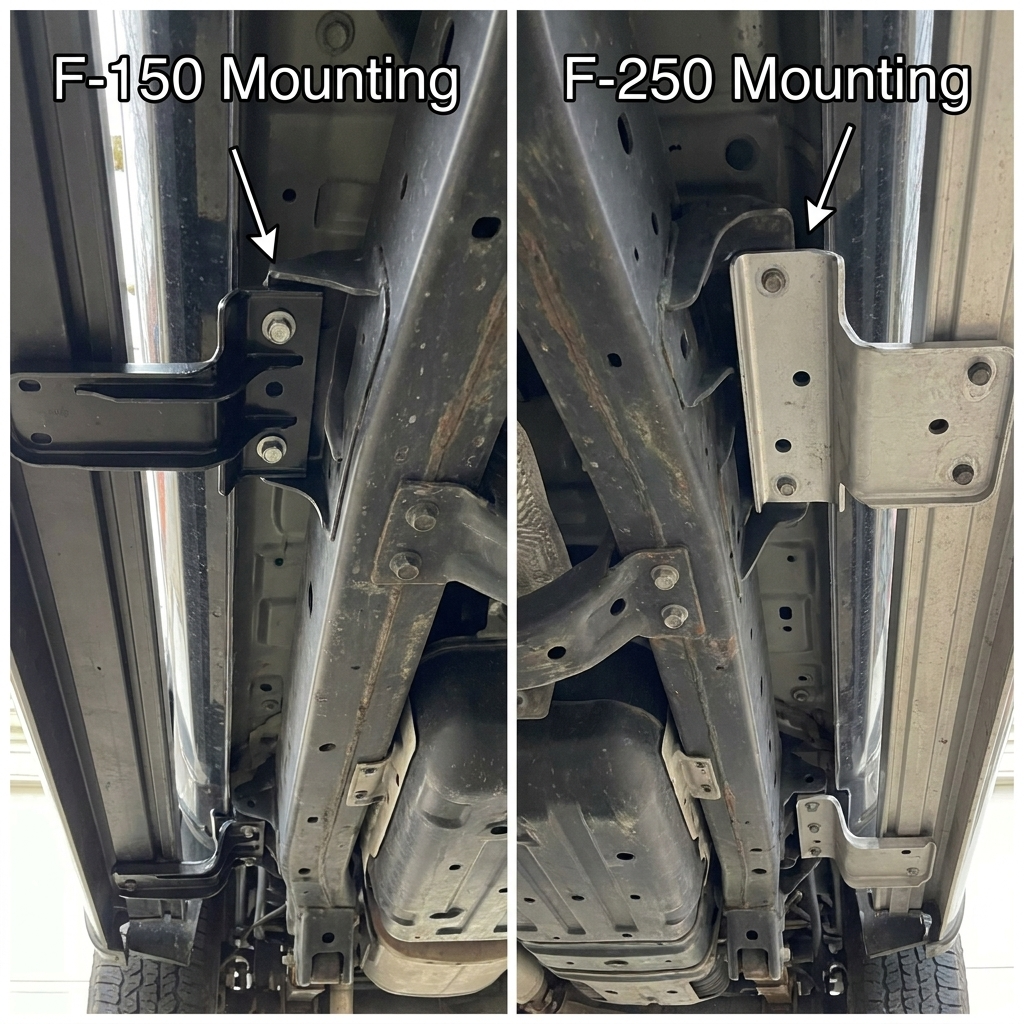
Most discussions around will f150 running boards fit f250 end up being less about the step itself and more about what is hidden underneath: mounting points, bracket geometry, and where the body sits relative to the frame. The apparent similarity between an F-150 and an F-250 can mask meaningful differences in cab mounting, rocker panel shape, and frame-to-body spacing. A board can look “close enough” held up to the truck and still fail at the bolt-up stage, or bolt up but sit at an awkward height and angle.
The key complication is that running boards are typically engineered around a specific set of factory holes, reinforcements, and load paths. If those references shift—by model line, cab configuration, or year—compatibility becomes uncertain. This is why the reverse question, will f250 running boards fit f150, tends to produce similarly mixed answers: the direction of the swap does not remove the underlying mismatch risk.
Mounting Point Patterns And Bracket Geometry Drive Fit
When will f150 running boards fit f250 is asked in practical terms, it helps to think in two layers: the vehicle-side interface and the board-side interface. The vehicle side is about where holes are, what thread sizes exist, and whether the structure behind them is designed to take stepping loads. The board side is about whether the bracket can reach those points without twisting, shimming, or colliding with pinch welds and body seams.
Fit issues most often show up as one of these scenarios:
- Hole alignment is off by a small but decisive amount, so bolts start but do not seat squarely, increasing the chance of loosening over time.
- Front and rear brackets “almost” match, but the mid support lands on a different structural area, changing how loads transfer into the body.
- The board sits too far inboard or outboard, which can create door clearance problems or expose the edge to debris and impacts.
- Ground clearance changes more than expected because the bracket drop differs between platforms, which matters on uneven terrain and steep driveways.
These are not cosmetic details. They affect how a step behaves under repeated dynamic loading—someone stepping quickly, jumping down, or using the board while carrying weight.
Year Ranges, Cab Types, And Trim Packages Can Break Assumptions
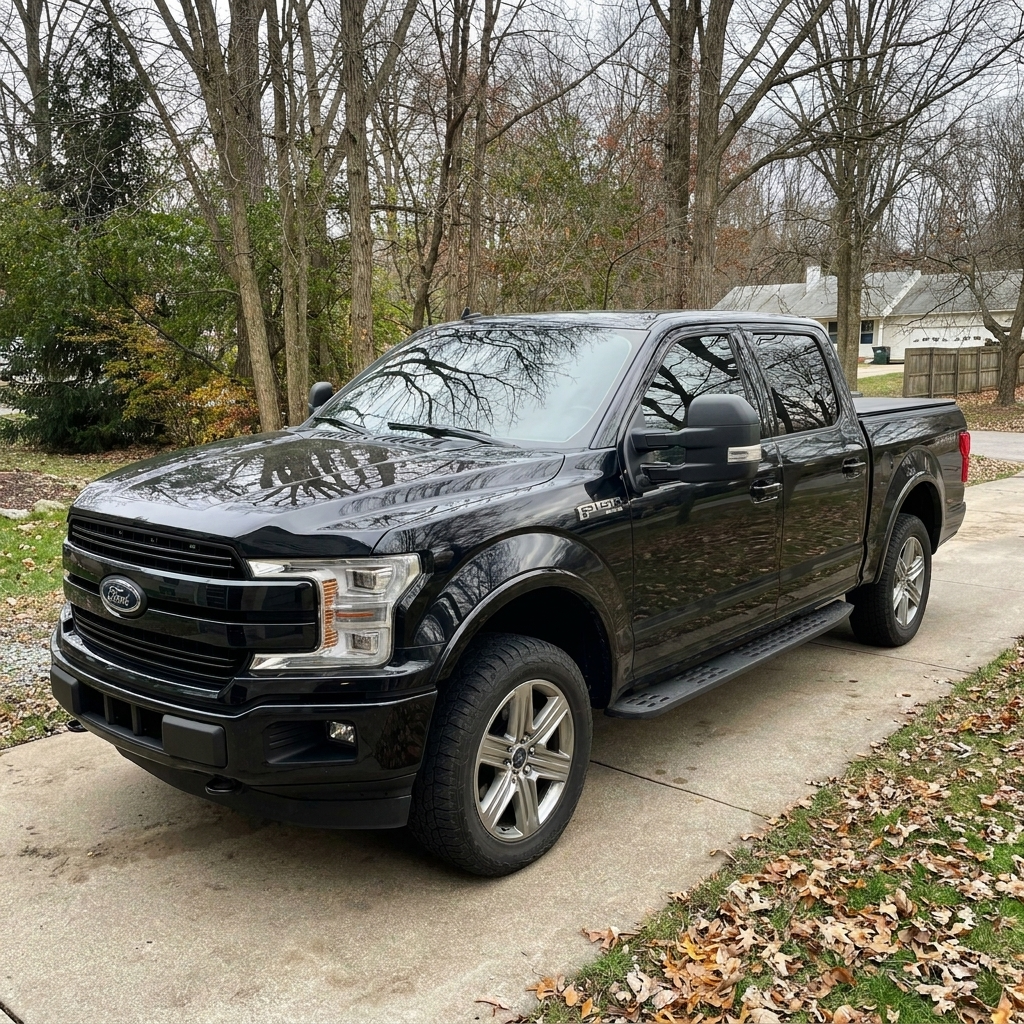
Questions like will 2018 f250 running boards fit a 2015 f150 highlight a common misconception: that “close” model years imply shared underbody architecture. In reality, platform changes do not follow a simple calendar logic, and cab types complicate the picture further. Crew cab, extended cab, and regular cab lengths change bracket spacing; bed length and wheelbase can influence where supports are practical even if the visual rocker length seems similar.
Ford COMNOVA Running Boards is a phrase that sometimes appears in fitment threads as an example of how listings may specify a narrow vehicle window, but the more reliable approach is still verifying mounting-point compatibility rather than trusting naming alone.
Safety, Load Ratings, And Why “It Bolts On” Is Not The Same As “It’s Correct”
Even when will f150 running boards fit f250 gets a “yes” from someone who made a swap work, that answer may be describing a one-off configuration, or a setup that required adjustments that are not obvious from a photo. From a safety standpoint, the relevant question is whether the installation preserves intended load paths and fastener engagement. In the United States, the National Highway Traffic Safety Administration provides context on vehicle equipment and safety defect reporting, which is useful when modifications involve structural attachments and occupant entry/exit behavior (https://www.nhtsa.gov/vehicle-safety).
For deeper background on fastener integrity and why partial thread engagement or misalignment can matter in real structures, engineering guidance from institutional sources such as NASA’s fastener design and preload resources can help frame the risk mechanisms without turning this into a brand-specific debate (https://standards.nasa.gov).
Will F150 Running Boards Fit F250: What The Question Usually Misses
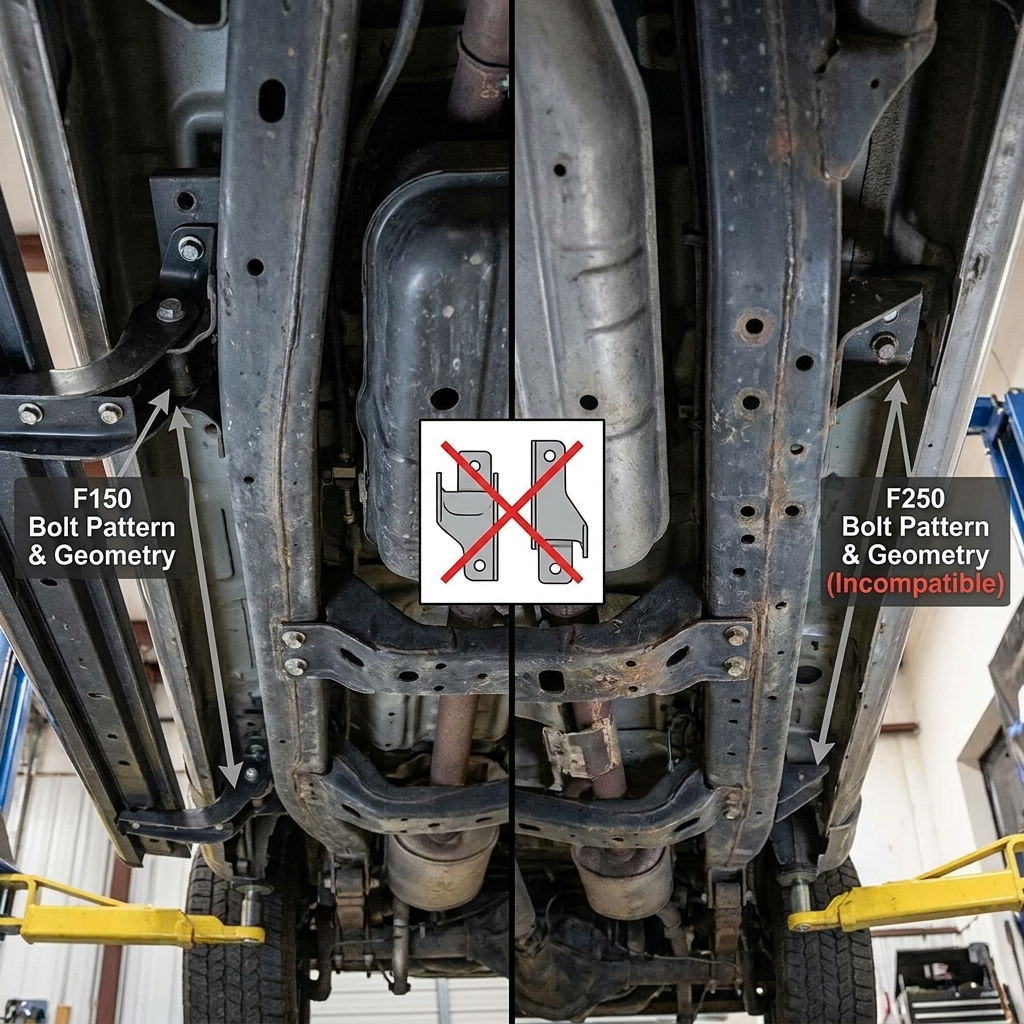
The question “will f150 running boards fit f250” is often treated as a simple yes-or-no, but the real issue is that “fit” has layers. There is Bolt-Pattern Compatibility (whether the mounting points line up), Geometric Compatibility (whether the length and position land correctly along the cab), and Clearance Compatibility (whether the step sits where it should without interfering with other components or creating awkward access).
In practice, even when two trucks look similar from the side, the hard points under the body can differ by generation, cab configuration, and how the manufacturer designed brackets and reinforcement. That is why forum answers can sound contradictory: two people may be describing different model years, different cabs, or different mounting architectures while using the same shorthand labels.
Why Cross-Fitment Claims Tend To Break Down In The Details
Cross-fitment discussions usually lean on visual similarity, but underbody mounting is not a visual system; it is a dimensional one. A small shift in where the factory intended loads to be carried can change bracket geometry, fastener size, or the number of attachment points—even if the outer body lines feel familiar.
When deciding how much confidence to place in a “will f250 running boards fit f150” claim, it helps to separate what is being asserted. These are the points that most often create false certainty:
- Cab Naming Assumptions: “crew cab” or “super cab” can hide differences in door length and rocker-panel span, affecting overall length and bracket spacing.
- Model-Year Drift: a question like “will 2018 f250 running boards fit a 2015 f150” mixes two different engineering cycles; even if both are modern, the mounting strategy may not be shared.
- Bracket Dependency: some setups are essentially a bracket system with a step attached; if the bracket set is not designed for the receiving truck, “the board” itself becomes irrelevant.
- Load Path Expectations: mounting points are designed to transfer weight through reinforced areas; mismatched hardware can create stress where the body was not intended to carry it.
How To Interpret Search Results Without Getting Pulled Into Noise
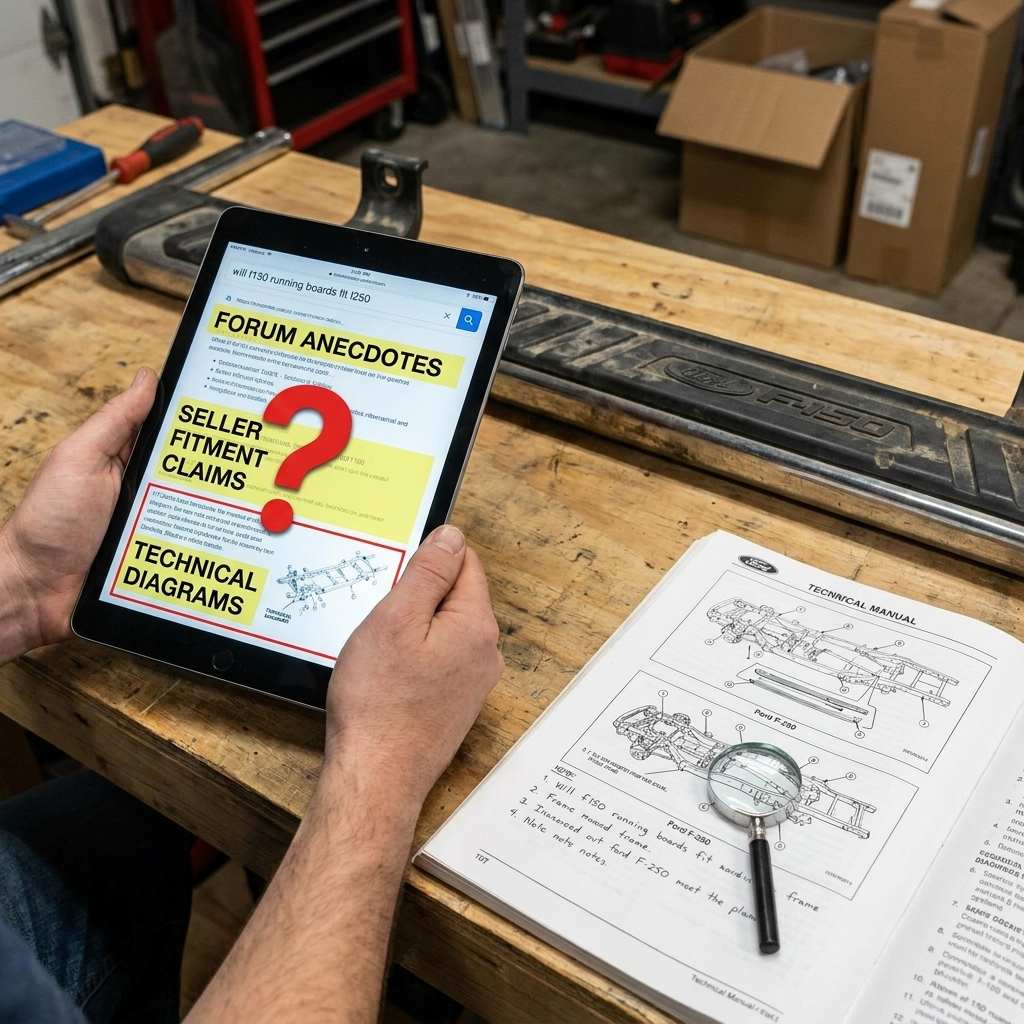
Search results for “will f150 running boards fit f250” often blend three different kinds of pages: personal anecdotes, seller fitment text, and partial technical notes. Each can be useful, but only if read with the right skepticism.
Anecdotes can be informative when they specify year, cab, and what hardware was used. Vague success stories (“bolted right up”) are hard to validate because they rarely state whether holes were reused, enlarged, or whether alignment was merely “close enough.” Seller fitment statements can be accurate, but they are only as good as the underlying catalog logic and the discipline of the listing creator.
For a reality check on what “compatible” should mean in a safety-relevant vehicle component, it helps to anchor expectations in institutional guidance on vehicle modifications and safety. The U.S. National Highway Traffic Safety Administration’s equipment and modification resources provide a baseline for why changes to vehicle equipment should be approached with attention to proper attachment and safe operation (https://www.nhtsa.gov/).
Practical Clarifications That Reduce Uncertainty
Without turning this into an installation guide, a few clarifications usually settle the confusion:
- If a source cannot state the exact truck years and cab style, it is not really answering “will f150 running boards fit f250”; it is guessing from appearance.
- If the claim depends on “making it work,” that is no longer simple fitment; it is a modification decision with trade-offs.
- If the discussion centers on the step’s look rather than where it mounts, it is not addressing the failure points that matter.
As a side note, brand-and-listing phrases like “Ford COMNOVA Pair Running Boards” are often encountered because search engines surface mixed-intent pages; that wording does not, by itself, resolve cross-fitment between platforms.
FAQ: Interpreting Will F150 Running Boards Fit F250 Searches
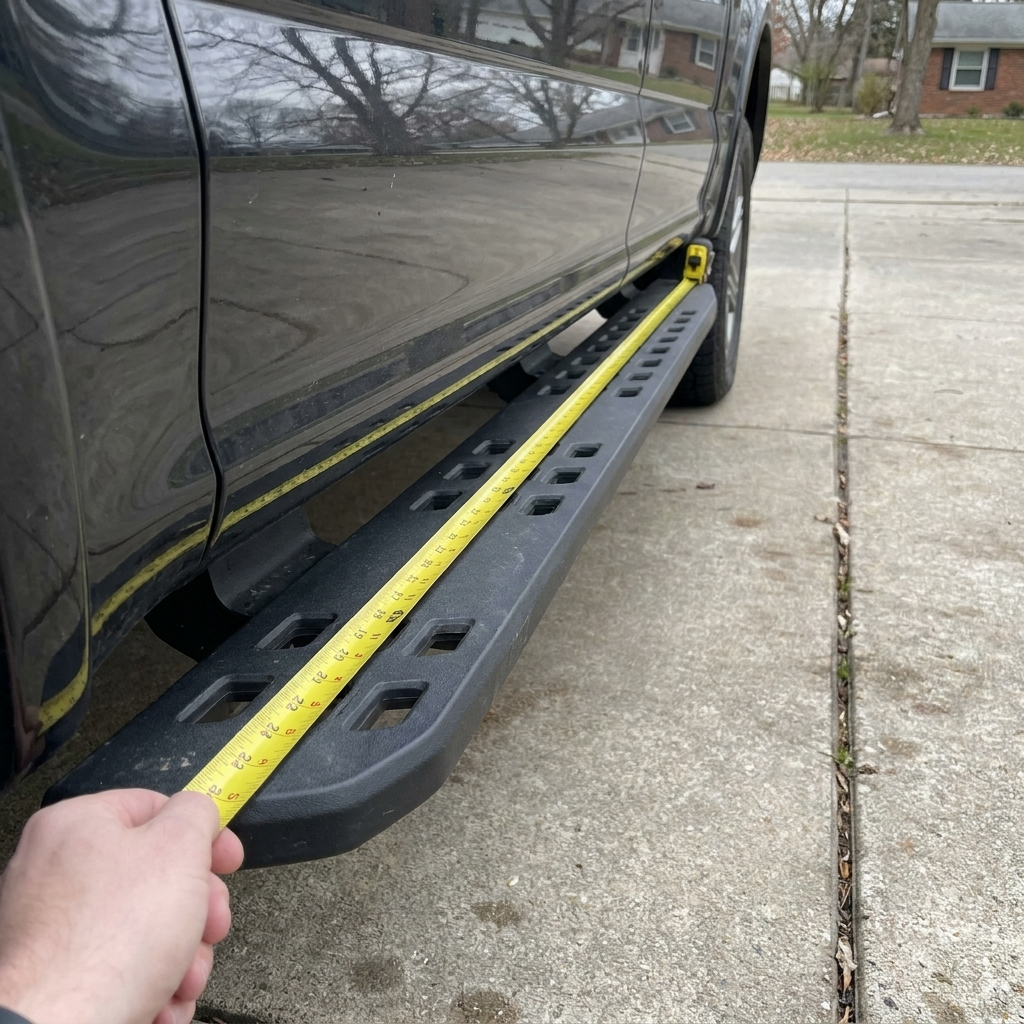
When People Ask “Will F150 Running Boards Fit F250,” What Are They Usually Trying To Confirm?
Usually it is a shortcut for “do the mounting points and length match closely enough to be a direct swap.” The hidden variable is that “direct swap” depends heavily on year and cab configuration, not just the badge.
Why Do Forum Answers Sound Confident But Still Conflict With Each Other?
Many answers are true for one specific combination of year and cab but are repeated as if universal. Small platform changes across years can turn a true statement into a misleading one.
Is “Close Enough To Bolt On” The Same As Proper Fitment?
Not necessarily. “Close enough” can describe alignment that still places load in the wrong spot or leaves the step positioned awkwardly, which changes how it behaves under real weight.
How Can A Reader Tell Whether A Search Result Is Describing A Swap Or A Modification?
Look for language about drilling, slotting, reusing different hardware, or “adjusting” brackets; those cues indicate modification rather than straightforward compatibility. If those details are missing, the claim is hard to trust either way.