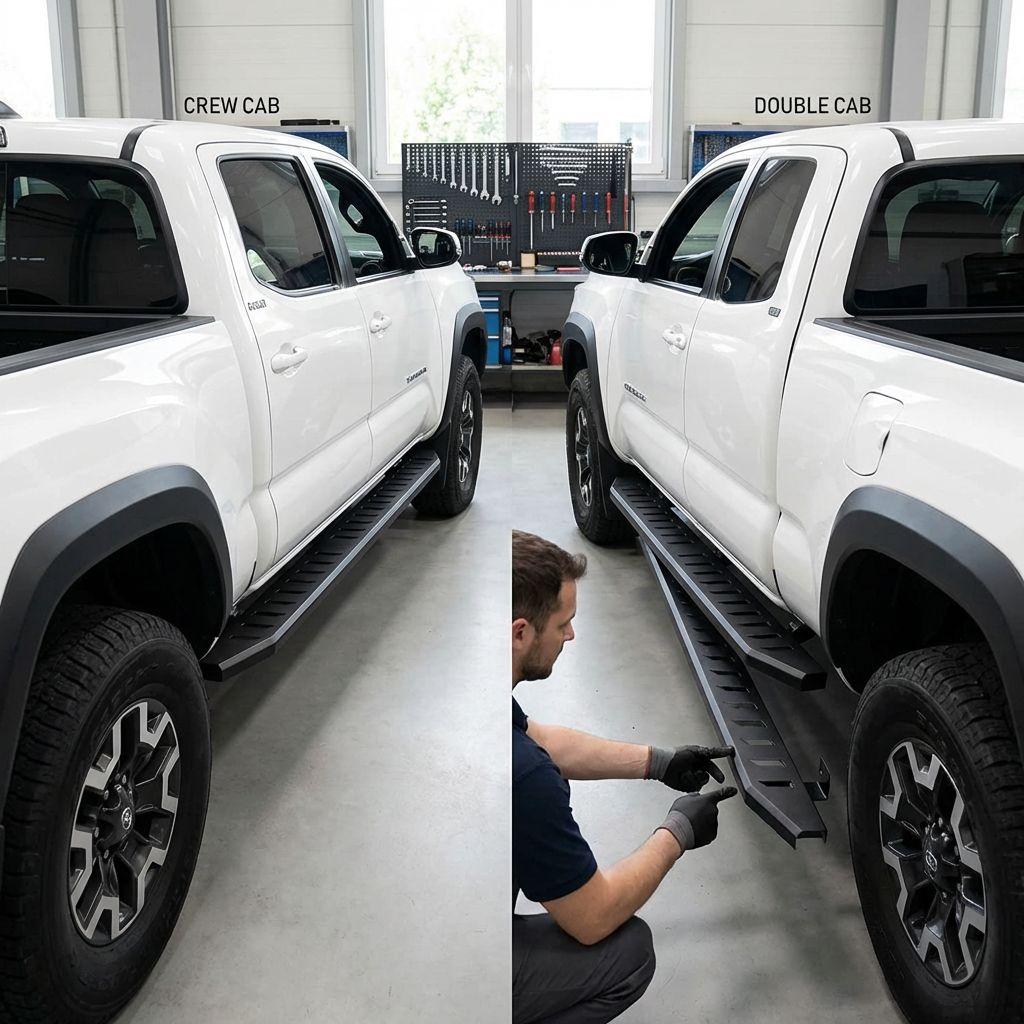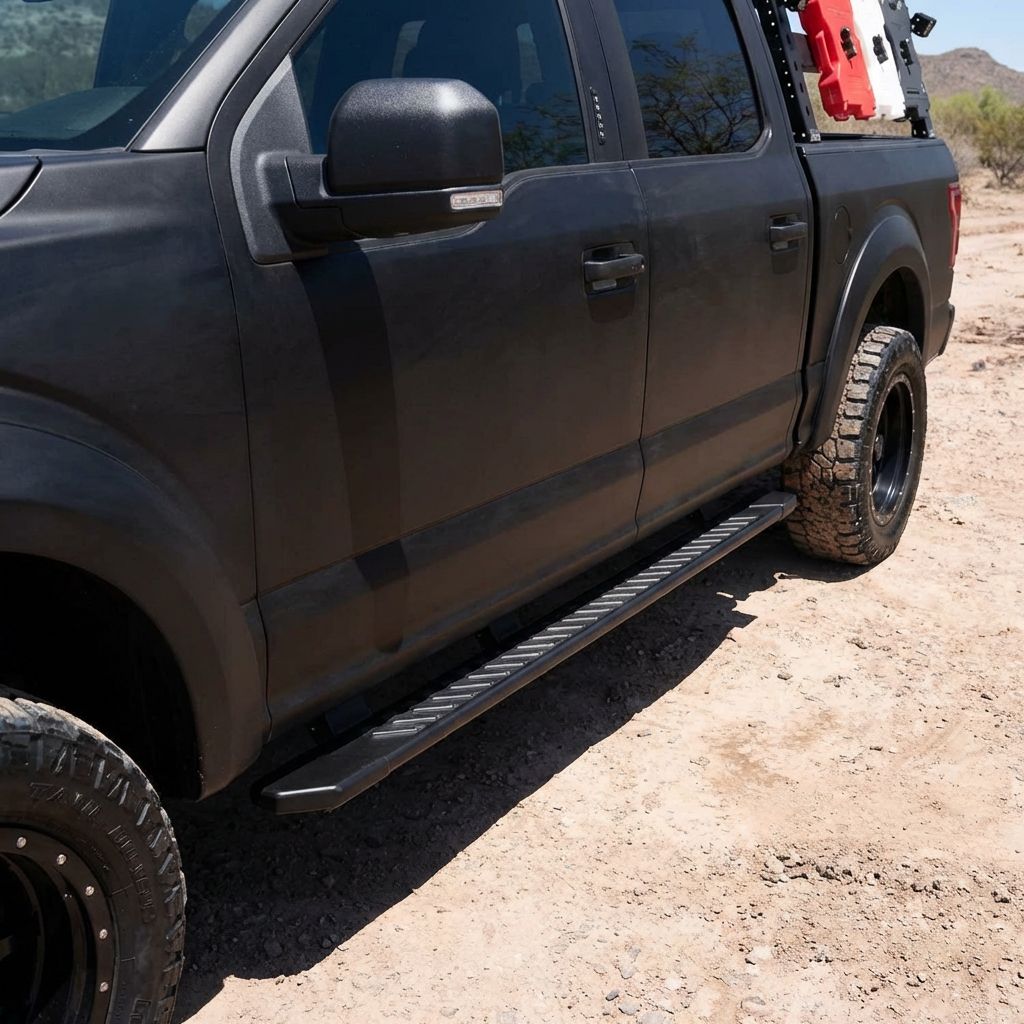
The question looks simple, but it rarely is. “Do F150 running boards fit Expedition” is really a shorthand for whether two different Ford platforms share the same mounting architecture along the rocker area, across specific model years, cab or wheelbase layouts, and trim-level hardware.
Most confusion starts with a reasonable assumption: if two vehicles are both Ford and roughly similar in size, the side step attachment points might line up. In practice, running boards live in the messy intersection of body structure, bracket geometry, and year-to-year changes that are not obvious from photos.
Quick Orientation Before Getting Lost In Details
- What it is in practical terms: “running boards” are fixed exterior steps that attach to the vehicle’s body or frame using brackets and factory mounting points.
- How people typically encounter it: a swap idea comes up when a set from an F-150 is available and an Expedition needs steps (or vice versa), so the question becomes interchangeability, not performance.
- Safe assumption: fit is determined by the exact mounting points and bracket offsets for a particular generation and wheelbase.
- Misleading assumption: brand match alone (Ford-to-Ford) implies bolt-on compatibility.
Why “Do F150 Running Boards Fit Expedition” Depends On Structure, Not Size
On trucks and large sport utility vehicles, the step sits under the rocker and has to clear doors, pinch welds, and any underbody shielding. The crucial part is not the board length by itself, but where the brackets land relative to reinforced mounting locations. Those locations are engineered into the body-in-white or frame interfaces and can move between generations even when the exterior silhouette feels familiar.
For an F-150, cab configuration drives length and bracket spacing. For an Expedition, wheelbase and body length do the same job. A “close enough” length can still fail if the bracket pattern is off by a small amount, because the mounts are not meant to be forced into alignment.
Mounting Systems: What Actually Has To Match
Interchangeability usually comes down to three physical matches, all of which can vary by year and platform.
- Mounting point pattern: the number of attachment points and their spacing along the rocker area.
- Fastener type and thread: factory studs, threaded inserts, or bolts into captured nuts. Even when holes exist, the hardware standard may differ.
- Bracket offset and drop: how far the step sits outboard and how low it drops. Door swing, flare shape, and underbody contours can make a bracket that “bolts up” still sit wrong.
Generation And Platform Are The Real Filters
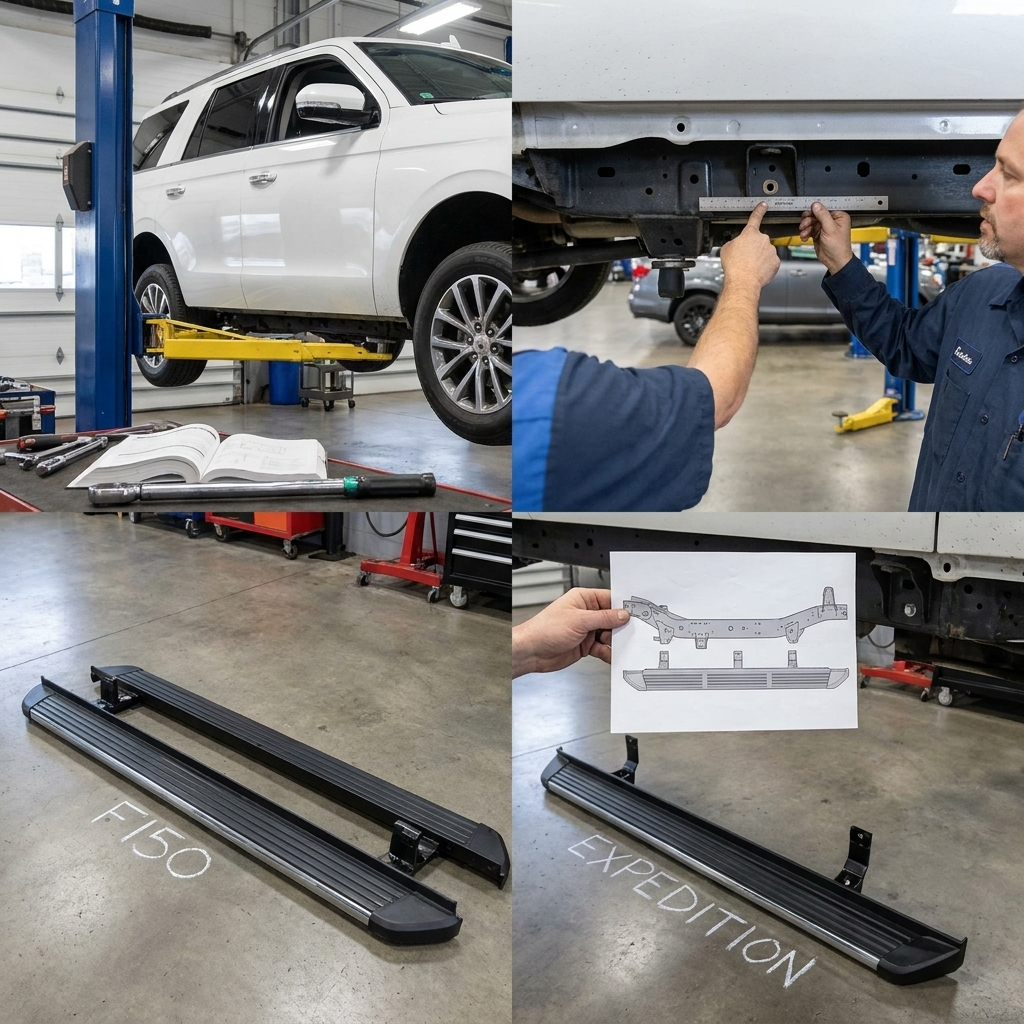
Ford changes platform architecture in jumps. When a new generation arrives, the underlying attachment strategy may change with it—sometimes subtly, sometimes completely. That is why “F-150 running boards fit Expedition” cannot be answered responsibly without tying the question to a specific generation range for both vehicles and the exact body configuration.
When forum discussions drift into “it fit my buddy’s truck,” the missing detail is usually the platform overlap: the same nameplate can span multiple architectures over time. In the same spirit, a listing title like “Ford Running Boards Side Steps Compatible for 2009-2014 Ford F150” signals how narrowly fitment is often defined when the mounting pattern is known.
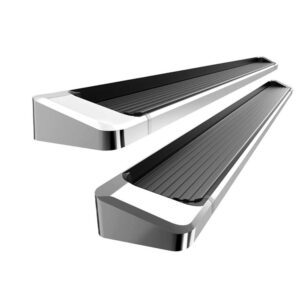
F-150 and Expedition boards to compare
The products below are vehicle-specific and not interchangeable. Match the listed F-150/Super Duty or Expedition application exactly.
Where The Confusion Commonly Spreads To Navigator
The related question “Expedition running boards fit Navigator” comes up because the Expedition and Navigator have been closely related for long stretches. Even then, trim-specific cladding, wheel-arch shapes, and factory step options can change bracket geometry or required offsets. The vehicles may share a platform, but still diverge in how steps integrate with exterior panels.
Part 1 ends at the foundational point: compatibility is a structural question. The next step is learning how to identify the right architecture markers—year ranges, wheelbase, and mounting style—without relying on guesswork or photos alone.
Why “F150 Running Boards Fit Expedition” Is Rarely A Straight Swap
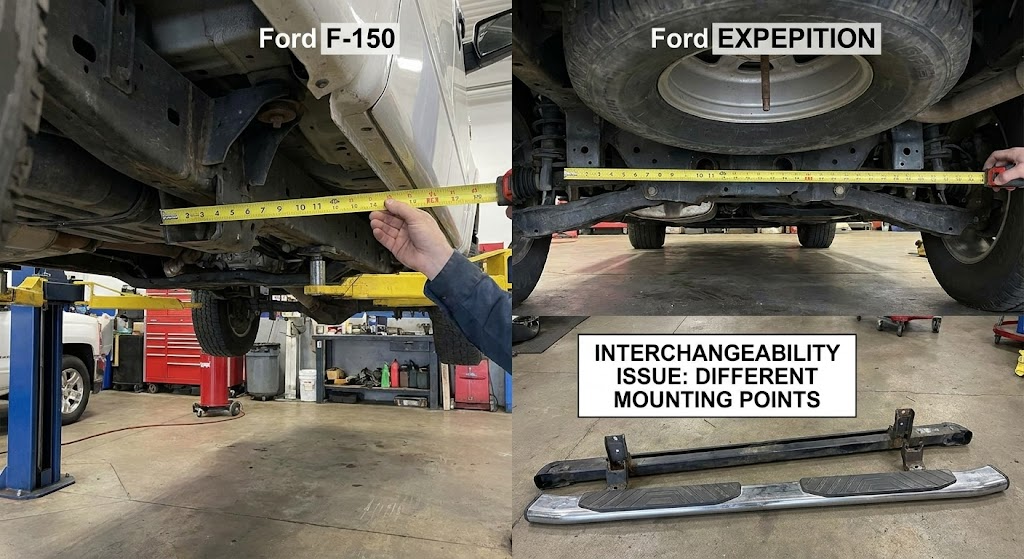
The question “F150 running boards fit Expedition” usually sounds simple because both vehicles sit under the same brand umbrella and, in some years, share broad platform thinking. The complication is that running boards are not defined by brand alone; they are defined by body geometry. Small changes in rocker panel shape, door cut lines, and the location of reinforced mounting points can make two boards that look similar behave very differently once offered up to the frame.
Even when hole spacing appears close, the system is still constrained by how the load is carried. A running board is effectively a lever attached to brackets; the bracket needs to land on structure designed to take repeated step loads without deforming. When the underlying reinforcement differs—even subtly—interchangeability becomes a gamble rather than a fitment rule.
Mounting Points And Structural Reinforcement Matter More Than Length
In “F150 running boards fit Expedition” discussions, length gets most of the attention. Length is visible; reinforcement is not. Yet reinforcement is what decides whether the board sits square, stays quiet, and remains stable over time. Trucks and full-size SUVs often distribute underbody structure differently because of packaging needs (fuel tank placement, suspension components, and body mounts).
In practical terms, interchange can break down in a few recurring ways:
- Bracket landing points align to open sheet metal rather than reinforced areas, creating flex and noise even if the holes can be made to line up.
- Door sill and rocker contours differ, leaving uneven gaps that trap debris and accelerate corrosion where coatings are compromised.
- Factory provisions vary by trim and year, so “same model year” does not guarantee the same underbody attachment scheme.
Wheelbase, Door Count, And Step Positioning Change The Experience
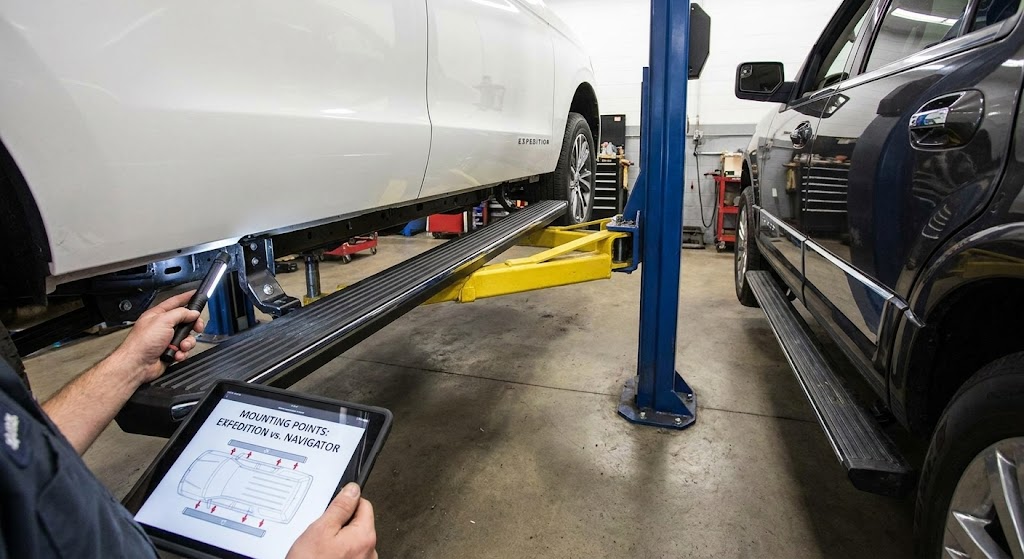
Another reason “F150 running boards fit Expedition” is hard to generalize is that wheelbase and door layout change where a step feels naturally placed. A board that technically mounts can still feel awkward if the step pad lands too far forward or rearward relative to typical foot placement. That becomes more noticeable for rear passengers, where door opening geometry and seat height influence how people enter and exit.
Fitment threads also tend to miss a subtle point: a board can clear the doors yet still interfere with other underbody elements during suspension travel or when jacking at factory lift points. These conflicts are not always visible until the vehicle is on a lift or the suspension is articulated.
Materials, Corrosion, And Fastener Interfaces Create Long-Term Differences
Running boards live in a harsh environment: water spray, road salt in many regions, and repeated impacts from gravel. Material choice matters, but so do interfaces—especially where dissimilar metals meet. A steel bracket against an aluminum body or mixed fasteners can set up galvanic corrosion if coatings are damaged and moisture is present. The U.S. National Park Service’s guidance on galvanic corrosion is a useful primer on why mixed-metal contact in wet environments can be problematic: https://www.nps.gov/articles/000/galvanic-corrosion.htm
Fastener torque and thread engagement are another long-term divider between “bolts on” and “stays right.” The National Highway Traffic Safety Administration emphasizes the importance of correct installation and maintenance in vehicle safety contexts, which includes proper fastening practices for accessories: https://www.nhtsa.gov/vehicle-maintenance
Where The “Navigator” Question Fits In
Searches often pair “F150 running boards fit Expedition” with whether Expedition running boards fit Navigator. That comparison can be closer in spirit because those SUVs may share more body-side design cues in certain generations, but it still depends on year, wheelbase, and trim-level provisions. The most reliable signal is not the nameplate; it is whether the mounting architecture and bracket geometry are truly shared.
A Single Example Without Turning It Into The Topic
A listing such as “Ford Running Boards Side Steps Compatible for 2009-2014 Ford F150” illustrates why descriptions often narrow fitment to a specific cab configuration rather than implying broad cross-model interchange.
When “F150 Running Boards Fit Expedition” Is The Wrong Question
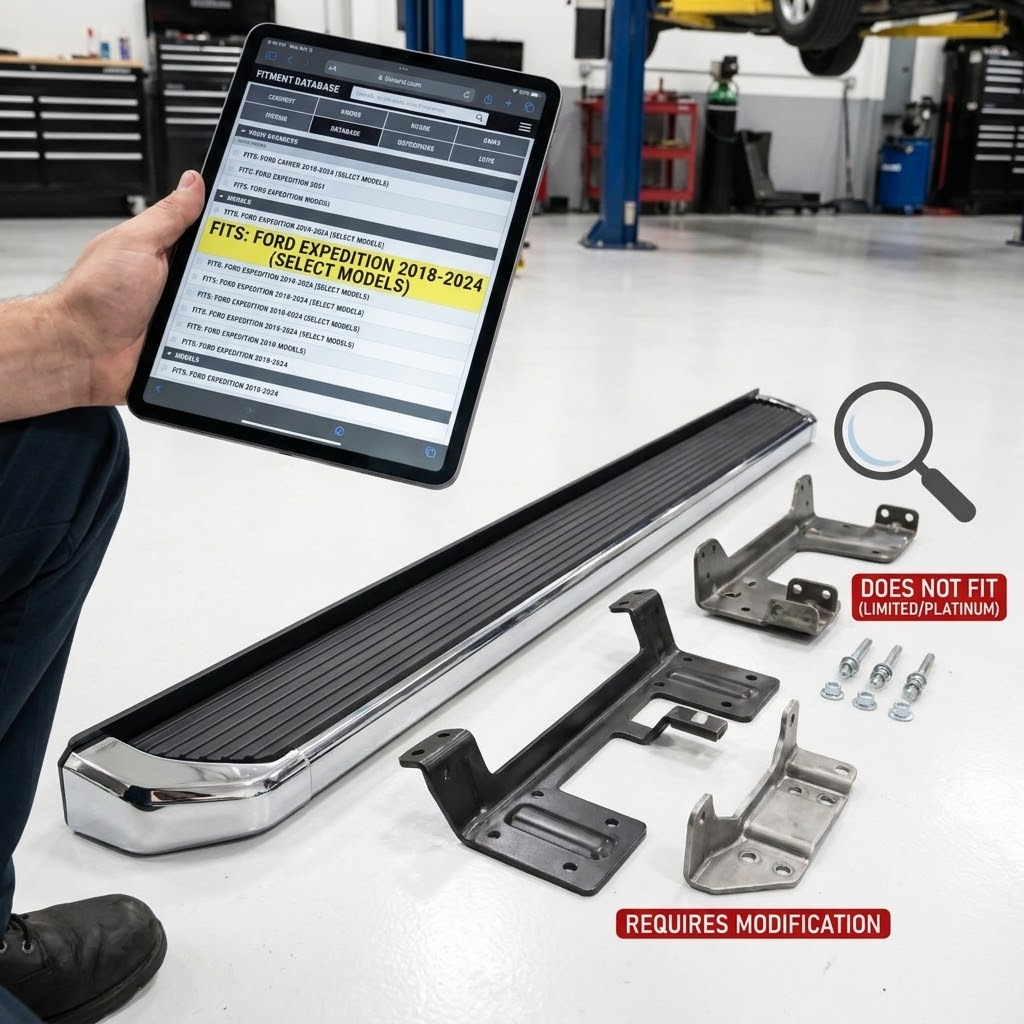
The search phrase “F150 running boards fit Expedition” often reads like a simple swap question, but it usually sits on top of two different issues: physical interchangeability and administrative fitment claims. Interchangeability is governed by body architecture and mounting-point geometry; fitment claims are governed by catalog rules that sometimes simplify or generalize. Confusion tends to spike when model years overlap, when a platform is refreshed mid-generation, or when two vehicles share a brand but not the same underbody layout.
In practice, the most reliable way to think about “F150 running boards fit Expedition” is as a compatibility hypothesis that must be tested against platform-specific constraints, not as a yes/no rule tied to the badge on the grille. Even when a seller or forum post reports a match, it may describe a narrow subset of configurations that look similar from the side yet differ underneath.
Compatibility Reality Checks That Usually Decide The Outcome
For “F150 running boards fit Expedition,” the deciding factors are typically structural and dimensional. They also interact; a small difference in one area can cascade into multiple misalignments.
These checks tend to separate “possible with caveats” from “not realistically compatible”:
- Mounting-Point Pattern And Spacing: If the number of attachment points or the fore-aft spacing differs, alignment becomes a fabrication problem rather than a simple transfer.
- Cabin And Body Length Logic: Pickup cab configurations and full-size SUV wheelbase options do not map cleanly; the usable length along the rocker area is often different even when overall vehicle size feels comparable.
- Rocker Profile And Pinch-Weld Geometry: Similar-looking rocker panels can have different flange shapes or reinforcement locations, which affects where brackets can sit without stressing sheet metal.
- Clearance Around Doors And Trim: Door swing, lower cladding, and splash protection pieces can change the required offset, so an assembly that “bolts up” can still interfere.
- Load Path And Certification Assumptions: Some designs assume specific reinforcement points; moving to a different body can change how loads transfer during entry/exit.
This is also why the related question “Expedition running boards fit Navigator” can behave differently: those two vehicles may share more underbody logic in certain years, but even then, trim and wheelbase differences can still break interchangeability.
Where Fitment Claims Commonly Mislead
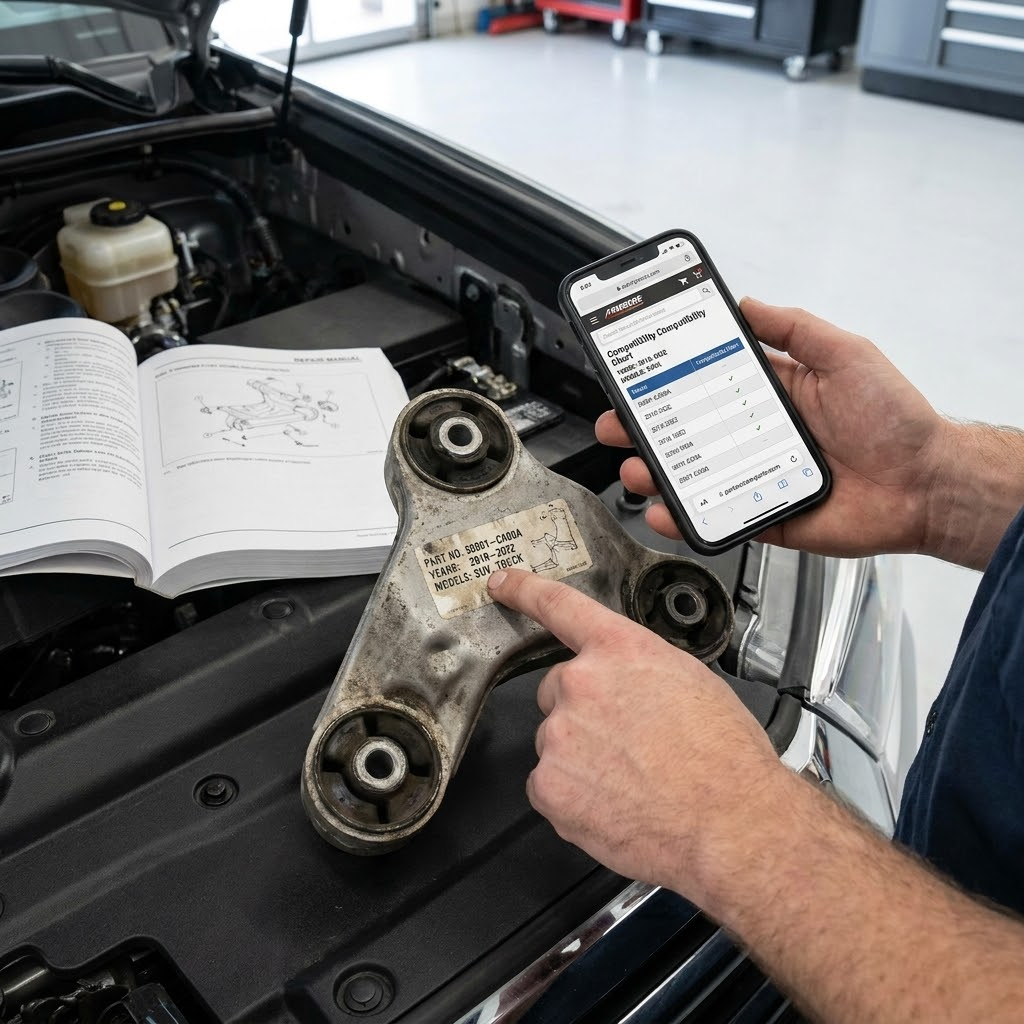
Many compatibility listings are built from databases that prioritize broad coverage over nuance. That does not automatically make them unreliable, but it explains why “fits” sometimes means “fits one configuration with standard mounting provisions” rather than “fits every version across a range of years.” A claim can also be technically true while still requiring extra parts, altered brackets, or acceptance of minor interference—details that may be omitted.
As a general reference point on how vehicle modifications can intersect with safety and compliance expectations, the National Highway Traffic Safety Administration provides consumer-facing material on vehicle equipment and safety topics at https://www.nhtsa.gov/. For a standards-based view of general vehicle safety frameworks and terminology, the SAE International site can be consulted at https://www.sae.org/ (access varies by document).
Decision Clarity Without Turning It Into A Buying Exercise
For most readers, the practical takeaway from “F150 running boards fit Expedition” is this: if the goal is a straightforward interchange, it only makes sense when the underlying mounting architecture matches closely enough that alignment is repeatable without improvisation. When the match depends on drilling, slotting, or mixed hardware assumptions, the question stops being “does it fit” and becomes “is the altered load path acceptable for regular use,” which is a higher bar and harder to validate from anecdotes.
That framing keeps expectations realistic. It also explains why two people can report opposite outcomes while both are being truthful: they may be talking about different years, different wheelbases, or different mounting provisions that are not obvious in casual photos.
FAQ: Clearing Up Common Confusion
What Do People Usually Mean When They Search “F150 Running Boards Fit Expedition”?
It is usually a shorthand for “can these parts transfer without fabrication.” The phrase often bundles multiple year ranges and configurations, which is where most misunderstandings start.
Why Can Two Vehicles From The Same Brand Still Not Share The Same Mounting Points?
Brand overlap does not guarantee platform overlap. Body structure, reinforcement locations, and underbody packaging are engineered around different use cases and can diverge even when exterior dimensions feel similar.
Why Do Some Fitment Databases Say Something Fits When Real-World Reports Disagree?
Databases may generalize across trims or assume standard provisions that are not present on every configuration. Real-world reports can also omit small but decisive details like wheelbase, door count, or lower-body trim differences.
Is “Expedition Running Boards Fit Navigator” Automatically More Likely To Be True?
Sometimes it is more plausible because those vehicles can share closer platform lineage in certain years. It still is not automatic; wheelbase and trim-level packaging can change bracket locations and clearances enough to break interchangeability.