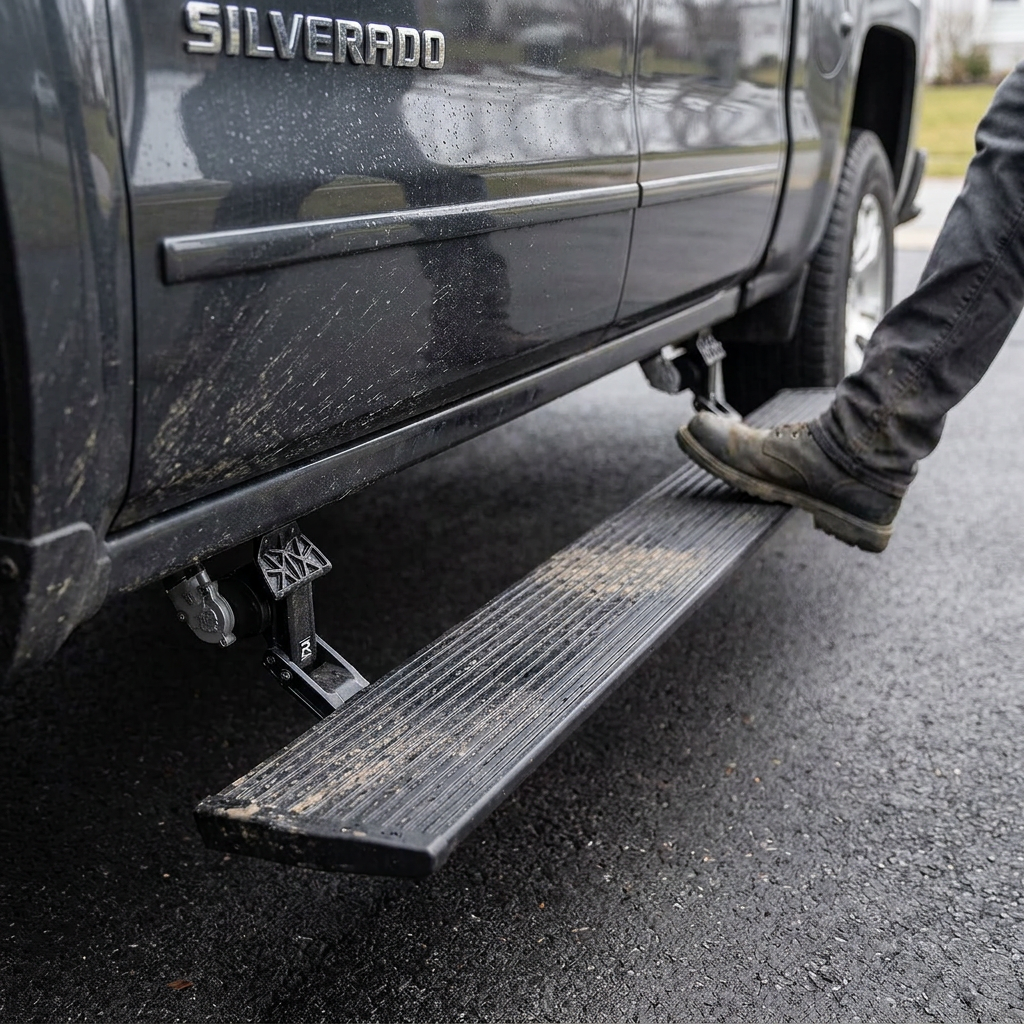
Choose Dee Zee running boards by confirming fitment first, then picking the step width and traction pattern that match your climate and passengers.
Most people searching "Dee Zee running boards" aren’t locked onto one modelthey’re trying to avoid two expensive mistakes: ordering something that doesn’t bolt up cleanly, or ending up with a step surface that feels slick in rain, snow, or work-site mud. Dee Zee’s catalog spans true board-style steps (more foot room), round or oval tube steps (clean look, less platform), and add-on step pads that change grip and comfort.
- Start with fitment reality: cab/bed configuration, rocker length, and where brackets can actually mount.
- Choose the step surface for your climate: wide, textured platforms beat narrow tubes for winter boots and kids.
- Plan for ownership: check material/finish expectations and re-check fasteners after install; corrosion starts at hardware and seams.
What "Dee Zee running boards" are worth buying forand what to watch
For most drivers, Dee Zee running boards make sense when the vehicle sits high enough that entry feels like a climb, or when regular passengers need a predictable step. The main strength of the brand’s better board-style options is day-to-day usability: a longer, flatter stepping area that feels natural rather than perched on a small tube. The trade-off is that boards sit where road spray, salt, and gravel liveso finish quality, hardware, and how cleanly the brackets mate to factory points matter as much as the step surface.
There are also two common watch-outs. First: "universal" can mean extra measuring, drilling, or compromise on position; a step that is an inch too far inboard or outboard changes comfort and can invite shin bumps. Second: traction is not a single feature. Wet rubber soles, packed snow, and oily work boots all behave differently. A board that feels fine in dry weather can feel nervous in slush if the tread pattern is shallow or the pads don’t shed debris.
As a concrete reference point inside the lineup, DEE ZEE DZ16201 NXc Black Running Boards represent the kind of full-length board-style step many shoppers expect when they type "Dee Zee running boards," but the same decision logic applies across the range: fit first, then surface, then durability details.
How Dee Zee running boards differ in real use (boards, tubes, and pads)
"Running boards" gets used loosely online. In practice, Dee Zee offerings fall into a few functional shapes, and each shape changes the way people step in and outespecially with boots, shorter passengers, or when the ground is uneven.
Board-style steps prioritize foot placement. The benefit is obvious on lifted trucks and taller SUVs: a wider platform lets the foot land flat, then pivot into the cab without balancing on an edge. This is also the style that tends to feel most "family friendly" because kids can find the step without looking down as much. The downside is exposure: a wide board catches more spray and can show cosmetic wear sooner if the finish isn’t suited to harsh roads.
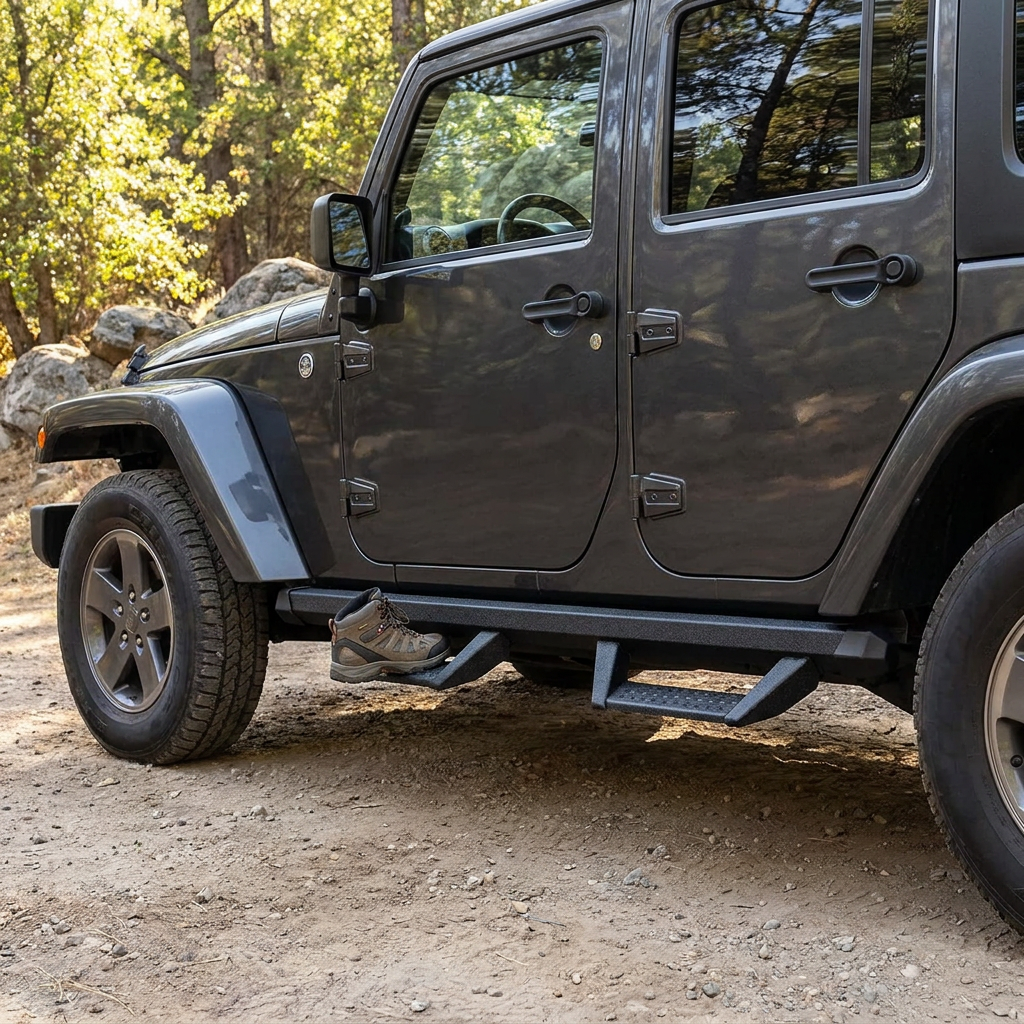
Tube steps (round or oval) trade platform for a cleaner profile. They can look lighter and may preserve a bit more ground clearance, depending on how they mount. The limitation is comfort and confidence: a narrow tube asks for a more precise step, and in winter conditions it relies heavily on the step pads for grip. This is where add-on pads and pad design matter more than people expect.
Step pads sound like a minor accessory, but they can be the difference between "fine" and "sketchy." A pad needs enough texture to bite wet soles, but also enough open pattern to shed slush and gravel rather than filling up. Replacement pads also matter long-term: if the bar or board is structurally fine but the pads are worn smooth, traction drops first. That’s the practical niche for parts like DEE ZEE DZ3ICHECKS +Boxed Pair Step Pad For 3in Tubeuseful when the tube itself is acceptable but the contact surface needs refreshing.
One more nuance that shows up during ownership: the "best-looking" step isn’t always the most forgiving. A sleek tube step can be perfectly adequate for a single driver with consistent footwear. Add winter boots, a dog jumping in, or a child climbing up, and the wider board starts to justify its bulk.
Fitment checks that prevent wrong orders (before any model number)
Running board styles to compare
The current catalog does not contain a confirmed Dee Zee match for this article. These vehicle-specific examples are for style comparison only, not fitment guidance.
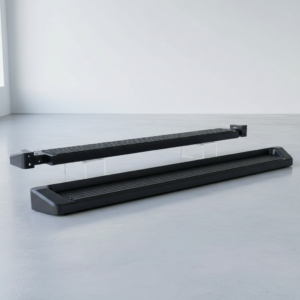
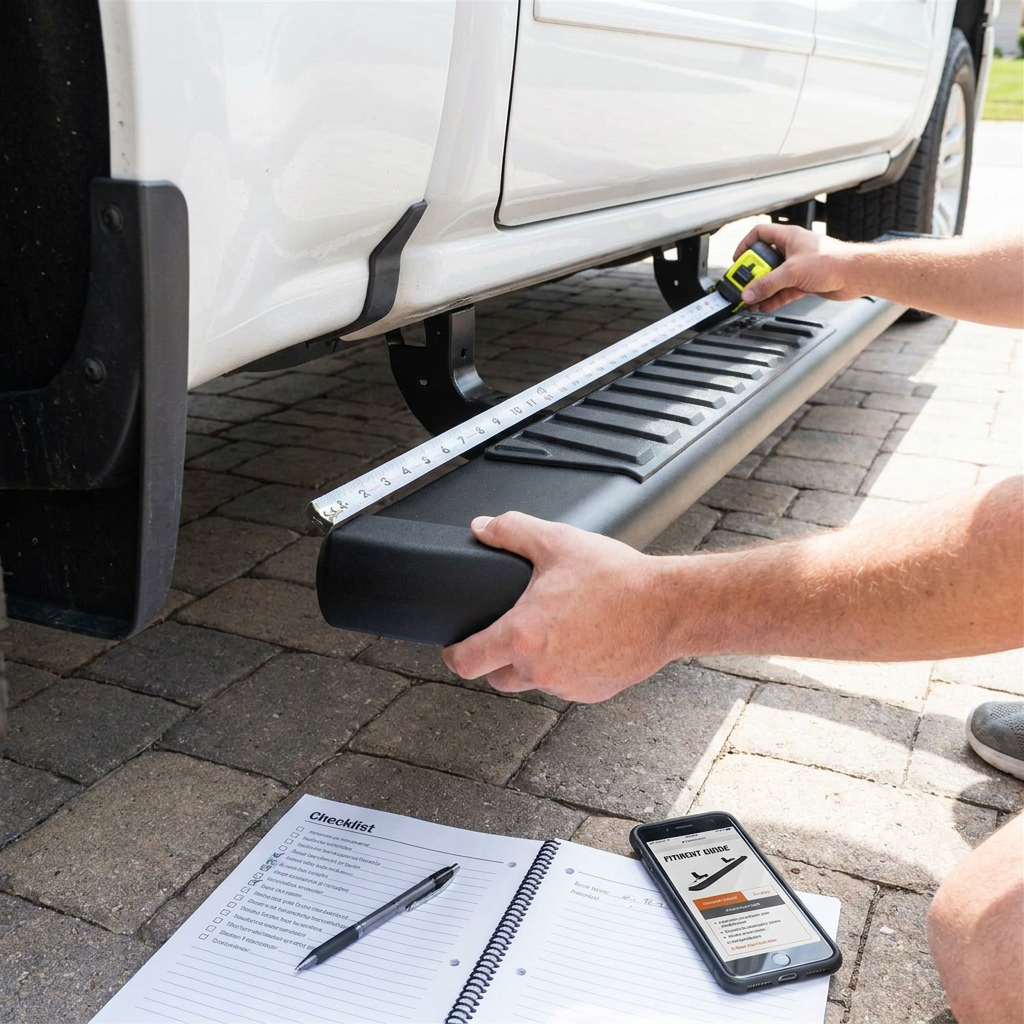
Fitment is where Dee Zee running boards either feel like a smart upgrade or a weekend of frustration. Catalog filters can be helpful, but the safest approach is to treat fitment as a short checklist and verify the details that actually cause returns: vehicle configuration, mounting points, step length, and interference with flares or mud guards.
Start with the vehicle’s exact configuration. Cab style matters because rocker-panel length changes; a step that is correct for a crew cab can be wrong for an extended cab even within the same model year. Trim can matter too, not because of badges, but because factory equipment changes the available spacespray guards, lower cladding, or factory steps can alter what fits cleanly.
- Mounting points: confirm there are factory holes or studs where the brackets are designed to land; "universal" bars may not align without drilling.
- Step length: match the usable door span; too short leaves rear passengers reaching, too long can look awkward and snag on obstacles.
- Door and flare clearance: check how far the step sticks out; wide tires and flares can change where the foot naturally lands.
- Bracket positioning: look for adjustability; small fore/aft shifts can fix door-edge comfort and reduce shin contact.
When a listing says "universal," treat it as a signal to measure twice. For example, DEE ZEE DZ3700301 3" Round Universal Nerf Bars can be a workable direction for someone comfortable with alignment and potential drilling, but that same "universal" promise is exactly what creates mismatched step position for buyers expecting a straightforward bolt-on.
A quick reality check that saves time: look under the vehicle before ordering. If there are obvious factory threaded holes along the rocker area, vehicle-specific kits tend to go smoothly. If the underside is smooth with few accessible points, the install can shift from "bolt-on" to "drill and align," which changes the value proposition immediately.
Finally, set expectations about step height. The goal isn’t "as low as possible." Too low can reduce clearance and invite contact with curbs or ruts; too high defeats the purpose for shorter passengers. A good step position is the one that matches how people actually enter: foot lands, body rotates, knee doesn’t have to swing wide to clear the edge.
How step width and placement change comfort (and shin bruises)
Two setups can both "fit" and still feel completely different every time someone climbs in. With these steps, the day-to-day feel is driven by where the foot naturally lands relative to the door opening, not by how good the product photos look.
Width is the first comfort lever. A wider board-style surface gives room to plant the whole boot and rotate the hips into the cab. A narrow tube forces a more vertical, toe-first step; that can be fine for one consistent driver, but it becomes less forgiving when passengers wear bulky boots, carry a bag, or step in from uneven ground. The risk isn’t only slipping. It’s awkward body mechanicsknee flaring out, heel hunting for a pad, and the classic shin strike when stepping down too close to the outer edge.
Placement is the second lever, and it’s where small numbers matter. A shift of roughly 1 inch inboard versus outboard can change whether the foot clears the rocker panel cleanly or clips it. The same goes for vertical drop: a step that hangs 23 inches lower than expected may feel "easy" to reach, yet it can start catching curbs, snow ruts, and steep driveway transitions. On the other side, a step that sits too tight and high can defeat the purpose for shorter passengers.
Door geometry quietly decides what "comfortable" means. Front doors invite a forward step and pivot; rear doors on longer cabs often create a more sideways entry. That’s why a step surface that feels perfect in the driver position can feel oddly placed for rear passengers. When evaluating Dee Zee running boards, it helps to picture the actual motion: foot lands, weight transfers, then the body turns. If the landing zone is narrow or offset, the whole movement becomes cautious.
- Families and frequent passengers: a broader, flatter landing area reduces missed steps when someone isn’t looking down.
- Work boots and winter footwear: wider contact helps when the sole is stiff and the ankle doesn’t flex easily.
- Lifted trucks: the more the first step becomes a drop, the more the surface needs to feel predictable and stable.
Traction is a surface system, not a single "non-slip" claim
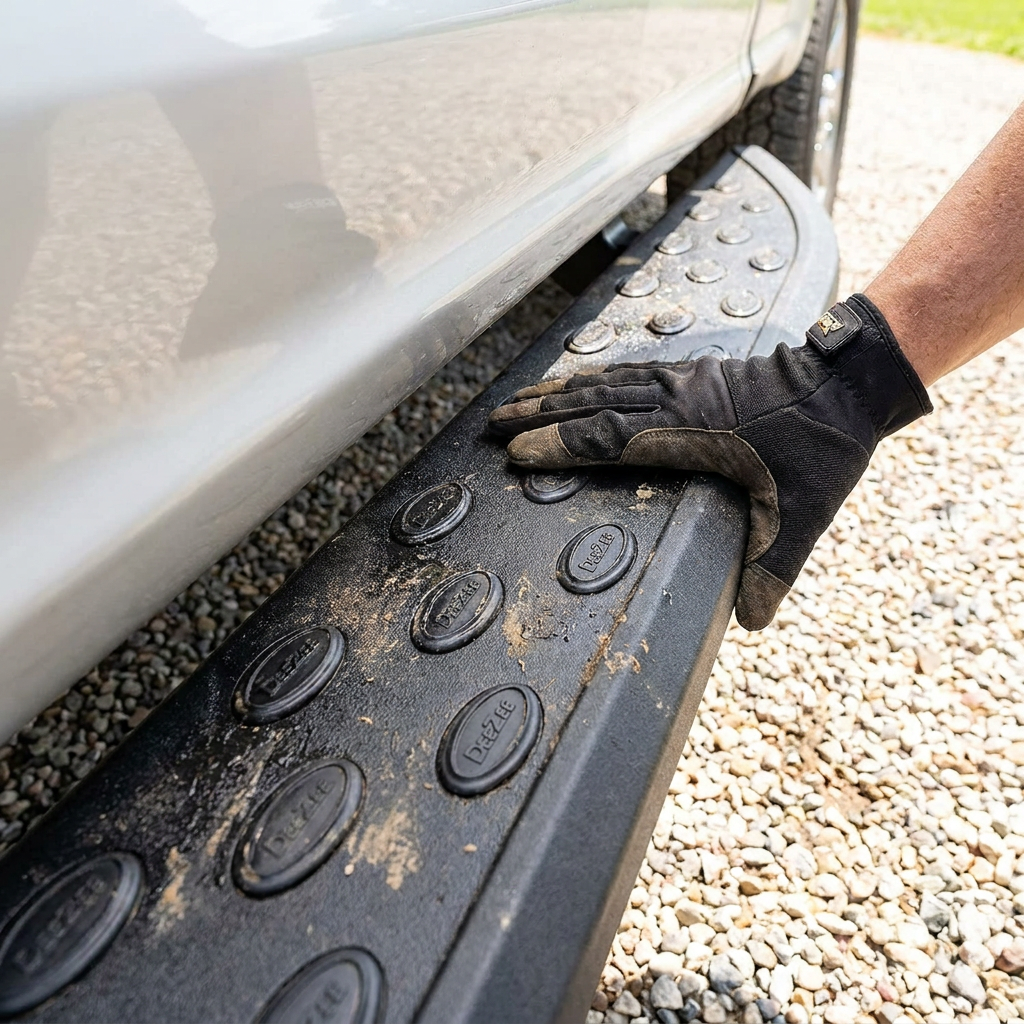
Traction complaints about Dee Zee running boards rarely come from perfectly dry shoes on a sunny day. The problems show up when the surface is asked to do two opposite jobs at once: bite into a wet sole and also release debris so the tread doesn’t pack solid.
Board-style steps and tube steps behave differently because the "system" is different. On a wide board, traction depends on the texture across the usable area and how water drains off that plane. On a tube, traction is concentrated on pads; those pads carry nearly all the grip responsibility, so wear and pad material matter more. A pad that looks aggressive can still be inconsistent if its grooves are shallow enough to fill with slush, or if the pad is positioned slightly away from where the foot naturally lands.
There’s also a footwear mismatch that catches buyers off guard. Soft rubber soles can grip well on mild texture; hard, cold-soaked soles and oily work boots need more mechanical bite. That’s where replacement pads can be more than cosmetic. If the tube itself still sits at a good height and position, refreshing the contact surface can restore confidence without changing the whole setup. In that niche, parts like DEE ZEE DZ3ICHECKS +Boxed Pair Step Pad For 3in Tube can be a practical fix for traction that has faded with use; the key is confirming the tube diameter and pad placement rather than assuming "one size" works everywhere.
Cleaning behavior is the underrated half of grip. A pattern that holds gravel becomes a sanding strip that accelerates wear. A pattern that holds wet clay becomes slick. In mixed conditionsrain one day, dust the nextan open design that sheds debris tends to feel more consistent than a fine, cosmetic texture that looks good in photos but clogs in real life.
When traction language starts sounding vague, it helps to evaluate with a simple mental test: would a wet boot be able to slide sideways before weight is fully committed? If the answer feels like "maybe," the surface is probably too dependent on perfect conditions.
Early ownership expectations: materials, corrosion, and hardware reality
Most regret around running boards shows up after the first bad season, not on day one. Traction and corrosion are the two issues that decide whether these steps feel like an upgrade or like something that needs constant attention.
Materials and finishes are the other half of the story. Aluminum boards resist red rust, but that doesn’t make them immune to winter ugliness; hardware and brackets are often steel, and corrosion can show up where coatings are compromised. Steel steps can be very durable structurally, but in salt states the coating quality and edge sealing become the whole story. Chips and scratches aren’t cosmetic onlythey’re entry points.
A practical maintenance baseline helps more than vague promises:
- Rinse grime and salt off the step surface and brackets every 24 weeks in winter driving.
- Re-check fastener tightness after roughly 100200 miles of driving, then periodically.
- Touch up coating damage early; waiting a full season can let corrosion creep under finishes.
When installation instructions mention torque specs, treat them as non-negotiable; under-tightened hardware can shift, and over-tightened hardware can crush coatings or deform brackets. If you want a general, non-brand explanation of why torque consistency matters (and why "tight enough" is unreliable), Fastenal’s Bolted Joint Design overview is a useful primer.
Installation realism: bolt-on expectations, tool time, and the 24-hour re-check
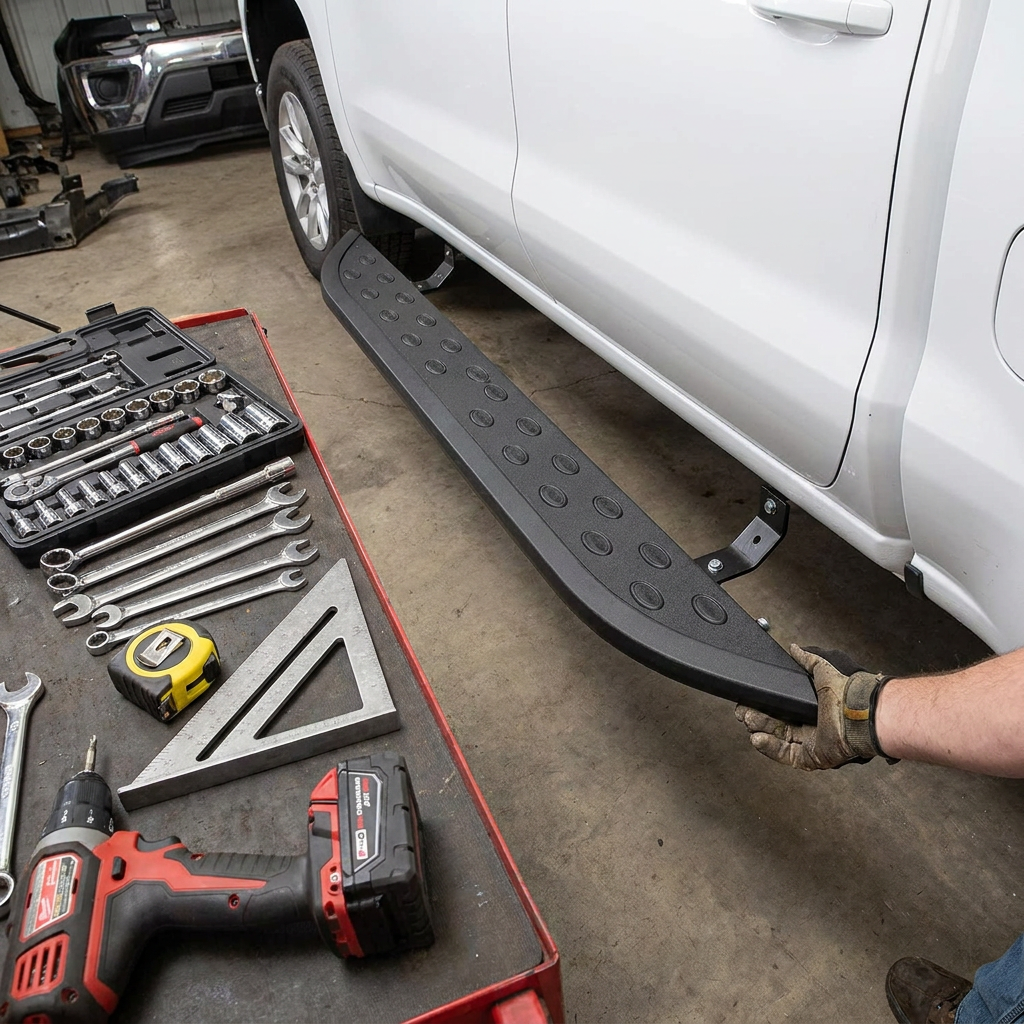
Installation is where Dee Zee running boards either feel like a clean upgrade or a project that eats a Saturday. The trap is assuming every listing behaves like a vehicle-specific kit. In practice, "bolt-on" is a spectrum: from straightforward bracket-to-factory-holes installs to universal setups that demand measuring, squaring, and sometimes drilling.
A realistic tool-and-time expectation prevents bad surprises. A clean bolt-on install often fits into a 60120 minute window with basic hand tools, while a universal-style bar can stretch longer once alignment starts, especially if holes need to be marked precisely or if the step must be positioned to avoid door-edge interference. Time isn’t just labor; it’s decision time spent under the vehicle figuring out the best compromise between clearance, reach, and symmetry.
One detail matters more than it sounds: the first re-check window. After the step has seen a short drive cycle and some body flexoften within 24 hours of drivinghardware can settle. That isn’t a flaw unique to Dee Zee; it’s normal joint behavior when brackets clamp against painted or coated surfaces. A quick re-check reduces the chance of bracket shift, squeaks, or a step that starts to feel "loose" even though nothing is actually broken.
- Alignment before tightening: snug everything loosely, step back, and confirm both sides sit at the same height and fore/aft position.
- Clearance check: open doors fully and confirm no contact at the edge, especially if the step sits close to the rocker panel.
- Noise prevention: any metal-to-metal contact point that can rub under flex tends to announce itself later; catching it early avoids chasing squeaks.
Quick comparison: which Dee Zee style fits which driver
The table below helps match step style to real-world use patterns, showing which Dee Zee option makes sense for different scenarios and why the choice matters.
| Scenario | Dee Zee Option | Why It Makes Sense |
|---|---|---|
| Family use, kids, frequent passengers | Full-length board-style running boards (e.g., DEE ZEE DZ16201 NXc Black Running Boards) | More usable landing area and less "precision stepping," especially when people aren’t looking down. |
| Cleaner profile and simpler look | Tube steps (round/oval) with good pads | Less platform bulk; grip depends heavily on pad design and placement. |
| Traction has faded but the bar height/position is still good | Replacement step pads (e.g., DEE ZEE DZ3ICHECKS +Boxed Pair Step Pad For 3in Tube) | Restores the contact surface without replacing the entire step setup. |
| Comfortable measuring, aligning, and possible drilling | Universal-style nerf bars (e.g., DEE ZEE DZ3700301 3" Round Universal Nerf Bars) | Can work when you’re willing to dial in placement; "universal" increases fitment risk. |
Value and buying safety: what to verify on listings before committing
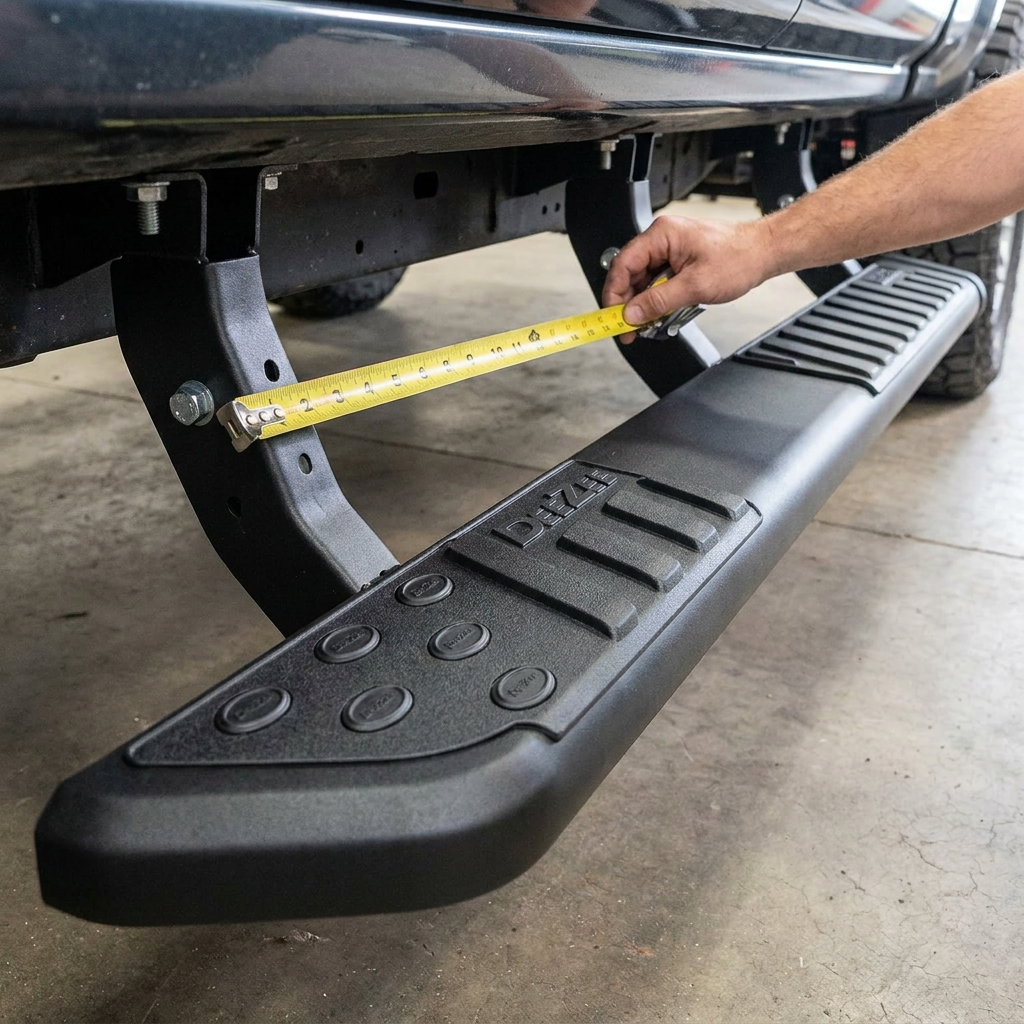
Because the search phrase "Dee Zee running boards" pulls up a mix of vehicle-specific parts, universal bars, and replacement components, value is often decided before the box arrives. The key is reducing mismatch riskwrong length, wrong brackets, wrong tube sizerather than chasing a theoretical best deal.
The first verification is fitment language quality. Good listings clearly state the exact vehicle range and cab configuration, or they clearly say universal and describe what that implies. Vague fitment claims are a warning sign because returns on large steps are inconvenient and sometimes expensive. The second verification is what’s included: brackets, hardware, and pads aren’t always interchangeable, and missing mounting pieces can turn a "good price" into a delayed install.
Counterfeit anxiety is usually overstated in this category, but mislabeling is real. The safest approach is to treat part numbers as the source of truth and verify that the listing title, photos, and included components match the same identifier. If the part number in the title doesn’t match the packaging photos or description, that’s enough reason to pause. For general guidance on spotting counterfeit or misrepresented auto parts online, see NHTSA’s consumer information on counterfeit vehicle parts.
Returns and exchanges aren’t just policy details; they change how much risk makes sense. If a seller makes fitment exchanges painful, the buyer is effectively paying a hidden premium in time and hassle. When Dee Zee running boards are selected with careful listing verificationpart number, vehicle notes, included brackets, and clear photosthe purchase tends to feel predictable. When those signals are missing, disappointment is often locked in before the first bolt is turned.
Dee Zee running boards as a long-term choice: what actually stays satisfying
The difference between a step that feels "right" and one that becomes background irritation is rarely the first week. It’s the third month, when the surface has seen grime, the brackets have settled, and passengers have built muscle memory about where to place a foot. In that window, Dee Zee running boards tend to land well when the setup is treated as a usability upgrade first and a styling accessory second.
The most reliable satisfaction pattern is simple: a board-style step that matches how people enter the cab beats a sleeker-looking tube when conditions are messy or when passengers vary. The extra platform isn’t a luxury; it’s tolerance for imperfect stepswet soles, awkward angles, carrying a child seat, stepping down onto uneven gravel. If the vehicle is used like a tool, the "cleanest" profile isn’t the same thing as the most confidence-inspiring profile.
There’s also a hard truth about "universal" options. When a universal bar ends up slightly offhalf an inch too far inboard, a touch too lowit still functions, but it never disappears. It becomes something people think about every time they get in. That’s why the most defensible way to shop the Dee Zee running boards ecosystem is to prioritize predictable positioning and repeatable comfort over chasing a particular look.
One confident editorial position fits this category: if regular passengers include kids, shorter adults, or anyone stepping in with winter boots, a full-length board-style solution is the safer bet than a narrow tube, even if the tube looks cleaner on day one.
When it works, and when it doesn’t
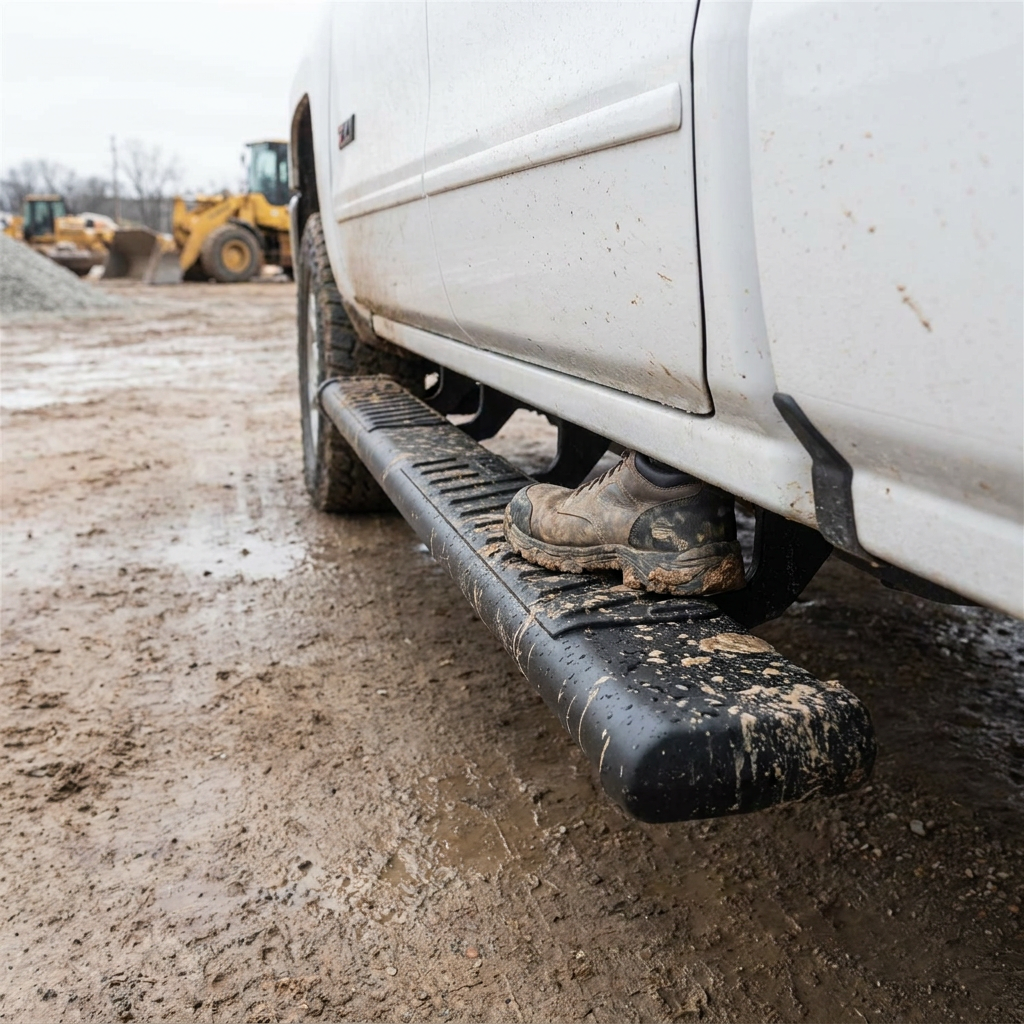
This fits best when the vehicle is tall enough that entry feels like a climb, passengers get in and out often, and the step needs to stay usable in rain, snow, or work-site dirt. It’s also a strong match when comfort matters more than a tucked-up, minimalist profilethink family hauling, daily commuting with varied footwear, or a truck that sees errands and job sites in the same week.
This isn’t the right direction when maximum ground clearance is the priority, when the vehicle is regularly used on tight off-road obstacles, or when the owner wants a step that is nearly invisible from the side. It can also disappoint drivers expecting a "universal" solution to land perfectly without extra measuring and alignment time; in those cases, the install can be the start of a compromise rather than the end of a problem.
Three small choices that decide whether the purchase feels smart
First, treat the step as a contact surface, not a brand name: the usable landing area should match real foot placement at both doors, not just the driver’s spot. A step that looks fine but forces a toe-first landing is a daily annoyance.
Second, keep the numbers in mind because comfort is geometric. Around 1 inch of inboard/outboard difference can change whether the foot clears the rocker naturally, and a 23 inch drop that feels helpful at first can become a clearance penalty in snow ruts, steep driveways, and parking blocks.
Third, decide whether the goal is "bolt-on and done" or "adjust and dial in." If the expectation is a clean 60120 minute install with basic tools, staying away from vague universal positioning is often the calmer path; if extra alignment time is acceptable, universal can still be workable, just not effortless.
Frequently asked questions
Are Dee Zee running boards worth it compared with other step styles?
They’re worth it when the priority is a predictable, repeatable step for varied passengers and messy conditions, where a wider landing area reduces awkward entries. If the vehicle is used in situations where clearance matters more than comfort, a tighter-profile approach can make more sense.
Is "universal" a red flag when shopping Dee Zee running boards?
It’s not automatically bad, but it changes the risk. "Universal" often means extra measuring and positioning decisions, and small misplacement can be felt every day; it favors buyers who are comfortable dialing in alignment rather than expecting perfect fit from the box.
How much installation time should be expected in real life?
A straightforward bolt-on setup commonly lands in a 60120 minute range with basic hand tools, while universal positioning can stretch longer once alignment becomes the main task. Planning for a short re-check after initial driving is part of treating the install like a mechanical joint, not a one-and-done assembly.
Do step pads matter as much as the main step surface?
Yes, because traction is experienced at the exact contact patch, and that patch changes with door position and passenger height. If the pad area is small, worn, or slightly misplaced relative to where feet land, the whole setup can feel less secure even if everything is structurally fine.
Bottom line
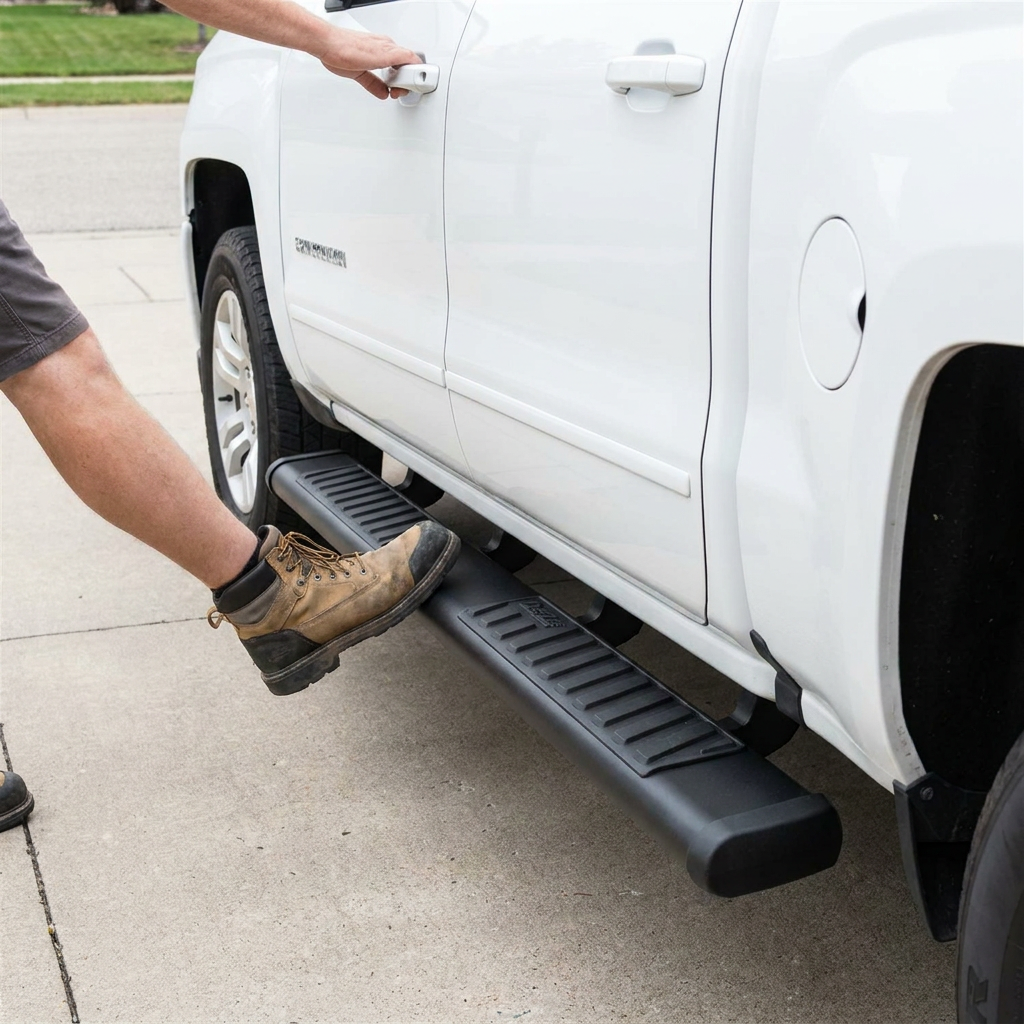
Dee Zee running boards make the most sense as a comfort-and-traction upgrade for real daily entry, and they feel like a mismatch when the vehicle’s priorities are clearance, invisibility, or "universal" convenience without compromise.