
The question sounds simple, but it sits at the intersection of GMC platform design, body style differences, and how accessory fitment is defined. “Running boards” are often discussed as if they were interchangeable across similar-looking SUVs. In practice, the fit is governed by mounting points, frame geometry, and rocker-panel shape—not by the model year alone.
GMC, as a brand, is encountered here less as a styling cue and more as an umbrella over multiple vehicle architectures that can share engines, interior ideas, or trim themes while still being mechanically distinct underneath. That distinction is where most assumptions become misleading.
Quick Orientation For This Fitment Question
- In practical terms, the question is about whether two different GMC vehicles share compatible attachment locations and physical clearances along the rocker area.
- People typically encounter this when swapping parts between vehicles, reading forum claims, or seeing a “fits many models” statement that compresses important differences.
- A safe assumption: “same year” does not imply shared mounting geometry. A risky assumption: “both are GMC SUVs” implies interchangeable side steps.
Why The 2003 Yukon And 2003 Envoy Are Not Automatically Interchangeable
Within GMC’s early-2000s lineup, the Yukon and Envoy occupy different size classes and, more importantly, different underlying platforms. Fitment-critical details—frame width, body mount locations, and the way the rocker area is reinforced—are platform decisions, not trim-level decisions. Even when two vehicles share a general design era, the side structure can be laid out differently because the load paths, ride height targets, and door openings differ.
Another quiet variable is wheelbase and door count. The “length” that matters for running boards is not overall vehicle length; it is the distance between the wheel openings and where the doors end. A board that visually seems “close” can still land its brackets in the wrong place, or interfere with a pinch weld seam or body mount.
What “Fit” Means For Running Boards On GMC Vehicles
Fitment is usually a combination of three compatibilities: where it bolts, whether it clears, and whether it aligns with the doors.
- Attachment geometry: Some setups use factory threaded holes in the frame; others rely on body-side seams or specific reinforced points. If the receiving structure is different, compatibility ends immediately.
- Clearance envelope: Brake lines, fuel lines, wiring, and underbody shields can occupy different routes across platforms. A bracket that fits one chassis can contact components on another.
- Door and rocker alignment: Even if something can be bolted on, it may sit too far inboard or outboard, changing step usability and risking contact with door swing or trim pieces.
Where Confusion Typically Comes From
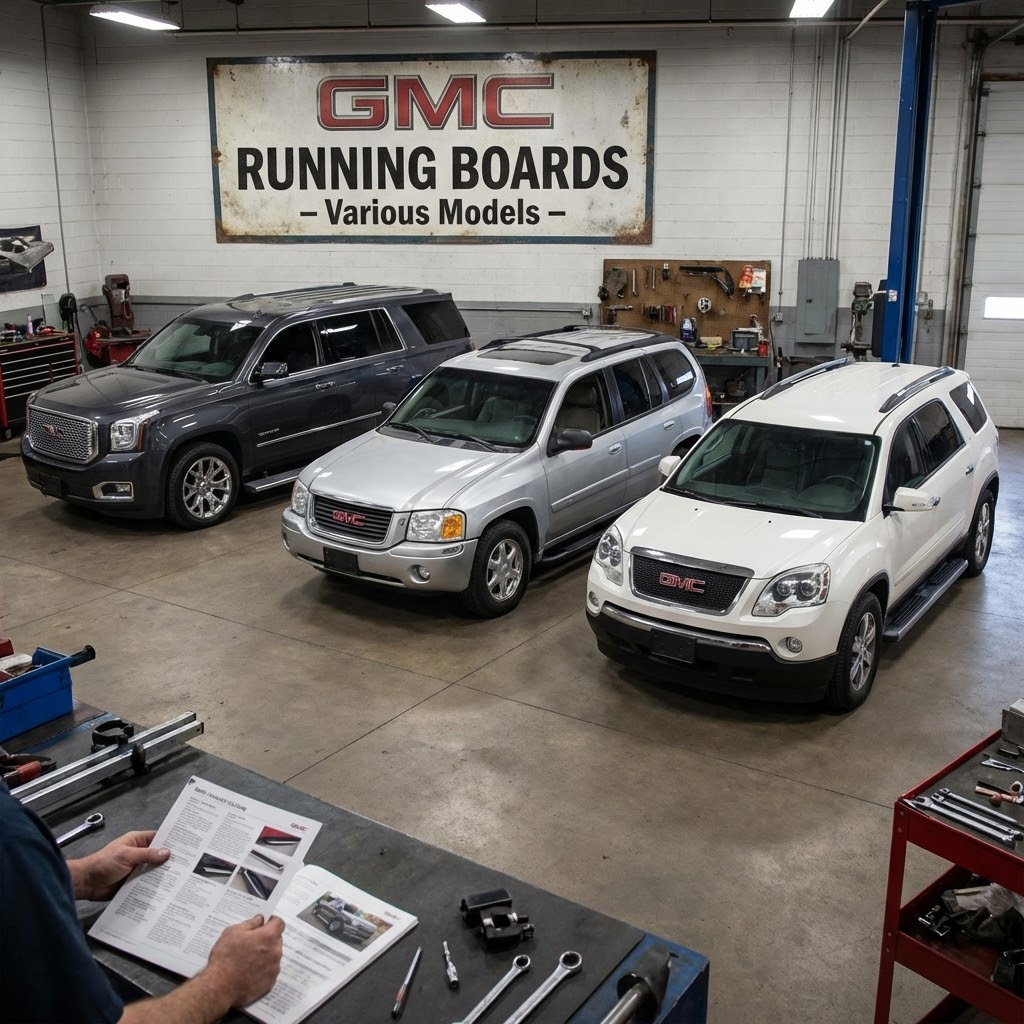
Current Yukon-family running boards to compare
This listing covers later Tahoe/Yukon/Escalade applications and is not listed for a 2003 Yukon or Envoy. It is a platform comparison only.
Most confusion is created by labeling that collapses many vehicles into one fitment bucket. “Yukon” can imply multiple body styles and trims, and “Envoy” can imply different configurations as well. This is also where the phrasing “GMC Running Boards” or “Running Boards GMC” becomes ambiguous: it describes an accessory category tied to a brand, not a guaranteed match across models.
Even “GMC running boards for GMC Envoy” can be misleading if it does not specify body configuration and how the part attaches. One listing sentence is sometimes the entire basis for a swap attempt; that is rarely enough information to establish compatibility.
Authoritative Context: Why Fitment Must Follow Vehicle-Specific Mounting Points
From a safety perspective, accessories that attach to the vehicle body or frame are expected to be installed in a way that preserves structural integrity and avoids interference with critical systems. That general principle is consistent with how vehicle modifications are framed in safety guidance, such as the U.S. National Highway Traffic Safety Administration’s consumer information on vehicle equipment and modifications at https://www.nhtsa.gov/. For the underlying vehicle-side definitions (model identification, configurations, and manufacturer documentation norms), the U.S. Environmental Protection Agency’s vehicle information resources provide additional context on how vehicles are categorized and documented at https://www.epa.gov/.
Why “Will 2003 GMC Yukon Running Boards Fit 2003 GMC Envoy” Is Rarely A Simple Yes
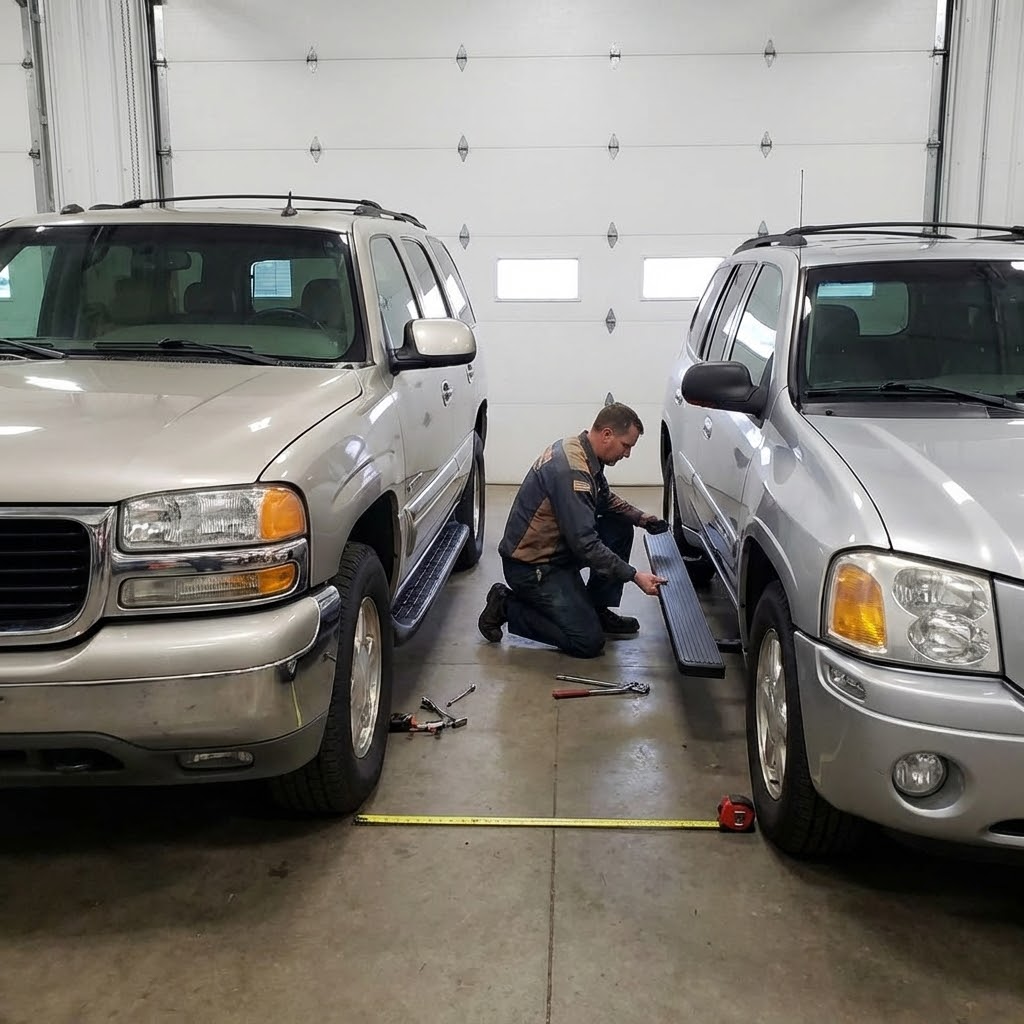
The question “will 2003 GMC Yukon running boards fit 2003 GMC Envoy” sounds like a straightforward swap between two GMC vehicles from the same era. In practice, running board fitment is dictated less by model year and more by underbody architecture: frame width and profile, rocker panel shape, and where the factory provided threaded inserts or studs. Even within GMC, platforms diverge quickly—full-size body-on-frame layouts and mid-size architectures do not share mounting geometry in a way that reliably supports direct interchange.
In other words, “Running Boards GMC” compatibility hinges on where loads are meant to go. A running board is not just a step surface; it is a lever arm that transfers repeated vertical and torsional forces into specific reinforced points. If those points are not present—or sit a few centimeters off—bolt-on becomes improvised fabrication, and the risk shifts from “will it attach” to “will it hold over time.”
Mounting Geometry Is The Real Compatibility Test
When “GMC Running Boards” are discussed as interchangeable, the hidden assumption is that bracket locations line up. The most decisive variables are structural rather than cosmetic.
- Attachment points: Some underbodies provide welded nuts or studs at set intervals; others require clamp-style brackets. A mismatch here is usually a stop sign for direct fit.
- Bracket offset and drop: Even if holes exist, the distance from the frame to the rocker panel affects whether the board sits level, clears the body, and does not contact trim during flex.
- Door and rocker clearance: The door swing arc and lower door seal area can conflict with a board that sits too high or too far inboard.
- Load path stiffness: A bracket designed for one frame rail shape may concentrate force on edges or thin sections on another vehicle, increasing loosening or deformation risk.
This is why the phrase “will 2003 GMC Yukon running boards fit 2003 GMC Envoy” should be treated as a question about mounting standards, not about brand commonality.
Where Year Matching Helps, And Where It Misleads
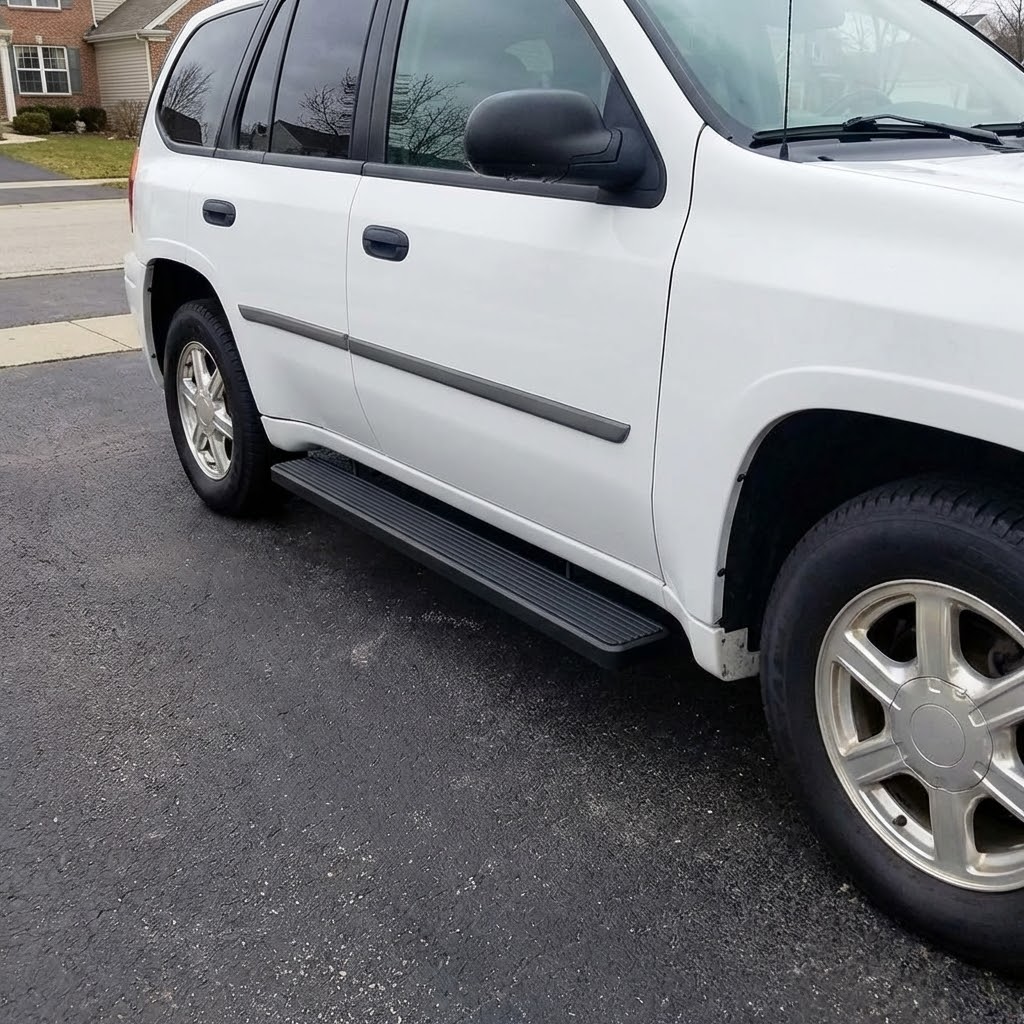
Model year alignment can matter for trim revisions, but it is a weak proxy for platform similarity. “GMC running boards for GMC Envoy” typically follow the mid-size SUV’s own underbody provisions; the 2003 Yukon follows a different set of assumptions about frame spacing and body mounting. Two vehicles can share a showroom year and still be incompatible underneath.
“GMC Running Boards Unlighted” versus illuminated styles also does not change the core fitment question. Lighting adds wiring considerations, but the mechanical interface—brackets, hole pattern, offsets—still governs whether the hardware belongs on the vehicle.
Edge Cases That Create False Positives
Occasionally, a used set of running boards may appear to “fit” because it can be held in place with partial fastening. That can be misleading. The following situations commonly produce a temporary or incomplete match:
- Only the front or rear bracket aligns, leading to a board that flexes under weight and gradually loosens.
- Aftermarket universal brackets can be made to clamp, but may interfere with brake lines, fuel lines, or wiring routed along the frame.
- Body lift kits or prior repairs can change effective clearances, making a board seem compatible on one vehicle but not another with stock geometry.
For safety context, the U.S. National Highway Traffic Safety Administration emphasizes the importance of properly installed vehicle equipment and avoiding modifications that can introduce hazards or interfere with vehicle systems; their consumer resources are a useful baseline when evaluating underbody add-ons and installation risks (https://www.nhtsa.gov/).
How Fitment Is Verified Without Guesswork
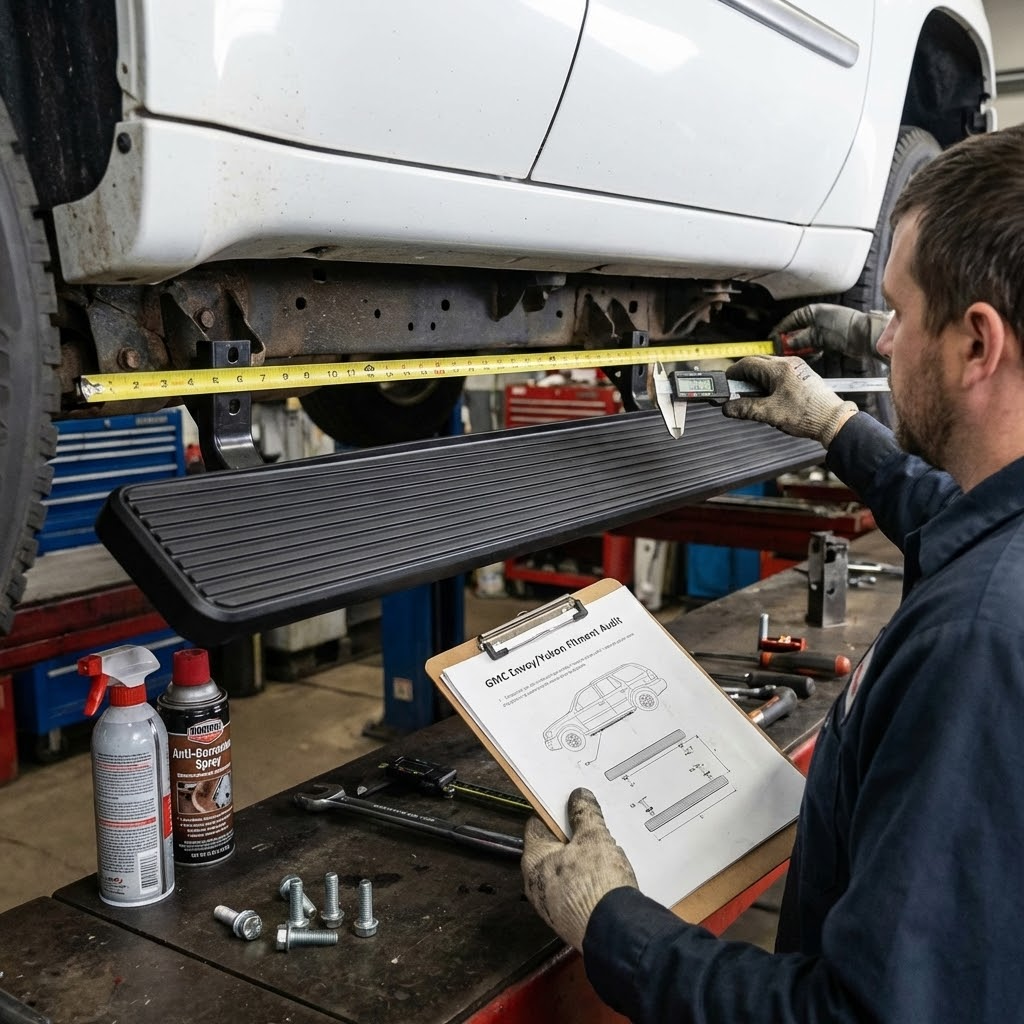
The most reliable way to resolve “will 2003 GMC Yukon running boards fit 2003 GMC Envoy” is to treat it like a dimensional and attachment audit. Fitment confirmation typically relies on measuring bracket spacing and comparing it to the vehicle’s mounting point spacing, plus checking for interference across suspension travel and body flex. Where drilling is considered, it becomes a corrosion-control and structural-fastener question, not a simple accessory swap—fastener selection, torque retention, and rust prevention matter as much as alignment. For general guidance on corrosion and protective maintenance that becomes relevant after drilling or exposing bare metal, the U.S. Federal Highway Administration’s materials and corrosion resources provide useful background (https://www.fhwa.dot.gov/).
When “Will 2003 GMC Yukon Running Boards Fit 2003 GMC Envoy” Is Actually A Fitment Question
The question “will 2003 GMC Yukon running boards fit 2003 GMC Envoy” is less about brand loyalty and more about how vehicle accessory fitment is defined. Fitment is usually tied to the exact body structure: where the mounting points sit, how many there are, and what loads those points are engineered to carry. Two vehicles from the same era can still differ in frame layout, rocker panel shape, and bracket geometry, so “same year” or “same manufacturer” rarely guarantees interchangeability.
In practice, cross-fitting between a full-size SUV and a mid-size SUV is the scenario most likely to fail quietly: the part may look close in length, but the bracket locations can be off by just enough to make alignment impossible or to create stress where it should not exist. That is why most credible fitment resources treat the vehicle as a precise configuration, not a general family name.
What Usually Breaks Compatibility Across Similar Vehicles
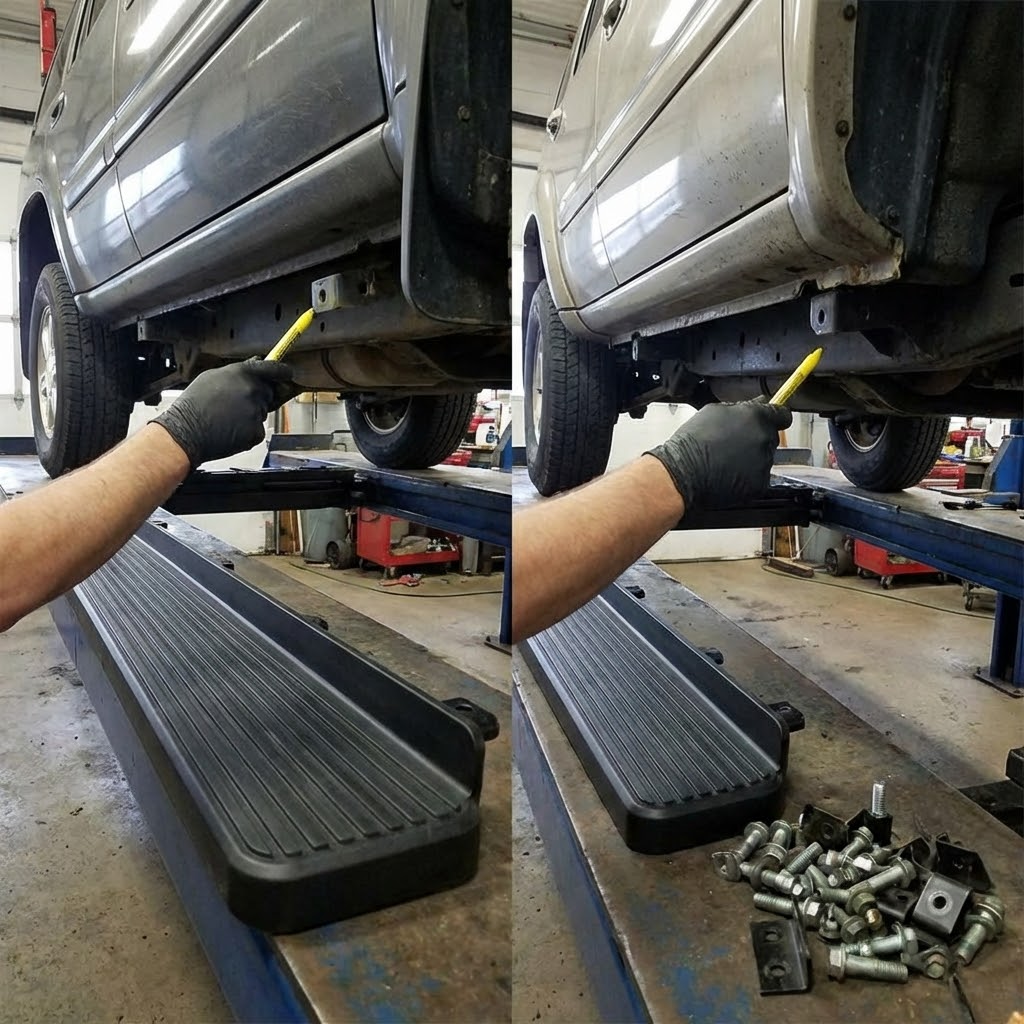
Interchange questions tend to hinge on a small set of structural mismatches. The details matter because these components are load-bearing and sit in a high-splash, high-corrosion area under the vehicle.
- Mounting Point Pattern: Even if both vehicles have potential attachment locations, the spacing, thread type, and bracket offset can differ enough that bolts do not line up or sit square.
- Length And Door Coverage: A piece designed to span one wheelbase or door layout can interfere with wheel well trim or leave awkward gaps under the doors on another vehicle.
- Clearance Geometry: Ground clearance and rocker panel contour influence whether the step surface sits level, rubs, or reduces approach and departure angles more than expected.
- Load Assumptions: The underlying structure may be rated differently; forcing a fit can shift load into thinner sheet metal or unsupported areas.
These are not theoretical concerns. They map directly to how automotive accessories are evaluated for safety and durability in real-world service, where vibration, road salt, and repeated step loads compound over time.
How To Read Fitment Claims Without Getting Misled
Fitment language in listings and search results is often compressed, and that compression creates confusion. Look for specificity: vehicle year range plus exact model plus body style. When the text becomes broad (“fits many models” or long mixed lists), it becomes harder to know whether the claim is engineered or just approximate.
A useful mental filter: if the fitment statement does not clearly explain the configuration it applies to, treat it as an unverified claim until confirmed elsewhere. U.S. consumer guidance on automotive equipment and safety recalls can also help frame why precision matters; the National Highway Traffic Safety Administration provides accessible context on vehicle equipment safety and defect reporting at https://www.nhtsa.gov.
For broader context on standards-driven safety thinking—how products are expected to perform under defined conditions—NIST’s standards and measurement role is a helpful reference point at https://www.nist.gov.
Clarifications That Lead To Realistic Expectations
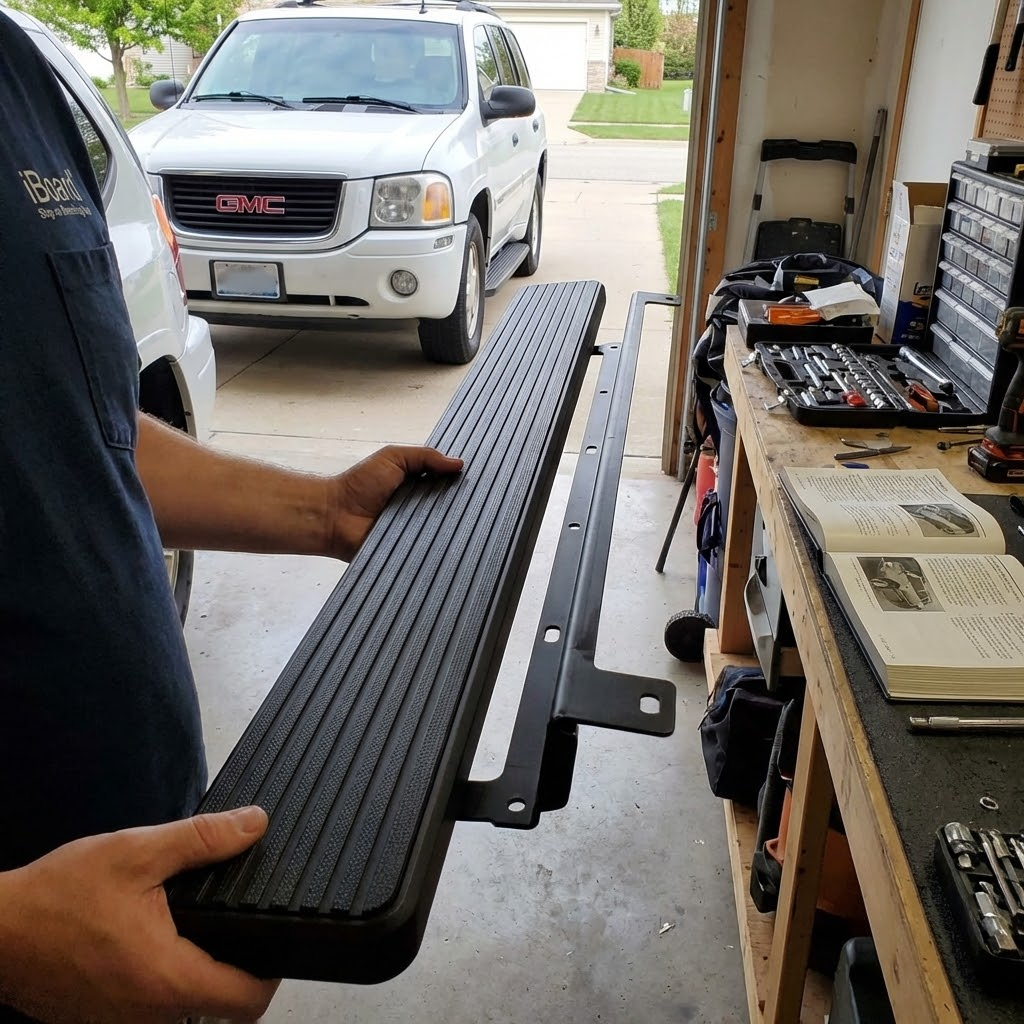
For the specific idea behind “will 2003 GMC Yukon running boards fit 2003 GMC Envoy,” the realistic expectation is that direct interchange is uncommon unless there is a documented cross-application listing that explicitly names both vehicles and configurations. Without that, “almost fits” is not a stable outcome: small misalignments can translate into loosening hardware, uneven loading, or contact with bodywork.
When the goal is simply to reduce step-in height, the safest path is not improvisation but confirmation: a fitment statement that is narrow, configuration-specific, and consistent across more than one credible source. That approach is slower, but it matches the level of precision these parts demand.
FAQ: Common Points Of Confusion Around Fitment And Search Results
Why Do Search Results Show Matches Even When The Vehicles Are Different?
Search systems often prioritize keywords over engineering compatibility, so a shared brand and year can trigger results. Treat those results as leads, not confirmations, until a configuration-specific fitment statement is found.
Does “Same Platform” Automatically Mean Parts Interchange?
Not automatically. Even within a shared engineering family, mounting points and body-side geometry can differ by model, trim, and production changes, which is enough to break compatibility for bolt-on accessories.
Is It Normal For Fitment To Depend On Body Style Details?
Yes. Door count, wheelbase, and rocker panel design affect both length and bracket placement, so body style is often as important as model year.
What Does “Universal Fit” Usually Imply For This Category?
It typically implies the part is intended to be adaptable rather than vehicle-specific, which can shift effort and risk onto the installer. For load-bearing steps, that adaptability can be a limitation rather than a benefit.
When People Ask “Will 2003 GMC Yukon Running Boards Fit 2003 GMC Envoy,” What Confirmation Is Actually Meaningful?
Meaningful confirmation is a fitment claim that explicitly names both vehicles and the relevant configuration, backed by consistent documentation. Anything less is closer to speculation than verification.