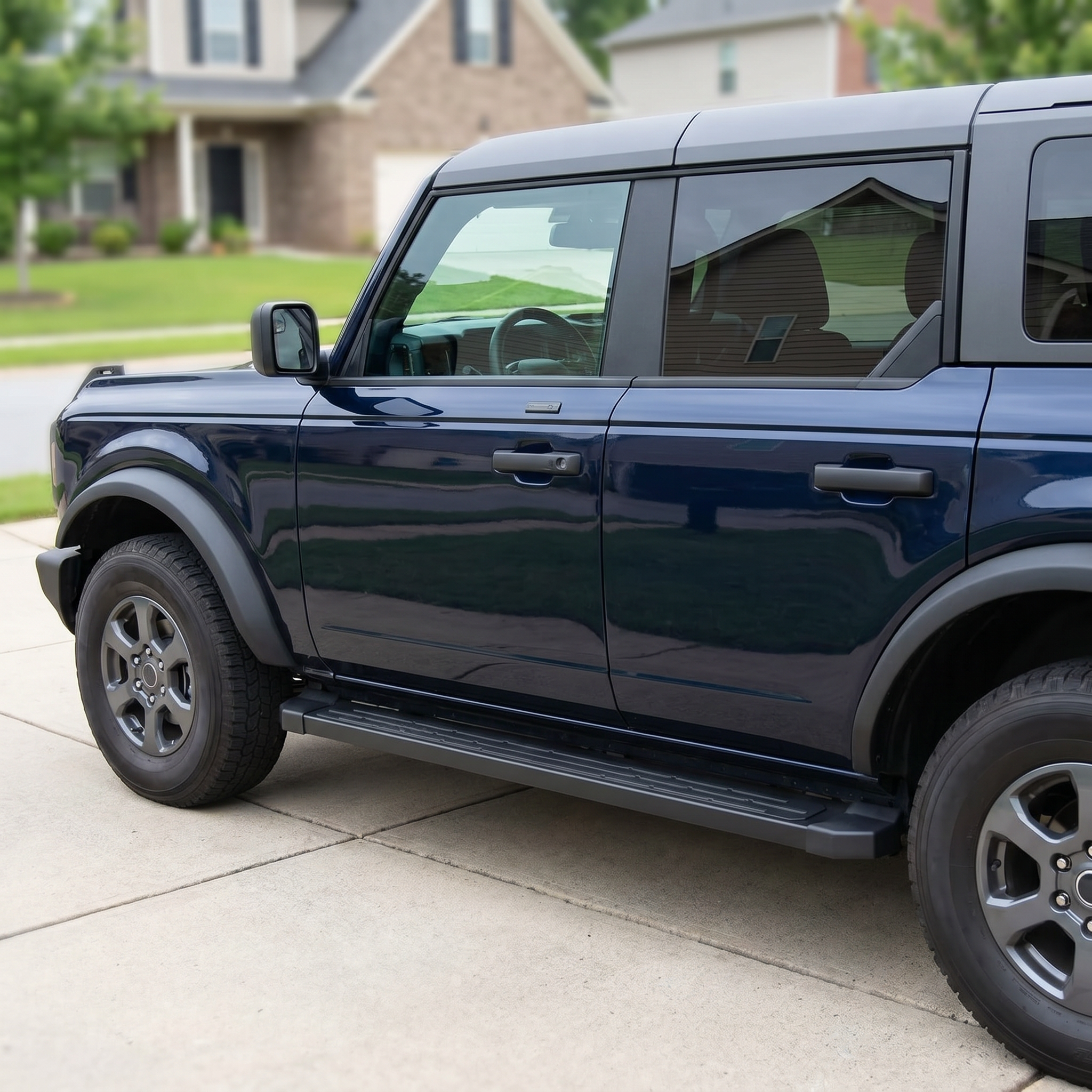
For 2021–2026 Bronco 4-door models, SMANOW running boards offer a stable step and “rock slider” look, with trade-offs in weight and ground clearance.
Bronco running boards: who the SMANOW fit (and who they don’t)
These bronco running boards make sense for a 4-door Ford Bronco used every day, especially if passengers want a consistent, real step. The main benefit is practicality: a side step that reduces the perceived “climb” when getting in, particularly with stock suspension and non-extreme tires.
The downside is just as real. A fixed exterior step under the rocker changes side clearance and can slightly reduce usable ground clearance on tight obstacles. That’s not forum drama. It’s physics.
Quick guidance before the details:
- Best for a 4-door Bronco used in town and on trips, with frequent entry/exit.
- Less ideal if your Bronco often sees rocks or deep ruts where a lower step becomes a liability.
- Fitment matters: 2021–2026 and 4-door. Not intended for Bronco Sport.
The reference product here is SMANOW Running Boards Step Bars Compatible With 2021-2026 Ford Bronco 4 Door SUV. Black Side Steps Step Bars Rock Sliders. Truck Running Boards Made With Carbon Steel. To check photos, variants, and compatibility notes on the marketplace, the page SMANOW Running Boards Step Bars Compatible With 2021-2026 Ford Bronco 4 Door SUV can help.
What these Bronco running boards really are (and what they aren’t)
Many searches for ford bronco running boards mix three different things: flat side steps, step-style boards, and true dedicated rock sliders. The SMANOW sit in the middle. The title mentions “rock sliders,” but in real use they’re a step with some side protection—not a part meant for repeated rock impacts.
The stated construction is carbon steel. That immediately points to two factors: stiffness and mass. Stiffness helps when your foot lands in the same spot without annoying flex. Mass shows up during installation and, over time, in corrosion management if the coating gets chipped.
The step-bar shape changes ergonomics. A more defined step is helpful for kids, older passengers, or anyone who doesn’t want to “climb” into the Bronco. But a step that hangs well below the body line tends to be first contact off-road. The same applies on rutted dirt roads—and you don’t need an extreme lift to scrape.
Another common misconception: these bronco running boards don’t replace factory lift points. A floor jack or lift should be placed on the manufacturer’s specified points. For a reference, Ford publishes guidance and warnings in the Bronco owner’s manual under jacking and lifting: Ford Owner Manuals.
Fitment first: 4-door, model years, and details that waste time
Ford running boards to compare
The current catalog examples are F-150 applications, not confirmed Bronco fitments. Use them only as format comparisons and verify Bronco-specific compatibility separately.
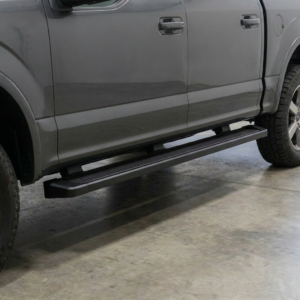
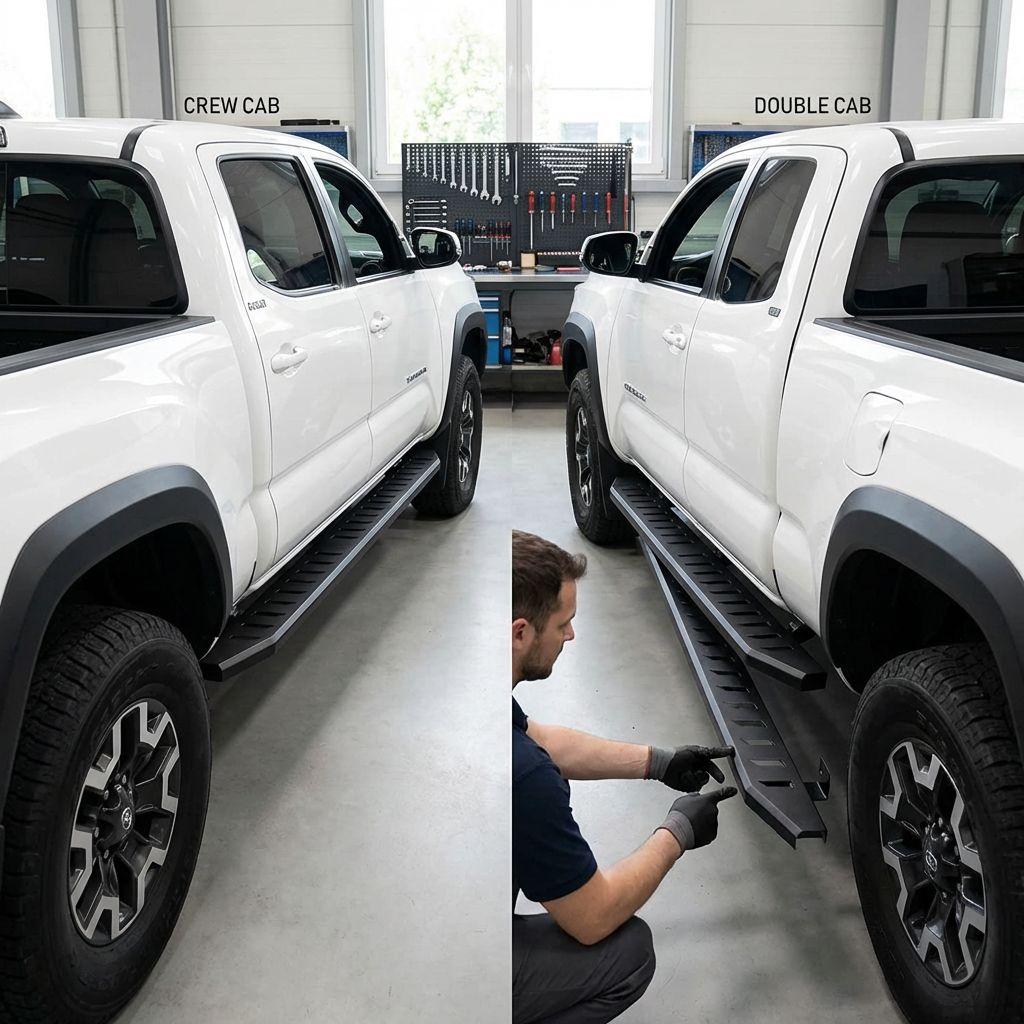
Most returns on side steps don’t come from defects. They come from assumed compatibility. Here, the stated fitment is clear: 2021–2026 Ford Bronco 4-door. Not 2-door. And not Bronco Sport. It sounds obvious, but it eliminates a huge chunk of impulse buys.
Why does the 2-door complicate things? Different lengths and, often, different mounting points and brackets. A long board on a 2-door can end up short, too far back, or simply not mountable. Better to stop before ordering.
Quick, practical checklist before ordering bronco running boards:
- Body style: Bronco 4-door, not 2-door.
- Model line: full-size Bronco, not Bronco Sport.
- Model years: 2021–2026 as stated.
- Mounting points: confirm the kit includes brackets and hardware for existing points, with no unplanned drilling.
- Use interference: consider if you often use jacks, ramps, or dollies for underbody maintenance.
One daily-use detail that matters: usable step length. On a 4-door, the board should cover a zone that works for both the driver and rear passengers. If it’s too “centered” on the front door, rear entry ends up without a step. It’s a common mistake when you only look at the main photo.
Then there’s suspension height. A lift changes how much you need a step, but it also changes contact risk. With larger tires and a lift, a low-hanging board can become a vulnerable point. Not always—it depends on terrain and how tight your lines are.
Real-world use: access, wet-weather traction, and off-road trade-offs
SMANOW aim to be an all-season solution. That appeals to people who use the Bronco as a primary vehicle. Getting in and out dozens of times a week highlights two things: step height and surface grip.
Grip also means drainage. Mud and snow can turn a smooth step into a bar of soap. A surface with holes, texture, or inserts improves traction, but it also traps grime—so it needs maintenance. A quick rinse after a trip helps keep sand from acting like sandpaper on the coating.
Also watch the distance from the door. A step that’s too “close” can get splashed by runoff and transfer dirt to pants and calves. Too “far” forces a wider lateral step, which isn’t fun in tight parking spots.
Off-road, the question isn’t whether it will ever touch—it’s when. Fixed steps get hit in three common situations: side crests, tall isolated rocks, and ruts where the wheel drops but the body “hangs” on the edge. In those cases, the step can bend or get gouged, and rust starts where the coating breaks.
Material matters here. Carbon steel is tough, but once the coating is compromised it suffers more in areas with road salt. If you live in the salt belt or near the ocean, a simple routine helps: underbody rinses in winter, a visual check every 4–6 weeks during the worst season, and immediate touch-up on chips with a suitable metal protectant. A few minutes can prevent months of deterioration.
A minimal comparison to place these bronco running boards without turning this page into a catalog: there are alternatives with a two-step design. For example, the “Two Stairs Design Side Steps” style can feel more intuitive if you want a more “stair-like” step for rear passengers. To check the listing and stated fitment, the page Running Boards Compatible With 2021-2026 Ford Bronco 4 Doors (Not for Sport Model) is a useful reference.
Another common variant in ford bronco running boards is the wide step. You’ll often see “6 inch” as the promise of a more generous platform. More width helps with big boots and winter use, but it also increases exposure to side hits and may stick out more. For an example of that approach, the listing BINARY STAR Running Boards Compatible With Vehicle 2021-2026 Ford Bronco 4 Door SUV shows the idea.
Final note on a common search: bronco power running boards. Retractable electric steps change the logic entirely, because they offer easy access without keeping a low, exposed part in place all the time. But they add motors, wiring, and maintenance. It’s not the same purchase—it’s a different trade-off.
Installation and daily living: why brackets, tolerances, and torque matter
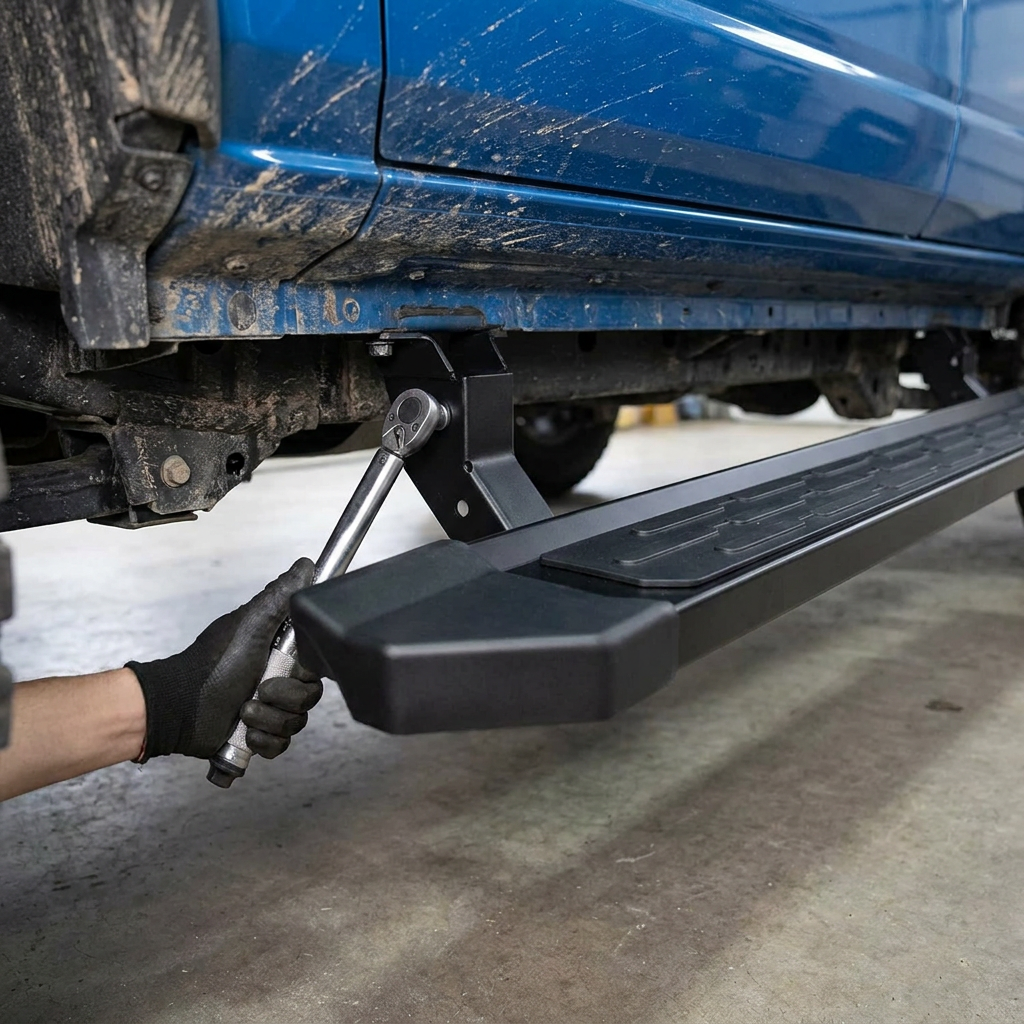
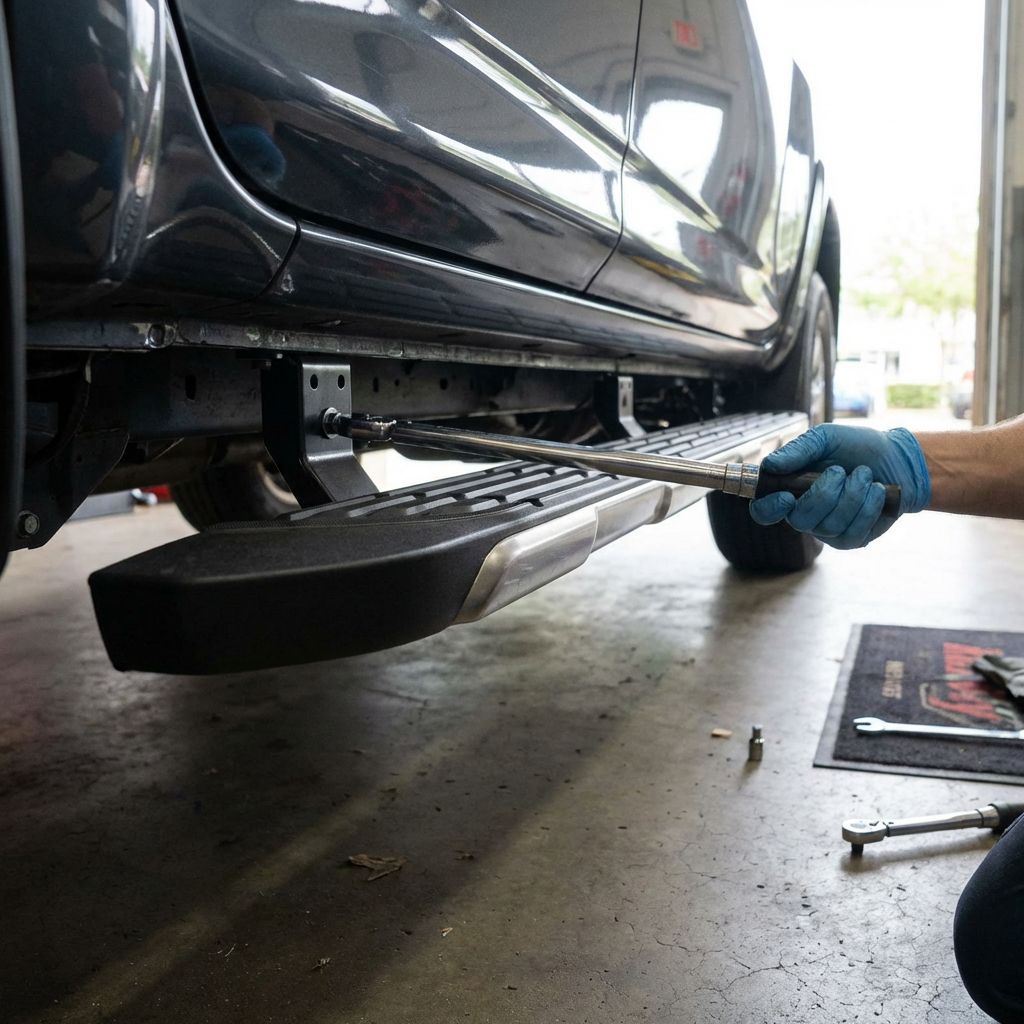
With steel bronco running boards, the difference between “installed” and “installed well” shows up after a few weeks. The SMANOW kit is designed to bolt onto existing mounting points on the 4-door Bronco. Good. But results depend on three details: alignment, fastener preload, and a re-check after the first miles.
A clean install means leaving all bolts finger-tight, positioning the board, then tightening in sequence. No rush. If you fully tighten one side first, a bracket can sit in torsion and later develop micro-movement or noise.
Practical numbers: after 50–100 miles (80–160 km), it’s worth checking torque. Then check again after the first “wet and dry” cycle (rain, wash, snow). That’s when washers settle and the metal “beds in.”
Also pay attention to tolerances. With aftermarket accessories, a slightly off-center hole doesn’t automatically mean a structural defect, but it can force the position. If you need to pry the board into place or “push” a bracket to line up holes, stop and re-check the sequence. The board should seat without obvious tension.
Another under-discussed point: living with maintenance and washes. A board that covers too much of the rocker area can make a floor jack harder to use and can limit access for thorough underbody cleaning. That’s not a defect—it’s a convenience cost. Anyone who rotates tires or checks brakes at home will notice.
- If your goal is zero noise, installation matters more than the model: clean mating surfaces and evenly tightened bolts.
- If your Bronco sees rough roads, the 80–160 km re-check helps prevent small play from “eating” paint on brackets.
- If you use a pressure washer often, avoid close-range blasts directly at joints and hardware to reduce water intrusion in exposed areas.
Corrosion and finish: what to expect from carbon steel in winter and near the ocean
SMANOW list carbon steel. It’s a sensible choice for stiffness and real-world impact resistance (gravel, scrapes, light hits). But the surface protection becomes the real durability factor once road salt or sea spray enters the picture.
Rust doesn’t start in the middle of the board. It starts at edges, holes, spots where shoes scuff the same area, and corners where a stone can chip the coating. A small scratch can stay cosmetic for months in dry climates. In a salted winter, the pace changes.
A useful reference without turning this into a body-shop topic: the Association for Materials Protection and Performance (AMPP, formerly NACE) explains corrosion mechanisms and why water and chlorides accelerate steel oxidation. For a simple, reliable technical overview: What Is Corrosion (AMPP).
Realistically, a painted step isn’t hot-dip galvanizing. And it isn’t stainless steel. So light maintenance is part of the deal, especially on a Bronco used as a daily driver in cold regions.
A sensible routine doesn’t require special products. It requires consistency: underbody rinses when roads are salted, visual checks of “active” points (edges and mounts), and touch-ups as soon as chips appear. Waiting months means chasing active rust.
- If you live where roads are salted, a check every 4–6 weeks from November to March is often worthwhile.
- Near the ocean, frequency changes: salt works even without snow, so it’s worth checking after heavy rain and washes.
- If you use the step to reach roof loads, shoe scuffs become more frequent—watch the edges more closely.
Bar-style step vs two-step: how ergonomics and trade-offs change on a 4-door Bronco
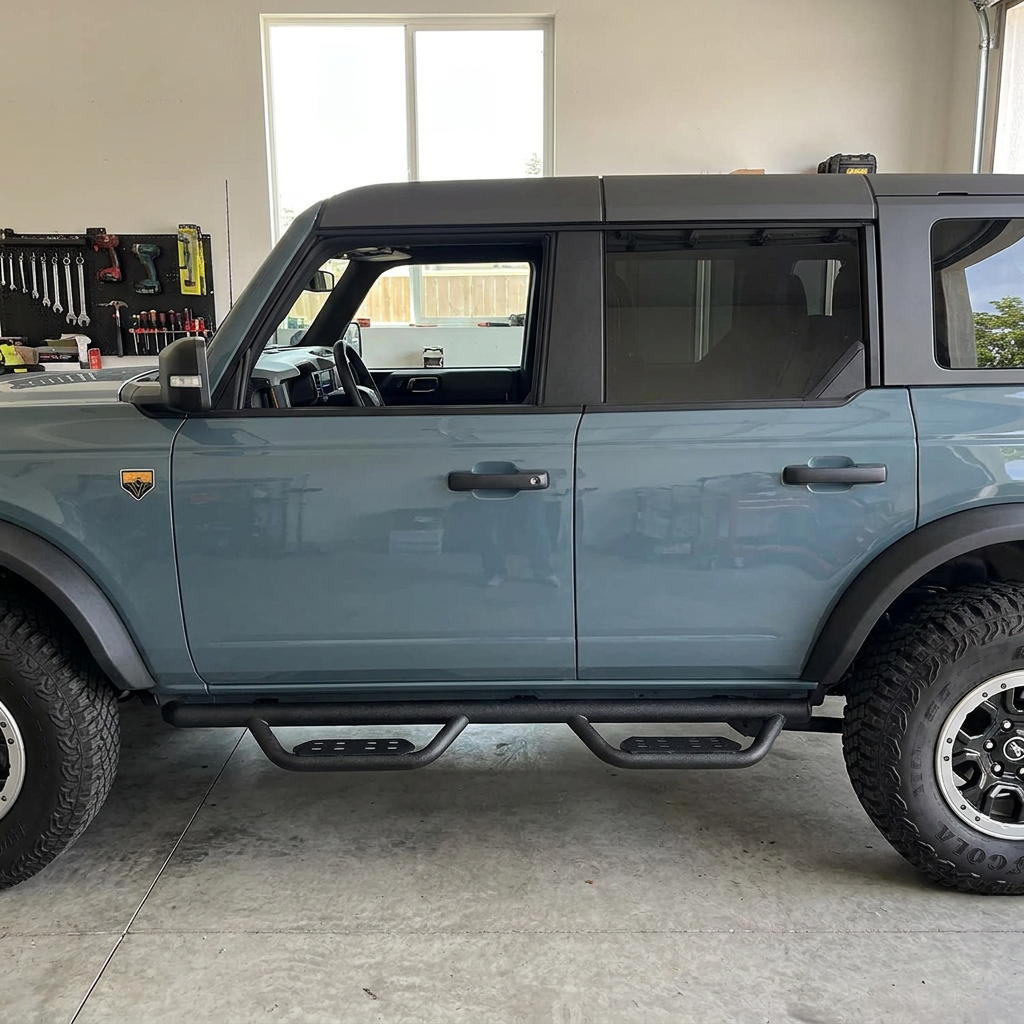
In the world of ford bronco running boards, design matters as much as material. SMANOW use a bar-style step with a defined tread and a “rock slider” look. Two-step alternatives (“two stairs” style) change entry, especially if rear seats are used often.
The most practical difference is step repeatability. With a two-step setup, your foot finds a lower “first step” closer to the ground and a higher second step. It’s helpful for kids and for anyone climbing in with gear in hand. But it adds more protrusions and surfaces, which increases the chance of side contact off-road or on tight obstacles.
Wide steps—often advertised as 6 inches (about 15 cm)—give a more generous platform and reduce how precisely you need to place your foot. In winter, that’s a real advantage. But a wider board tends to catch more grime and can increase pant-leg dirt if the geometry makes water drip right onto the edge.
To make the choice easier without turning it into a ranking, a scenario table helps. The three models mentioned here are concrete examples in the same format for 2021–2026 Bronco 4-door.
| Use scenario | Option | Why it may work |
|---|---|---|
| Daily use, repeated entry, rugged look | SMANOW Running Boards Step Bars Compatible With 2021-2026 Ford Bronco 4 Door SUV | Stable bar/step layout, simple and predictable under the rocker |
| Frequent rear passengers, “stair-like” entry | Running Boards Compatible With 2021-2026 Ford Bronco 4 Doors (Not for Sport Model) | More intuitive two-step feel, reduces the perceived climb for rear entry |
| Big boots, winter use, want a wider platform | BINARY STAR Running Boards Compatible With Vehicle 2021-2026 Ford Bronco 4 Door SUV | Advertised 6-inch step, wider footing with less precise placement |
To verify details and variants beyond photos, the product pages help you read notes and stated fitment: SMANOW Running Boards Step Bars Compatible With 2021-2026 Ford Bronco 4 Door SUV, Running Boards Compatible With 2021-2026 Ford Bronco 4 Doors (Not for Sport Model) and BINARY STAR Running Boards Compatible With Vehicle 2021-2026 Ford Bronco 4 Door SUV.
A detail that often flips preferences: the step’s effective height relative to the seat. A Bronco with stock suspension and stock tires can make a bar-style step feel “enough.” With a lift, a two-step setup becomes more appealing—not for looks, but for the biomechanics of entry.
When you need a different approach: bronco power running boards
Searches for bronco power running boards often come after a week of real-world use with fixed steps. It happens when you want an easy step, but don’t want a low, exposed part hanging down all the time.
The logic of retractable electric steps is straightforward: they drop when you open the door and retract while driving. It works well for road-driven SUVs with families or frequent passengers. But it also changes the risk list: motor, sensors, wiring, and potential binding from mud or ice.
In practice, switching to power steps makes sense when ergonomics matter more than mechanical simplicity. People who do hard off-road often prefer fewer exposed components and fewer moving parts. City-and-trip drivers may accept added complexity and maintenance to get a step “only when needed.”
One last detail that’s often overlooked: retractable steps can require more care at car washes and in winter. Ice and salt are unforgiving. So before chasing the “power” idea, clarify what problem you’re solving: access, a cleaner look while driving, or off-road protection. The answer changes the choice.
Before you buy: three quick checks that prevent the “wrong” purchase
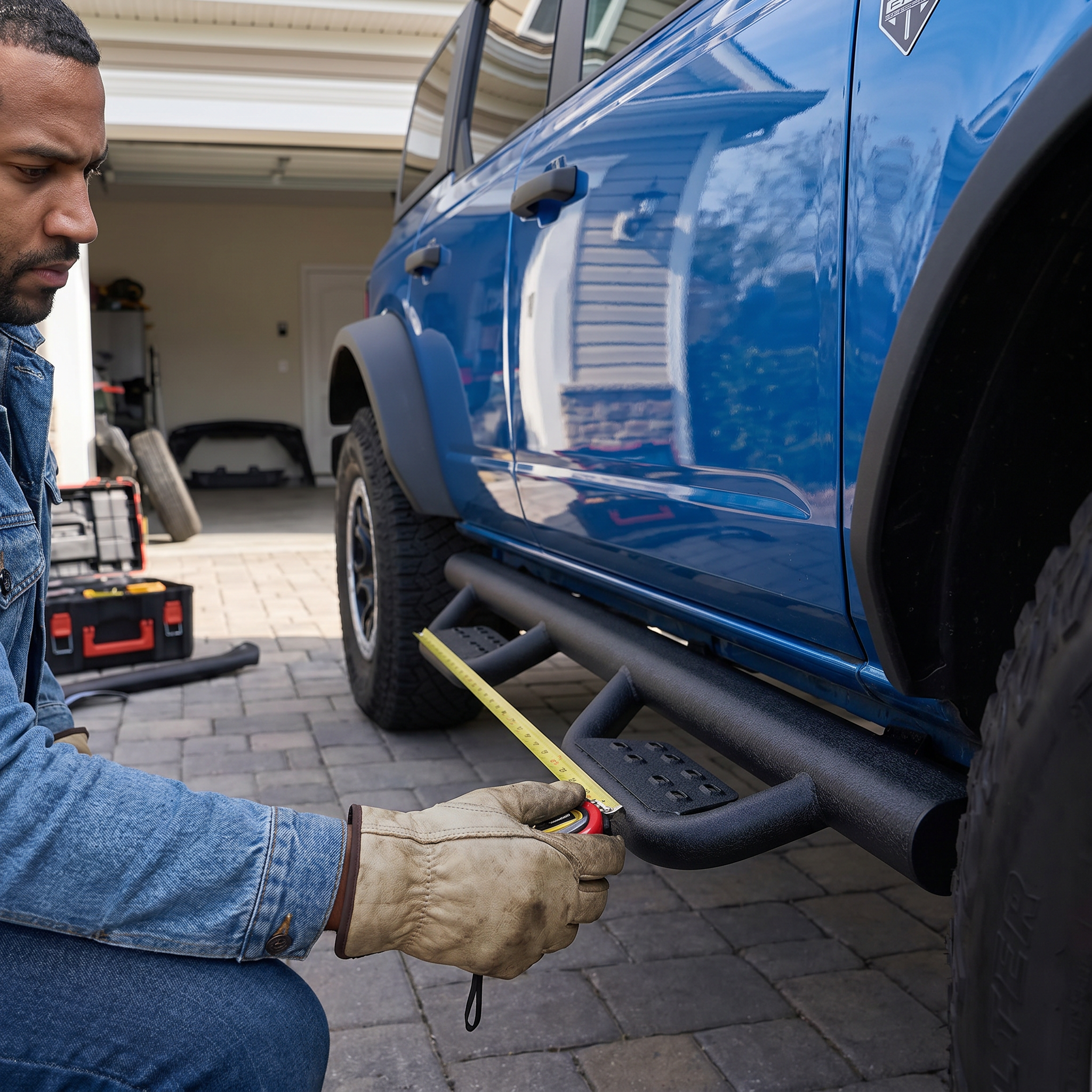
In practice, many bronco running boards searches end with a purchase based on photos and generic promises. It’s better to do three adult checks before spending. They take a few minutes and eliminate the most common mistakes.
First: stated compatibility with a 2021–2026 Bronco 4-door, with no ambiguity around Bronco Sport. If a listing or seller mixes “Bronco” and “Sport” in the same text, be more cautious. Second: brackets and hardware included, with clear instructions. An “incomplete” kit isn’t always solved with generic hardware, because bolt length and grade matter. Third: expectations about protection level. A design that looks like a rock slider can imply repeated-impact use. If that’s your goal, confirm it’s actually engineered for that load—not just for stepping.
A useful signal is also the perceived weight and how far the step sticks out. If your use includes tight parking, steep ramps, or trails with side rocks, a few centimeters of protrusion becomes a daily factor—not an aesthetic detail.
Where these bronco running boards truly shine—and where the trade-offs start
The SMANOW’s strength, in the context of ford bronco running boards for the 4-door, is day-to-day consistency. They work when you want a stable reference point to get in and out the same way every time. That’s a real benefit with passengers who don’t like “jumping” into the SUV, with kids, or when you often climb in with bags and gear in hand. The setup is simple—and simplicity tends to pay off over time on an exterior accessory.
The trade-off is just as clear. A fixed step changes the Bronco’s side geometry. Off-road or on rutted dirt, that part becomes a potential contact point and may require more attention to line choice. If you want the rocker area as “clean” as possible, or you’re trying to maximize usable clearance and breakover on the sides, you’ll often prefer a different solution. A firm position helps here: if your main goal is demanding off-road with frequent side hits, SMANOW aren’t the most targeted choice. If your goal is daily accessibility with a rugged look, they make sense.
Within the same product perimeter, the alternatives mentioned help clarify direction. A two-step design can make rear entry feel more natural. A wider step can reduce foot-placement “misses” in winter. Neither path is free: they change protrusion, cleanliness, and contact likelihood.
When they’re a great fit—and when they aren’t
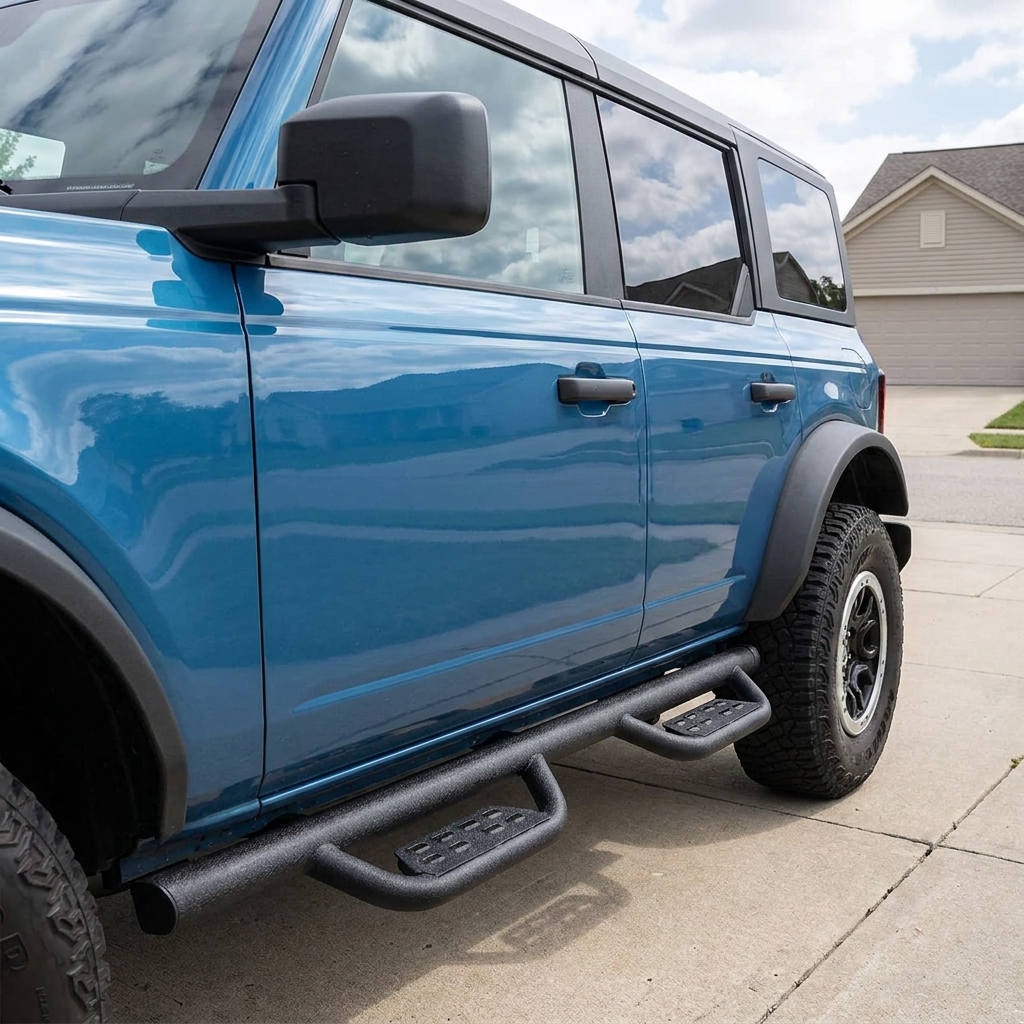
These bronco running boards make sense on a 2021–2026 Ford Bronco 4-door used as a daily driver, with frequent entry and passengers who benefit from a defined step. They also suit anyone who wants a rugged look without moving to more complex options like bronco power running boards.
They’re less suitable if your Bronco often runs tight trails with rocks, deep ruts, or side crests, where a fixed step can become the first contact point. They’re also not ideal if you want to minimize added exterior weight and long-term finish maintenance.
Frequently asked questions
Are the SMANOW bronco running boards worth it for daily use?
Yes—if your priority is easier, more repeatable entry on a 4-door Bronco. They make less sense if your main use is off-road with frequent side contact.
Should you look at bronco power running boards instead of fixed steps?
It can make sense if you want a step only during entry and a cleaner rocker line while driving. In exchange, you accept moving parts, wiring, and more careful maintenance in mud, ice, and salt.
What matters most to avoid noise or looseness over time?
Mostly a tension-free install and a re-check after the first miles. If a bracket is “pulled” into place to align holes, micro-movement can develop over time.
Are two-step ford bronco running boards always more comfortable?
They’re often more intuitive for rear entry or for anyone who prefers a “stair-like” climb. But they add protrusions and exposed surfaces, which can matter on tight dirt roads or off-road.
What’s the most common mistake when ordering bronco running boards online?
Mixing up Bronco 2-door, 4-door, and Bronco Sport, or assuming compatibility across different model years. Reading the stated fitment carefully prevents returns and wasted time.
Verdict and use case
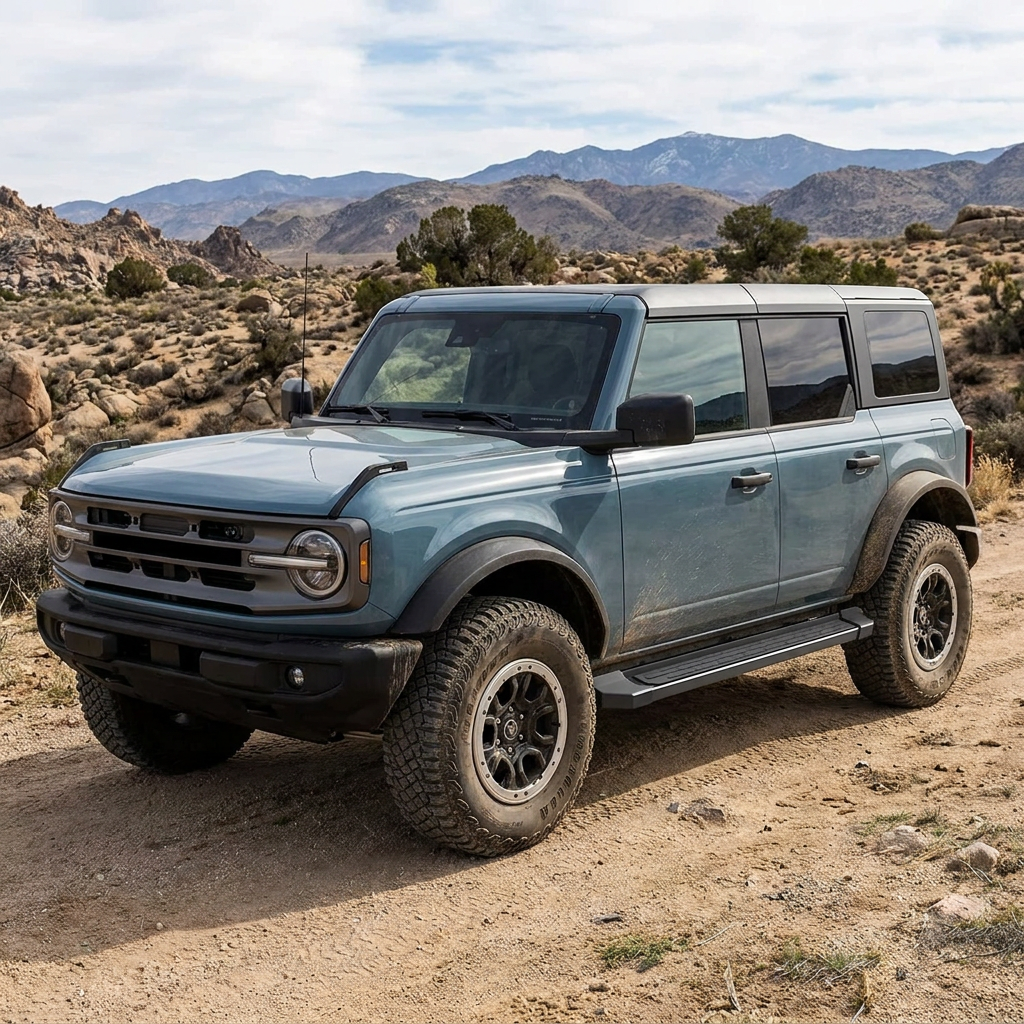
SMANOW are a sensible pick if you want solid, straightforward bronco running boards for a 4-door Bronco, with an acceptable trade-off between practicality and added side bulk.
The best-fit use case is a 4-door Bronco driven daily, with repeated entry/exit, parking and road trips, and passengers who want predictable footing even in rain or dirt. In that context, the step stops being a cosmetic add-on and becomes an ergonomics upgrade.