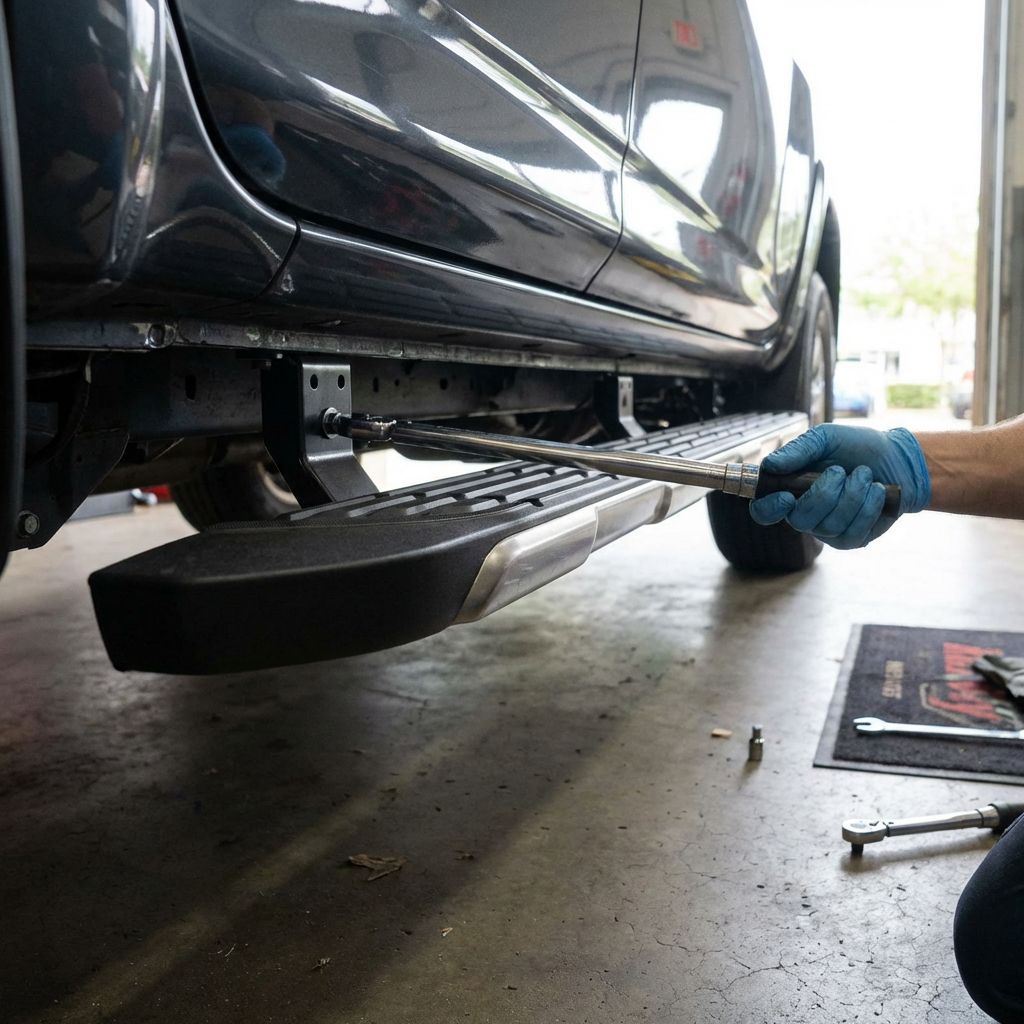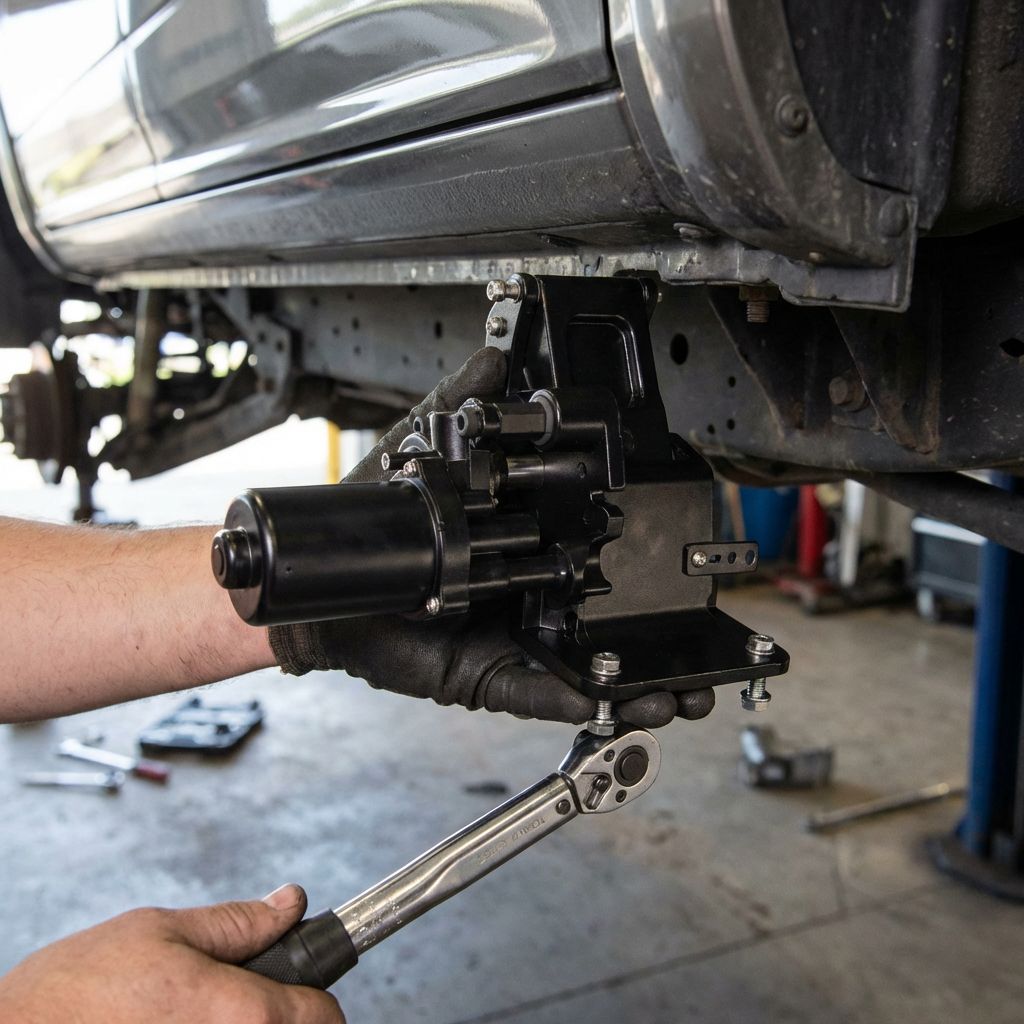
AMP running boards are retractable electric steps that deploy with the door, adding a lower step without sacrificing ground clearance.
How AMP running boards fit real owners
They make the most sense for trucks that are tall enough to feel awkward to climb into, but still see daily use where convenience matters. The defining upside is the "down when needed, tucked away when not" behavior; the defining trade-off is complexity—motors, wiring, and door-trigger logic can all become the deciding factors long after installation.
For most buyers, the first decision is not "electric vs not." It is whether the vehicle and lifestyle justify an automated step that lives under the rocker panel year-round. On a clean, mostly pavement-driven truck, that answer is different than on a mud-heavy work rig that gets pressure-washed weekly.
Three practical checks keep expectations realistic early:
- Fitment must match year/make/model and cab configuration; "close enough" is where wrong orders start.
- Winter, mud, and road salt add maintenance obligations that fixed boards can ignore.
- Noise, speed of deployment, and occasional quirks are normal considerations, not rare exceptions.
What "AMP Research running boards" really means in practice
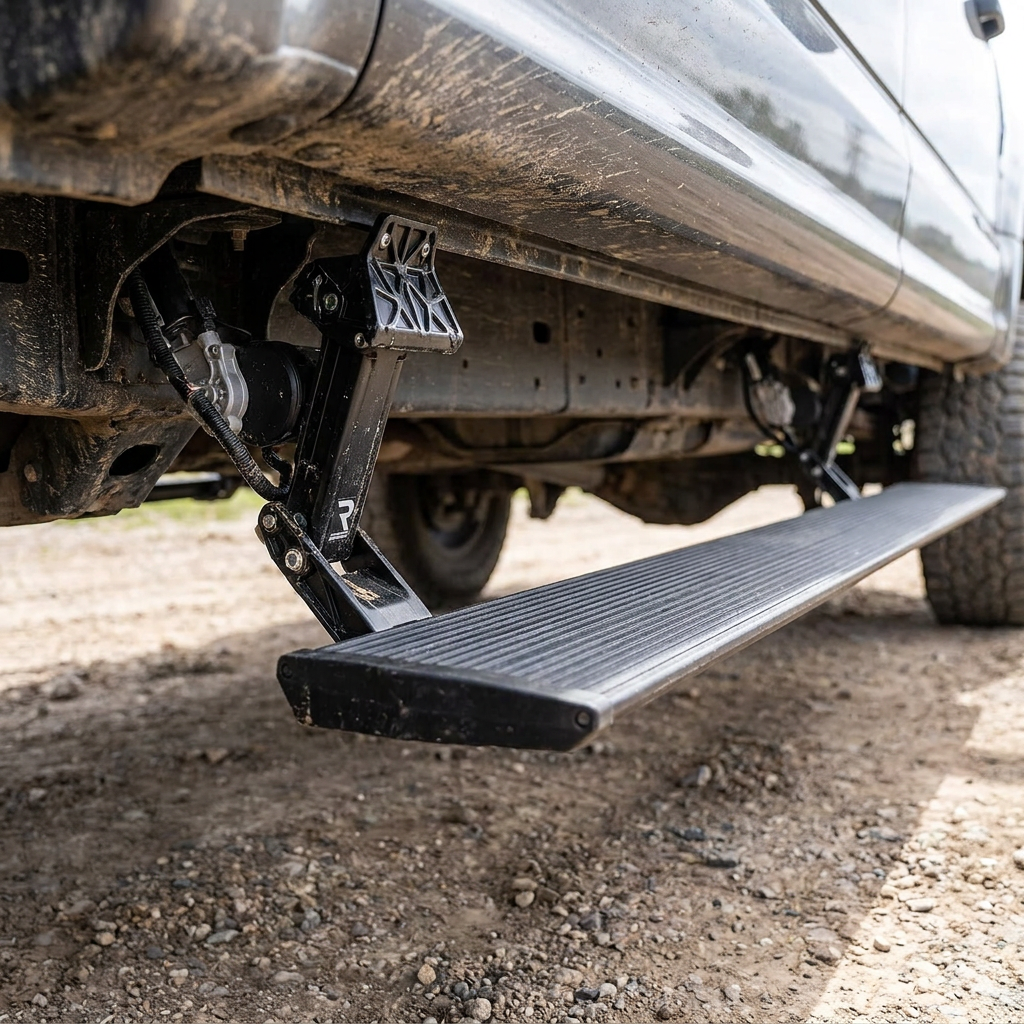
Most searches for AMP Research running boards are really about the PowerStep-style retractable electric step: a powered mechanism that swings a step down when a door opens and retracts it tight to the body when the door closes. That basic behavior is the whole point. It changes where the step sits relative to the cab, and it changes what can go wrong over time.
Fixed running boards and nerf bars are essentially passive structures. Retractable steps are a system: step assemblies, pivot points, a motor or drive unit, wiring, and control logic that needs a door-open signal. Even when a listing says "plug-n-play," it still implies electrical integration and routing harnesses away from heat, pinch points, and moving parts.
That system nature explains why AMP power running boards get discussed in the same breath as convenience and troubleshooting. When they work well, entry and exit feel more natural—especially for shorter drivers, kids climbing in, or anyone stepping down with a load in hand. When they do not, the annoyance is immediate: a step that fails to deploy is not just cosmetic; it changes how the truck is used that day.
Another point that gets missed: retractable steps are partly about clearance, not only about height. With the step retracted, the underside is cleaner than a fixed board hanging outboard. That can matter on steep driveways, rutted access roads, or when the truck is backed into snow berms. But the same underbody location is also why impacts, ice, and packed debris are recurring themes with PowerStep-style setups.
For readers comparing "AMP running boards" as a category to other step styles, the right mental model is simple: fixed boards trade convenience for simplicity; retractable steps trade simplicity for a cleaner profile and a lower step when the door opens.
Early take: strengths and trade-offs worth weighing before shopping
Recommended AMP Research PowerStep options
These PowerStep examples are vehicle-specific. Select only the product whose listed Ford or Ram fitment matches the exact truck.
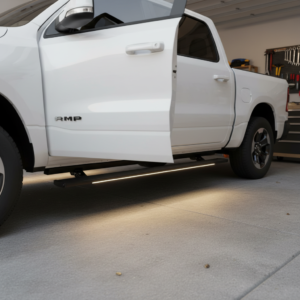
AMP Research PowerStep running boards are bought for one reason—easier entry without a permanently low-hanging step—and judged on a different set of criteria than fixed boards. The common mistake is treating them like a bolt-on accessory rather than a powered mechanism living in a harsh zone under the truck.
Where the value tends to be obvious:
- Daily-driven trucks where multiple people of different heights use the vehicle.
- Larger tires, mild lifts, or simply tall factory ride height that makes the first step awkward.
- Owners who care about a tucked-in look and better clearance when the step is not needed.
Where the trade-offs become visible fast:
- Frequent mud, clay, or road-salt exposure that can pack into linkages and pivots.
- Off-road use where rocks or ruts can strike the step assembly when retracted.
- Anyone unwilling to troubleshoot occasional electrical or sensor-related quirks.
This is not a verdict—just a realistic framing. If the benefits are the point, the rest of the article’s job is making sure the right kit is chosen and the common failure modes are avoided.
Fitment reality: why the "right part number" matters more than the brand name
With AMP running boards, fitment is not a minor detail. It is the difference between a clean install and a job that turns into drilling, splicing, returns, or living with a step that sits wrong. Vehicle-specific kits exist because cab lengths, door counts, rocker shapes, and underbody mounting points change across trims and model years.
A good pre-purchase check is more specific than "Silverado" or "RAM." It should lock down at least:
- Model year range and generation (mid-cycle changes can alter mounting points and wiring routes).
- Cab configuration (crew cab vs extended/double cab matters for step length and bracket placement).
- Engine and packaging constraints when a listing calls them out (diesel vs gas is sometimes used as a shorthand for underbody differences).
- Whether the vehicle has special equipment that competes for space under the rocker area (aftermarket skid plates, certain lift components, or non-stock exhaust routing).
The product titles themselves hint at how narrow fitment can be. For example, one kit is positioned for "2019 – 2021 Chevrolet Silverado & GMC Sierra 1500" under part number 76254-01A, while others target "2018 – 2024 RAM 2500/3500 Diesel" (76239-01A) or "2019 – 2024 RAM 1500" (76240-01A). Those ranges are not marketing fluff; they are a practical warning that AMP Research PowerStep running boards are not one universal set of steps.
When a listing says "& more (See Description)," take that literally. The most reliable approach is to verify the exact vehicle details against the manufacturer’s application guide before ordering. That is also the cleanest way to avoid the most expensive mistake in this category: paying for shipping and labor, then discovering a mismatch at the bracket stage.
Installation expectations should be set with the same realism. Even a plug-in harness still needs careful routing and secure fastening. Under-truck wiring can’t hang, can’t rub, and can’t be left near moving joints. Poor routing may work for a week, then fail after vibration and weather exposure.
For reference on safe wiring practices in vehicles—especially the importance of abrasion protection, secure routing, and avoiding heat sources—SAE’s automotive standards catalog is a useful starting point for understanding why "clean wiring" is not cosmetic: SAE Automotive Standards Catalog
Step feel: drop, usable width, and why "lower" is not always better
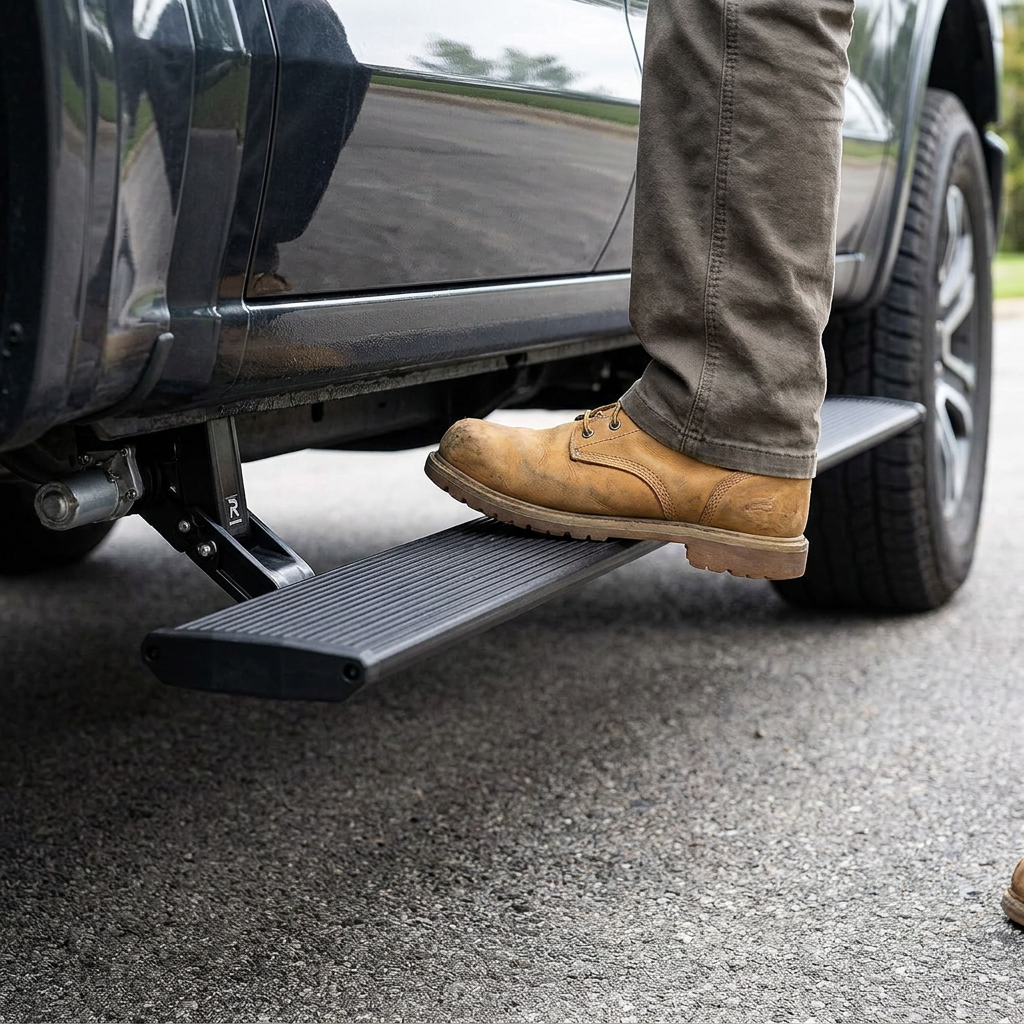
With AMP running boards, satisfaction is tied less to the fact that the step moves and more to how the deployed step feels under a moving body. The useful metric is not marketing language; it is the effective "drop" from the cab floor to the step and from the step to the ground. A lower deployed step can reduce the first climb, but it also changes how the foot lands and how the knee tracks when stepping down.
In real use, the most stable pattern is a step that lets the foot land flat, then allows a clean pivot into the cab without an awkward toe-first reach. That is why the same AMP Research PowerStep running boards can feel perfect on a truck with a mild lift and slightly tall tires, yet feel oddly low on a stock-height truck where the seat already sits close to the ground.
Without relying on a single "correct" number, there are practical ranges that help frame expectations. A step drop around 6–8 inches can feel like a small "assist" step; around 9–12 inches starts to feel like a true intermediate step for taller trucks; beyond that, the step can become so low that it encourages a long stride down, which some drivers find less controlled—especially when exiting with a heavy item or when the ground is uneven.
Usable width matters as much as height. Retractable steps tend to be narrower than some full-width fixed boards, and the important detail is whether the foot can be placed fully on the traction surface without hanging the heel off the back edge. Narrower steps are still workable, but they punish sloppy exits: a partial step becomes a slip risk when boots are wet or the tread is packed with snow.
Where this becomes a decision point is not "short vs tall." It is who uses the truck. A family vehicle with kids climbing up benefits from a step that is easy to find and forgiving of imperfect foot placement. A work truck where the driver often steps out while twisting to grab tools benefits from a step that supports lateral movement without feeling like a balance beam.
Three quick ways to judge whether the "step feel" profile is likely to match the truck and driver, before any money changes hands:
- Compare the cab’s perceived climb (seat height and door opening) to the step’s deployed position; if the step seems dramatically lower than the natural stride, expect a longer reach down on exit.
- Consider footwear and cargo: wet boots, steel-toe soles, and carrying items push the preference toward a wider, more confidence-inspiring landing zone.
- Think about ground conditions where the truck is used most: sloped driveways and uneven job sites penalize steps that encourage a big drop to the ground.
This is also where AMP power step running boards can surprise buyers who only focused on clearance. Clearance is real, but the day-to-day win is the controlled, repeatable step motion that fits the body mechanics of the main drivers.
Traction and lighting: what helps in rain, mud, and winter grime
The traction discussion with AMP running boards is not about whether there is "grip." It is about how the grip behaves when the step surface is contaminated. Mud, fine dust, road salt slurry, and packed snow all create different failure modes, and a tread pattern that feels aggressive when clean can become slick when the grooves pack full.
Because retractable steps live close to the rocker panel, they also tend to catch spray. That makes the traction surface a maintenance item, not a one-time choice. If the truck is used in winter or on untreated roads, the step face should be treated like a high-contact safety surface: it needs periodic cleaning, and it needs to be checked after storms or off-road weekends.
Lighting is not cosmetic. The value of integrated step lights is highest in two scenarios: stepping down into a dark driveway where the ground is uneven, and stepping out onto a curb or rock edge where the foot placement needs to be precise. The practical limitation is that lights do not fix traction; they only reduce "unknowns." A well-lit slick step is still slick.
Where traction and lighting intersect is when the step deploys into a narrow space—between the truck and a snowbank, or alongside tall grass that hides holes. In those conditions, the driver often lands quickly and commits weight before fully judging the surface. Better illumination reduces missteps, but the tread still needs to shed contamination to remain trustworthy.
For buyers comparing AMP Research running boards to fixed alternatives, one subtle point is worth keeping in mind: fixed boards can be brushed off quickly because they are always exposed and easy to reach. Retractable steps can be cleaner when retracted, but when they are dirty, the contamination is sometimes more "stubborn" because it is mixed with road film and packed into tighter spaces.
In climates with frequent freeze-thaw cycles, plan for a routine rather than hoping for luck. A realistic expectation is a quick check and wipe-down every 1–2 weeks in peak winter use, and after any event where the truck was driven through deep slush or sticky clay. That small habit does more to preserve safe footing than any single tread pattern choice.
Installation risk points: where plug-and-play still goes wrong (and what to check)
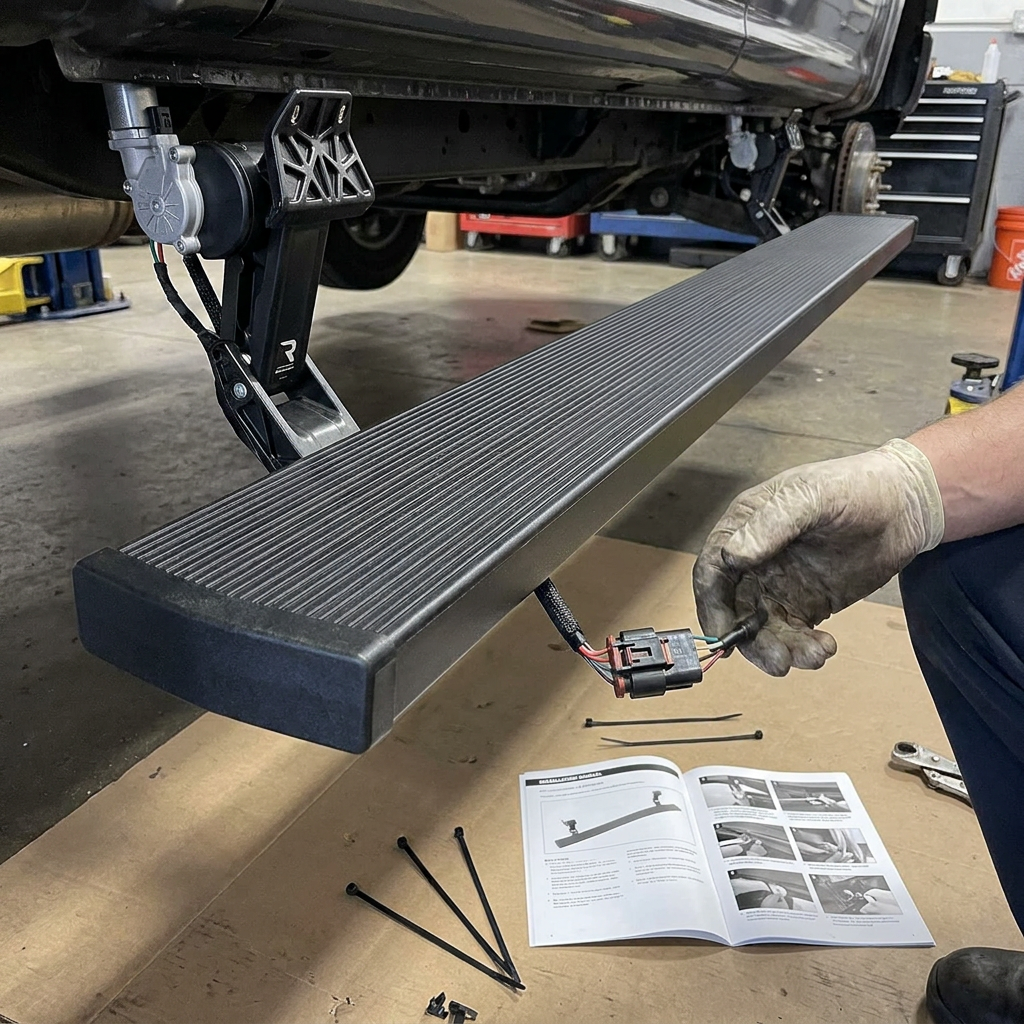
"Plug-N-Play" reduces wiring complexity, but it does not eliminate installation risk. The most common long-term issues with AMP running boards are not dramatic failures; they are small mistakes that show up as intermittent behavior weeks later—exactly the kind of problem that is hardest to diagnose because it feels random.
The highest-risk area is harness routing. Underbody wiring must be secured so it cannot sag, chafe, or contact heat sources. The step mechanism itself creates moving zones, and anything that can rub during deployment will eventually wear through insulation. The result may be a blown fuse, a step that stops mid-travel, or lights that flicker when the truck hits bumps.
Another recurring risk is ground connection quality. A ground that "seems fine" can still create odd symptoms: slow movement, uneven behavior between sides, or a system that works in the garage but acts up in wet weather. The reason is simple—resistance and corrosion. Underbody grounds live in a harsh environment, and marginal connections degrade.
Door-trigger logic is the third risk point. Retractable steps depend on a reliable door-open signal. When the signal is inconsistent, the step can hesitate, deploy late, or retract unexpectedly. The fix might be as simple as correcting where a connector is seated, but it can also be a compatibility issue if the wrong kit is used or if the truck has aftermarket electronics that interfere with signals.
A short verification routine right after installation prevents many "mystery" complaints later. It is not about obsessing; it is about proving the system is stable before the truck sees rain, salt, and vibration:
- Cycle each door at least 10–15 times and watch for consistent timing and full travel; intermittent issues often show up only after repeated cycles.
- Check both sides with the truck on level ground and on a slight incline; body flex and door alignment can change signal timing in subtle ways.
- Inspect harness routing with the steps fully deployed and fully retracted; confirm no cable becomes taut or pinched at either extreme.
- After a short drive, recheck fasteners and cable ties; vibration can reveal a routing path that looked safe while parked.
For readers who want a credible baseline on why routing, abrasion protection, and connector integrity matter in vehicle electrical work, the National Highway Traffic Safety Administration’s equipment and safety information hub is a useful reference point for the broader safety context around vehicle modifications: NHTSA Equipment And Safety Information
Among the common AMP Research PowerStep running boards complaints, many are not inherent design flaws. They are installation quality problems that only become visible after the truck sees a few weeks of weather and vibration.
Living with the system: noise, speed, winter sticking, and realistic maintenance windows
Retractable steps add a new category of ownership experience: behavior. Even when everything is installed correctly, AMP running boards will have a sound profile and a timing profile. Some drivers love the "mechanical certainty" of the deployment; others notice it every time. What matters is not whether there is noise, but whether the noise changes over time—because changes can signal binding, contamination, or a developing electrical issue.
Speed of deployment is also more than a comfort detail. A step that deploys decisively before the foot reaches for it feels natural. A step that lags changes how the driver exits: it encourages a pause or a half-step, which is where awkward slips happen. The key is consistency. A consistent, slightly slower step can be adapted to; an inconsistent step cannot.
Winter performance is where expectations should be most honest. Ice can prevent full movement, packed snow can add mechanical resistance, and slush can refreeze around pivots. None of that is unique to one kit. It is the reality of a moving mechanism mounted low on the vehicle. In those conditions, forcing the step—kicking it down, yanking it, or repeatedly cycling the doors—can turn a temporary sticking issue into a bent component or a stressed motor.
A practical winter routine reduces the odds of the "stuck step" day. After heavy snow or freezing rain, a quick visual check before driving is more valuable than discovering the problem during an exit in a parking lot. If the truck is regularly exposed to road salt, a rinse of the underbody area every 2–4 weeks during peak season helps preserve pivots and fasteners; letting salt film sit for months is how corrosion becomes a real ownership cost.
Maintenance is not complicated, but it is recurring. The difference between owners who stay happy and owners who get frustrated often comes down to whether the step assemblies are treated as "set and forget" or as a mechanism that needs periodic attention. The attention is small, but it must be scheduled into real life.
For readers thinking in terms of AMP power running boards Bluetooth and other convenience add-ons, it helps to separate two ideas: convenience features can be nice, but they do not change the fundamentals. Reliability still comes from clean electrical connections, stable signals, and a mechanism that is not fighting packed debris.
Common PowerStep fitments: examples, use cases, and why the titles are so specific
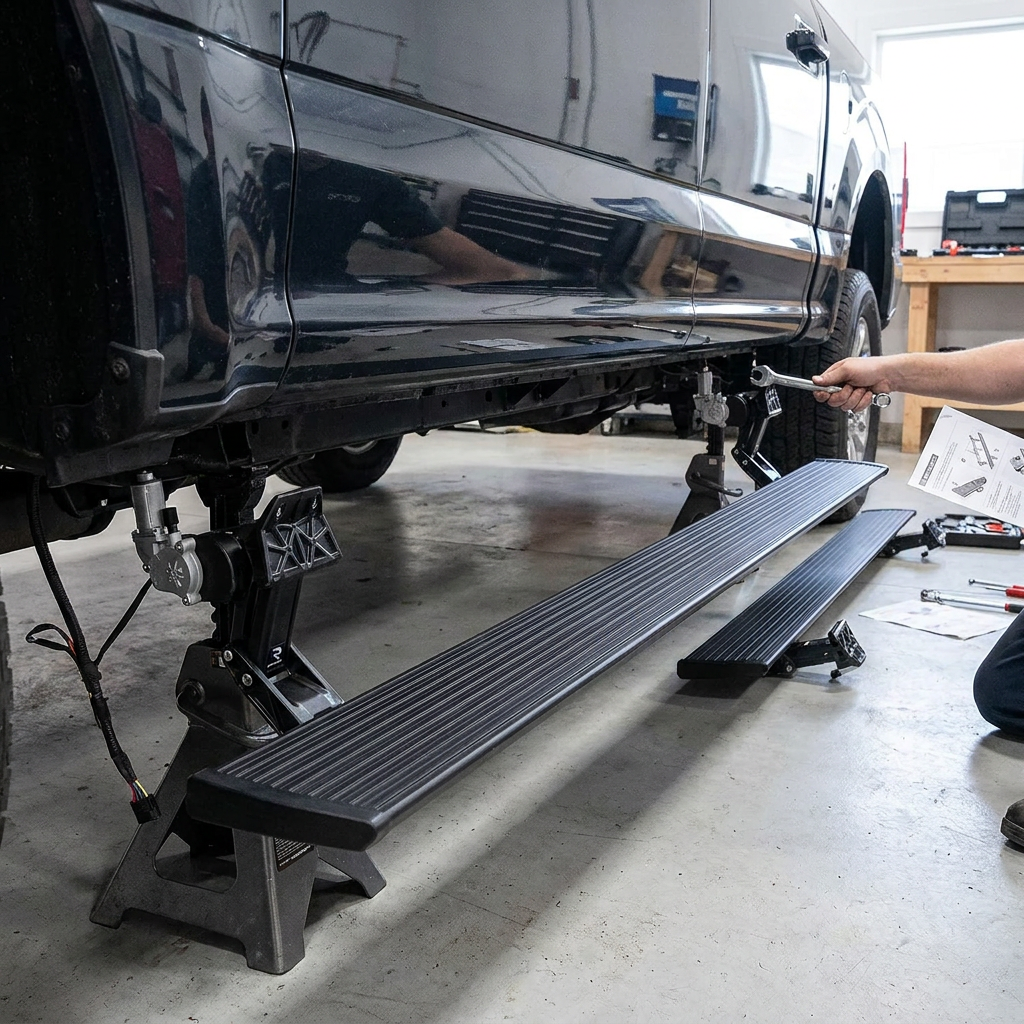
Because fitment is vehicle-specific, the most grounded way to think about these kits is by application rather than generic category. The three commonly searched configurations below illustrate how narrow the match can be, and why it is worth verifying the exact listing before ordering.
| Real-World Scenario | Example Kit | Why It Matters |
|---|---|---|
| Half-ton GM truck in the 2019–2021 range, daily driver | RealTruck AMP Research PowerStep Plug-N-Play Retractable Electric Truck Steps With LED Step Lights | Fits 2019 – 2021 Chevrolet Silverado & GMC Sierra 1500 | 76254-01A | Model-year range hints at mounting and wiring differences; wrong match can derail installation early. |
| Heavy-duty diesel RAM used for towing and work | RealTruck AMP Research PowerStep Plug-N-Play Retractable Electric Truck Steps With LED Step Lights | Fits 2018 – 2024 RAM 2500/3500 Diesel; & More (See Description) | 76239-01A | "Diesel" in the title is a fitment signal; underbody packaging constraints can change routing and bracket needs. |
| Late-model RAM 1500 with frequent passenger use | RealTruck AMP Research PowerStep Plug-N-Play Retractable Electric Truck Steps With LED Step Lights | Fits 2019 – 2024 RAM 1500 | 76240-01A | Cab and generation differences drive step length and mounting points; correct kit supports consistent deployment. |
To verify the exact configuration details and the current listing information for the GM fitment example, use the product page for RealTruck AMP Research PowerStep Plug-N-Play Retractable Electric Truck Steps With LED Step Lights | Fits 2019 – 2021 Chevrolet Silverado & GMC Sierra 1500 | 76254-01A; the same approach applies to the RAM HD diesel kit RealTruck AMP Research PowerStep Plug-N-Play Retractable Electric Truck Steps With LED Step Lights | Fits 2018 – 2024 RAM 2500/3500 Diesel; & More (See Description) | 76239-01A and the RAM 1500 kit RealTruck AMP Research PowerStep Plug-N-Play Retractable Electric Truck Steps With LED Step Lights | Fits 2019 – 2024 RAM 1500 | 76240-01A, especially when the title includes "& more" language that requires careful application-guide confirmation.
Ownership reality: what separates happy owners from constant tinkering
With AMP running boards, the long-term experience is decided less by the first week and more by what happens after months of vibration, weather, and repeated door cycles. The owners who stay satisfied tend to treat retractable steps as a small mechanical system that benefits from occasional attention, not as a purely cosmetic accessory. That mindset changes behavior: issues get caught early, before they become "why does this only fail when it rains?" problems.
The biggest practical divider is tolerance for intermittent quirks. A fixed board can be ignored until it rusts or loosens; a powered step can be perfect 99% of the time and still feel unacceptable if the 1% shows up when leaving a dark parking lot with hands full. That is why the bar for consistency is higher than in most exterior add-ons.
Three ownership patterns show up again and again with AMP Research running boards, and they are worth using as a self-check:
- Clean Daily-Driver Pattern: the steps stay relatively clean, the mechanism sees mostly rain and dust, and reliability comes down to installation quality and basic upkeep.
- Salt-And-Slush Winter Pattern: the steps get coated, then dry, then freeze; the system still can work well, but it rewards owners who rinse buildup and avoid forcing movement when things are packed.
- Mud/Worksite Pattern: debris and pressure-washing are frequent; this is where any retractable design is easiest to hate if expectations are "set it and forget it."
A blunt editorial position fits here: AMP power running boards are a premium convenience feature, and they only feel worth the money when the owner’s routine supports them. If the truck lives in grime and gets treated like a tool that is never washed, a simpler step style will usually create fewer bad days.
When it works—and when it doesn’t
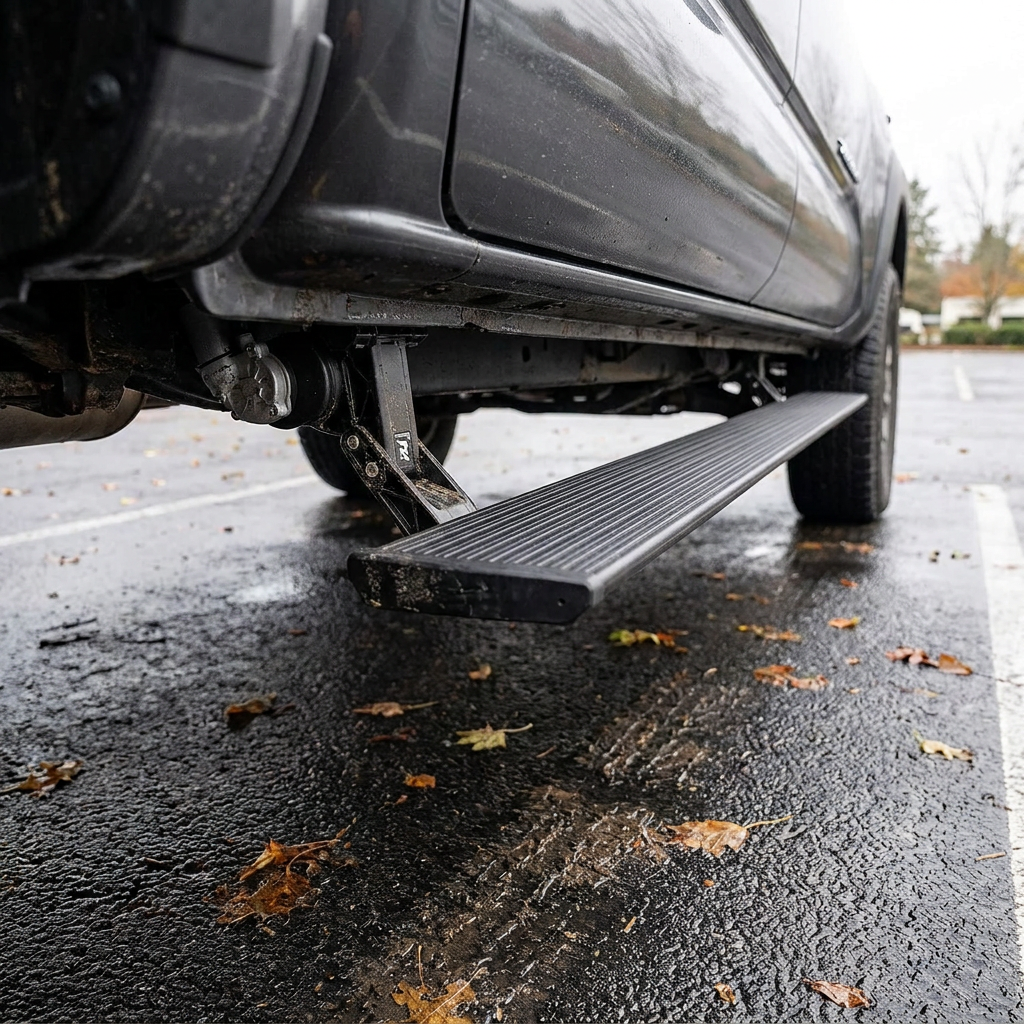
AMP running boards make the most sense on vehicles that feel tall in everyday entry, especially when multiple passengers use the truck and the tucked-away look/clearance is genuinely valued. They fit best when the truck is mainly on pavement, the owner is comfortable verifying fitment details, and there is willingness to keep the mechanism reasonably clean during winter or muddy seasons.
They are a poor match for trucks that regularly drag through ruts or rocks, fleets where nobody "owns" maintenance, or buyers who want zero-systems ownership. If a single no-deploy event would be unacceptable, or if electrical oddities would become a constant irritation, fixed boards or sliders are usually the calmer choice.
Choosing between common PowerStep fitments without overthinking it
The three kits highlighted in this guide are not "better or worse" versions of the same thing; they are vehicle-application answers to a fitment question. That sounds obvious, but it is exactly where buyers get burned—shopping by brand name or by the phrase AMP Research PowerStep running boards, then discovering the actual decision is the application match.
Use this as a practical sorting approach: start by locking down the truck’s exact year range and cab configuration, then treat the kit number as the anchor. For example, a GM half-ton in the 2019–2021 range points toward the 76254-01A application, while RAM applications split between the 2500/3500 diesel-focused range (76239-01A) and the 1500 range (76240-01A). If a listing includes "& more," assume that the exceptions matter and verify before ordering.
For readers who want to double-check the exact listing and fitment language in one place, these links are useful as verification pages (not as substitutes for an application guide): RealTruck AMP Research PowerStep Plug-N-Play Retractable Electric Truck Steps With LED Step Lights | Fits 2019 – 2021 Chevrolet Silverado & GMC Sierra 1500 | 76254-01A, RealTruck AMP Research PowerStep Plug-N-Play Retractable Electric Truck Steps With LED Step Lights | Fits 2018 – 2024 RAM 2500/3500 Diesel; & More (See Description) | 76239-01A, and RealTruck AMP Research PowerStep Plug-N-Play Retractable Electric Truck Steps With LED Step Lights | Fits 2019 – 2024 RAM 1500 | 76240-01A.
One last expectation check keeps this category sane: "plug-n-play" reduces complexity, but it does not remove the need for careful routing and secure mounting. A realistic post-install verification is still about repetition—cycling doors 10–15 times, checking both sides on level ground, and confirming nothing binds during full travel. Those numbers are not overkill; they are how intermittent problems get caught while the install is still fresh.
Common questions about AMP running boards
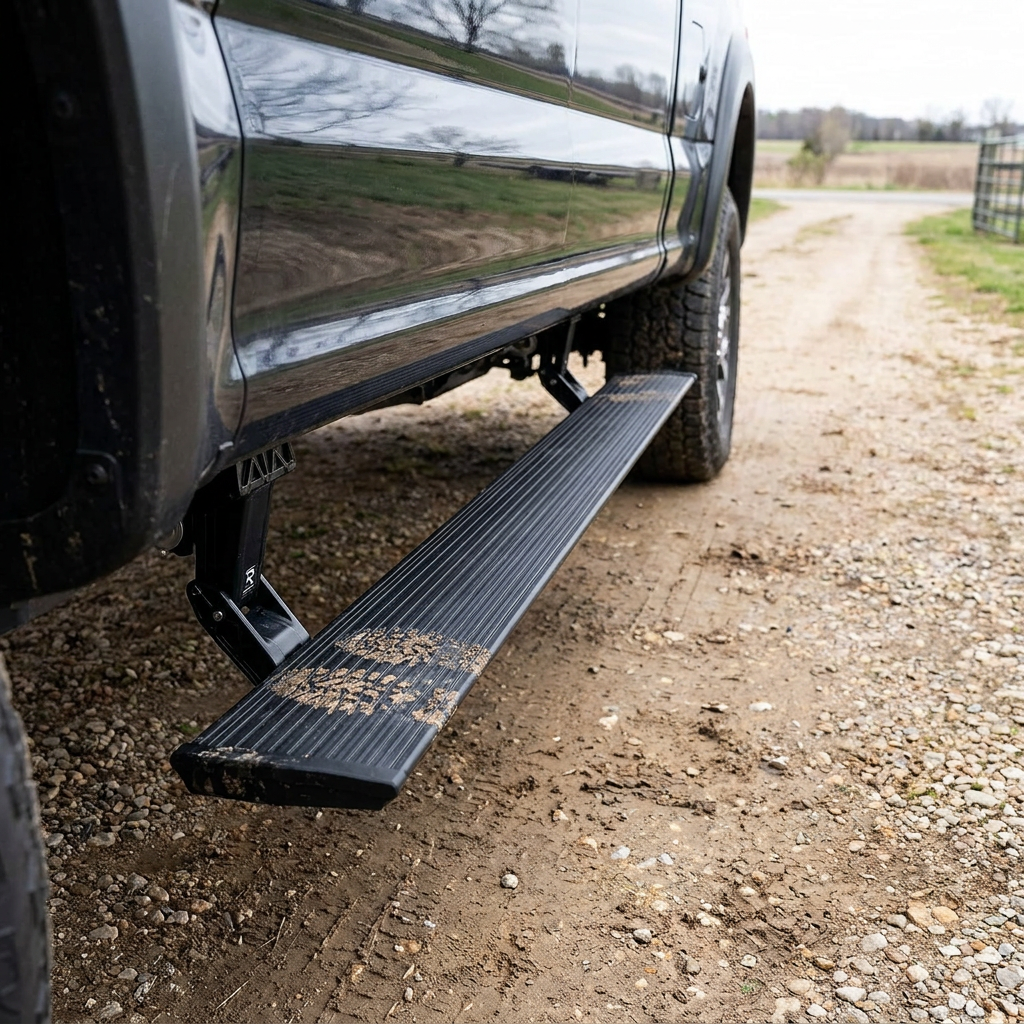
Are AMP running boards worth it compared to fixed running boards?
They are worth it when the convenience of a lower step and the tucked-away profile are used every day and the truck’s environment is not constantly packing the mechanism with debris. If the goal is purely "something to step on" with minimal ownership overhead, fixed boards tend to deliver more peace for the money.
What are the most common headaches with AMP Research running boards?
The recurring complaints are usually inconsistency: a step that hesitates, behaves differently side-to-side, or acts up after weather exposure. In many cases that points back to installation details (routing, grounds, connections) or contamination around moving points rather than a single dramatic failure.
Does "Plug-N-Play" mean no wiring risk?
No. It typically means fewer splices and a more direct harness approach, but routing and securing wiring still matters because vibration and movement can create chafing over time. The risk is not "hard wiring," it is underbody wiring that is allowed to rub, sag, or sit near heat.
Do AMP power running boards Bluetooth features change the reliability equation?
Convenience add-ons can change how the steps are triggered or configured, but they do not change the fundamentals that drive reliability in this category. The core determinants remain stable signals, sound electrical connections, and a mechanism that is not fighting packed debris or corrosion.
Bottom line
AMP running boards are the right call for daily-driven trucks where entry ease and a tucked-away step are genuinely valuable, and the owner is willing to treat them like a maintained system rather than a permanent bolt-on.