
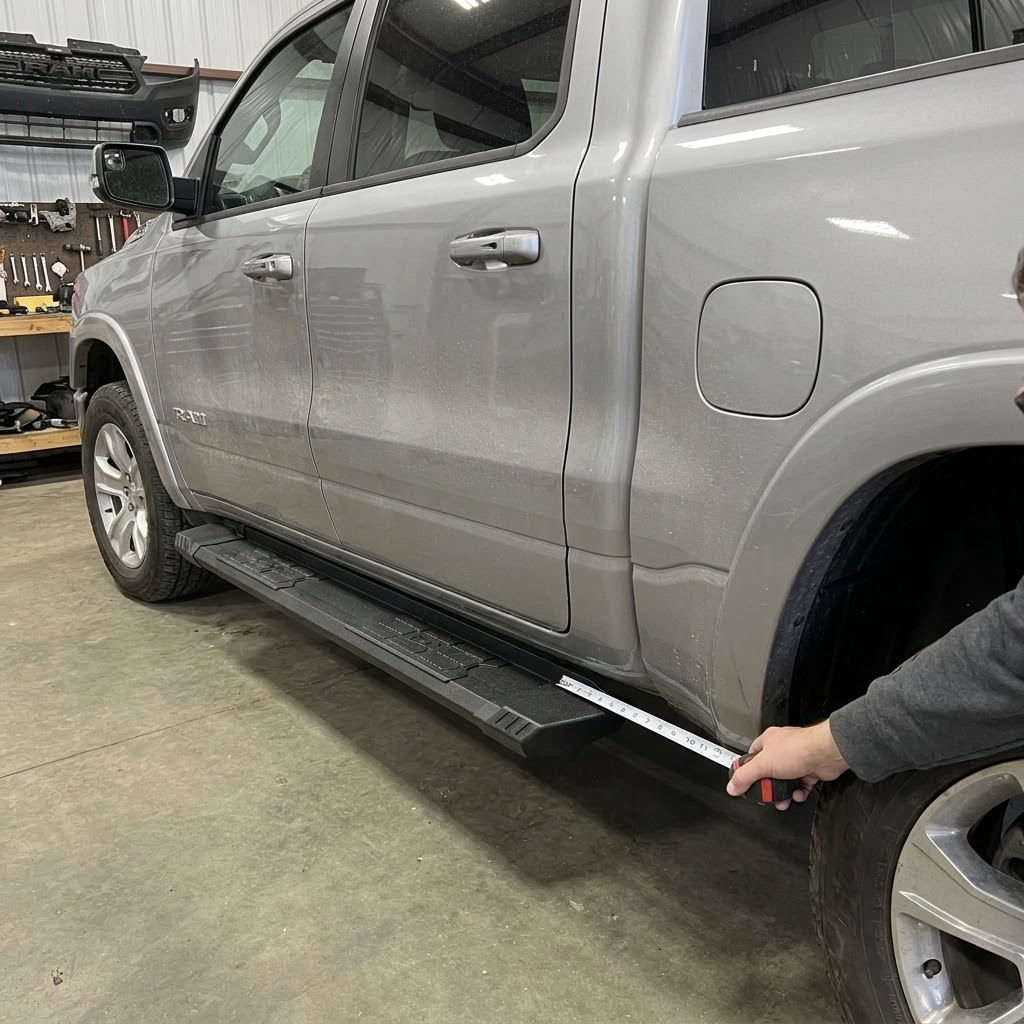
The question sounds simple, but it rarely is. “Will Ram 1500 running boards fit on a 2500” usually isn’t about the board itself as much as the hidden geometry: cab length, mounting points, and where the factory put threaded inserts and brackets for that specific frame-and-cab combination.
Ram running boards sit at the intersection of three moving targets: truck generation, cab configuration, and trim-level mounting provisions. Two trucks can look nearly identical from the side and still have different hole spacing under the rocker area. That is why forum answers often sound contradictory—both can be true, depending on the exact build.
Quick Orientation Before Details
Ram is the truck brand; “1500” and “2500” are different series within it.
Running boards are the side steps mounted to the cab area, not to the bed.
A “fits” claim is only reliable when it matches cab style and model year (and sometimes whether the truck is a “Classic” carryover versus a newer body).
Why The 1500-To-2500 Fit Question Keeps Coming Up
Owners tend to encounter the issue after a swap opportunity, a used set, or a parts listing that groups multiple series together. The confusion is understandable: Ram 1500 and Ram 2500 can share similar cab silhouettes, and the running board length may look right at a glance. But “Running Boards Ram” discussions keep circling back to what cannot be seen in photos: bracket locations and the way the cab’s underside is laid out.
Another driver is generational overlap. Ram has had periods where an older body style continued alongside a newer one, which makes model year alone a misleading shortcut. That is also why phrases like “Ram Running Boards Compatibility” matter more than the basic label “Ram 1500” on its own.
What “Fit” Means For Ram Running Boards Fit
On trucks, fitment is not a single measurement. It is a stack of alignments that all need to be true at once. For Ram running boards fit questions, the practical meaning usually includes:
- Mounting point match: the bolt pattern and location of threaded inserts or studs under the cab must align with the brackets.
- Cab-length match: crew, quad, and regular cabs change the usable length and where supports should land.
- Clearance behavior: doors must open without contacting the step, and the step must not interfere with pinch welds, mud flaps, or splash shields.
- Load path: the bracket structure needs to place weight into intended reinforced points, not into thin sheet metal.
This is why “Will Ram 2500 running boards fit a 1500” is essentially the same question in reverse: the constraint is the mounting architecture, not the direction of the swap.
Model Years, Generations, And The “Classic” Trap
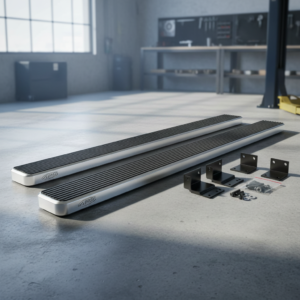
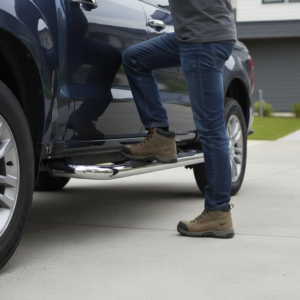
Recommended Ram running boards
Both options cover Ram truck applications, but cab style and model year still control fit. Verify those details on the product page.
Questions like “Do 2018 running boards fit 2019 Ram 2500” or “Will 4th gen Ram running boards fit 5th gen” tend to fail when they treat generation changes as cosmetic. Underbody revisions can move attachment points even when the rocker profile looks familiar. “Classic” naming can further blur this because a later model year might still use an older body architecture.
For a grounded baseline, it helps to anchor understanding in how manufacturers treat attachments and occupant egress. Guidance around step access and vehicle modifications is often discussed in safety-oriented terms by institutions such as the National Highway Traffic Safety Administration (NHTSA) at https://www.nhtsa.gov/ and, for broader vehicle regulation context, the U.S. Department of Transportation at https://www.transportation.gov/.
As a single illustration of how listings sometimes bundle series and years, one aftermarket running board listing may claim compatibility across multiple Ram 1500/2500/3500 year ranges; that phrasing should be read as a prompt to verify cab and mounting specifics, not as proof of interchangeability.
Why “Will Ram 1500 Running Boards Fit on a 2500” Is Rarely a Simple Yes
The question “Will Ram 1500 running boards fit on a 2500” usually sounds like a straight swap, but the real constraint is not the board itself. It is the relationship between the cab, the rocker area, and the mounting points that the boards depend on. Two trucks can look similar in side profile and still differ in where brackets land, how many attachment points exist, and what clearances are available around the frame and body mounts.
In practice, “Ram running boards fit” hinges on three variables that often get conflated: cab configuration (regular, quad, crew), generation changeovers, and the specific mounting strategy (factory holes, clamp-on brackets, or frame-adjacent mounts). When any one of these shifts, “Ram running boards compatibility” becomes conditional rather than universal.
Cab Length And Door Layout: The Quiet Deal-Breaker
Fitment talk tends to orbit model numbers, yet door count and cab length can matter more than whether the badge says 1500 or 2500. A board that aligns perfectly with the door openings on one cab can leave awkward gaps, interfere with door swing, or sit visually off-center on another.
- Step placement may feel “wrong” if the usable stepping area does not line up with where feet naturally land when exiting a taller 2500.
- Mount spacing can differ even when overall board length seems plausible, forcing bracket compromises that reduce rigidity.
- Rear door geometry on some cabs changes how far back the board can sit before it becomes a shin contact point in tight parking scenarios.
Generation Boundaries: Where “Do 2018 Running Boards Fit 2019 Ram 2500” Gets Tricky
Questions like “Do 2018 running boards fit 2019 Ram 2500” or “Will 4th gen Ram running boards fit 5th gen” are really questions about platform boundaries. Around redesign years, the cab and body structure may change even if the truck’s footprint stays familiar. That can move mounting holes, alter underbody shielding, or change the rocker contour enough that a board sits at a different angle.
One subtle issue: even if holes exist in roughly the right places, the standoff distance (how far the board sits from the body) can change. On a heavier-duty truck, a board that sits too close may collect more debris or contact packed snow; too far out and it can behave like a lever that flexes more under load.
Mounting Architecture: Holes, Brackets, And Load Paths
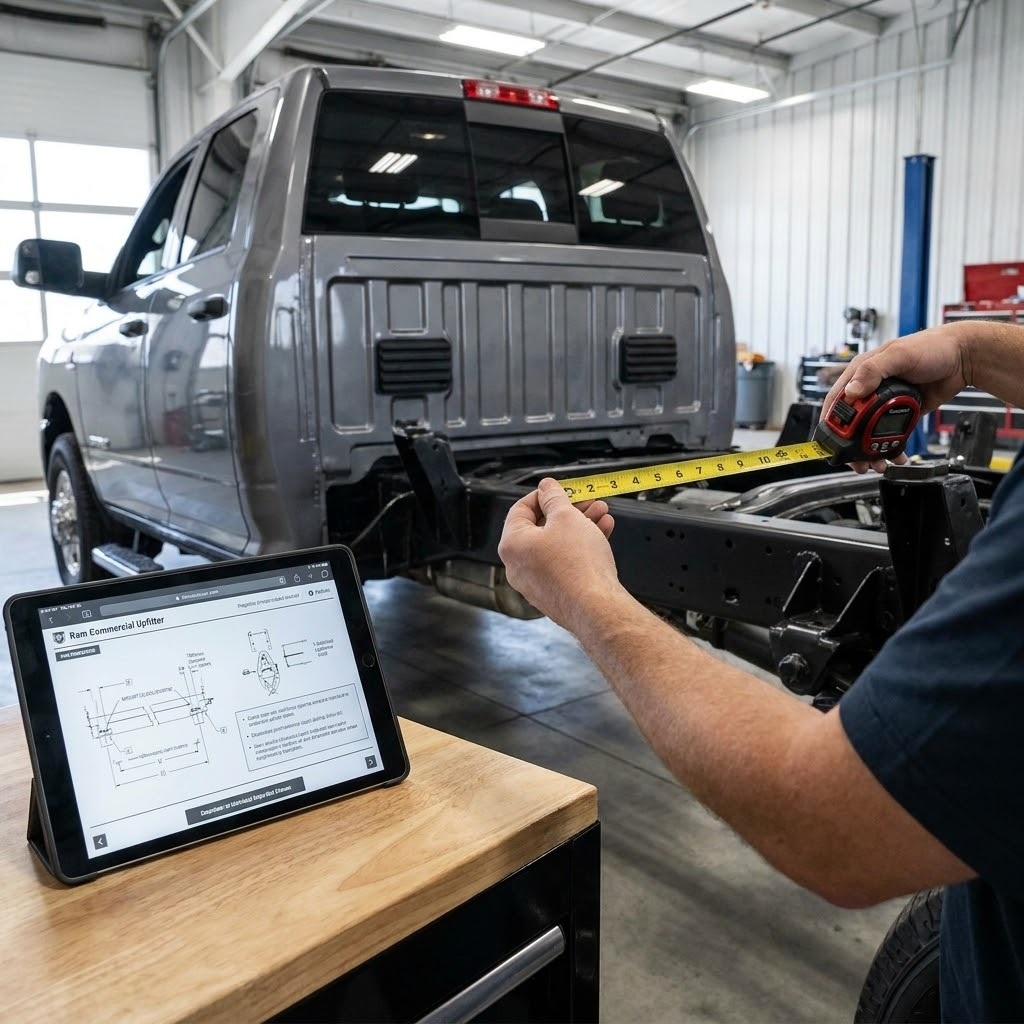
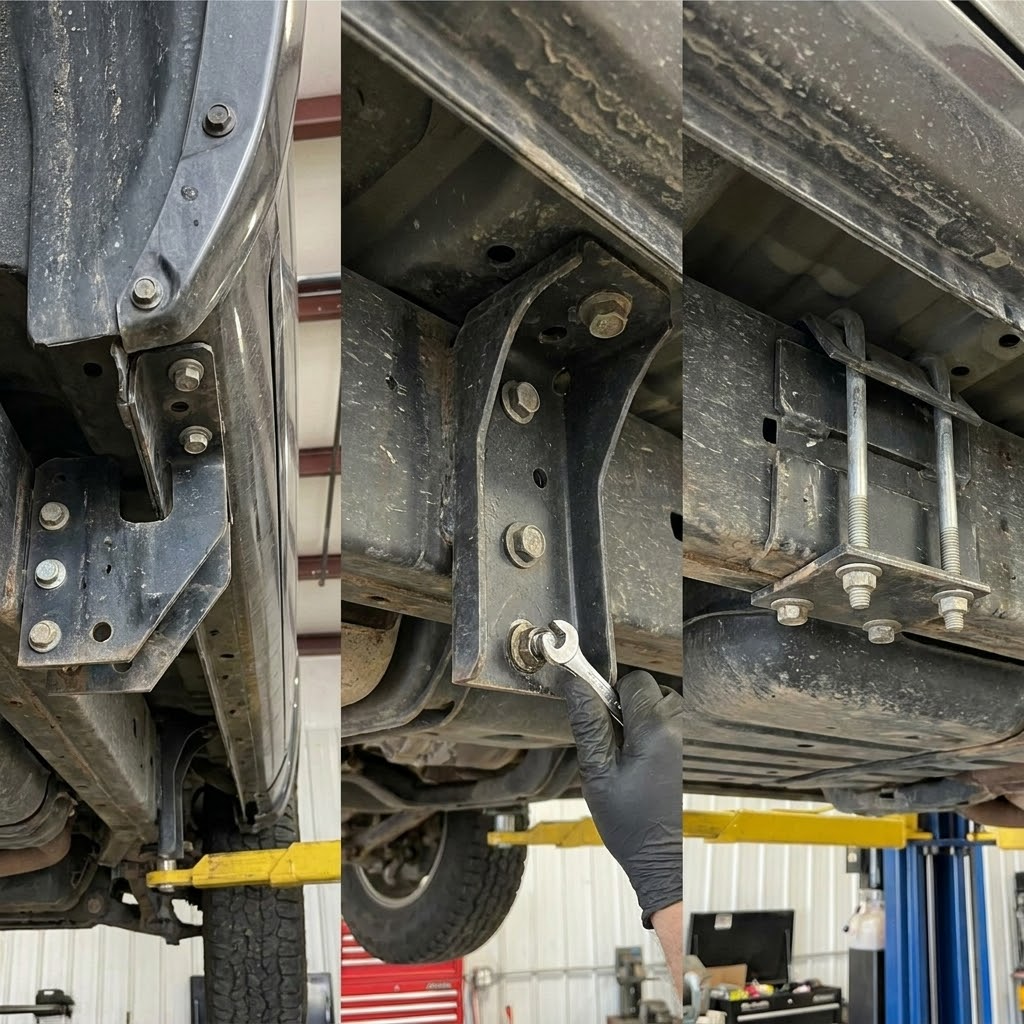
When people ask “What running boards fit a 2010 Ram 1500” or “Do 2014 Ram running boards fit a 2010,” they are often encountering a shift in how the load is carried: some systems rely on predefined body points, others share load across multiple brackets, and others depend on clamps that avoid drilling. The same board profile can be paired with very different bracket kits, and it is the bracket kit that usually decides cross-fitment.
A single example seen in the market is a running-board listing that claims compatibility across multiple Ram years and 1500/2500/3500 ranges, which typically signals that the manufacturer is changing brackets rather than assuming identical underbody geometry.
Edge Cases That Change The Answer
Even when the question “Will Ram 1500 running boards fit on a 2500” seems close to a yes, a few edge conditions can flip it:
- Trim and underbody equipment (skid plates, splash shields, wiring runs) can occupy the same space a bracket expects.
- Ride height differences can make a board feel too high to be useful or low enough to reduce clearance in ruts and snow.
- Corrosion history matters on older trucks; compromised threads or distorted pinch seams can turn a theoretical fit into a practical headache.
How To Verify Fit Without Turning It Into Guesswork
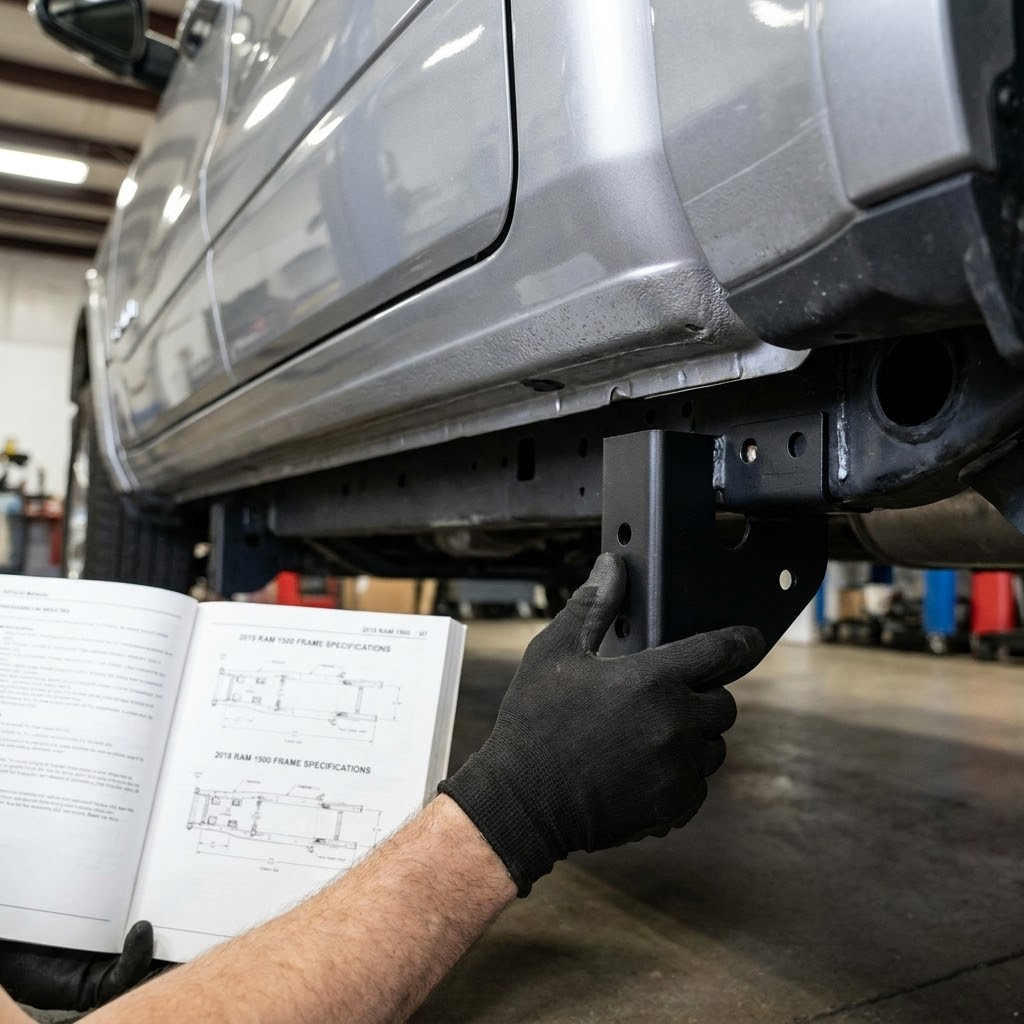
Fitment is ultimately a geometry problem, so the cleanest verification is measurement and reference to official technical information. Manufacturer upfitter resources and service documentation help confirm where attachment points are intended and what loads those areas are designed to take. For Ram-specific body and frame context, Stellantis’ upfitter guidance is the most direct starting point: https://www.ramtrucks.com/ram-commercial/upfitters.html.
For broader safety context—why mounting integrity and step geometry matter—NHTSA’s equipment and safety information provides a useful grounding in how vehicle equipment relates to safe use on public roads: https://www.nhtsa.gov/.
When “Will Ram 1500 Running Boards Fit on a 2500” Has a Clear Answer
The question “Will Ram 1500 running boards fit on a 2500” often sounds like it should have a simple yes-or-no answer. In practice, the most reliable answer is conditional: sometimes the outer shape looks close enough, but the attachment points and underbody geometry are what decide whether the swap is straightforward, requires adaptation, or is simply impractical.
What tends to create confusion is that “fit” can mean different things in forum threads: physically touching the truck, bolting up without modification, aligning evenly along the rocker area, clearing tires through full steering lock, and not interfering with jacking points. Those are different thresholds, and one person’s “fits” is another person’s “It technically mounts but sits wrong.”
For Ram running boards fit questions, the decisive variables usually sit in three places:
- Mounting Architecture: the number, location, and spacing of factory mounting points and whether they are threaded inserts, studs, or bracket-specific interfaces.
- Cab And Frame Relationship: even within the same brand family, the distance from rocker area to frame and the shape of pinch welds can shift enough to matter.
- Cab Length And Door Layout: the overall length and where doors land affects where supports “want” to sit; a mismatch can lead to unsupported spans or contact at the wrong points.
This is why “Ram Running Boards Compatibility” is often more about platform specifics than about the badge on the grille. It also explains why the reverse question—Will Ram 2500 running boards fit a 1500—runs into the same constraints from the other direction.
Year-to-Year Questions: Why 2018-to-2019 And 4th Gen-to-5th Gen Gets Messy
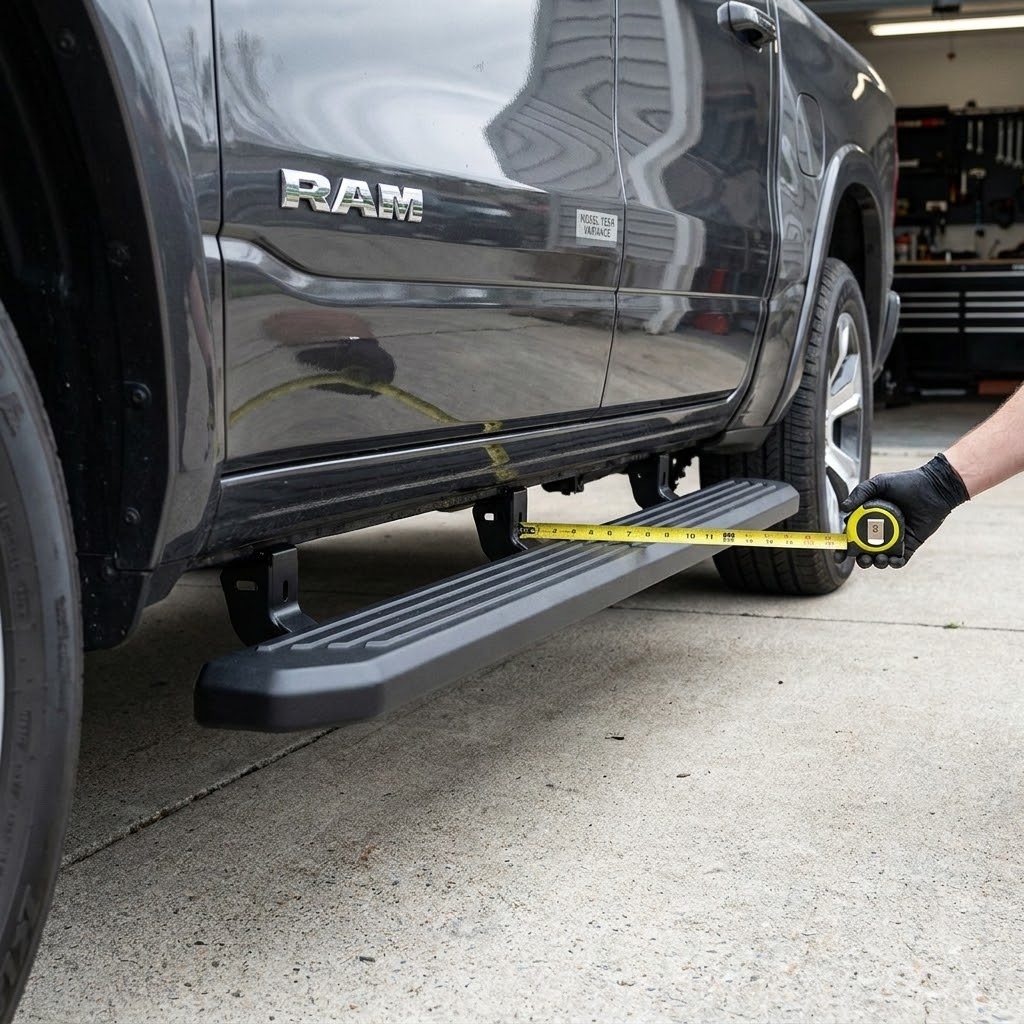
Searches like “Do 2018 running boards fit 2019 Ram 2500” or “Will 4th gen Ram running boards fit 5th gen” usually spike around redesign years. Even when a truck looks similar from the side, manufacturers routinely change attachment strategies, underbody shielding, and bracket geometry across generations. The result: a part that lines up visually may still miss mounting points by small but decisive margins.
Older cross-year questions—such as whether 2014 Ram running boards fit a 2010—also run into quiet changes that are easy to miss in casual answers: revised bolt patterns, different bracket offsets, or altered clearance around exhaust routing and emissions hardware. Fitment uncertainty is not a personal preference issue; it is a tolerance and interface issue.
For a safety-oriented reality check, it helps to remember that exterior steps are not cosmetic trim. They are load-bearing components that must tolerate dynamic loads (stepping, bouncing, slipping) and corrosion over time. Public safety guidance on vehicle modifications consistently emphasizes that changes should not create hazards or interfere with safe operation; a useful U.S. reference point is NHTSA’s consumer-facing vehicle safety material at https://www.nhtsa.gov/.
Running Boards Ram Fit: What “Compatible” Should And Should Not Be Taken To Mean
In mixed discussions, “compatible” is sometimes used loosely to mean “Some people made it work.” In a stricter, engineering sense, compatibility implies that the interface geometry matches and the component can be installed without compromising attachment integrity or clearance. If adaptation is involved, the key issue is not ingenuity; it is whether the attachment method preserves strength, avoids stress concentrations, and does not introduce sharp edges or pinch points.
For readers trying to interpret Running Boards Ram threads without getting pulled into conflicting anecdotes, these are the signals that the situation is not a simple bolt-on:
- Reports of uneven gaps to the rocker area, especially front-to-rear.
- Mentions of “different brackets,” “extra holes,” or “spacers,” which indicate interface mismatch.
- Comments about contacting wheel well liners, mud flaps, or underbody shields during steering or suspension travel.
For broader context on safe vehicle equipment and modification considerations, the U.S. FTC’s consumer education on auto-related issues can be a helpful general reference point (not a fitment guide) at https://consumer.ftc.gov/.
FAQ: Clearing Up Ram Running Boards Compatibility Confusion
Why Is “Will Ram 1500 Running Boards Fit on a 2500” So Common In Search?
Because the trucks can look similar from the side, and many listings or posts speak in broad year ranges. People are often trying to translate “Looks close” into “Mounts safely,” which requires more specific platform detail than most casual answers provide.
What Does “Fit” Usually Mean In Online Answers?
It varies. Some mean the part can be physically attached somehow; others mean it bolts to factory points with correct alignment and no clearance problems. Treat vague “It fits” statements as incomplete unless they clarify what was required.
Why Do Generation Changes Matter More Than Small Year Differences?
A generation change often comes with redesigned underbody structure and attachment points, not just styling. That can invalidate assumptions based on exterior appearance, even if door count and cab length sound comparable.
Why Do People Get Different Results With The Same Trucks?
Trim level differences, cab configuration, and prior modifications can change what is present underneath. Also, some users accept small alignment issues, while others consider those issues unacceptable because they can affect load distribution and long-term durability.