
The phrase Honda Pilot OEM running boards gets used casually, but it points to a surprisingly specific corner of vehicle accessories where small details decide whether the result feels integrated or improvised.
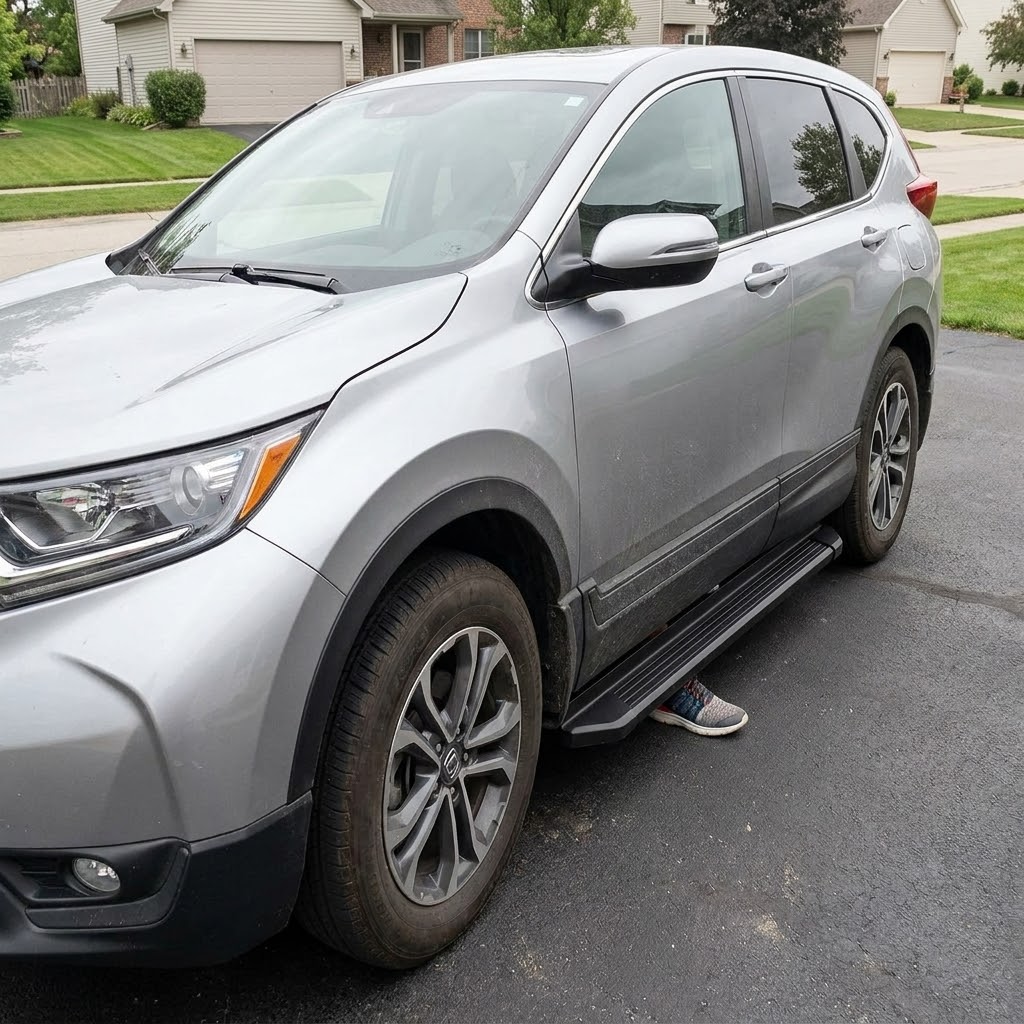
In simple terms, this means the side step fixed along the lower edge of the Honda Pilot to make entry, exit, and roof access easier.
Some owners encounter Honda Pilot OEM running boards while configuring a new vehicle, others when trying to solve a day-to-day annoyance: children climbing in, an older passenger needing a more predictable step, or a driver who is tired of brushing trousers against road grime on the sill. The same term also gets pulled into conversations about appearance, because a running board changes the side profile of the vehicle more than most add-ons.
Quick Orientation Before The Details
-
What it refers to: Honda Pilot OEM running boards are factory-branded side steps designed to match the Pilot’s mounting points and styling language.
-
How people usually run into it: accessory catalogues, dealer add-on lists, and model-year discussions where “OEM” is used as shorthand for “should fit without drama.”
-
Safe assumption: OEM usually means predictable fit and consistent finish standards for that model year.
-
Misleading assumption: OEM does not automatically mean every trim, every sensor layout, or every year is identical underneath.
What “OEM” Actually Signals In Honda Pilot OEM Running Boards
OEM is less about a magical quality jump and more about accountability and specification. With Honda Pilot OEM running boards, the expectation is that hole locations, bracket geometry, and clearance around the bodywork were defined with the same vehicle data used in production. That tends to reduce the “almost fits” problem: brackets that sit a few millimetres off, steps that sit too proud, or mounting hardware that forces awkward torque angles.
It also signals a certain consistency in surface finishing and corrosion protection. Running boards live in the worst zone of the vehicle: spray, grit, salt, and repeated shoe contact. A finish that looks fine in a box can dull quickly if it is thin, poorly sealed, or prone to chipping at edges and fastener points.
Why Running Board Design Feels Different On A Honda Pilot
The Honda Pilot sits in a sweet spot where a running board can feel genuinely helpful without being mandatory. Door opening height, seat height, and sill shape matter. If the step is too narrow, it becomes a toe-catcher rather than a platform. Too wide, and it can steal ground clearance in a way that is noticeable on steep driveways or rutted tracks.
Two measurements shape the real experience more than marketing terms:
-
Drop distance: how far below the door sill the step sits. More drop can help shorter passengers, but it can also feel like an extra “down then up” movement for taller adults.
-
Outboard width: how far the step sticks out from the body. More width often makes the step easier to use, yet it increases the chance of brushing trousers against a wet or dusty surface.
Mounting And Compatibility: Where Confusion Usually Starts
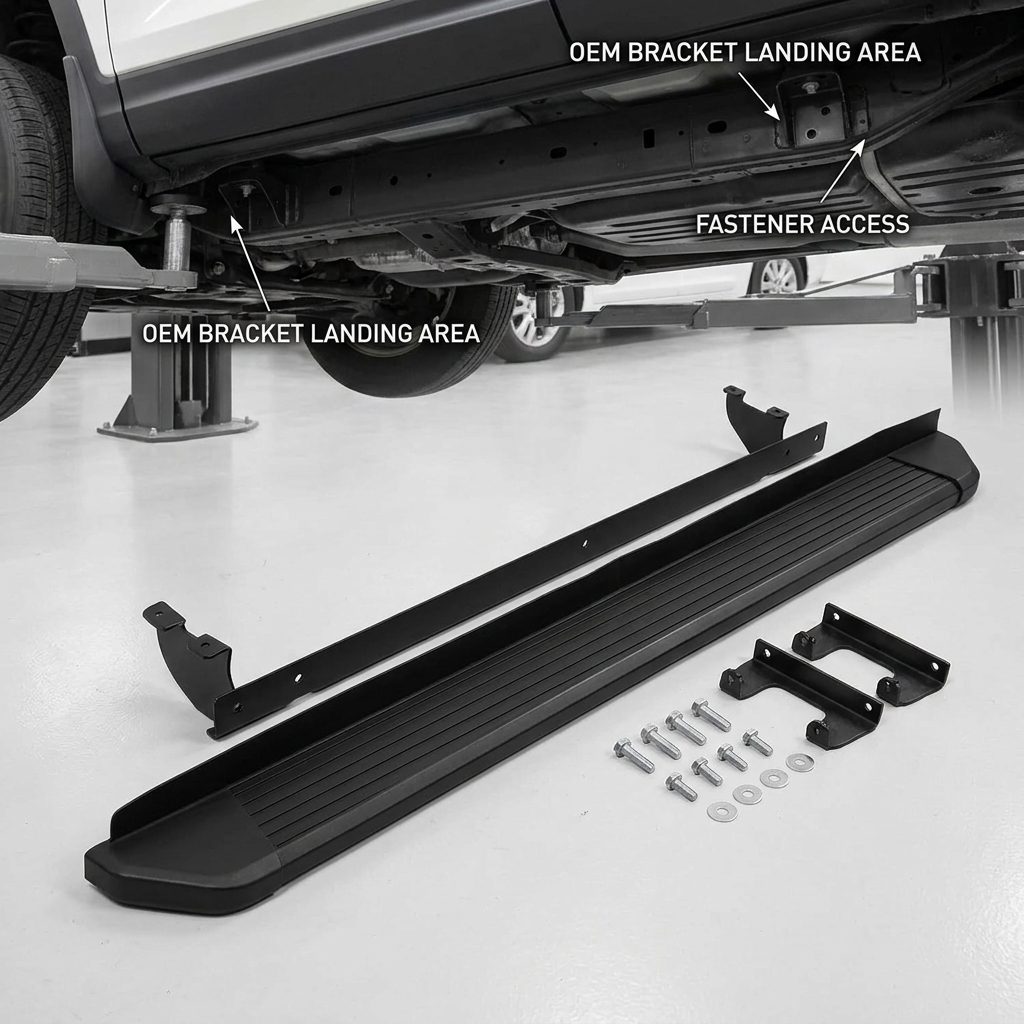
Honda Pilot running boards by model year
These options cover specific later Pilot model years. Match the exact year and listed mounting application before choosing.
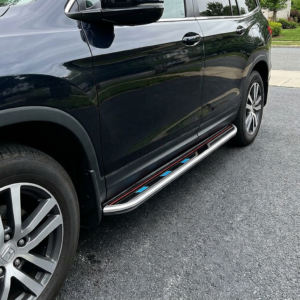
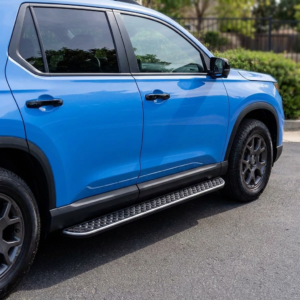
Most confusion around Honda Pilot running boards OEM searches is not about the step itself. It is about compatibility language. Model year matters, but so do trim differences and underbody equipment. Even when the side of the vehicle looks unchanged, the underside can vary: fastener access, bracket landing areas, and the presence of covers or wiring routes.
Fit questions often cluster around three practical points:
-
Model year and generation breaks: a change that looks cosmetic can come with revised mounting points.
-
Side skirt and cladding shape: a board that sits neatly on one trim can look oddly spaced on another.
-
Clearance around sensors and mud flaps: not every accessory combination plays nicely without small adjustments.
Materials And Surface Grip: The Part People Notice With Their Feet
Running boards are judged instantly, and mostly by people who never chose them. Wet shoes, school bags, hurried entry. That is why surface texture matters. A board with shallow texture can be comfortable underfoot in dry weather but feel uncertain when wet. Aggressive tread improves grip, yet it can be harsher on bare legs when brushing past in shorts, and it can trap grit that accelerates wear.
Material choices tend to show up as trade-offs rather than clear wins. Aluminium keeps weight down and resists corrosion well, but the coating quality becomes the weak point. Steel can feel more solid, but it relies heavily on paint and sealing to survive winter road salt. Plastic end caps and trim pieces often decide whether the unit looks integrated after a year of UV and washing.
Real-World Expectations For Honda Pilot OEM Running Boards
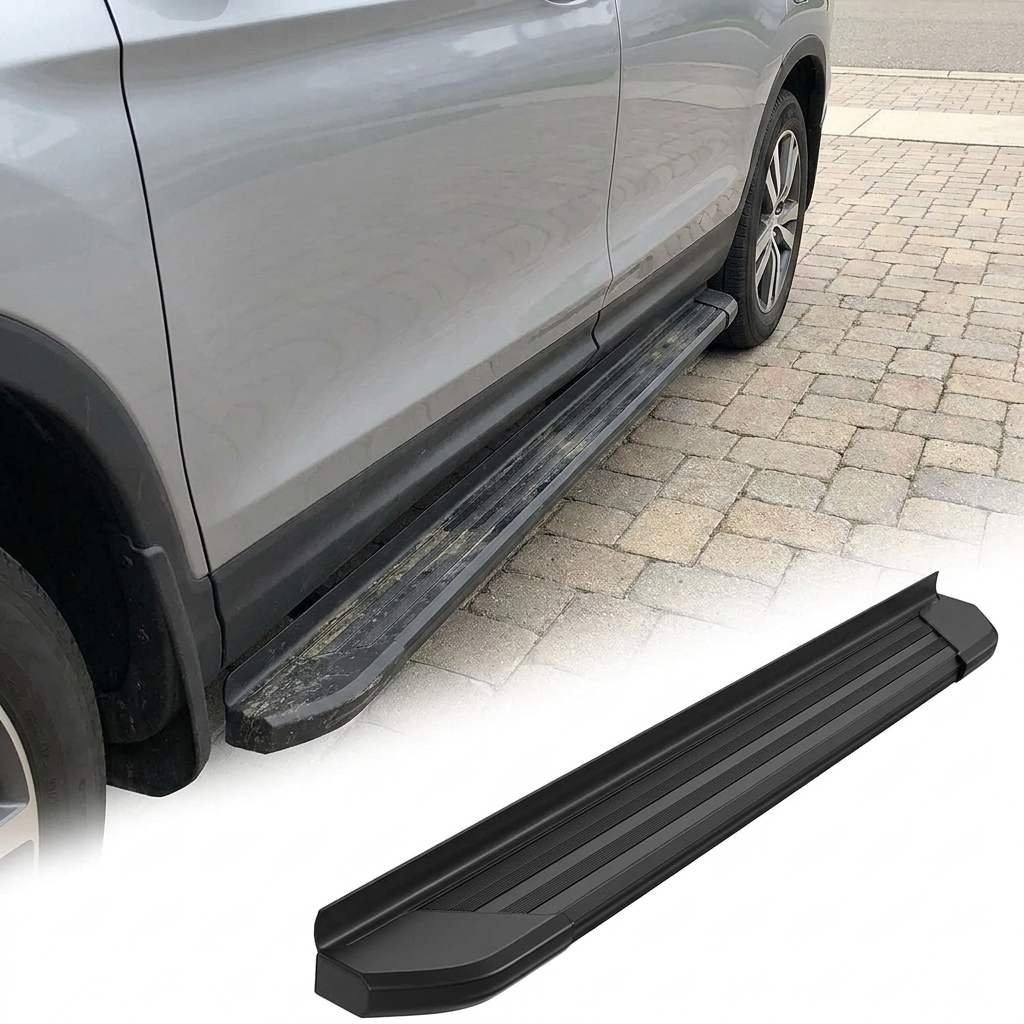
Honda Pilot OEM running boards are typically pursued for “set-and-forget” confidence: a step that looks like it belongs and behaves predictably. The realistic expectation is not that they transform the vehicle, but that they make repeated entry and exit slightly calmer—especially for children, shorter adults, and anyone managing mobility limitations.
There are also contexts where running boards can feel less satisfying. For drivers who prioritise maximum clearance, the added hardware can feel like a compromise. For those who rarely carry passengers, the day-to-day benefit may be subtle, while the side profile change is permanent. Those are not deal-breakers; they are simply the kinds of trade-offs that sit behind the deceptively simple search for Honda Pilot OEM running boards.
Where OEM Fit Really Shows Up In Daily Use
With Honda Pilot OEM running boards, the difference most drivers notice is rarely a single headline feature. It is the cumulative effect of how the step sits against the rocker area, how consistently it supports weight along its length, and how well the hardware stays quiet over time. A board that matches the vehicle’s mounting points tends to feel “invisible” in use: the foot lands where expected, the height is predictable, and the step does not flex in a way that changes confidence when entering or exiting.
That said, “OEM” does not automatically mean “perfect for every owner.” It usually means the design target is broad, with trade-offs that prioritise consistent fit and factory-like integration over niche preferences. Some owners want the lowest possible step for children; others want the most clearance for uneven tracks. Those goals can pull in opposite directions.
Step Height, Stance, And The Real Ergonomics
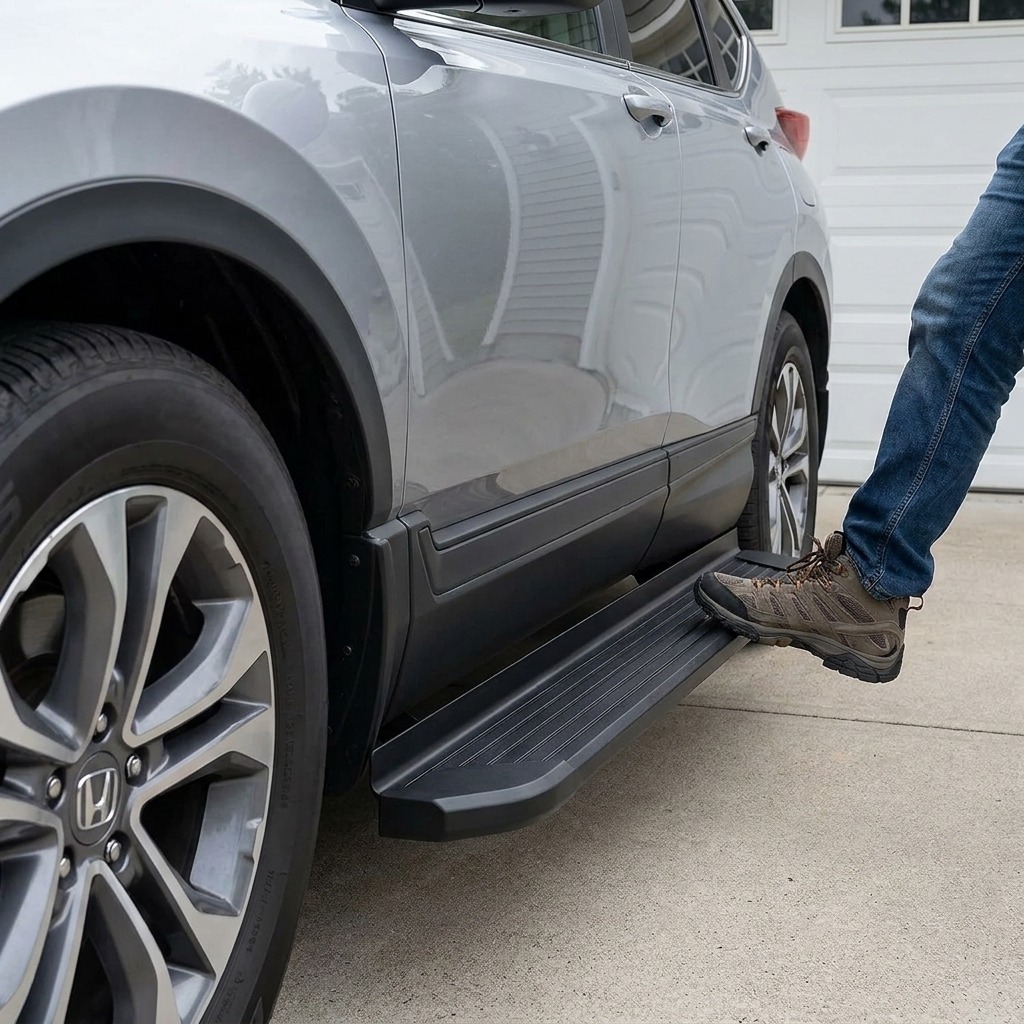
Running boards succeed or fail on geometry. The vertical drop from the door sill to the step surface determines whether the board meaningfully reduces the climb or simply becomes an extra surface that still requires a high lift. The horizontal “stand-off” from the body matters just as much: too close and shoes scrape the paintwork; too far and it forces an awkward outward step that can feel unstable in wet conditions.
In practice, Honda Pilot Running Boards OEM are often chosen because the stance tends to look intentional and line up with the vehicle’s proportions. The nuance is that a visually tidy stance can still be less accommodating for wider footwear, bulky boots, or passengers who naturally turn their foot outward when stepping down.
- If the board sits relatively high, it can preserve ground clearance but may not change access much for shorter passengers.
- If it sits lower, entry becomes easier, but it can become the first point of contact on steep driveways or rutted lanes.
- If the step surface is narrow, it can be fine for careful stepping yet feel limiting when carrying a child seat, bags, or when exiting quickly in rain.
Traction And Surface Design In Bad Weather
The practical question is not whether a surface is “non-slip” in a product description, but how it behaves when it is dirty. Mud, road salt, and fine grit can turn shallow textures into something that looks grippy but feels slick under a wet sole. Deeper channels often shed debris better, but they can also trap stones that then scratch footwear and reduce comfort.
For Honda Pilot OEM running boards, the expectation is usually a conservative traction approach: enough texture to be helpful, without being aggressively abrasive. That balance suits everyday shoes, but it can feel less reassuring with smooth-soled dress footwear or when the step is used at an angle rather than straight on.
Noise, Flex, And Long-Term Tightness
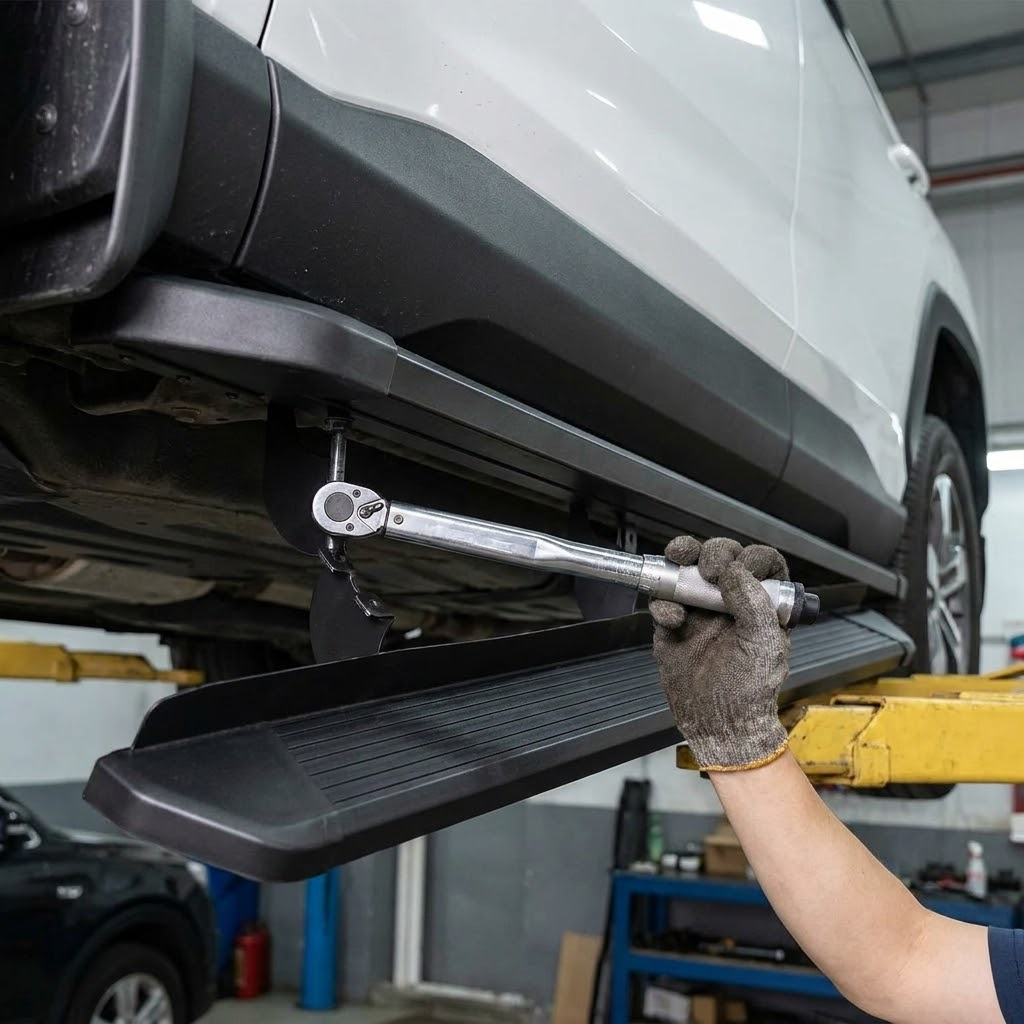
Owners often underestimate how much satisfaction comes from the absence of noise. A faint creak when shifting weight, or a periodic rattle over rough roads, tends to become more noticeable with time because it signals movement somewhere in the system. Flex is not automatically a defect—some controlled flex can reduce harshness—but it should feel consistent and not “springy” in the mid-span.
What changes the outcome is usually the interface: bracket alignment, fastener torque consistency, and whether the mounting points allow the board to sit flat without being forced into position. When a board has to be “pulled” into alignment, it can preload the hardware, and that is where loosening can start later.
Body Protection Versus Cleanliness Trade-Offs
Many people approach Honda Pilot Running Boards OEM thinking primarily about access, then discover the secondary effect: the board can catch some spray and stones. The trade-off is that it also becomes a shelf for grime. In winter or on wet roads, the step can accumulate slush and then transfer it to trousers or calves during exit—especially if passengers pivot out rather than stepping straight down.
Another nuance is door swing behaviour. If the board sits in a way that encourages stepping close to the body, it can reduce the chance of brushing the outer edge. If it encourages stepping outward, it may keep clothing cleaner but can increase the “reach” to the ground for shorter occupants.
Fit Across Passenger Needs: A Simple Applicability Map
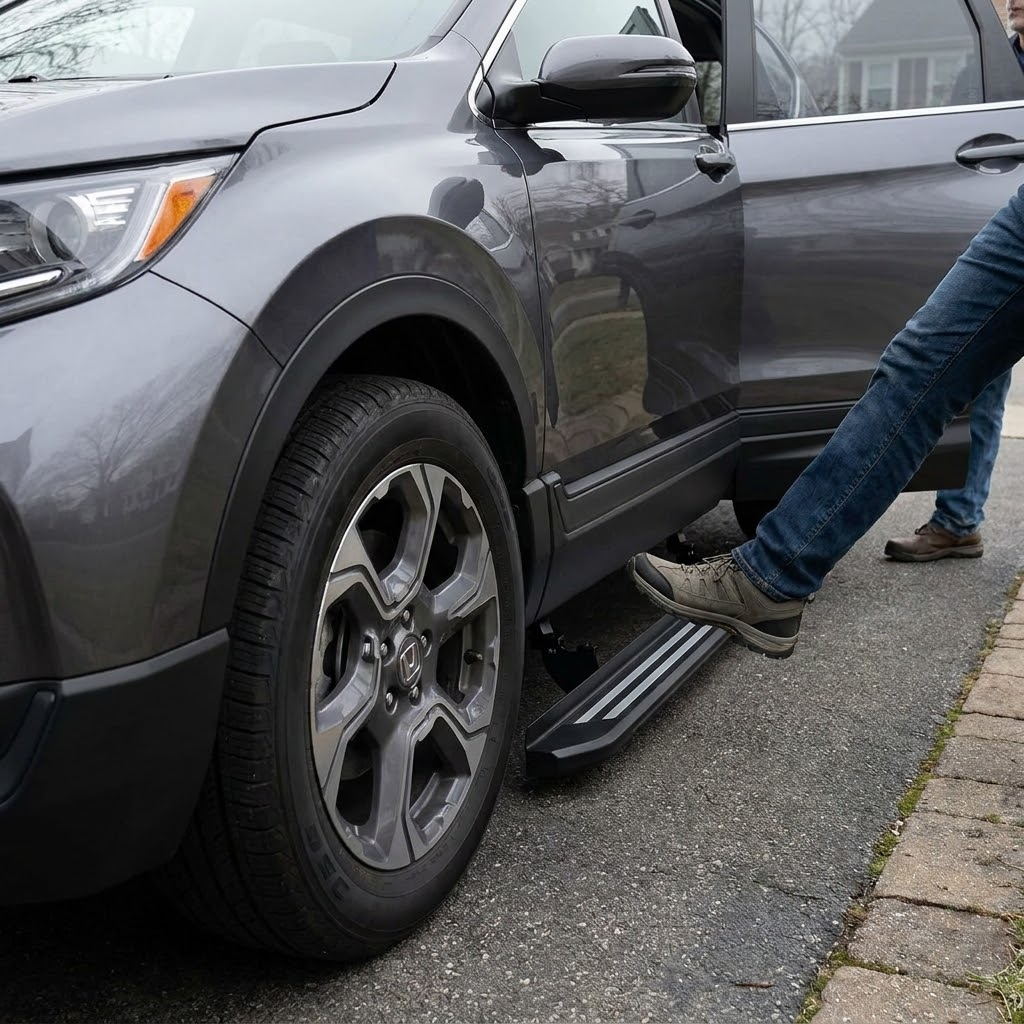
Even within one vehicle, the “right” feel depends on who uses the step most. The same running board can be a clear benefit for one household and only a mild convenience for another.
| Context | Tends To Feel Like A Good Fit | May Feel Less Convincing |
|---|---|---|
| Frequent child passengers | Lower, predictable step height that reduces the climb and supports small feet securely | Higher boards that preserve clearance but do not materially change access |
| Muddy lanes, winter roads | Surfaces that shed debris and maintain traction even when dirty | Shallow textures that look tidy but feel slick once coated with fine grit |
| Urban kerbs and steep driveways | Boards tucked closer and higher to reduce contact risk | Lower-hanging boards that improve access but can scrape more easily |
| Older passengers | Stable, wide stepping area that reduces balance demands | Narrow steps that require precise foot placement, especially when descending |
When Product Listings Help Without Taking Over The Decision
At this stage, the practical aim is to match expectations to the kind of board being considered, rather than chasing labels. A listing can be useful for checking basic compatibility, mounting approach, and whether the step surface looks like it will cope with the conditions the vehicle actually sees. For example, Running Boards for Honda Pilot 2023 Side Steps Nerf Bar can serve as a reference point for how sellers present fitment and installation claims, but those claims still need to be interpreted through geometry, traction behaviour when dirty, and long-term noise risk.
For readers focused on Honda Pilot OEM running boards, the most useful mindset is to treat “OEM” as a fit-and-integration baseline, then pressure-test it against household use: who steps in most, what shoes they wear, what weather is common, and whether ground clearance is routinely challenged. Those factors tend to decide satisfaction more than the label itself.
Where Honda Pilot OEM Running Boards Usually Make The Most Sense
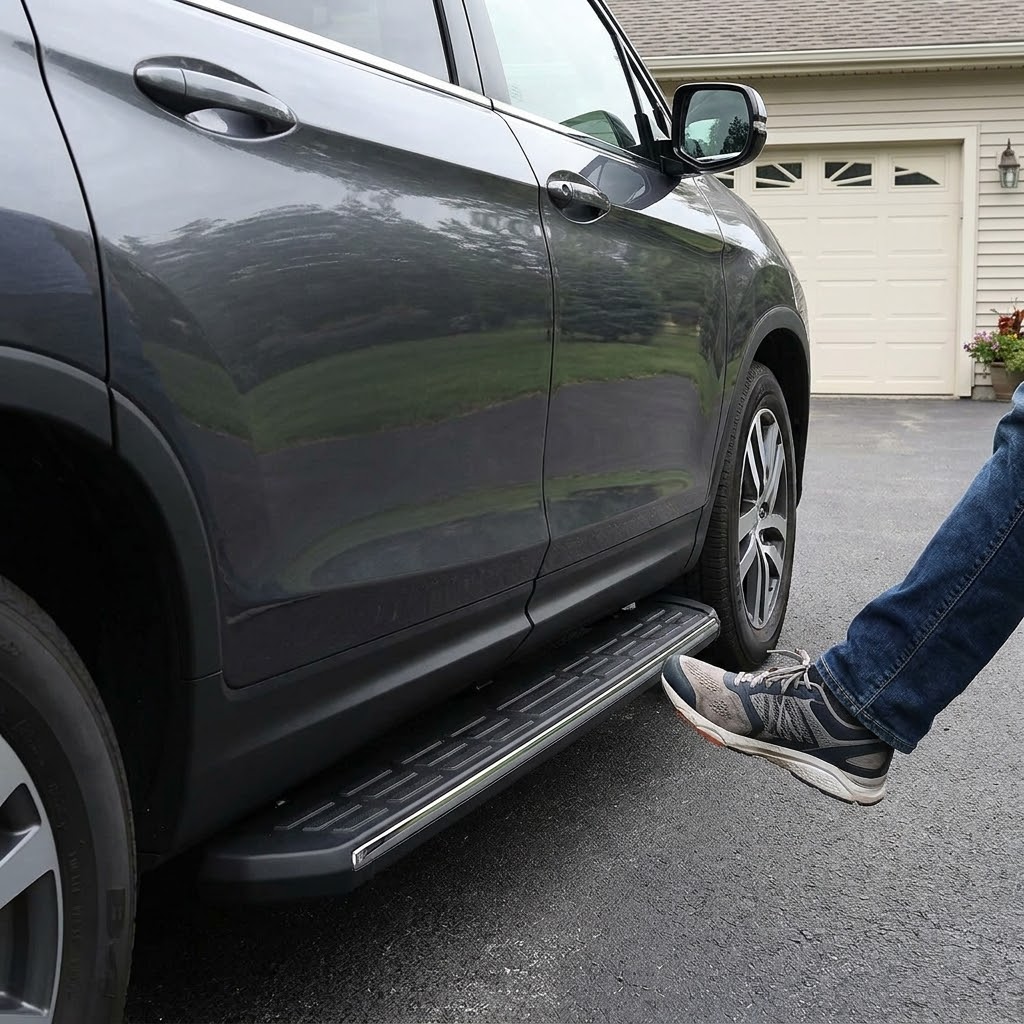
The strongest case for Honda Pilot OEM running boards is consistency: the step is always in the same place, with predictable grip and height. That predictability matters most when the same people use the vehicle every day and the movement pattern becomes automatic.
They tend to fit best in situations like these:
- Stability matters more than speed: anyone who prefers a controlled, two-step entry rather than a single climb benefits from a fixed, repeatable footing.
- Frequent short trips with lots of in-and-out: school runs, errands, and commuting amplify small annoyances, so a stable step can feel like a genuine quality-of-life improvement.
- Mixed passenger heights: when a vehicle is shared between taller adults and shorter adults, the step can reduce awkward twisting and “half-jumps” that strain knees and hips over time.
- Carrying items regularly: even without being heavy, bags and awkward loads change balance; a consistent step can reduce the tendency to pivot while stepping up.
In practice, the value is rarely dramatic on day one. It shows up after weeks, when entry becomes less of a thought and more of a routine.
When Honda Pilot Running Boards OEM Can Feel Like A Compromise
There are also contexts where Honda Pilot Running Boards OEM can feel like an added obligation. A step collects road film, salt, and grit, and that changes how “clean” the sides of the vehicle stay between washes. It can also slightly reduce the margin for steep driveways, uneven ground, or deep ruts—situations where clearance is part of why an SUV feels reassuring.
Common trade-offs that are easy to underestimate:
- More visible dirt along the rocker area: a step creates an extra horizontal surface where grime settles, so maintenance becomes more noticeable in wet climates.
- Edge awareness in tight parking: kerbs and high pavement edges become something to judge more carefully, especially when turning in close.
- Different feel for very tall drivers: for some, the step can become something to step around rather than on, which is not a deal-breaker but can feel unnecessary.
None of this automatically rules out Honda Pilot OEM running boards; it just reframes them as a comfort-and-access choice, not a universal upgrade.
Real-World Fit: A Quick Situational Guide For Running Boards
What matters is the match between the vehicle’s daily environment and the people using it. A simple way to sanity-check the decision is to map it to routine conditions rather than to “features.”
| Situation | Tends To Fit Better | May Feel Limiting |
|---|---|---|
| Urban kerbs, multi-storey car parks | Drivers who prioritise predictable foot placement | Those who often park very close to high kerbs or tight ramps |
| Wet winters, salted roads | Owners comfortable with more frequent rinsing | Anyone who wants low-maintenance exterior cleanliness |
| Family use with varied mobility | Passengers who prefer a stable intermediate step | Households where most users are tall and already comfortable with entry height |
| Regular uneven terrain | Light off-pavement use with modest angles | Steeper approach/departure angles where every bit of clearance matters |
How To Read Search Results For Honda Pilot OEM Running Boards Without Getting Misled
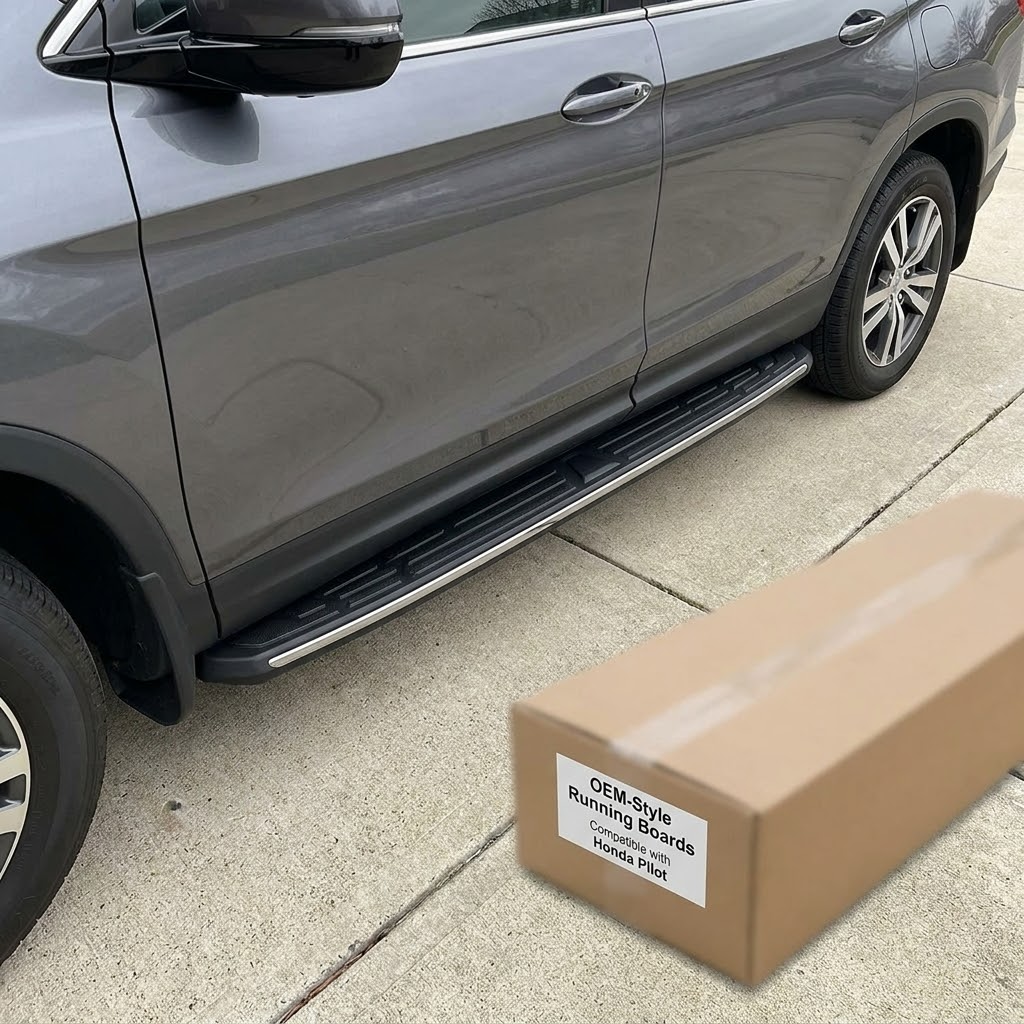
Search results for Honda Pilot OEM running boards often mix official-looking language with third-party listings, and the difference is not always obvious at a glance. The practical skill is learning to separate “genuine/OEM claims” from verifiable sourcing and correct fitment language.
Signals that usually reduce confusion:
- Clear fitment boundaries: specific model years and trims stated without vague “fits most” phrasing.
- Transparent seller identity: a seller that is easy to verify outside the listing tends to be easier to resolve issues with later.
- Complete documentation cues: part references, installation notes, and return constraints written plainly rather than buried in marketing copy.
For general vehicle accessory guidance and consumer rights expectations in the UK, the UK government’s consumer protection guidance is a useful baseline for understanding what “as described” and returns typically mean in practice.
FAQ: Common Questions People Ask While Searching “Honda Pilot OEM Running Boards”
Why Do Searches For Honda Pilot OEM Running Boards Show So Many Different-Looking Results?
Because “OEM” is used both as a sourcing term and as a marketing term. Some results reflect official supply chains; others use OEM-style wording while being third-party, so the listing language needs to be read carefully.
What Does “OEM” Actually Guarantee In A Listing?
On its own, it guarantees very little unless the seller clearly identifies the source and provides verifiable part references. Treat it as a claim that needs supporting detail, not as proof.
Is It Normal To See Year Ranges That Overlap But Don’t Match Exactly?
Yes. Fitment can change with refreshes, trims, or mounting points, and sellers sometimes simplify ranges for search visibility. When ranges differ, the more precise fitment statement is usually the safer interpretation.
What’s The Quickest Way To Check Whether A Result Is “Official” Versus A Marketplace Listing?
Look for clear seller identity, consistent branding, and support terms that read like a real organisation rather than generic text. If the seller cannot be verified outside the marketplace page, it is effectively a marketplace purchase regardless of how official the wording sounds.
Do Honda Pilot Running Boards OEM Change What Ownership Feels Like Day To Day?
They can, but mostly through small repeated moments: entry, exit, and how often the sides look dirty. If those moments are frequent in the routine, the change feels meaningful; if not, it can feel like added upkeep for a benefit that is only occasional.