
Honda Pilot running boards tend to get discussed as a “small add-on,” but in real use they change how the vehicle is entered, loaded, and cleaned.
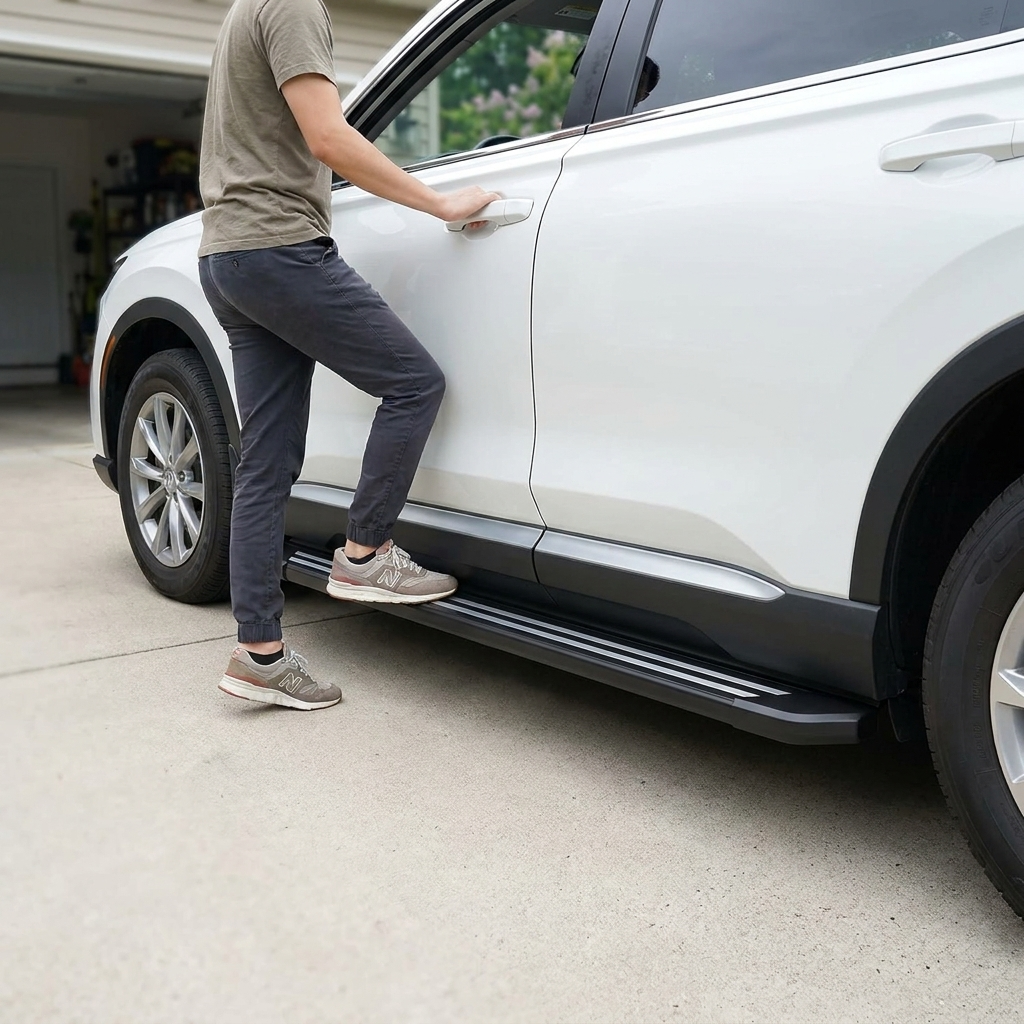
In simple terms, Honda Pilot running boards are the fixed step surfaces along the side of the SUV that create an in-between step from the ground to the cabin.
They sit in an awkward middle ground: not as essential as tyres or brakes, yet not purely cosmetic either. For some households they quietly remove daily friction—kids climbing in, older passengers stabilising themselves, reaching a roof box without a stretch. For others, they become one more surface to keep clean, one more part that can catch winter grime, and one more thing to think about when parking close to kerbs.
Honda Pilot running boards also get mixed up with similar terms. People say “step boards,” “side steps,” and “running boards” interchangeably. In practice, the name matters less than the geometry: how far the step sits out from the body, how wide the foothold is, and where it lands relative to the door opening.
Quick Orientation Before Details
- This topic is about the side step surface fitted below the doors on a Honda Pilot, not about tyres, suspension lifts, or off-road modifications.
- Most confusion comes from assuming “any running board fits” when fitment, mounting points, and door clearance vary by model year and trim.
- The practical upside is easier entry and a more predictable step height; the trade-off is added width and an extra area that collects dirt and road salt.
Why Honda Pilot Step Boards Feel Different From a Bare Sill
The Honda Pilot is tall enough that the first move into the cabin is a climb, not a step—especially for shorter adults, children, and anyone carrying a bag. Honda Pilot step boards reduce that “pull up and swing in” motion by giving the foot a staging point. That changes posture: less hip lift, less twisting, fewer awkward grabs at the steering wheel or door frame.
But the same piece that helps entry can subtly change exit. If the step sits far outboard, it can encourage a two-step drop that feels controlled. If it sits tight to the body, it can be missed entirely, leaving shoes to scrape the edge. That is why two vehicles can both be described as “a Honda Pilot with running boards” and still feel completely different in daily use.
Construction Logic That Matters More Than the Name
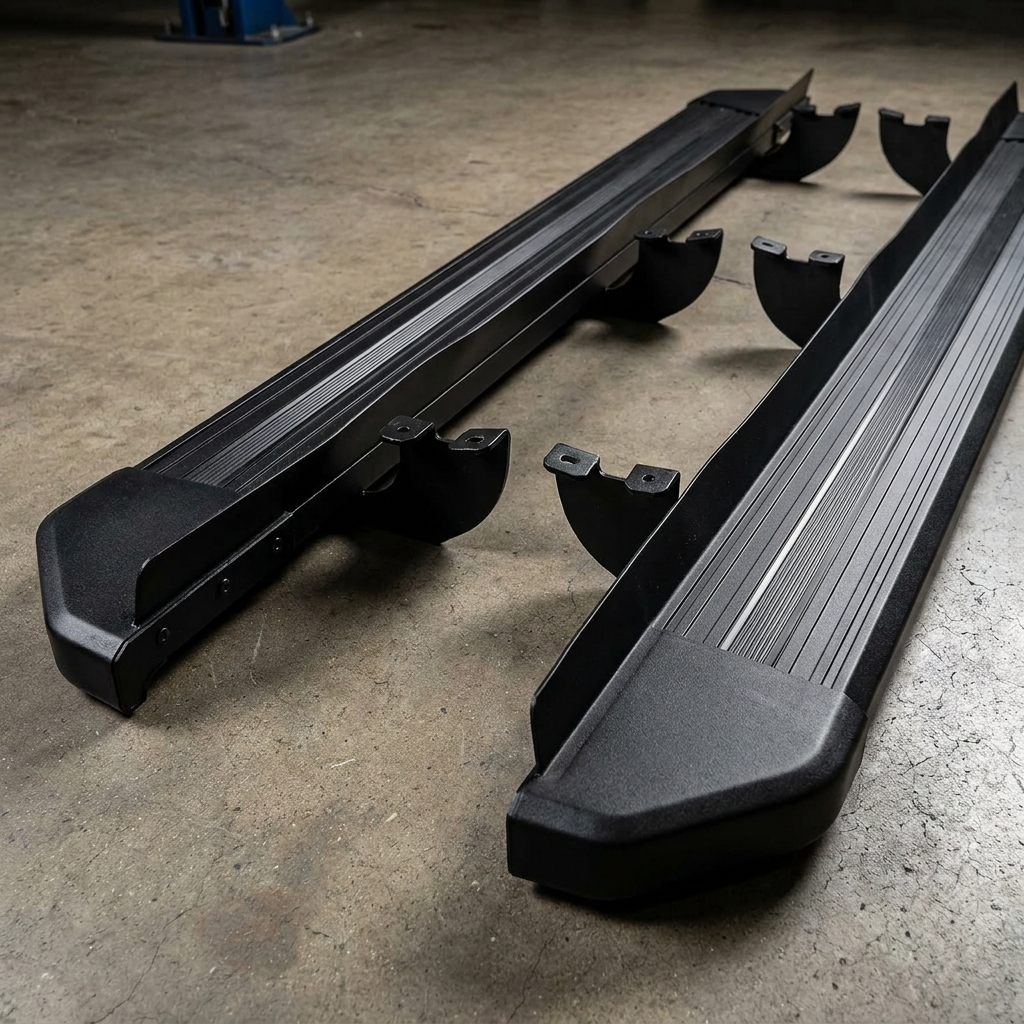
Recommended Honda Pilot running boards
Compare the model-year range shown on each product page with the exact Pilot before choosing a set.
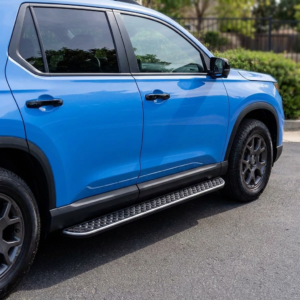
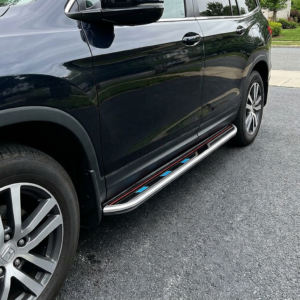
Most Honda Pilot running boards are built around a rigid structure (often aluminium or steel) and a top surface designed for traction. The key is not marketing texture; it is how grip behaves when wet, icy, or covered in fine grit. A step that feels secure in trainers can feel less predictable with smooth-soled shoes, and that difference shows up in the first week of winter.
There is also a simple mechanical reality: any step becomes a lever. If it is mounted poorly, flex shows up over time as creaks, loosened fasteners, or a slightly “springy” feel. Good mounting spreads load into the vehicle’s existing attachment points rather than concentrating it in one bracket.
Fitment Is Not Just “Honda Pilot”
When people search Honda Pilot running boards, they often assume the vehicle name alone guarantees compatibility. It rarely does. Model year changes can shift mounting locations, underbody shielding, and even how close the step can sit without interfering with door swing and weather seals.
Real-world fitment questions tend to cluster around:
- Clearance: whether the step reduces ground clearance enough to matter on steep driveways or speed bumps.
- Door Interaction: whether the step sits where heels naturally pass when stepping out, and whether it encourages dirty contact with trouser legs.
- Width Added: whether the vehicle becomes harder to thread through narrow gaps, and whether passengers brush against it unintentionally.
Where the Practical Benefit Is Strongest

Honda Pilot running boards usually make the most sense when the vehicle is used like a family tool: frequent short trips, repeated in-and-out, and passengers who are not all tall adults. They also help when loading a child into a seat, because the body can be positioned closer to the door opening without a stretch.
There are contexts where they can feel less compelling. Drivers who prioritise maximum clearance, or who regularly deal with deep slush and heavy mud, may find that any horizontal step becomes a collector. Not a deal-breaker, but a predictable maintenance reality.
Early Skin-In-The-Game Questions To Keep in Mind
Before getting into specifics later, a few questions frame the topic without locking anyone into a single “right” outcome:
- Is the problem primarily entry height, or stability (a secure pause mid-step)?
- Who enters most often—children, older adults, tall adults, a mix?
- Is the vehicle used in winter road salt conditions where extra surfaces need rinsing?
- Is the parking environment tight enough that added side width becomes noticeable?
These points shape what “good” looks like for Honda Pilot running boards long before any discussion of finishes, styles, or add-on features. The step is only useful if it matches how people actually move around the vehicle.
Fitment Real: Year, Trim, and Expectations
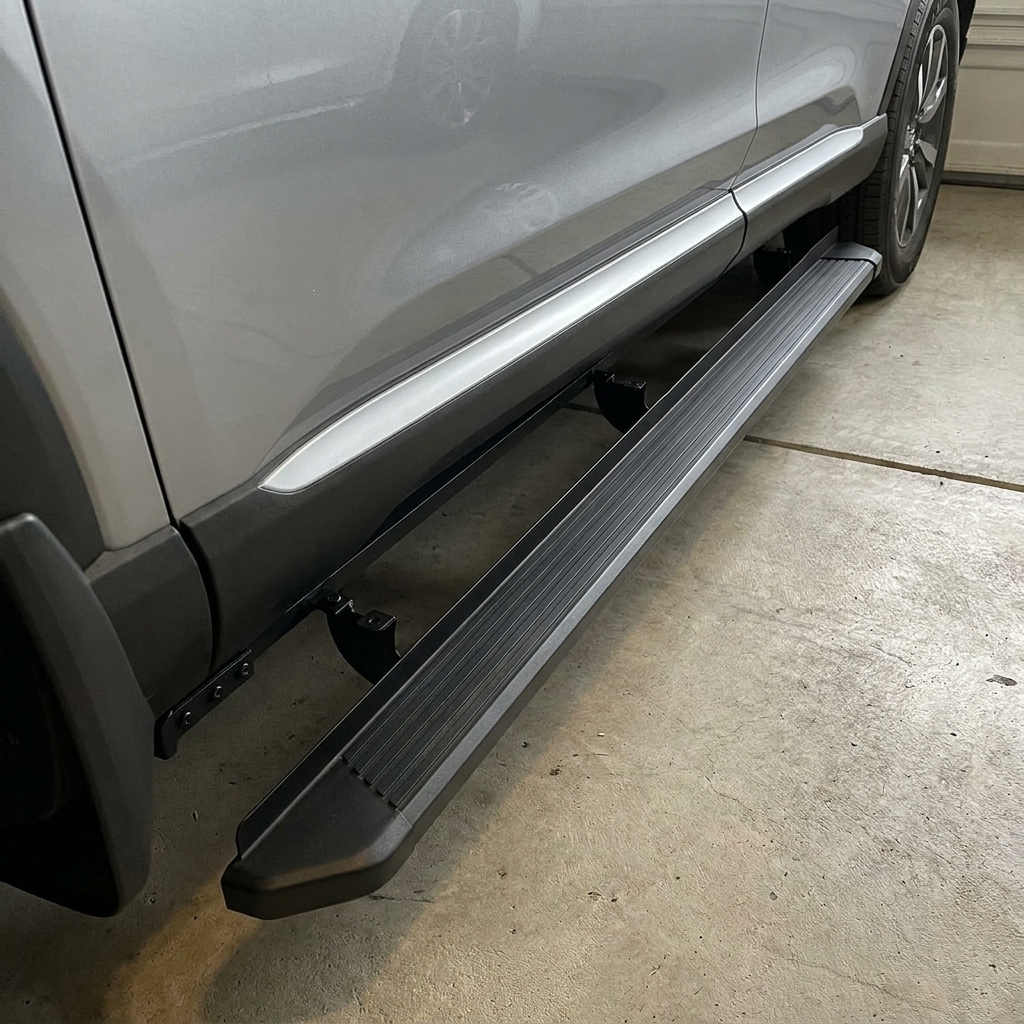
In practice, problems with Honda Pilot running boards almost never start with “do they look good,” but with real fitment on the vehicle. The Honda Pilot changes by generation, and within the same generation there can be differences in trim, mounting points, and underbody pieces that affect installation.
It helps to think of fitment as a triangle: model year, trim level, and the existing condition underneath (whether there are already shields, whether it has been used in salt and mud, whether fasteners are fatigued). When that triangle does not line up, you tend to get noises, looseness, or a step height that feels “off” when climbing in.
- Stated compatibility vs. practical compatibility: a listing that says “for Honda Pilot” does not guarantee it includes everything needed for a clean install on a specific trim.
- Mounting points: some kits use existing holes; others require additional hardware or adaptations. The difference shows up in install time and the likelihood of vibration.
- Usable height: a slightly lower step can make access easier, but it is also more exposed to kerbs and impacts on rougher roads.
Height, Width, and Grip: What You Notice When Stepping Up
Honda Pilot step boards get judged in seconds: the first foot placement. Two variables matter more than they seem: distance to the ground and usable surface area. A very narrow step forces a sideways foot placement and can feel insecure with wet soles; a step that is too wide can stick out and make trouser legs brush it more often on entry.
It also behaves differently depending on who uses it. For taller people, a very low step can feel like an unnecessary extra move that breaks a natural stride. For children or adults with limited mobility, that same lower step can be the difference between comfortable access and a forced climb.
On vehicles used often in rain, texture matters more than visual finish. In day-to-day use, consistent grip tends to matter more than decorative effect.
Materials and Finishes: Durability Versus Looks
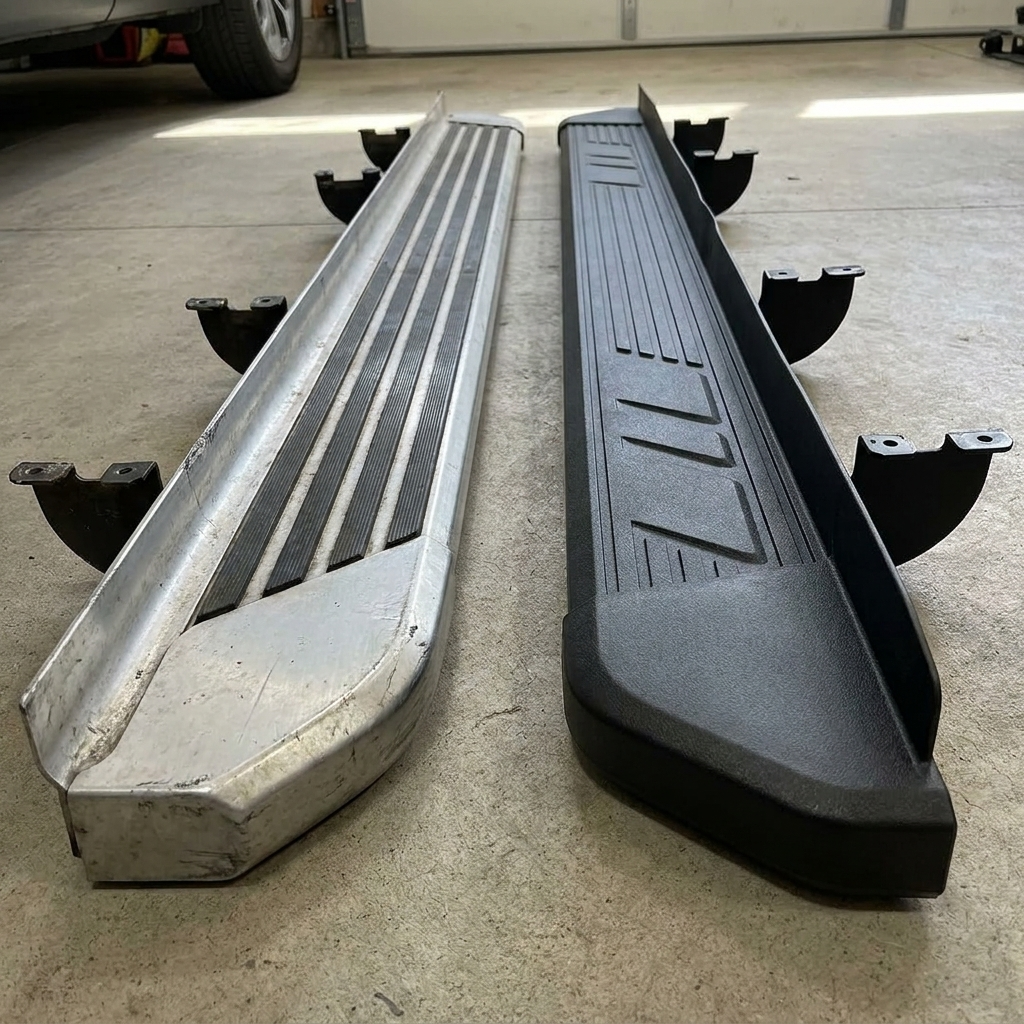
On Honda Pilot running boards, material and finish do not just change appearance; they change how the boards age. Glossy finishes can show fine scratches and stone chips more readily, while more subdued finishes sometimes hide wear better but can show dirt sooner.
In the UK, where damp conditions and road salt are a real winter factor, the weak point is often corrosion at hardware and joints. That is not a minor detail: when fasteners degrade, creaks and loss of rigidity can appear and get misread as “car noises.”
- Urban use: typical wear is scuffs and grime; ease of cleaning matters, and the surface should not become slippery.
- Mixed use with rougher roads: impact resistance matters, and the assembly should not become the lowest point along the side.
- Winter salt: prioritise corrosion protection and check fixings periodically.
How the Experience Changes With Weather, Age, and Daily Habits
Context drives the experience. In cold, wet weather, mud builds up and the step becomes a transfer zone for dirt into the cabin. In dry summer conditions, the issue is more often fine dust that reduces grip if the surface is too smooth.
Age and usage patterns also change perception. In families, a Honda Pilot with running boards can reduce the “hop” into the cabin, but it also adds a step that some teenagers ignore, brushing the edge with a leg instead of using it. For older users, the benefit tends to be more direct: a more gradual entry, less hip twist, and less need to pull on the door.
As for how running boards coexist with other changes, larger wheels or altered ride height can change the relative step height. It is not always a problem, but it does reset expectations: the same setup can feel perfect on a standard Pilot and “too high” on another.
Quick Fit Table by Scenario
| Scenario | What Usually Works Better | What Can Feel Limiting |
|---|---|---|
| Kids climbing in daily | A grippy surface with enough width for a full foot | A narrow or very smooth step that gets slippery in rain |
| Adults with limited mobility | A step height that reduces the “jump” without forcing an awkward bend | An unnatural height that makes people “hunt” for the step |
| Damp climate and salted roads | Protected hardware and robust joints that do not loosen | Finishes that mark quickly or fixings that loosen with vibration |
| Mixed use with kerbs and rougher roads | A setup that does not protrude too far and keeps good lateral rigidity | Very low or protruding designs that are more exposed to impacts |
When It Helps To Ground the Decision With an Example
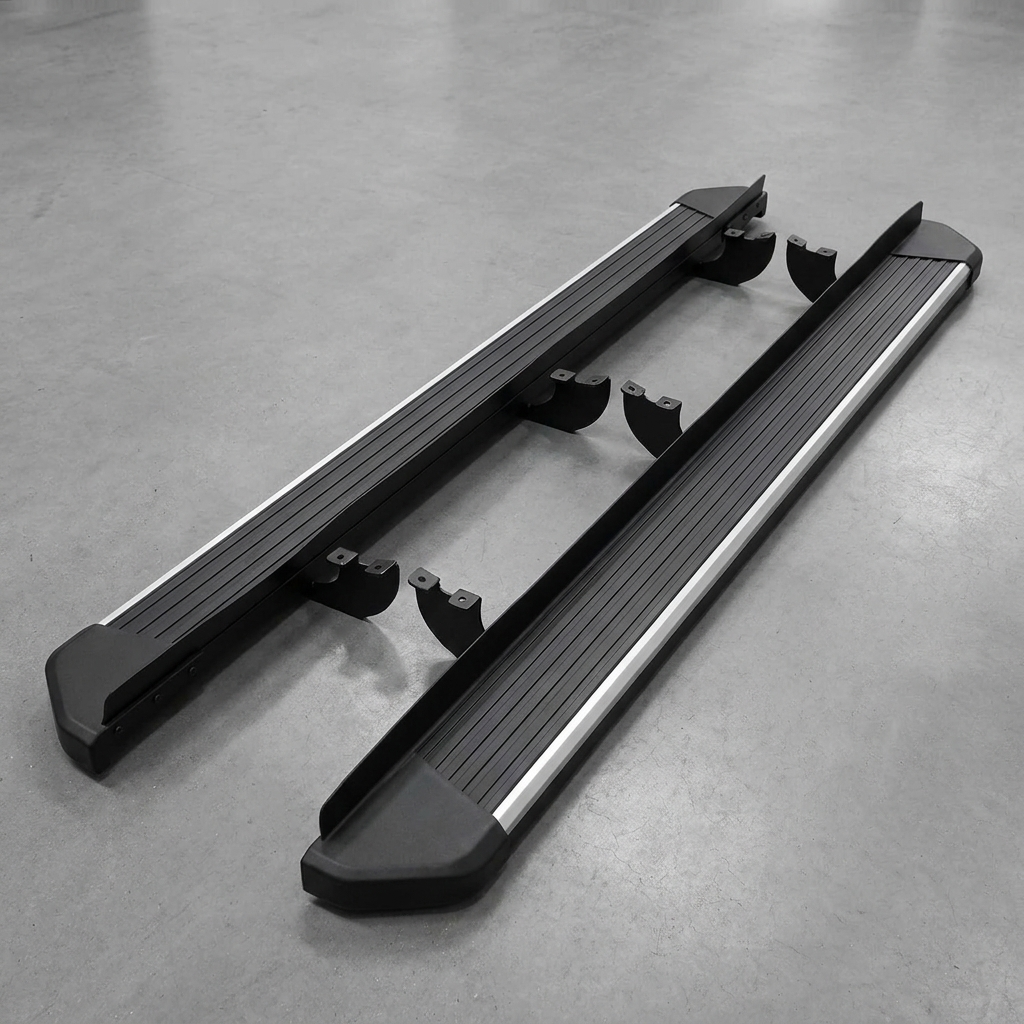
When you are in the compatibility-check phase, it can help to look at a specific listing to see what information is typically shown (compatible years, mounting type, finish): for example, Running Boards Fit for Honda Pilot 2023 Side Steps Nerf Bar.
The point is not the listing name, but the habit: verify year and generation, check whether hardware is included, and look for signs the kit is designed around the Honda Pilot’s specific underbody. That filter reduces surprises and helps keep Honda Pilot running boards from turning into an improvised adjustment project.
Honda Pilot Running Boards in Daily Life: What Feels Worth It and What Does Not
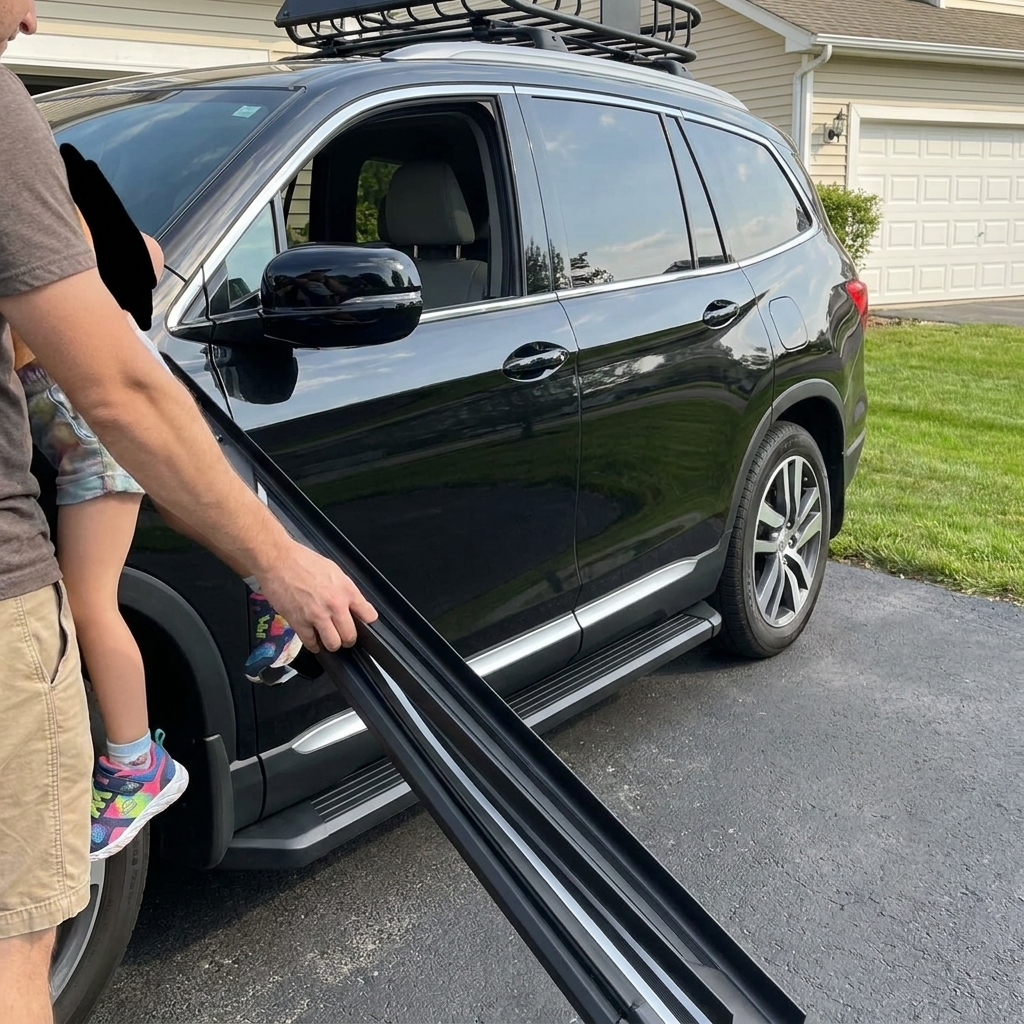
In real use, Honda Pilot running boards tend to feel “worth it” only when they remove a repeated annoyance: awkward entry for shorter passengers, kids climbing in, or loading roof cargo without a stable side step. When that friction is not there, they can quickly feel like a cosmetic add-on that adds upkeep and reduces clearance.
The most reliable way to judge fit is to be brutally specific about how the vehicle is used. A Honda Pilot with running boards can feel more welcoming for families and for anyone who steps in and out many times a day. On the other hand, if the Pilot frequently sees uneven tracks, deep snow ruts, or steep driveways, the same step can turn into the first point of contact—especially if it sits lower or protrudes wider than expected.
Where this type of setup generally makes sense:
- Consistency matters: daily school runs, rideshare-style use, or frequent errands where easy entry is repeated many times.
- Passengers include shorter adults, older relatives, or children who benefit from a predictable intermediate step rather than a single big climb.
- Roof access is part of normal life (sports gear, boxes, seasonal items), and a stable side step reduces awkward reaching.
Where it can feel limiting:
- Off-pavement driving, deep slush, or rough winter roads where packed debris and impacts are more likely.
- Drivers who prioritise maximum ground clearance and a clean side profile over convenience.
- Anyone sensitive to added cleaning time, because grime tends to collect along the step and its brackets.
Step Boards Vs. No Step: a Practical Fit Check Without Guesswork
Thinking in “step boards versus none” is more useful than obsessing over small design differences. The decision is mainly about geometry and habits: how high the cabin feels to the household, and how often that height is a problem.
| Situation | Usually Feels Like a Better Fit | Usually Feels Like a Compromise |
| Kids or shorter passengers use the car daily | Honda Pilot step boards for a stable, repeatable step | No step if entry is already easy and the family prefers less upkeep |
| Frequent winter grime, salted roads | No step if cleaning time is a pain point | Step boards if convenience outweighs extra washing |
| Steep driveways or uneven surfaces | No step to protect clearance and reduce contact risk | Step boards if they sit high/tight and the use case is strong |
| Roof loading is common | Step boards to make side access less awkward | No step if roof access is rare |
The key expectation: running boards do not “transform” the vehicle. They make one action easier (getting in, stepping up, reaching the roofline), while adding trade-offs (clearance, cleaning, and potential noise if anything loosens over time). If the household will not repeatedly use the step, the trade-offs arrive without the payoff.
Fitment Reality for Honda Pilot Running Boards: Year, Trim, and Search Hygiene
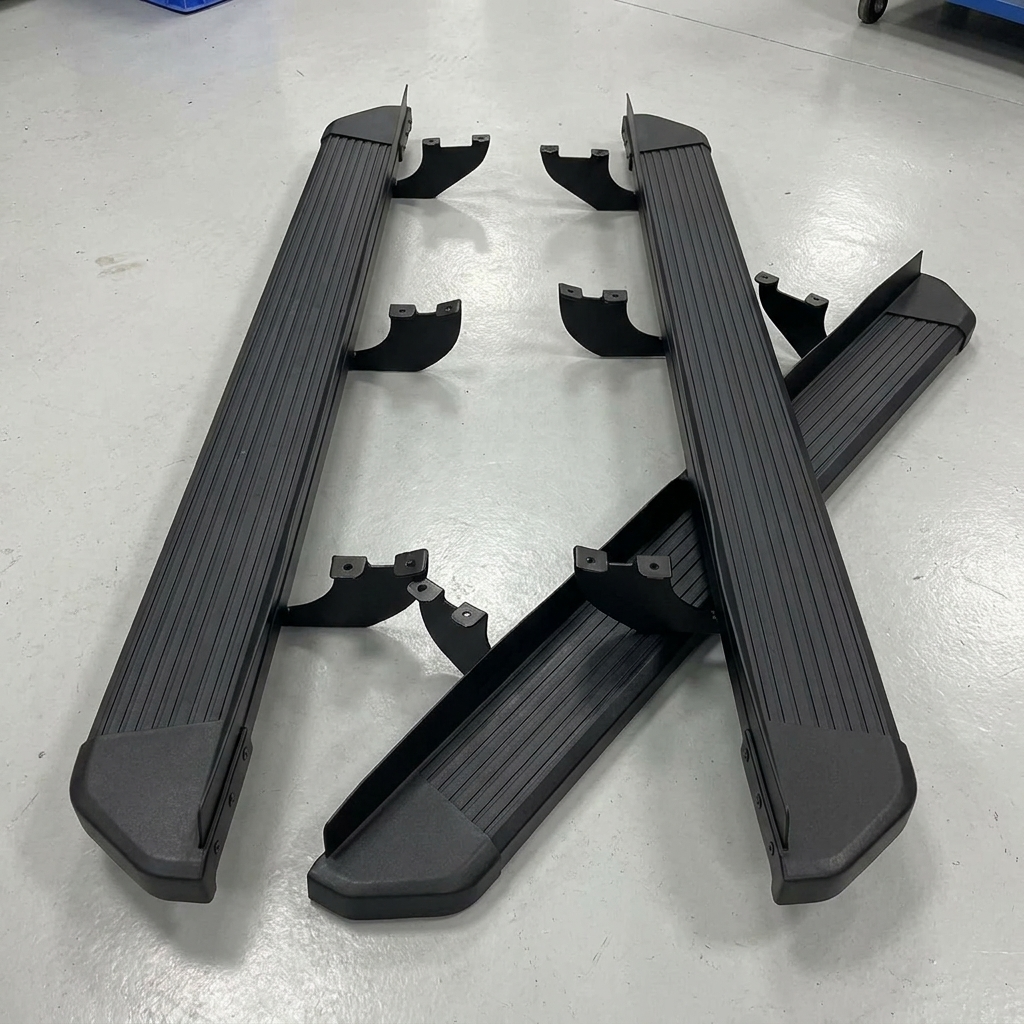
Most disappointment around Honda Pilot running boards is not about the idea—it is about mismatch. Search results and listings often look similar, but compatibility can hinge on model year, trim details, and factory mounting points. That is why the “fitment” step is not optional; it is the whole decision.
Practical ways to reduce wrong-fit risk when browsing:
- Cross-check model year and trim wording in more than one place; do not rely on a single title line.
- Look for clear mention of mounting method and whether drilling is implied; vague language is a signal to slow down.
- Verify what “fits” means: some sellers use it loosely, while others tie it to specific OEM mounting points.
- Be cautious with photos that do not show bracket locations or how far the step sits out from the body.
This is also where the “Honda” part of the query can mislead: many shoppers mean “for a Honda Pilot,” not necessarily “from Honda.” Treat “Honda Pilot running boards” as a fitment search first, and a brand search second, and the browsing process becomes cleaner.
Choosing Honda Pilot Running Boards With Realistic Expectations
A sensible target is simple: safer, easier entry without creating a new daily irritation. If the step surface is used often, it should feel stable under a quick, imperfect foot placement—wet shoes, grocery bags, a child hopping in. If that stability is not there, convenience turns into hesitation, which defeats the point.
One grounded way to decide is to picture two weeks of normal life and ask a single question: will people naturally step on it, or will they keep stepping over it? If the answer is “step over,” the decision is already made—because the household is paying the trade-offs without using the benefit.
For readers who want a concrete starting point while browsing, one example listing sometimes encountered is Running Boards Fit for Honda Pilot 2023 Side Steps Nerf Bar, but the more important work is still verifying fitment and deciding whether the step will be used every day.
FAQ: Clearing Up Common Confusion Around Honda Pilot Running Boards
When People Search “Honda Pilot Running Boards,” What Are They Usually Trying To Confirm?
Most are trying to confirm compatibility and whether the setup will actually make entry easier for their household. The phrase often signals uncertainty about model year fit and what “fits” really means across different sellers.
Why Do Search Results Show So Many Different-Looking Options That Claim To Fit the Same Vehicle?
Because listings may generalise fitment, reuse photos, or bundle multiple model years under one page. The safest interpretation is that “looks similar” is not evidence; specific compatibility notes and mounting details matter more.
Is “Honda” in the Query the Same as “Official Honda” Parts?
No. Many people use “Honda” as shorthand for the vehicle brand, not the source of the part. It helps to treat “official” as a separate question that must be confirmed explicitly on the seller’s page.
What Is the Quickest Way To Avoid a Wrong-Fit Purchase When Browsing?
Match model year and trim carefully, then look for unambiguous mounting language rather than marketing descriptions. If the page is vague about how it attaches, it is a signal to slow down and verify elsewhere.