
For a 2013 Honda Pilot, the KUIPERAUTO running boards land in a practical middle ground: they can make daily entry feel noticeably easier, but the real question is whether the style and mounting approach match how the vehicle is actually used.
This review looks at KUIPERAUTO Running Boards Side Steps as a specific choice for owners searching for running boards for Honda Pilot 2013, not as a generic discussion of side steps.
Running boards are rarely “one-size-fits-all” even when fitment years line up. A Pilot that mostly does school runs has different priorities than one that sees muddy boots, winter road salt, and frequent roof loading. The product can be the same; the satisfaction outcome is not.
Quick Orientation for Running Boards on a 2013 Honda Pilot
- What Is Being Evaluated: a full-length pair of side steps intended to sit below the doors, giving a consistent step surface for entry and exit.
- Why People Consider It: reducing the “climb” into the cabin, helping shorter passengers, and making roof access feel less awkward.
- A Realistic Expectation: this type of hardware usually improves convenience more than it changes the vehicle’s capability; it can also create a new surface that collects water, grit, and winter salt.
Where This KUIPERAUTO Setup Typically Fits Best
As running boards for a 2013 Honda Pilot, this KUIPERAUTO design makes the most sense when the vehicle regularly carries passengers who benefit from a lower intermediate step—kids, older family members, or anyone who dislikes the “hop” into a taller SUV. In that context, the board is less about looks and more about reducing awkward foot placement and stabilising entry.
It also tends to suit owners who use the Pilot as a daily driver but still want the side profile to look finished. A board with a bright accent can read cleaner on some paint colours and busier on others; that’s not a quality issue so much as a styling commitment that is hard to ignore once installed.
What It Is, and What It Is Not
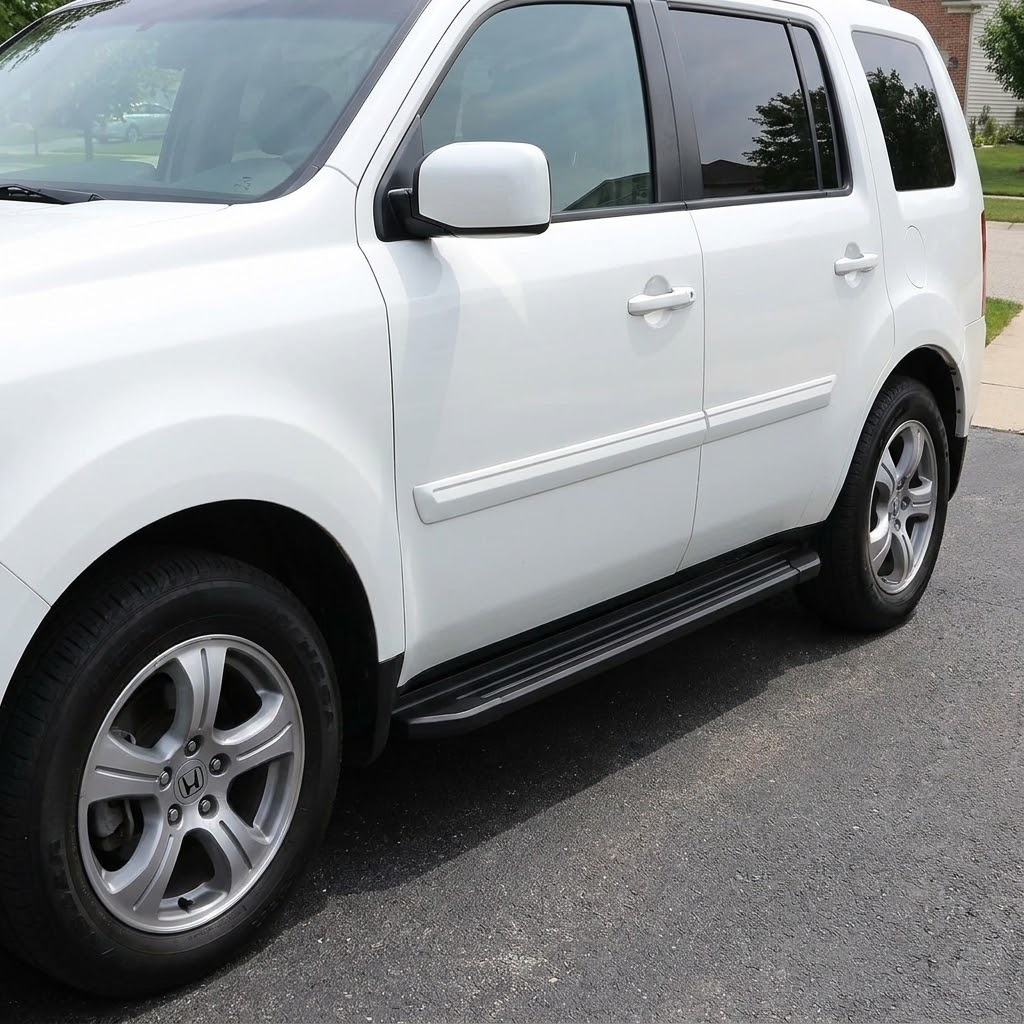
Later-model Honda Pilot boards to compare
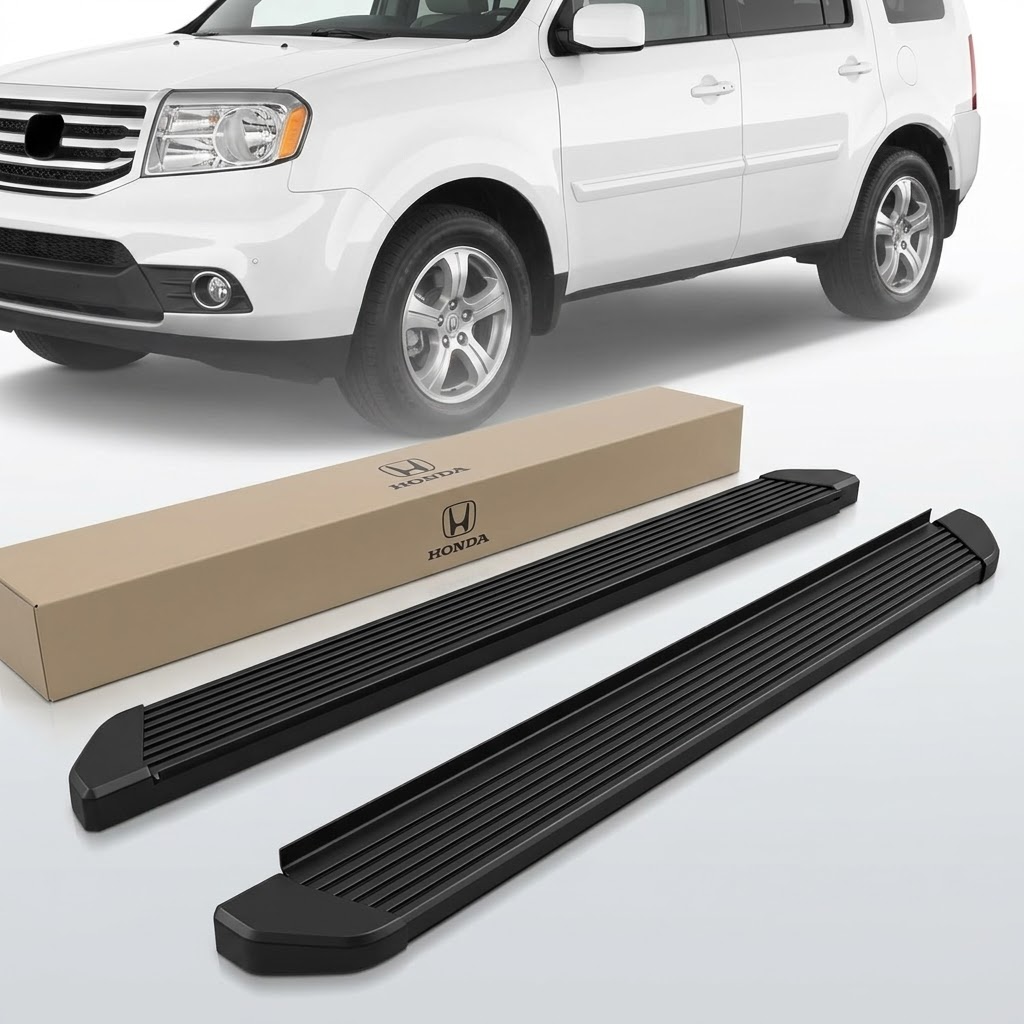
These catalog products cover later Pilot years and are not listed for a 2013 Pilot. Use them only as current-market comparison references.
The KUIPERAUTO unit is best thought of as a fixed step surface with a trim-forward appearance. It is not a rock slider, not an off-road protection bar, and not a part chosen primarily for impact resistance. If the vehicle is expected to drag over ruts or take frequent contact underneath, that is a different decision category than “Honda Pilot running boards 2013” in the everyday sense.
For most owners, the more relevant distinction is simpler: a fixed board changes how shoes meet the vehicle. It becomes the default stepping zone. That can be a genuine upgrade in comfort, but it also means the board’s width, surface feel underfoot, and wet-grip behaviour matter more than the spec sheet suggests.
Fitment Reality: Compatibility Claims Versus Installation Outcome
This product is positioned for the 2009–2015 Pilot range, which includes the 2013 model year. Even so, “compatible” in listings does not automatically mean “no surprises in the driveway.” Small differences in underbody hardware, prior repairs, or rust on mounting points can turn a straightforward install into a slower, more fiddly job.
For buyers searching variations like running boards for 2013 Honda Pilot or Honda Pilot 2013 running boards, the practical way to think about fitment is less about the year and more about the condition of the vehicle underneath. A clean, unmodified underside usually rewards this type of bolt-on accessory. A high-mile Pilot that has lived through winters may demand extra time and patience, and that should be part of the expectation before any judgment about the product itself.
Early Build and Finish Impressions That Affect Ownership
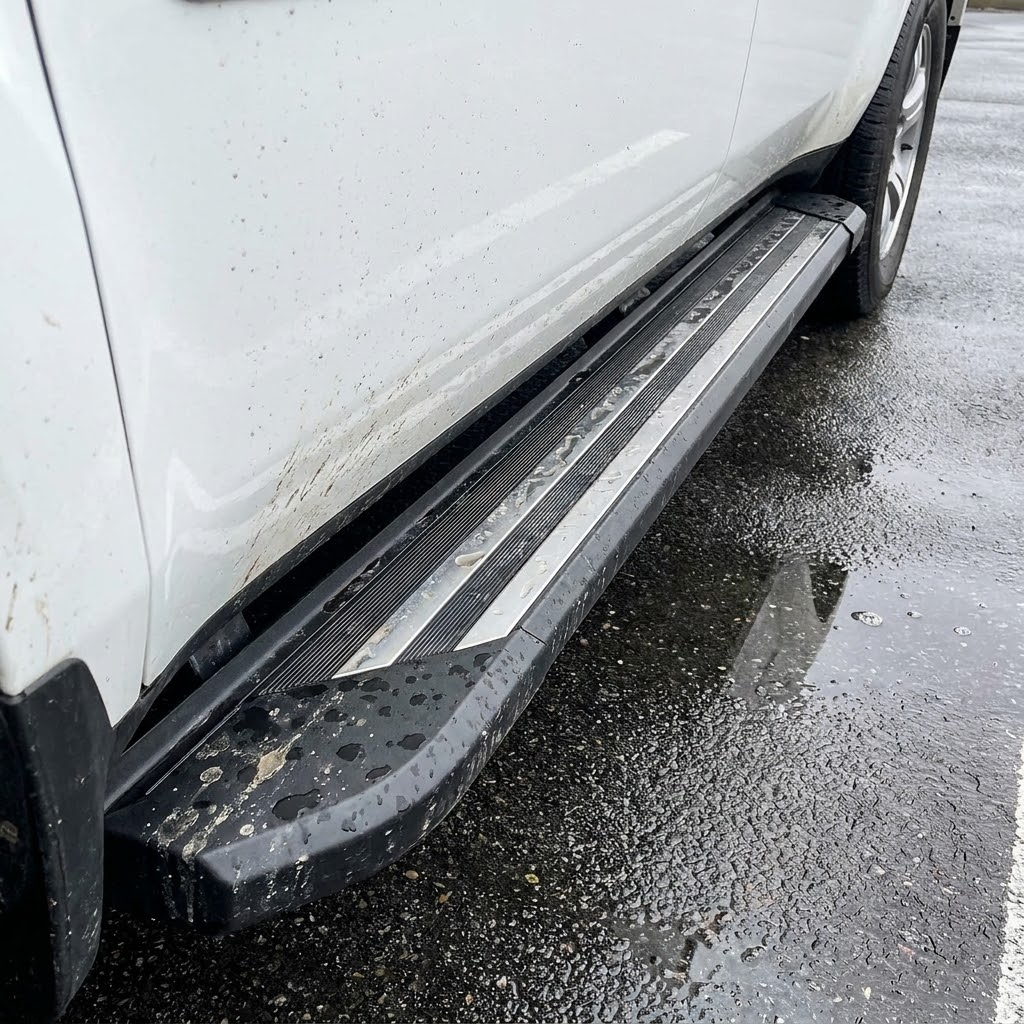
With step bars, the “feel” is often decided by small things: whether the board sits level and consistent side-to-side, whether it looks integrated or slightly tacked-on, and how the finish reads in real light rather than studio photos. A brighter panel can look sharp when clean, but it also makes grime and spotting more visible, especially in wet climates.
That visibility trade-off is not automatically a drawback. Some owners prefer a board that looks like an intentional exterior detail. Others would rather it disappear visually and only show up when needed. This is one of the first suitability filters for running boards Honda Pilot 2013 shoppers, and it is better to be honest about it early than to treat appearance as an afterthought.
How It Feels Day to Day on a 2013 Honda Pilot
On a taller SUV like the Pilot, the real value of running boards for Honda Pilot 2013 shows up in repeated situations: getting in quickly, stepping out with bags, helping children, or supporting passengers with limited mobility. This type of platform reduces the “hop” and makes the movement more predictable. The practical read, however, depends on two things that are not always obvious in photos: the usable step depth and the position relative to the door.
On the KUIPERAUTO Running Boards Side Steps, the chrome-like finish tends to feel more “visible” than “technical.” That can work if you want a stronger styling statement, but it also forces you to think about real use: a bright finish typically shows fine dust and shoe marks sooner. It does not prevent grip by itself; it simply makes upkeep more noticeable when the vehicle is used every day.
Another nuance: when 2013 Honda Pilot running boards sit relatively close to the body, you gain clearance for your leg as you turn in (less chance of brushing the board), but you give up some “shelf” to place your foot confidently. If they sit further out, the opposite tends to be true: easier stepping, but more physical presence when walking close to the vehicle.
Rigidity, Underfoot Feel, and Noise
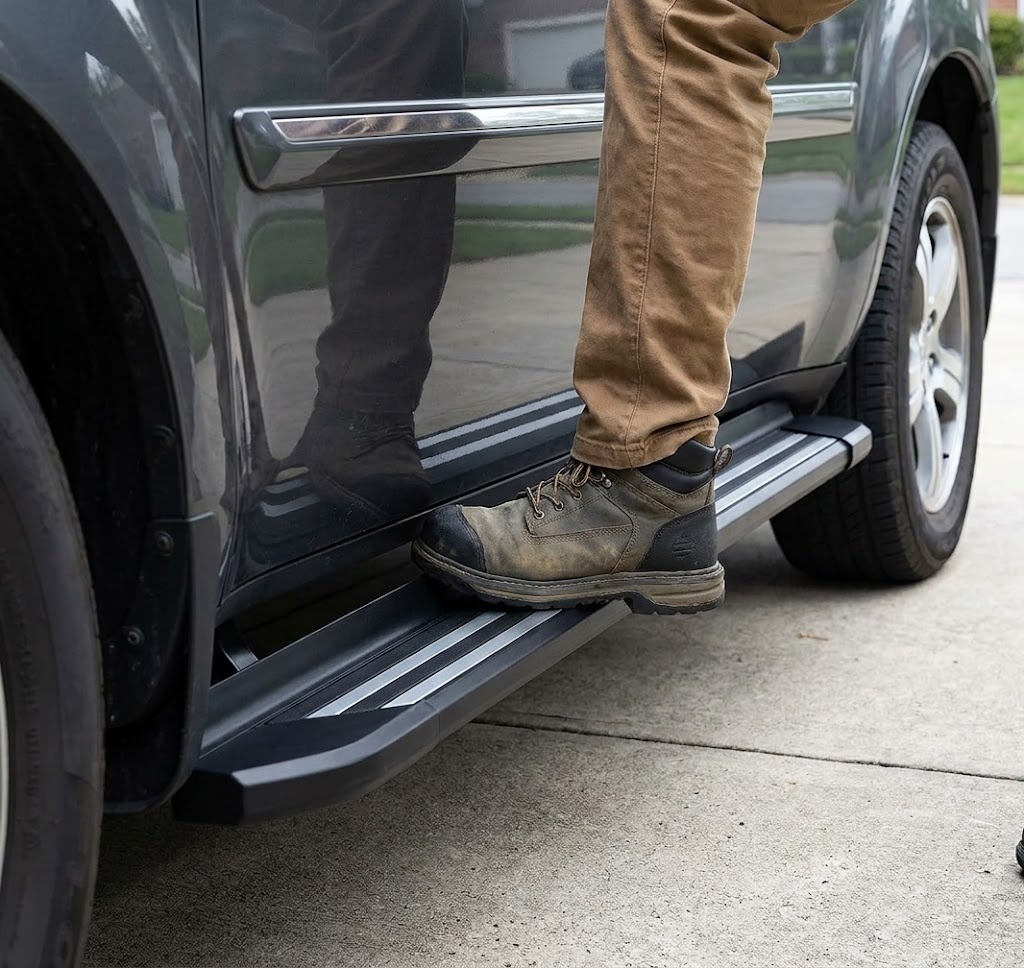
With running boards for 2013 Honda Pilot, perceived rigidity matters more than the headline load rating. A board can “hold” weight and still transmit flex or vibration when you step on it; that sensation is what determines whether people use it naturally or avoid it. With this style, the outcome depends on the whole system: the board, the brackets, and how the mounting points share the load.
When installation is well aligned, the step typically feels solid through the middle of the span. Doubts tend to show up nearer the ends, especially if someone steps with their foot further outboard or uses the board as a reference point while turning their body. In those cases, any small play can translate into a click or slight movement that is not immediately dangerous, but can be annoying over time.
- If the vehicle is used heavily in town, minor noise on entry and exit can matter more than it would with occasional use, simply because you notice it several times a day.
- On steep driveways, kerbs, or angled ramps, a board that flexes can feel less confidence-inspiring even if it is structurally adequate.
- With wet footwear, confidence depends on the real surface texture; a smoother surface can still work, but it demands more precise foot placement.
Useful Step Height and Access: Where It Helps Most
Running boards Honda Pilot 2013 owners buy are usually about accessibility, but the benefit is not uniform. For taller adults, the board can become an unnecessary intermediate step: they end up stepping over it and occasionally brushing the edge. For children, older passengers, or anyone climbing in with a load, the intermediate step reduces effort and stabilises entry.
With this set, the most realistic read is that it works best as a repeated daily aid rather than a step you only use occasionally. If the Pilot is a family or travel vehicle, the likelihood of use is high and the payoff is real. If the SUV is driven mostly solo and without cargo, it can end up being more of a styling element than a functional one.
Behaviour in Weather, Dirt, and Heavy Use
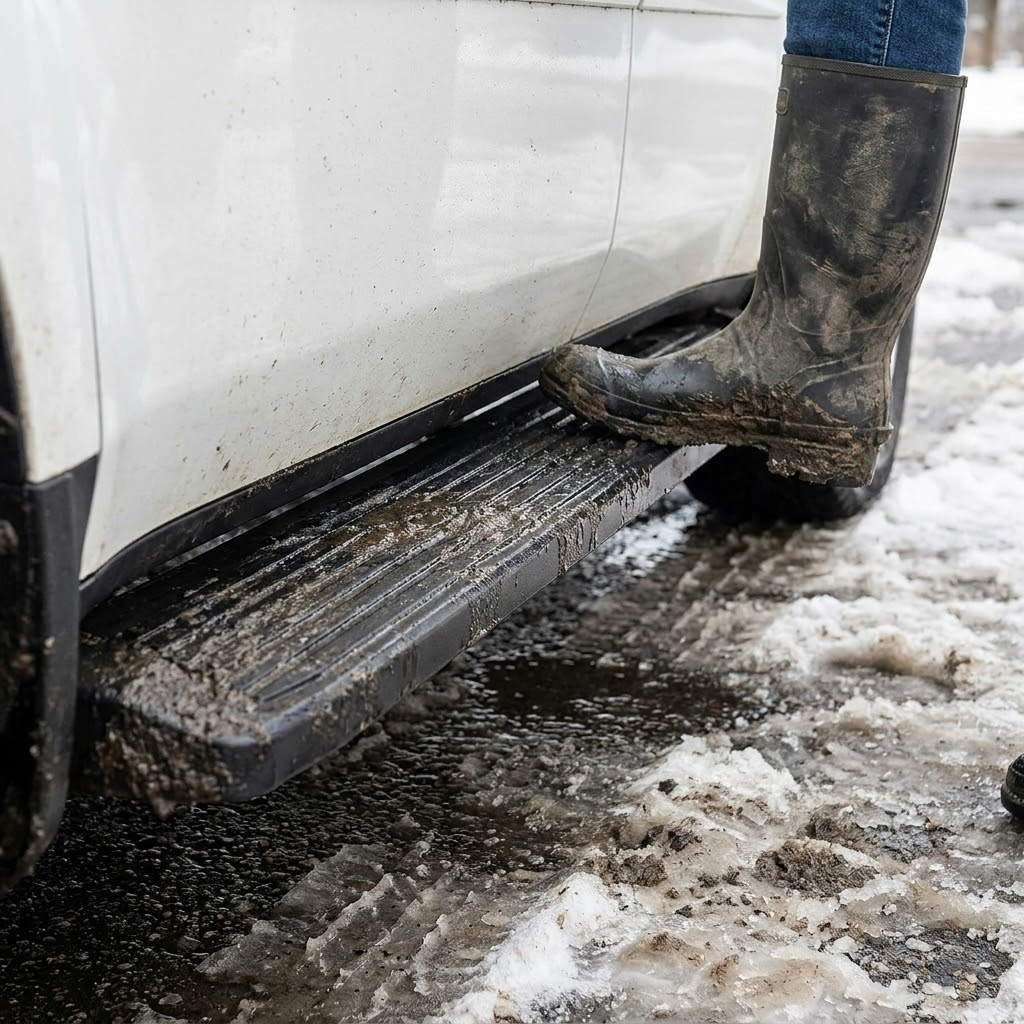
It is one thing to try running boards for Honda Pilot 2013 in dry conditions and another to live with rain, mud, or slushy winter roads. In that scenario, the weak point is rarely structural strength; it is the balance between grip and cleanliness. Step surfaces that look “clean” at a glance can become slick when a thin film of water mixes with fine road dust.
The bright panel on this model can work for or against you depending on expectations: it can look convincingly “new” when clean, but it also shows splashes sooner. For drivers in wet areas or places where roads are treated in winter, cleaning stops being a detail and becomes part of ownership.
- In frequent rain, it is worth paying attention to whether the step texture sheds water or holds a film; you feel the difference the first time you step quickly.
- In mud, the edge and the join to the body are common dirt traps; design matters more than material in those areas.
- With pets that jump up or brace their paws, a less forgiving surface can show marks sooner and may need more care to keep the finish looking tidy.
Installation and Adjustment: What Changes the Experience
With Honda Pilot running boards 2013, “fits” does not automatically mean “sits right.” Fine adjustment is what decides whether the board ends up centred, parallel, and evenly spaced along the body. A small deviation can translate into an odd underfoot feel; your body compensates without you noticing.
This type of kit typically relies on existing mounting points and hardware. That simplifies the job, but it also makes the result sensitive to tolerances, dirty threads, and tightening sequence. If everything is fully tightened before the board is properly presented and levelled, it is easy for the assembly to pull slightly out of position.
It is also worth thinking ahead: after a few months of vibration and temperature changes, a re-check of fasteners can prevent noises and minor play. That is not a defect; it is the kind of follow-up that separates a quiet installation from one that starts to creak on entry and exit.
Ground Clearance and Light Off-Pavement Use
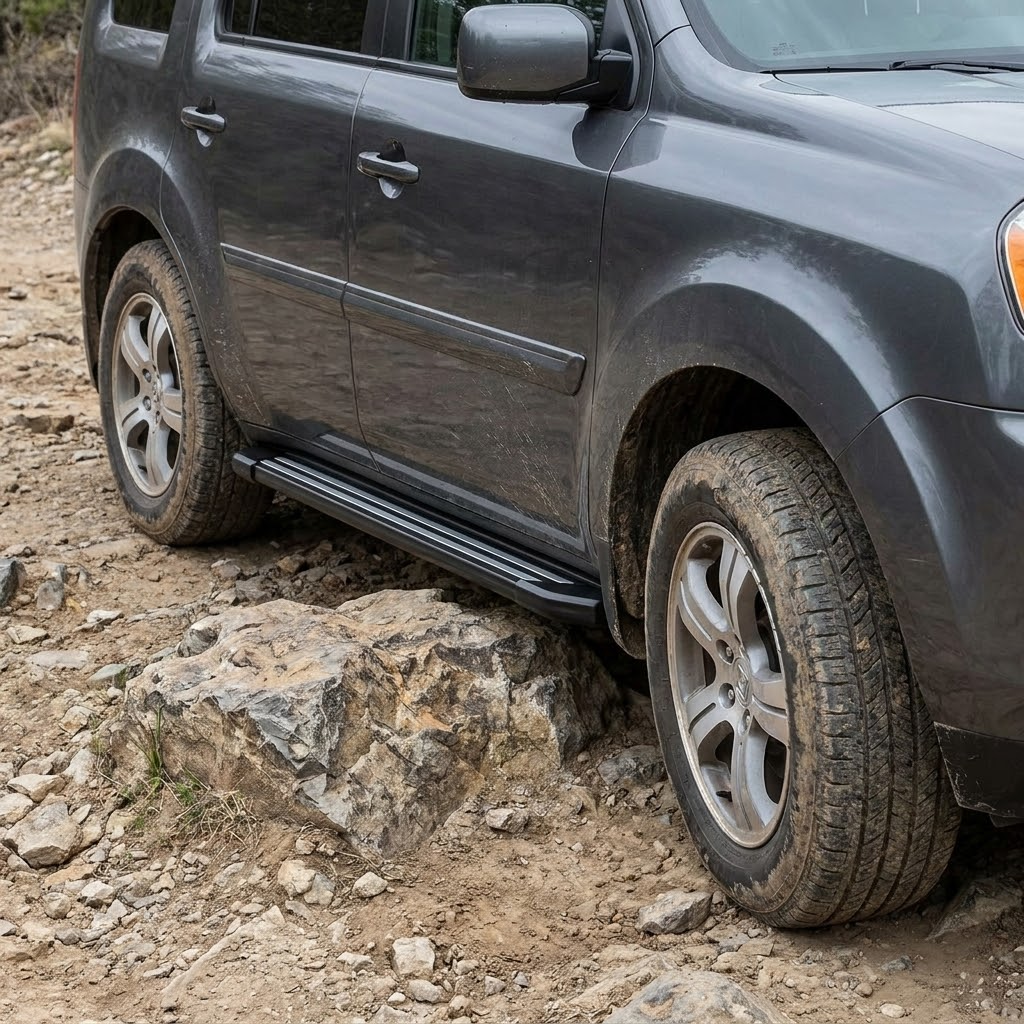
Running boards for 2013 Honda Pilot add hardware along the lower outer edge of the vehicle. In normal driving, that is rarely an issue, but on rutted tracks, rocky entrances, or speed humps with a fully loaded vehicle, the extra presence can become an early contact point. It does not happen in every case; it depends on suspension condition, load, and how you approach the obstacle.
In that sense, this style is more clearly aimed at road and town use, plus family travel, than at maximising clearance. If the Pilot is used regularly on uneven ground, priorities often shift toward a more tucked-in profile and more margin underneath.
Styling and Fit With the Pilot: What You Gain and What You Expose
On an SUV with relatively clean lines, a chrome-like panel can visually underline the side profile. Some owners like that because the vehicle looks more “finished”; others feel it disrupts a more understated look. The practical point is that a more visible piece also makes wear more visible: small chips, shoe scuffs, and stone marks show sooner.
If you want the vehicle to stay discreet, Honda Pilot 2013 running boards with a less reflective finish often hide age better. This KUIPERAUTO style, by contrast, leans into presence. That is not a problem; it is an aesthetic choice worth accepting upfront to avoid frustration later.
Running Boards for Honda Pilot 2013: When This KUIPERAUTO Setup Makes Sense
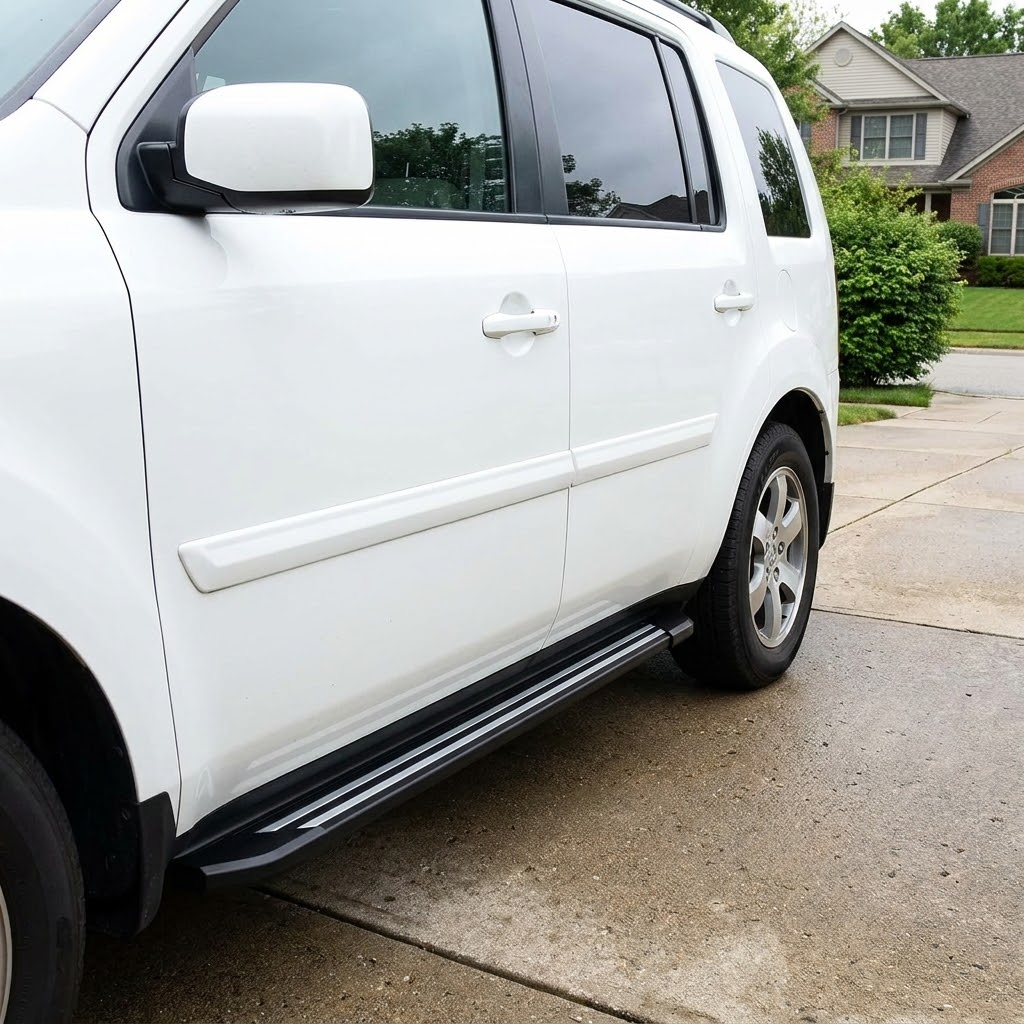
For most owners looking at running boards for Honda Pilot 2013, this KUIPERAUTO set lands in a fairly specific middle lane: it focuses on an eye-catching side profile and a conventional step height, rather than disappearing into the body line or prioritising maximum grip above all else. That can be exactly the right trade-off for a daily-driven Honda Pilot that needs easier entry, but it also means expectations should stay grounded—especially around how the step surface behaves in wet conditions and how the styling will age alongside the rest of the trim.
It tends to suit households where the step is used repeatedly and casually—school runs, errands, regular passengers—because the real value of 2013 Honda Pilot running boards is consistency: the step is always there, at the same height, with the same feel underfoot. If the vehicle is used more like a work tool (muddy footwear, frequent off-pavement stops, winter road film), the finish and surface choice matter more than the headline look, and this style can feel a little more “showy” than purely practical.
Where It Feels Strong in Day-to-Day Use
In real use, the most convincing argument for this style of running boards Honda Pilot 2013 owners consider is basic ergonomics: a stable intermediate step can reduce awkward climbs, especially for shorter passengers and older family members. The chrome-accented presentation also tends to read as “factory-adjacent” from a distance, which is often what buyers want when they do not want the sides to look unfinished.
It is most at home in these scenarios:
- Consistency matters more than maximum traction: entry and exit are frequent, but typically in clean shoes and predictable conditions.
- Passengers vary in height and mobility: the step becomes a shared convenience rather than a niche add-on.
- The Honda Pilot is kept tidy: the visual payoff of the finish is part of the point, and regular washing is already the norm.
That last point is not cosmetic nitpicking. With running boards for 2013 Honda Pilot setups that include bright trim, cleanliness and perceived quality are linked; road film and salt residue show sooner, so the “nice look” depends on maintenance habits that may already be realistic—or may not fit at all.
Nuances That Decide Satisfaction More Than the Spec Sheet
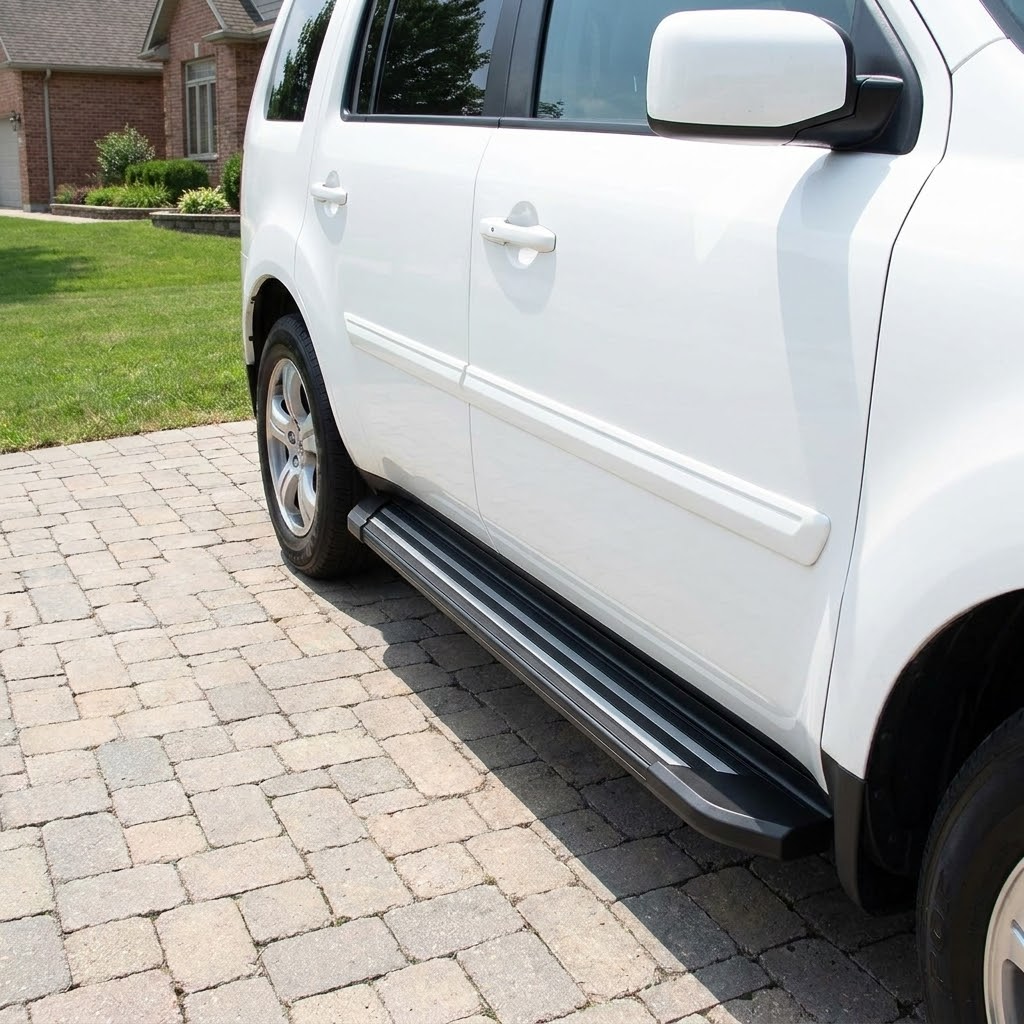
Most disappointment with Honda Pilot 2013 running boards is not about whether they “work”, but about small mismatches between expectations and reality. This style can be comfortable and confidence-inspiring when dry, then feel less secure when the step surface is wet, especially if footwear is smooth-soled. That does not make it unsuitable; it makes surface behaviour a deciding factor for certain climates and routines.
Other context-dependent points that commonly shape long-term satisfaction:
- Visual integration is not universal: the chrome panel can complement some trim levels and colours, and look out of place on others, particularly if the vehicle has blacked-out accents.
- Owners who prefer a subtle profile may find the side view “busy”, even if the step function is exactly what they wanted.
- If the Honda Pilot regularly sees grit, slush, or heavy rain, prioritising a more aggressively textured stepping surface often matters more than a clean reflective finish.
These are not minor details; they are the difference between “useful every day” and “looks good but gets ignored”. When people search running boards for Honda Pilot 2013, the hidden question is usually whether the step will become a habit. Habit depends on confidence underfoot as much as it depends on height.
A Practical Verdict for Honda Pilot Running Boards 2013 Shoppers
This KUIPERAUTO option is for drivers who want running boards for Honda Pilot 2013 that look deliberate, provide a predictable step, and fit a family-use pattern where the vehicle stays mostly road-focused. It is also a reasonable fit when the goal is to make entry feel less like a climb without turning the side of the vehicle into a utilitarian platform.
It may not suit drivers who treat the Honda Pilot as a year-round rough-weather tool, who prioritise grip above appearance, or who want the most understated side profile possible. In those cases, the same category of 2013 Honda Pilot running boards can still be the right idea, but this particular style of finish and surface emphasis can feel like the wrong priority.
Realistic expectations are straightforward: it can meaningfully improve entry comfort and add a finished look, but it will not erase the need for attention to wet footing, and it rewards owners who are comfortable keeping bright exterior trim clean. If those conditions match the way the vehicle is actually used, it is a sensible choice; if they do not, the compromise will show up quickly in day-to-day behaviour.
FAQ: Running Boards for Honda Pilot 2013
Do Running Boards for Honda Pilot 2013 Make Entry Easier for Everyone?
They usually help most for shorter passengers, children, and anyone who prefers a smaller step-up. Very tall drivers sometimes find they do not use them much, because the natural stride already clears the sill easily.
Are 2013 Honda Pilot Running Boards Worth It If the Vehicle Is Mostly City-Driven?
Often, yes—city use tends to mean frequent stops and passengers getting in and out, which is where a consistent step earns its keep. The main question becomes whether the visual change and maintenance needs fit the owner’s preferences.
What Usually Causes Regret After Adding Honda Pilot 2013 Running Boards?
The most common issue is a mismatch between expected grip and real wet-weather feel, especially with smooth-soled shoes. The other is styling: a finish that looked great online can clash with existing trim or personal taste once installed.
Do Running Boards for 2013 Honda Pilot Reduce Ground Clearance in a Meaningful Way?
They can reduce effective clearance at the sides in certain situations, such as deep ruts or uneven edges, even if the vehicle’s central clearance is unchanged. For mostly paved driving, it is rarely noticeable; for rougher tracks, it can become relevant.