
The phrase “2016 Colorado running boards fit 2016 Tahoe” shows up because running boards look deceptively universal. They are not. In practice, the question is less about model years and more about how a step system attaches to a specific body structure, and how door openings, cab length, and rocker-panel geometry differ between vehicles that happen to share a parent brand family.
Much of the confusion comes from the way listings and forum replies compress fitment into a short line of text. That shorthand hides the real determinants: mounting points, frame shape, and the exact underbody packaging that engineers designed around crash structures, fuel and brake lines, and ground clearance.
Quick Orientation
- “Fit” usually means bolt pattern and bracket alignment, not just length.
- Colorado and Tahoe sit on different platforms with different underbodies, so direct interchange is uncommon.
- Model year alone is a weak predictor; cab style and trim-level underbody differences often matter more.
Why “Fitment” Is a Structural Question, Not a Brand Question
Even within GMC and related vehicles, exterior accessories are engineered around hard points: threaded inserts, weld nuts, or frame holes that can carry load without deforming the rocker area. Running boards are load-bearing. They experience dynamic forces from stepping, off-angle entry, and occasional impacts from road debris. Because of that, manufacturers avoid “universal” attachment where the structure is not validated.
From a safety and compliance standpoint, the underbody is not an open canvas. Vehicle structures are designed to meet crash requirements; modifying attachment points or clamping around sensitive areas can create unintended consequences. For general guidance on why vehicle modifications can affect safety systems and crash performance, the U.S. National Highway Traffic Safety Administration provides consumer-facing safety information at https://www.nhtsa.gov/.
How Running Boards Actually Interface With a Vehicle
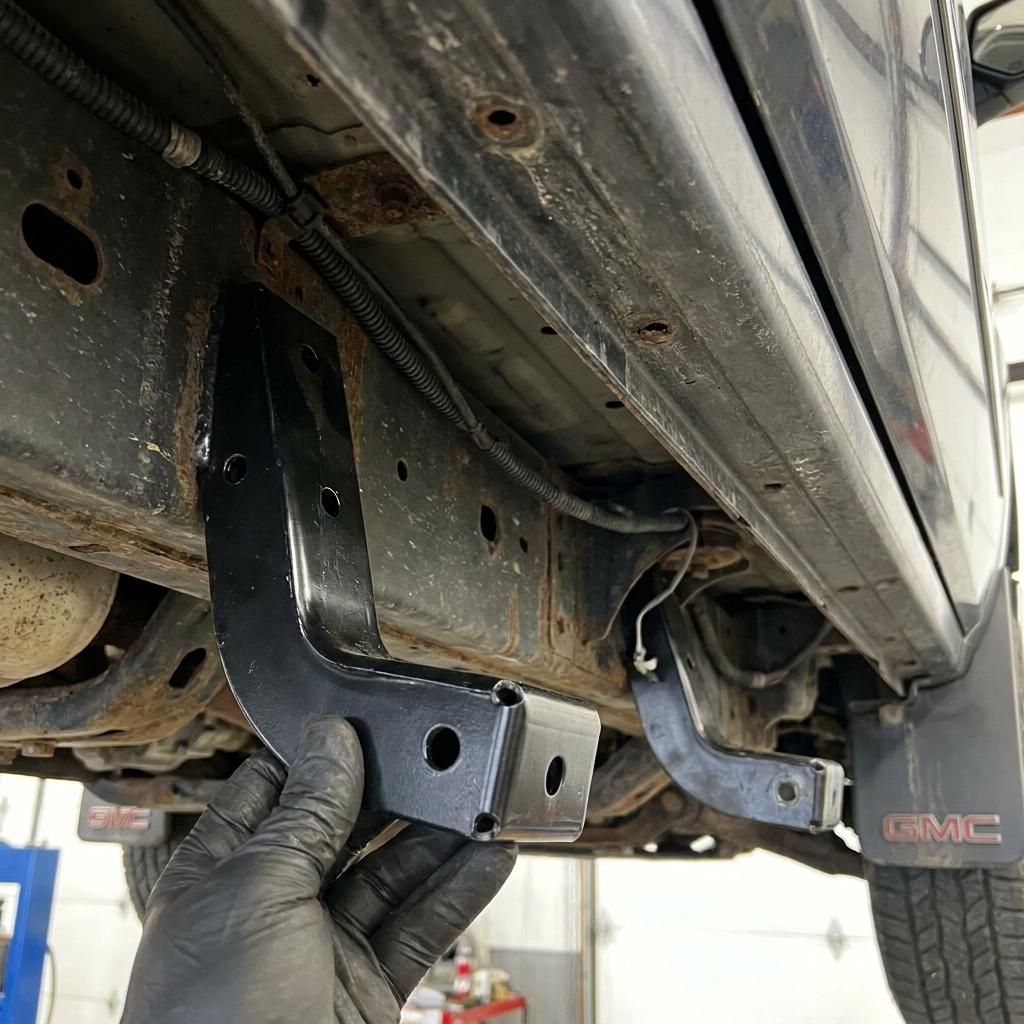
Running boards typically connect in one of a few ways: to the vehicle’s frame rails, to reinforced rocker-panel mounting locations, or to factory-provided studs and threaded holes. The “interface” is a combination of bracket geometry and the vehicle’s underside layout. If any one element is off—hole spacing, bracket drop, or the lateral offset needed to clear pinch welds—the board may physically touch the body, sit too far out, or fail to align with the door sill.
On trucks like the 2016 Colorado, cab configuration (extended cab vs crew cab) changes door length and the usable stepping area. On a 2016 Tahoe, the body is longer and the rocker profile and clearance envelope are different. So the question “2016 Colorado running boards fit 2016 Tahoe” often collapses several separate checks into one sentence.
Common Assumptions That Tend to Mislead
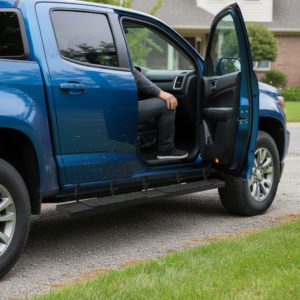
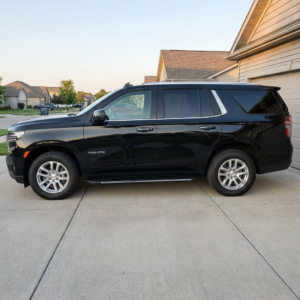
Colorado and Tahoe boards to compare
These products are for different Chevrolet platforms and are not interchangeable. Use them to compare the listed vehicle-specific options.
Some assumptions sound reasonable but break down quickly under measurement.
- Assumption: Same brand family means shared mounting points. Reality: Platforms and body structures differ widely across lines and sizes.
- Assumption: If overall length looks close, it will work. Reality: bracket positions matter more than board length.
- Assumption: “2016” equals compatibility. Reality: mid-cycle updates, trim differences, and underbody shields can change clearances.
Where GMC Context Enters the Picture
GMC owners often encounter this question when trying to reuse parts across vehicles, especially within households or fleets. The practical takeaway is that GMC context helps narrow terminology—cab styles, rocker panels, frame rails—but it does not guarantee interchangeability. A single fitment statement should be treated as a claim that needs structural confirmation, not as a general rule.
As an example of how narrowly fitment is usually defined in listings, a product title may specify something like compatibility with a particular cab configuration and a specific year range, such as “COMNOVA 6 Inches Running Boards Compatible with 2015-2026 Chevrolet Colorado/GMC Canyon Crew Cab.”
Why Cross-Vehicle Fit Claims Break Down in Practice
The phrase “2016 Colorado running boards fit 2016 Tahoe” sounds simple, but it compresses several independent variables into one assumption: that a running board is a generic add-on with interchangeable mounting logic. In reality, the limiting factor is rarely the visible length of the step. It is the interface between the vehicle’s underbody structure and the bracket geometry.
Even within the same model year, a midsize pickup and a full-size sport utility vehicle typically use different frame architectures, rocker panel profiles, and underbody packaging. Those differences matter because running boards rely on fixed attachment points that are engineered around load paths. If the bracket lands on the wrong plane, or the fastener pattern is offset by a small amount, fitment stops being “close enough” and becomes mechanically unsound.
Mounting Points and Load Paths Matter More Than Overall Size
When people ask whether 2016 Colorado running boards fit 2016 Tahoe, they often picture a board that simply bolts on wherever there is metal. That is not how most systems are designed to work. OEM-style mounting usually targets factory studs, threaded inserts, or pre-drilled holes positioned to distribute stepping loads into the body or frame without deforming sheet metal.
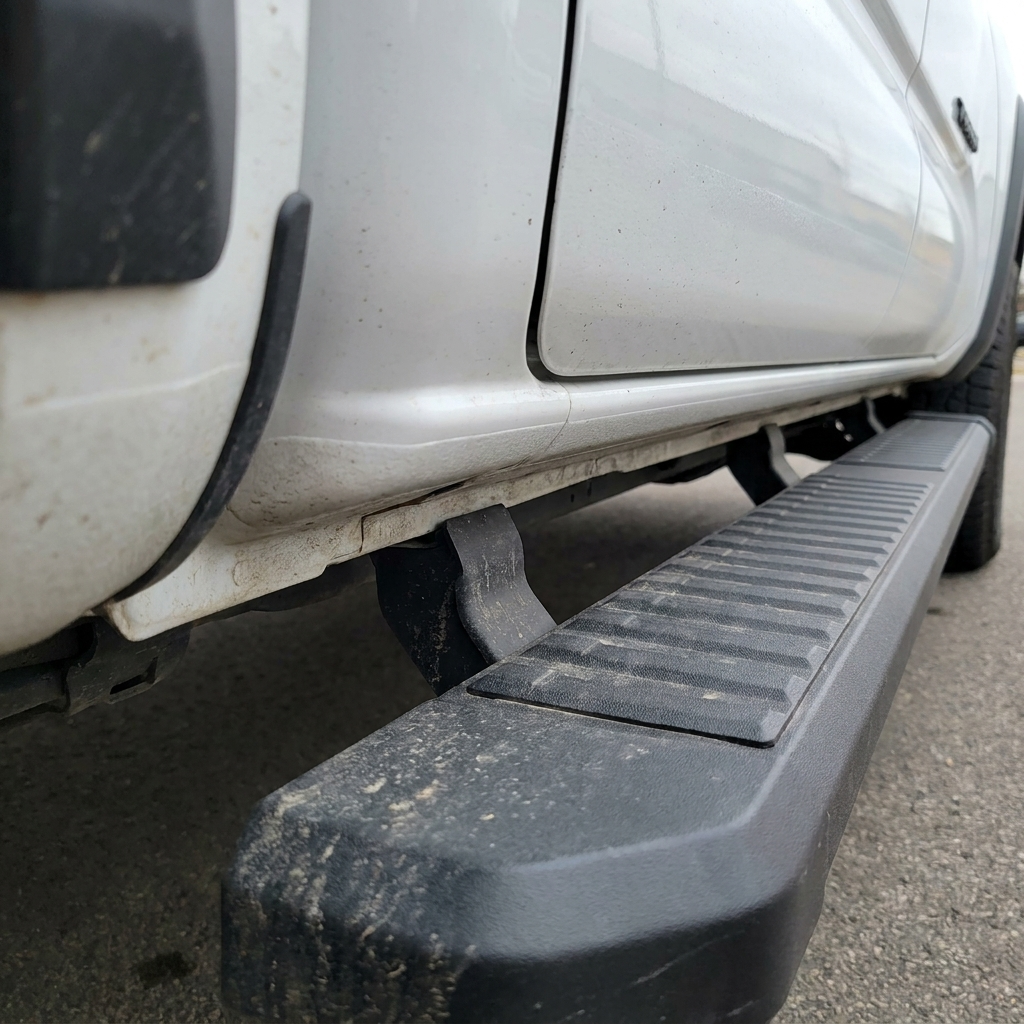
The practical problem with cross-vehicle swaps is that the load path may change completely. A board that is adequately supported on one platform may flex or concentrate stress on another if the supports land farther apart, sit at a different height, or require improvised hardware. That can show up as squeaks, loosened fasteners, or a step that feels stable on flat ground but shifts when weight is applied near the ends.
- Support spacing changes how the board behaves under a person’s weight; longer spans tend to increase deflection unless the structure is overbuilt.
- Vertical offset affects leverage; a board mounted lower can increase bending moment at the brackets during entry and exit.
- Attachment surface (frame rail versus body pinch seam) changes what “tight” means, because thin flanges can deform even when fasteners are torqued.
Cab, Door, and Rocker Geometry Create Hidden Mismatches
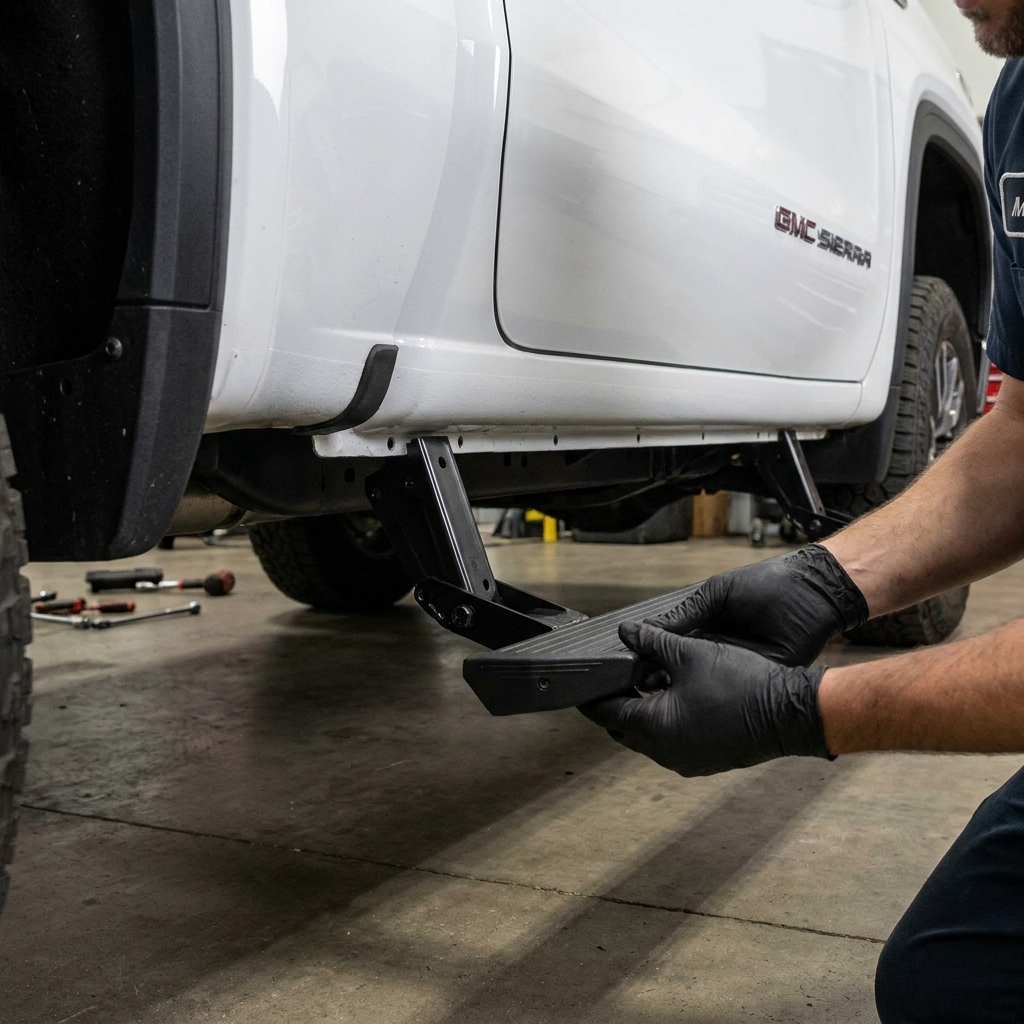
Fit is not only about bolts aligning. Door swing, rocker contour, and the distance from the seat to the step surface influence whether the board sits in a usable position. If the board protrudes too far, it can catch pant legs and collect road spray; too tucked-in, and it may not meaningfully reduce the step-up height.
This is where the “2016 Colorado running boards fit 2016 Tahoe” idea often fails in a non-obvious way: a board can be physically attachable yet functionally awkward. The Tahoe’s body width and rocker shape typically demand a different standoff than a Colorado’s. That affects not only comfort, but also how debris and slush are thrown onto the board surface.
Trim, Underbody Equipment, and Crash Structures Can Interfere
Within a single vehicle line, different trims can relocate underbody components—fuel and brake line routing, wiring looms, splash shields, or off-road protection. Across different vehicles, the chance of interference increases. A bracket that clears one exhaust routing may conflict with another; a board that seems aligned at the front may collide with a rear mud flap mount or a jacking point cover.
Regulatory and safety design also play a role. Side-impact structures and designated lift points are engineered zones. Interfering with them is not just inconvenient; it can complicate safe lifting and service. For general guidance on vehicle modifications and safety-related considerations, the National Highway Traffic Safety Administration provides consumer information on vehicle equipment and safety topics at https://www.nhtsa.gov/.
How to Interpret Compatibility Language Without Turning It Into a Buying Exercise
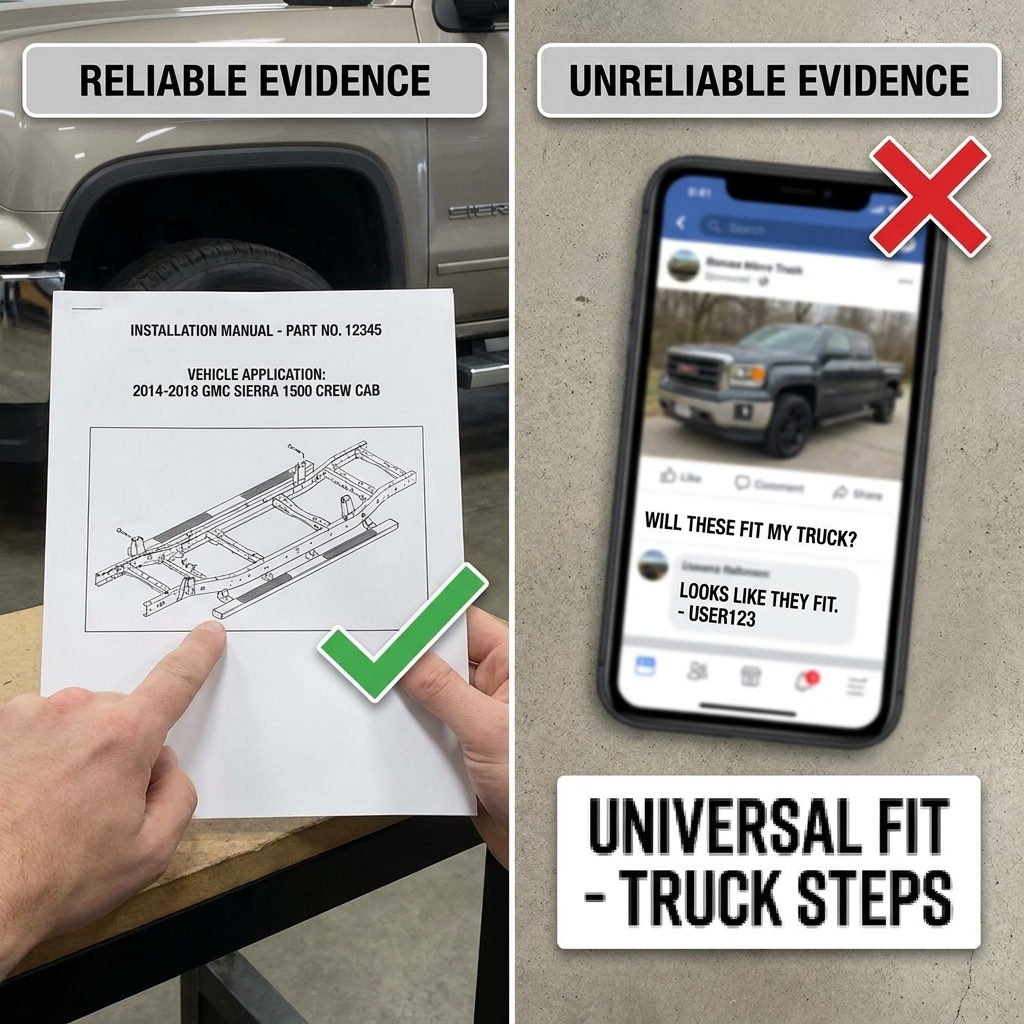
Compatibility statements work best when they are narrowly scoped: exact model, body style, and year range, with explicit notes about cab configuration. When the question becomes “2016 Colorado running boards fit 2016 Tahoe,” the most educational approach is to treat it as a prompt to check interfaces rather than dimensions.
- Look for confirmation that mounting points match the intended platform rather than assuming drilling can substitute for engineered anchors.
- Consider whether the board’s standoff suits the wider body and different rocker contour typical of a full-size sport utility vehicle.
- Account for underbody packaging differences that can cause contact or block access to lift points.
As a single illustration of how narrowly manufacturers usually define fitment, listings such as “COMNOVA 6 Inches Running Boards Compatible with 2015-2026 Chevrolet Colorado/GMC Canyon Crew Cab” typically restrict compatibility to a specific platform and cab configuration rather than implying cross-model interchangeability.
Why “2016 Colorado Running Boards Fit 2016 Tahoe” Is Usually a Fitment Misunderstanding
The query “2016 Colorado running boards fit 2016 Tahoe” typically appears when a search engine shows similar-looking results across models, or when a seller’s fitment title lists multiple vehicles and the reader assumes cross-compatibility. In practice, the underlying question is about interchangeability between two different vehicle platforms, and that is where confusion starts.
Even when two vehicles share a model year, the mounting points and body geometry can be fundamentally different. Running boards attach to specific locations along the rocker area using brackets that are designed around the frame, body mounts, and hole patterns. A mismatch is not only “it won’t bolt on”; it can also mean the board sits at the wrong height, interferes with trim, or places load in a way the mounting structure was not designed to take.
- Model-year overlap does not imply shared mounting architecture, especially across different vehicle lines.
- “Fits” in a listing title may reflect a seller’s catalog mapping rather than a universal standard.
- Visual similarity in photos is a weak indicator; bracket geometry and hole spacing matter more than appearance.
What to Treat as “Real Fitment Evidence” (And What to Treat as Noise)
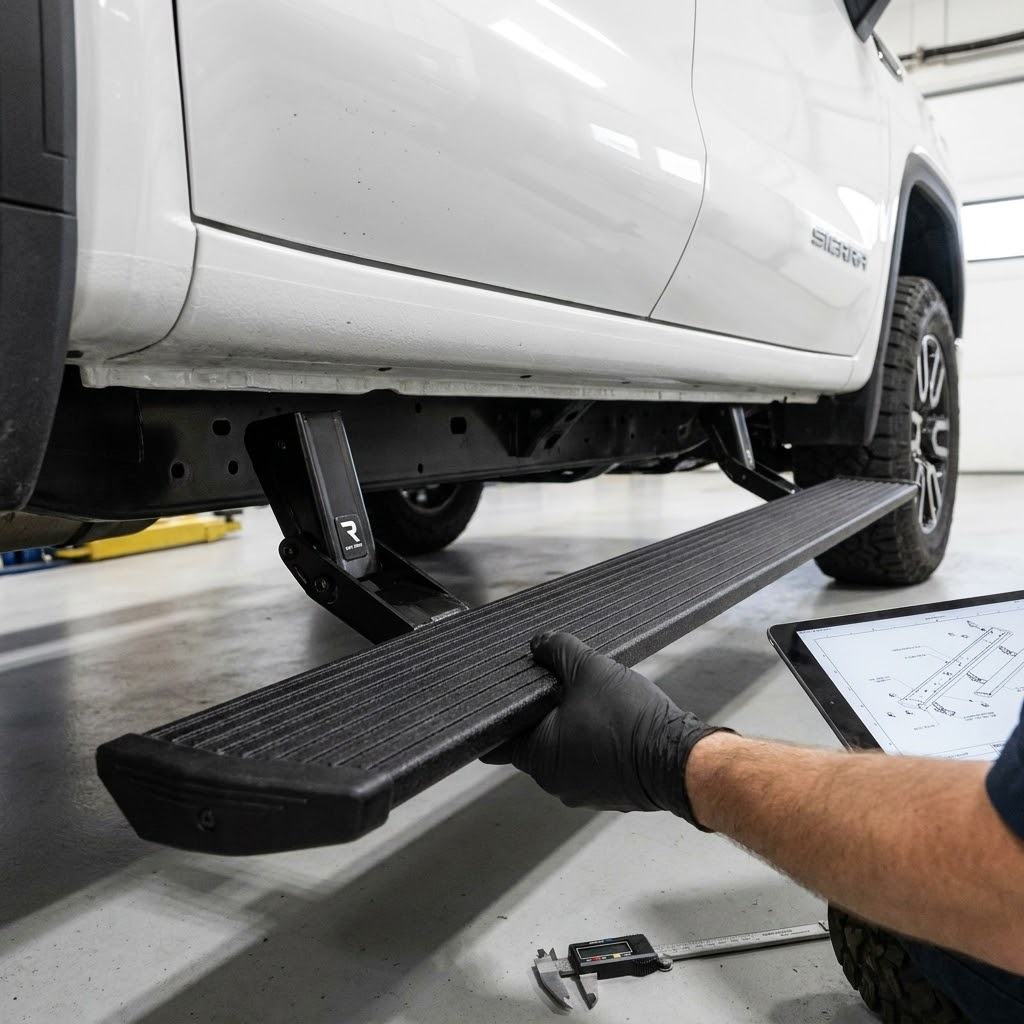
When trying to interpret “2016 Colorado running boards fit 2016 Tahoe,” the most reliable evidence is documentation that ties a specific mounting configuration to a specific vehicle. The least reliable evidence is anything that depends on guesswork, photos, or generic labels.
Fitment confidence tends to increase when the information includes vehicle-specific qualifiers (cab style, wheelbase where relevant, and trim-related constraints) and decreases when it relies on broad buckets like “SUV” or “truck.” If a source cannot state how it determined compatibility, it is closer to marketing metadata than technical confirmation.
For general safety context on modifications and the importance of correct installation and secure attachment, the U.S. National Highway Traffic Safety Administration provides broader guidance on vehicle equipment and safety considerations at https://www.nhtsa.gov/.
Where Interchangeability Breaks Down in Real Use
The practical reason interchangeability is uncommon is that running boards are load-bearing accessories. They are repeatedly subjected to dynamic loads: a footstep is not a static weight; it is a brief impact, often off-center, sometimes while the vehicle is on uneven ground. That load routes through brackets into the vehicle’s structure, and small differences in bracket placement can create large differences in leverage.
There is also a secondary layer many people overlook: clearance relationships. Door swing, mud flaps, rocker cladding, and underbody shields vary by model and trim. Something that “bolts up” in theory can still be wrong if it changes door clearance, catches debris, or alters how water and road salt collect along seams.
Decision Clarity Without Turning It Into a Buying Question
Interpreting “2016 Colorado running boards fit 2016 Tahoe” becomes simpler when the goal is reframed: not “can it be made to work,” but “is it engineered to match the vehicle’s attachment points and clearances.” If the only support is a vague claim of compatibility, the realistic expectation should be uncertainty, not interchangeability.
The most grounded assumption is that Colorado-specific and Tahoe-specific mounting solutions are different unless a credible technical source explicitly documents shared attachment geometry. Anything else is a gamble with both fit and long-term stability.
FAQ: Clearing Up Common Fitment Confusion
Why Does “2016 Colorado Running Boards Fit 2016 Tahoe” Show Up So Often in Searches?
Because search results often blend similar keywords and model years, and some titles are written to capture broad traffic. The phrase reflects uncertainty about interchangeability rather than a confirmed cross-fit.
If Two Vehicles Are Both From 2016, Isn’t the Hardware Likely Similar?
Not necessarily. Model year is a calendar label; platforms, frames, and body mounting points can differ completely even within the same brand family.
What’s the Single Most Important Detail Behind Compatibility?
The bracket-to-vehicle interface: exact mounting locations, hole patterns, and how the load is transferred into the structure. If that interface is not vehicle-specific, everything else becomes a workaround.
Can a “Close Enough” Fit Still Be Safe Over Time?
Sometimes it may appear stable at first, but repeated dynamic loading can loosen fasteners or stress attachment points if the geometry is off. Long-term stability depends on correct alignment, proper hardware, and a mounting design intended for that vehicle.