
The question “will GMC running boards fit Silverado” tends to surface when owners notice how closely related many GM trucks appear, then assume exterior hardware swaps over with minimal effort. Sometimes that assumption holds. Often it breaks on details that are easy to miss until bolts do not line up.
In practice, “fit” is not a single claim. It can mean bolt pattern alignment, clearance to the rocker and cab corners, correct length for the cab, and acceptable step position once installed. A running board that physically mounts can still look off-center or sit too high to be comfortable.
Quick Orientation:
This topic is about platform and mounting compatibility, not brand loyalty.
People usually encounter it when swapping take-off parts, buying used OEM-style hardware, or comparing GM model years.
A safe assumption: GM trucks share design DNA across eras; a misleading assumption: the badge alone guarantees identical brackets and hole locations.
Why “Will GMC Running Boards Fit Silverado” Is Harder Than It Sounds
Silverado and Sierra are sibling models, but “sibling” in manufacturing still allows different cab mount points, rocker panel shapes, and underbody provisions across generations. Running boards depend on those provisions. Some trucks have factory threaded inserts; others rely on clamp-style brackets; some have holes present but not in the same spacing.
Even within a single generation, the cab configuration changes everything. Crew cab, double cab, and extended cab require different board lengths and bracket positions. That is why questions like “will 2013 stock GMC running boards fit a 2013 Silverado” cannot be answered from the year alone; trim and cab style quietly control the mounting geometry.
The Compatibility Variables That Usually Decide Fitment
Most real-world mismatches come from a short list of variables that stack together.
- Generation and body style: redesign years can move attachment points or change the rocker profile, even when the truck’s size feels similar.
- Cab length: a board sized for one cab may leave an awkward gap at the rear door or extend too far forward.
- Mounting method: factory provisions (threaded holes/inserts) versus bracket systems that grab pinch welds or existing holes.
- Clearance and interference: mud flaps, wheel well liners, and lower cladding can conflict with bracket placement.
- Step position: “fits” can still mean the step sits too tight to the cab or too far out, changing usability and splash protection.
How To Think About Cross-Model Swaps (Avalanche, Tahoe, And Older Trucks)
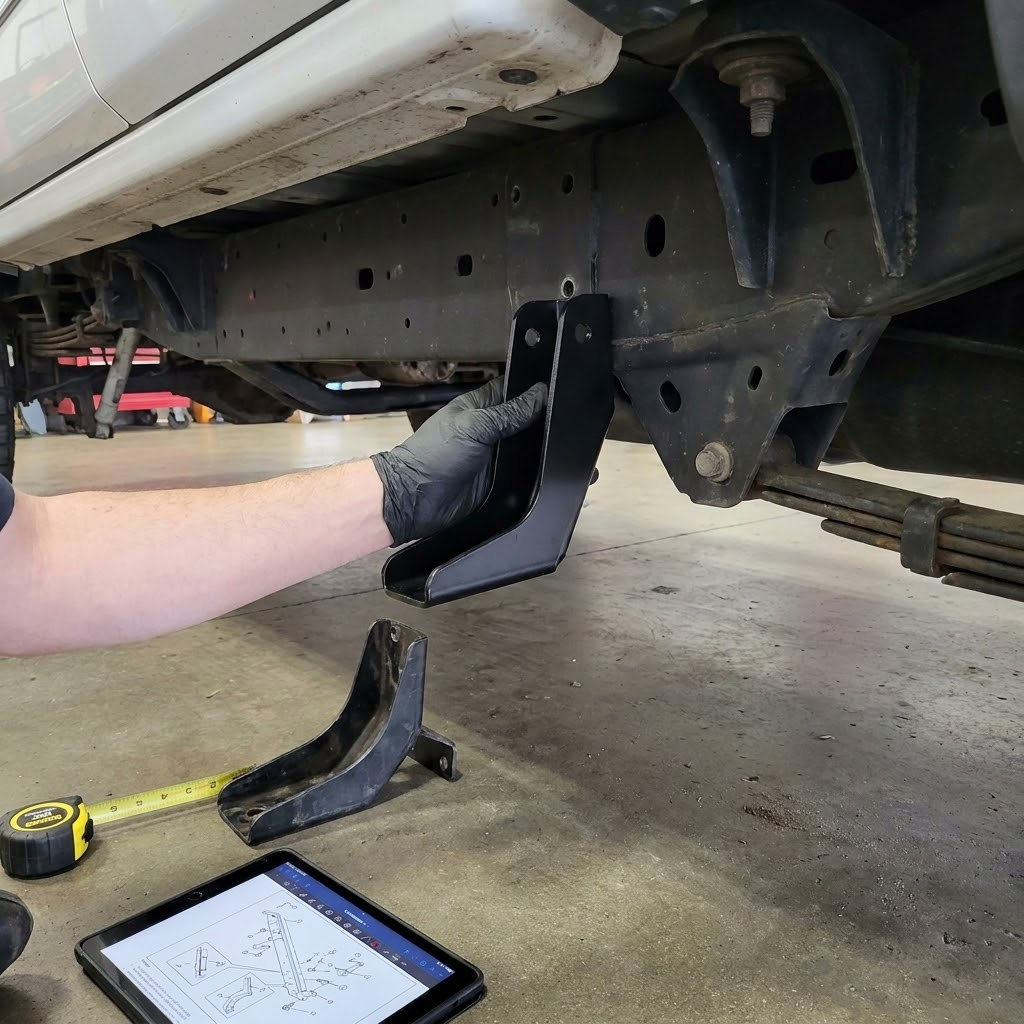
Silverado and Sierra running boards
These listings cover matched Silverado/Sierra applications, subject to the model-year and Crew Cab details shown on each page.
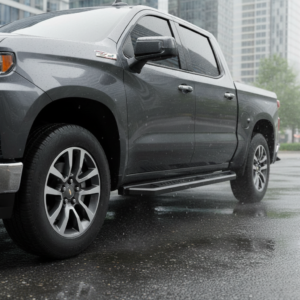
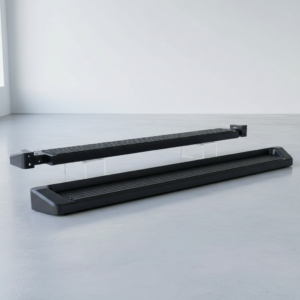
Searches like “will 04 Avalanche running boards fit on 96 Chevy Silverado” or “will 10 Tahoe running boards fit 03 Silverado” usually involve different platforms and different eras of underbody design. The further apart the donor and recipient vehicles are, the more likely the swap becomes a fabrication project rather than a bolt-on match.
That does not automatically make it impossible; it shifts the question from “does it fit” to “what would need to be changed.” For an informational check, the key is to treat SUVs and earlier truck generations as separate mounting ecosystems unless a verified platform link exists.
What Counts As A Reliable Fitment Answer
Forum anecdotes can be useful, but a reliable answer typically includes the exact year range, cab type, and whether the boards were OEM take-offs or aftermarket. Fitment confidence goes up when the source describes bracket count, hole alignment, and any trimming required—details that are hard to fake.
For authoritative background on how vehicle equipment is regulated and described in the US, the National Highway Traffic Safety Administration provides consumer-facing and regulatory context around vehicle equipment and modifications at https://www.nhtsa.gov/; for broader manufacturer and equipment terminology used in safety and compliance discussions, SAE International’s standards catalog context is at https://www.sae.org/standards/.
As a single neutral illustration of how listings often phrase compatibility, one example title may claim coverage across specific Silverado and Sierra year ranges and cab types, but that phrasing should still be checked against the truck’s exact configuration before treating it as a guaranteed match.
Why “Will GMC Running Boards Fit Silverado” Is Usually a Fitment Question, Not a Brand Question
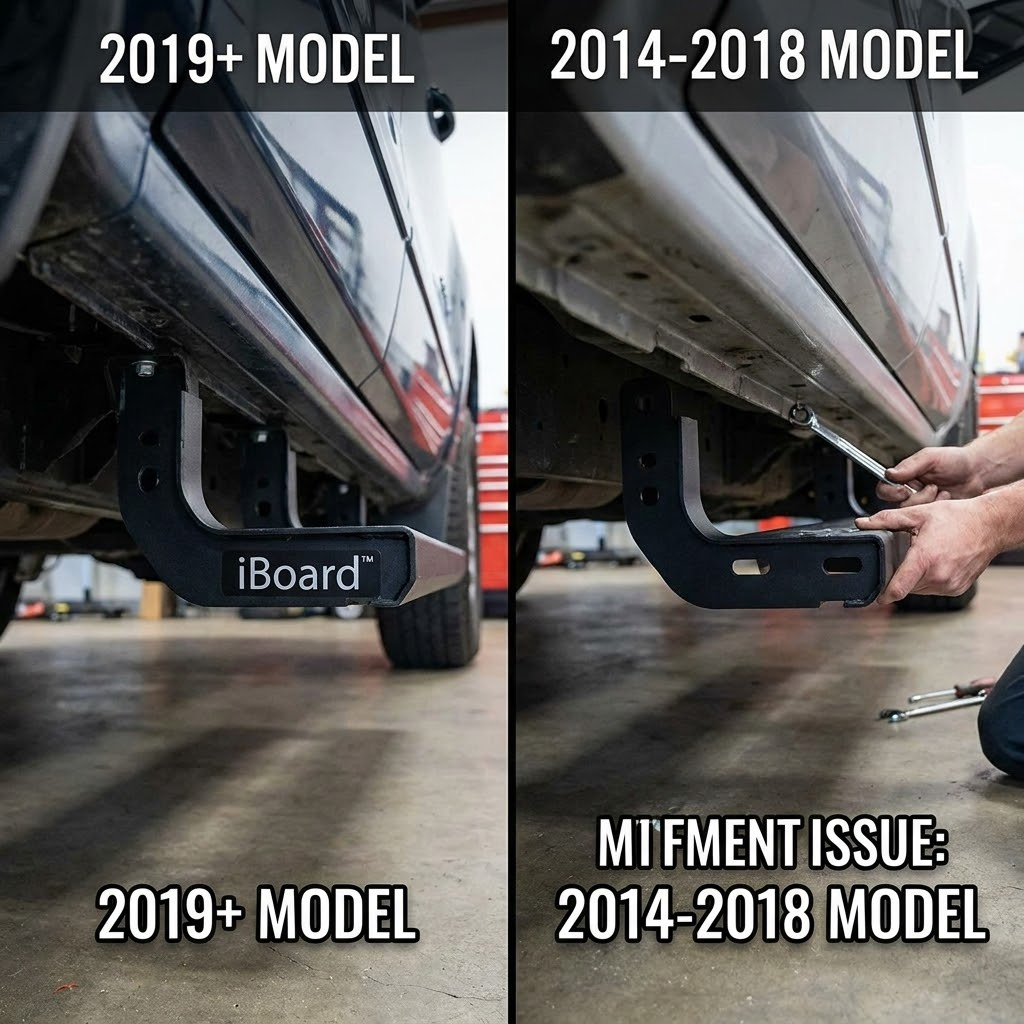
In practice, “will GMC running boards fit Silverado” is rarely about whether a step can physically sit under the truck. It is about whether the mounting points, clearances, and body geometry line up without drilling, shimming, or leaving gaps. That is why forum answers often sound inconsistent: two trucks can share a platform family yet differ in cab structure, rocker panel shape, or underbody packaging enough to change the outcome.
The most reliable way to think about Silverado running board compatibility is to separate the “board” from the “interface.” The board is typically a straight or gently contoured extrusion. The interface—brackets, bolt patterns, and how they index to the rocker pinch weld or factory studs—is where cross-model fit succeeds or fails.
What Actually Determines Whether GMC Running Boards Fit Silverado
Several constraints stack together. One mismatch can be enough to turn a “yes” into a “yes, but only with modifications,” which is often what people are trying to avoid when searching “will GMC running boards fit Silverado.”
- Generation and frame strategy: trucks that look similar can span different generations with different underbody layouts; even within the same era, half-ton and heavy-duty frames can move mounting points.
- Cab configuration: regular cab, double cab, and crew cab change door length and rocker length; a board that aligns on one cab can end short or interfere with wheel-arch trim on another.
- Mounting provision type: some trucks rely on factory threaded studs or weld nuts; others use pinch-weld clamping locations. A board can be “compatible” only if the bracket strategy matches what the Silverado provides.
- Rocker panel and sill shape: subtle contour differences matter. If the underside is sculpted differently, brackets may contact at odd angles, causing twist or uneven step height.
These factors also explain why the question “will 2013 stock GMC running boards fit a 2013 Silverado” is not automatically answered by model year alone. “Stock” can mean different OEM suppliers and bracket geometries inside the same year range.
Year-to-Year Edge Cases That Commonly Trip People Up
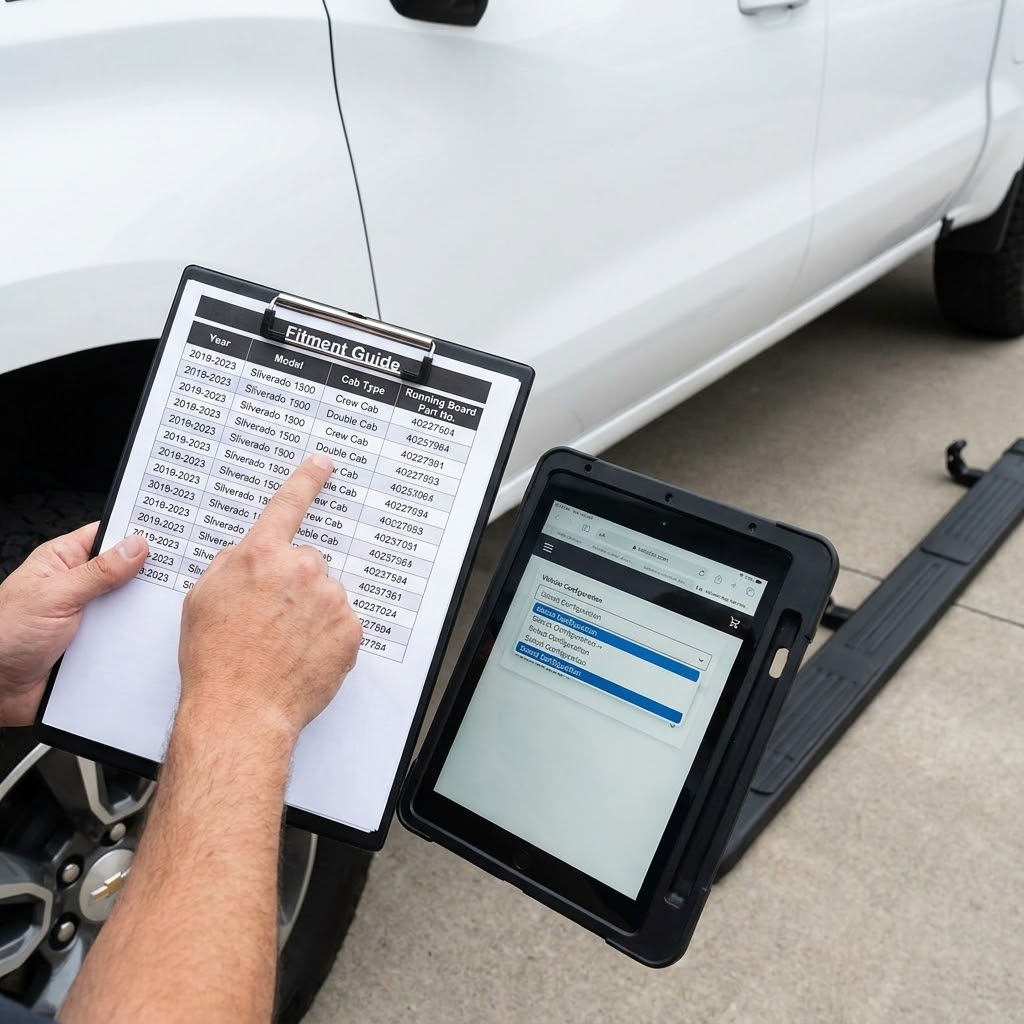
Fitment confusion often concentrates around model changeovers. A query like “will 2019 GMC running boards fit 2014 Chevy Silverado” implicitly crosses a major generation boundary for many trims, and that usually changes the bracket indexing. Even if a board’s length seems close, the front and rear bracket locations are typically not where the older truck expects them.
Older cross-platform questions—such as “will 04 Avalanche running boards fit on 96 Chevy Silverado”—tend to be even less predictable. The Avalanche body architecture is not a simple Silverado clone, and the earlier truck may not have equivalent mounting provisions. In those cases, the answer often depends on whether the installer is willing to fabricate brackets, which moves the topic away from fitment and into custom mounting practice.
Why “It Bolts Up” Can Still Mean “It Doesn’t Fit Well”
Even when holes line up, real-world fit can be compromised by clearance and alignment. Running boards that sit too close to the rocker can trap debris; too far out and they become shin-catching and reduce ground clearance. Door swing and mudflap clearance matter as well—especially on trucks with wider tires or aftermarket fender coverage.
There is also a structural nuance: a bracket that technically mounts but is loaded in an unintended direction can loosen over time. This is one reason institutional guidance on vehicle modifications emphasizes using correct attachment points and hardware practices rather than improvised fastening; the National Highway Traffic Safety Administration provides broader vehicle equipment and modification context at https://www.nhtsa.gov/.
How To Validate “Silverado Running Boards Compatible” Claims Without Treating Them As Proof
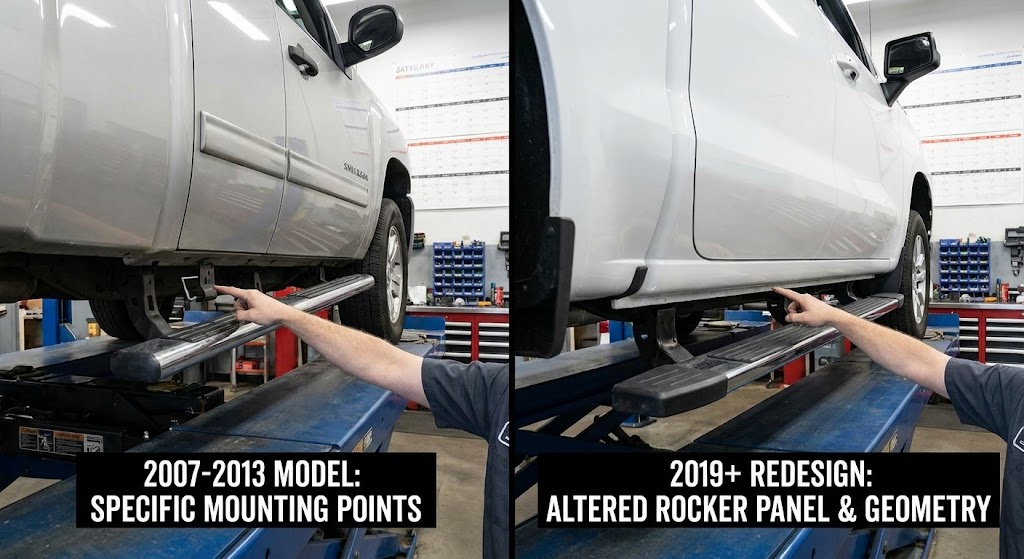
“Silverado running boards compatible” claims are best treated as a starting hypothesis. Validation comes from matching the truck’s exact configuration to an application chart and confirming the mounting style. When a listing states compatibility across both Chevy and GMC platforms, the critical detail is still the cab type and year range rather than the brand badge.
For a more standards-oriented view of safe fasteners and threaded joints—useful when evaluating whether a mounting method is mechanically appropriate—NIST offers engineering references that help ground the discussion in measurement and mechanics at https://www.nist.gov/.
When “Will GMC Running Boards Fit Silverado” Has a Real Answer (And When It Doesn’t)
The question “will GMC running boards fit Silverado” often sounds like a simple yes-or-no, but in practice it is a fitment question disguised as a brand question. The reliable answer depends on whether the attachment points, body architecture, and underbody packaging were engineered to be shared across the two vehicles in the specific year range and body configuration being discussed.
Where people get misled is assuming that “same size truck” means “same mounting.” Even within the same model year, a change in cab style, rocker panel shape, or factory-provided mounting provisions can turn an apparent match into a mismatch. The most consistent way to think about it is not brand-to-brand, but platform-to-platform and cab-to-cab equivalence.
- Platform alignment matters more than badges: shared underlying architectures tend to share mounting strategies, but that is not guaranteed across redesign years.
- Cab configuration is a common breakpoint: crew, extended/double, and regular cabs can have different lengths and bracket locations even if the vehicles look similar from a distance.
- Trim and factory preparation can change the starting point: some vehicles have factory threaded inserts or studs; others require different hardware or do not have provisions in the same places.
Why Year-Range Questions Keep Coming Up in Silverado Running Board Searches
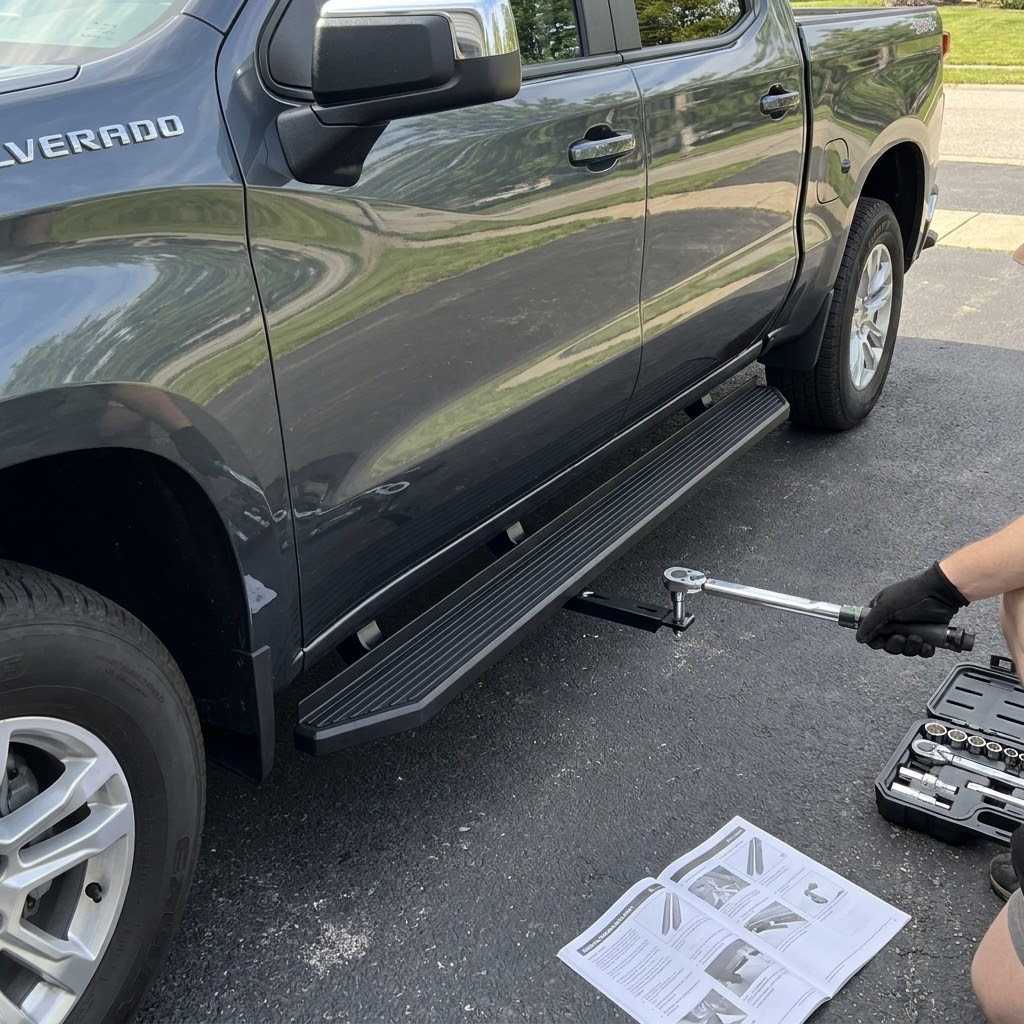
Searches such as “will 2013 stock GMC running boards fit a 2013 Silverado” or “will 2019 GMC running boards fit 2014 Chevy Silverado” reflect a real pattern: people are usually trying to bridge a parts swap across a redesign boundary. That is exactly where assumptions fail most often, because redesigns can change rocker panel geometry and the location of pinch welds, body mounts, and underbody shielding.
Another recurring pattern is cross-model curiosity—questions like “will 10 Tahoe running boards fit 03 Silverado” or “will 2001 Tahoe running boards fit Silverado.” Those are typically lower-probability matches because SUVs and pickups can share some engineering DNA yet still differ in body length, door openings, and rocker construction. The older the spread in years and the more the body type diverges, the more “looks like it should fit” becomes unreliable.
What To Treat As a Red Flag Before Assuming Compatibility
Certain clues tend to predict trouble even when the vehicles are closely related. These are not absolute rules, but they help set realistic expectations for anyone circling back to “will GMC running boards fit Silverado” after seeing conflicting forum answers.
- Mounting requires drilling on one vehicle but not the other; that usually indicates different factory provisions rather than a simple bracket swap.
- Door count and door length differ; step length and bracket spacing often follow the door openings, not the wheelbase alone.
- Underbody protection panels differ; interference can appear where a bracket wants to sit, especially near fuel/brake line routing and shields.
- “Stock” versus “accessory” terminology is mixed; factory-installed equipment and dealer-installed accessories may follow different mounting logic.
For authoritative background on why vehicle equipment must be secured according to intended mounting and loading assumptions, it helps to anchor the discussion in basic safety and modification principles rather than anecdotes. The National Highway Traffic Safety Administration provides consumer-facing guidance on vehicle modifications and safety considerations at https://www.nhtsa.gov/vehicle-safety/vehicle-modifications.
Silverado Running Boards Compatible: What That Phrase Usually Means in Search Results
When a listing or discussion uses wording like “Silverado running boards compatible” or “running boards Silverado,” it usually means compatibility has been asserted for a defined set of model years and cab configurations—not that the part is universally interchangeable across related vehicles. Compatibility language is only as precise as the configuration details behind it, and vague statements tend to hide the exact constraints that decide fit.
In other words, “Silverado running boards fit Silverado” is often a circular claim unless it is paired with clear configuration boundaries (year range, cab, and sometimes trim-level mounting differences). Treat compatibility claims as conditional statements that require the conditions to be stated.
FAQ: Clearing Up Confusion Around “Will GMC Running Boards Fit Silverado”
Why Do Answers to “Will GMC Running Boards Fit Silverado” Conflict So Much Online?
Most conflicts come from people answering for different year ranges or cab layouts without stating which one. A correct answer for one configuration can be incorrect for another that looks nearly identical.
Does “Same Generation” Automatically Mean the Mounting Points Match?
Not automatically. Even within a generation, running changes and trim-specific underbody packaging can alter bracket locations or clearance, so “generation” is a helpful clue but not a guarantee.
Is “Stock” Equipment More Likely To Swap Than Aftermarket Equipment?
“Stock” is used loosely and can refer to factory-installed or dealer-installed equipment. Either way, the limiting factor is still whether the receiving vehicle has the same mounting provisions in the same locations.
What Makes Cross-Model Swaps (Like SUV-to-Pickup) Less Predictable?
Body structure around the rocker area can differ even when engines and frames are related. Differences in door openings, rocker contours, and underbody shielding can prevent a clean bolt-on fit.