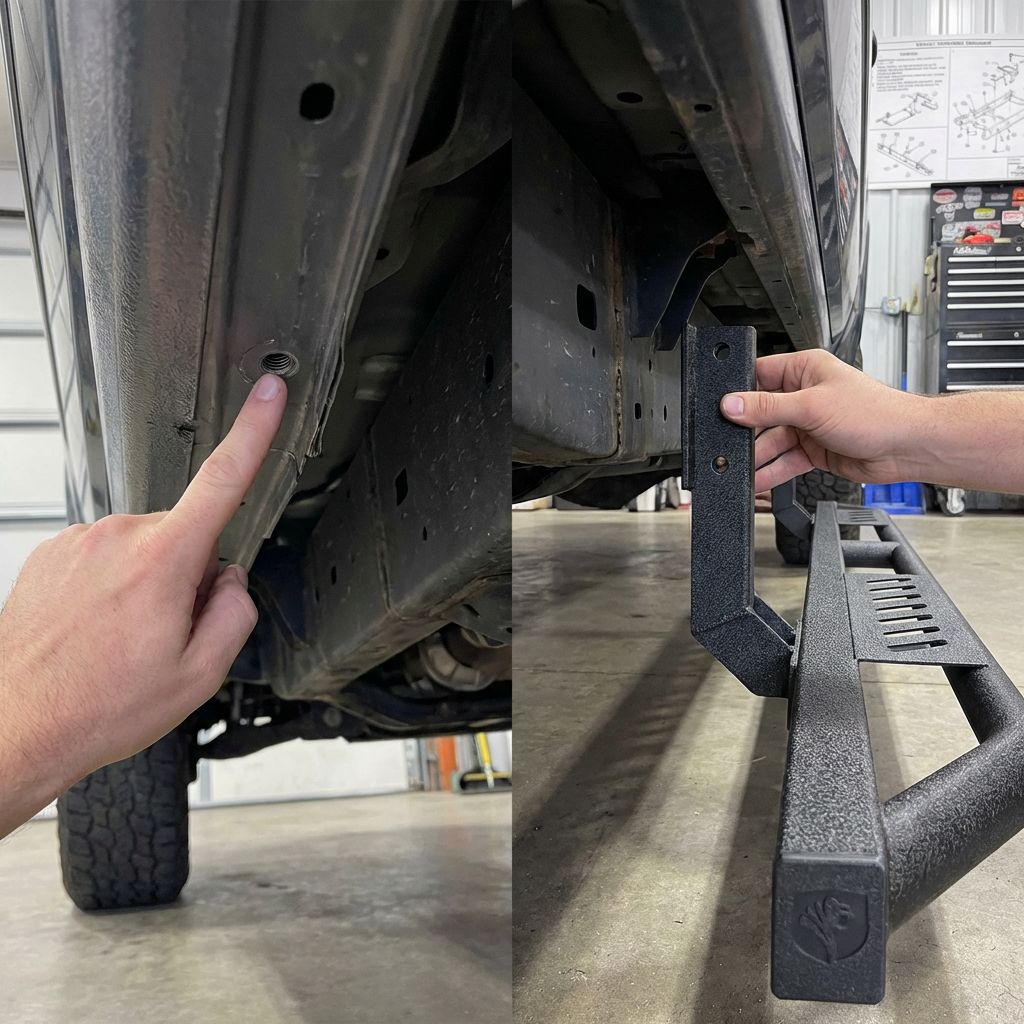
The question will Tahoe running boards fit Silverado sounds simple, but fitment rarely comes down to one measurement. It sits at the intersection of vehicle architecture, trim-specific hardware, and model-year changes that are easy to miss when looking at photos or a single listing title.
Running boards look interchangeable until the first bolt doesn’t line up. On many GM trucks and sport utility vehicles, the visible step surface matters less than the hidden variables: bracket geometry, mounting-point locations, and how the rocker area is shaped and reinforced. Those details are where “should fit” becomes “fits without forcing anything.”
Quick Orientation for Will Tahoe Running Boards Fit Silverado
-
What this is: a fitment question about whether a part designed around a Chevrolet Tahoe’s body and mounting points can attach correctly to a Chevrolet Silverado.
-
How people run into it: swapping used parts, cross-shopping listings, or trying to reuse OEM-style hardware across vehicles and model years.
-
Safe assumption: “GM family” does not guarantee direct interchangeability; platform generation and cab/body configuration usually matter more.
-
Misleading assumption: similar length or similar-looking brackets mean the underbody mounting points match.
Why “Will Tahoe Running Boards Fit Silverado” Depends on Platform, Not Badges
For the will Tahoe running boards fit Silverado question, the most useful starting point is the platform generation. Tahoe and Silverado may share broad engineering DNA in some years, but the body structure underneath the rocker panels is not automatically the same. Mounting points can shift with redesigns, and even small changes in rocker contour can alter bracket stand-off and door clearance.
Cab and body style create another layer. A Silverado’s cab length (and whether it is a crew cab or another configuration) changes the usable span and the bracket spacing. The Tahoe, as a sport utility vehicle, has different rocker proportions and body-side packaging even when it shares major chassis concepts with a truck.
What Actually Determines Running Board Fitment
Fitment is mostly a hardware problem. The step surface is the easy part; the brackets and their relationship to factory attachment points are the deciding factor.
-
Mounting-point pattern: number of attachment points, their spacing, and whether they are threaded inserts, studs, or clamp-style pinch weld interfaces.
-
Bracket offset and angle: how far the board sits from the rocker and at what angle; this affects door swing clearance and whether the board contacts bodywork under load.
-
Rocker and pinch weld geometry: some designs index off a pinch seam; others rely on pre-existing holes in the body. Mixing these approaches often fails even if the board length looks correct.
-
Model-year changes: refreshes can move holes or change reinforcement thickness, which changes which fasteners and brackets are viable.
Where Cross-Fit Attempts Usually Go Wrong
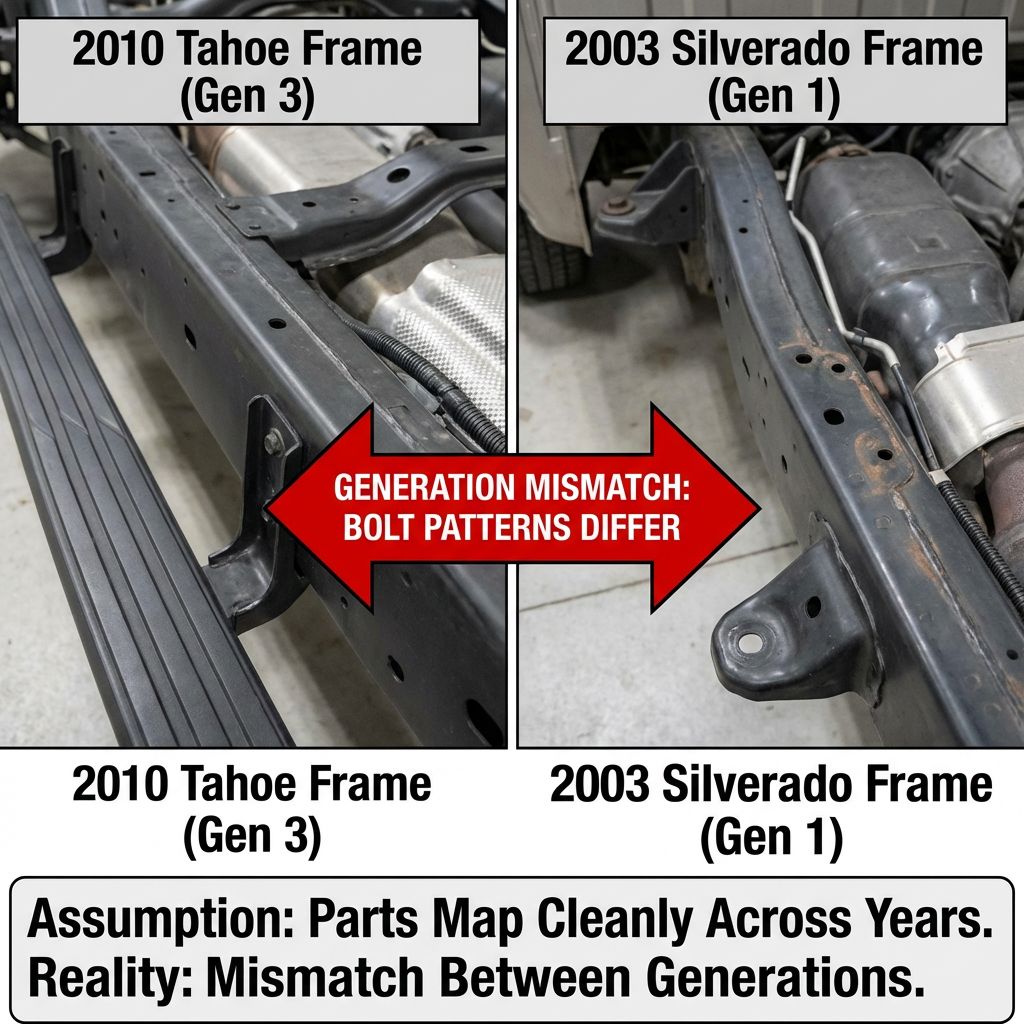
Most “will Tahoe running boards fit Silverado” dead ends come from assuming that a 2010-era Tahoe part will map cleanly to a different-year truck. That is why secondary questions like will 2010 Tahoe running boards fit 2003 or will 2010 Chevy Tahoe running boards fit 2003 GMC Sierra show up so often: they reflect a real mismatch between generations, not user error.
Common failure modes are predictable. Brackets may land close to the right place but not squarely on the mounting points. The board may bolt up in two locations but leave a third unsupported. Or the board sits slightly rotated, creating a subtle door-edge interference that only appears when the body flexes.
As a neutral illustration of how listings can narrow fitment by year and cab/body type, some aftermarket running boards are explicitly labeled for specific Silverado model years and cab configurations, which highlights how tightly these parts are tied to application details.
Authoritative Fitment and Safety References Worth Using
When judging interchangeability, it helps to separate “can be attached” from “is safely supported.” For general guidance on vehicle modifications, load changes, and safety implications, the U.S. National Highway Traffic Safety Administration (NHTSA) provides consumer-facing safety information at https://www.nhtsa.gov/. For manufacturer-level service information practices and why model-year accuracy matters, the National Automotive Service Task Force (NASTF) outlines service and repair ecosystem standards at https://www.nastf.org/.
Why “Will Tahoe Running Boards Fit Silverado” Is Rarely a Simple Yes or No
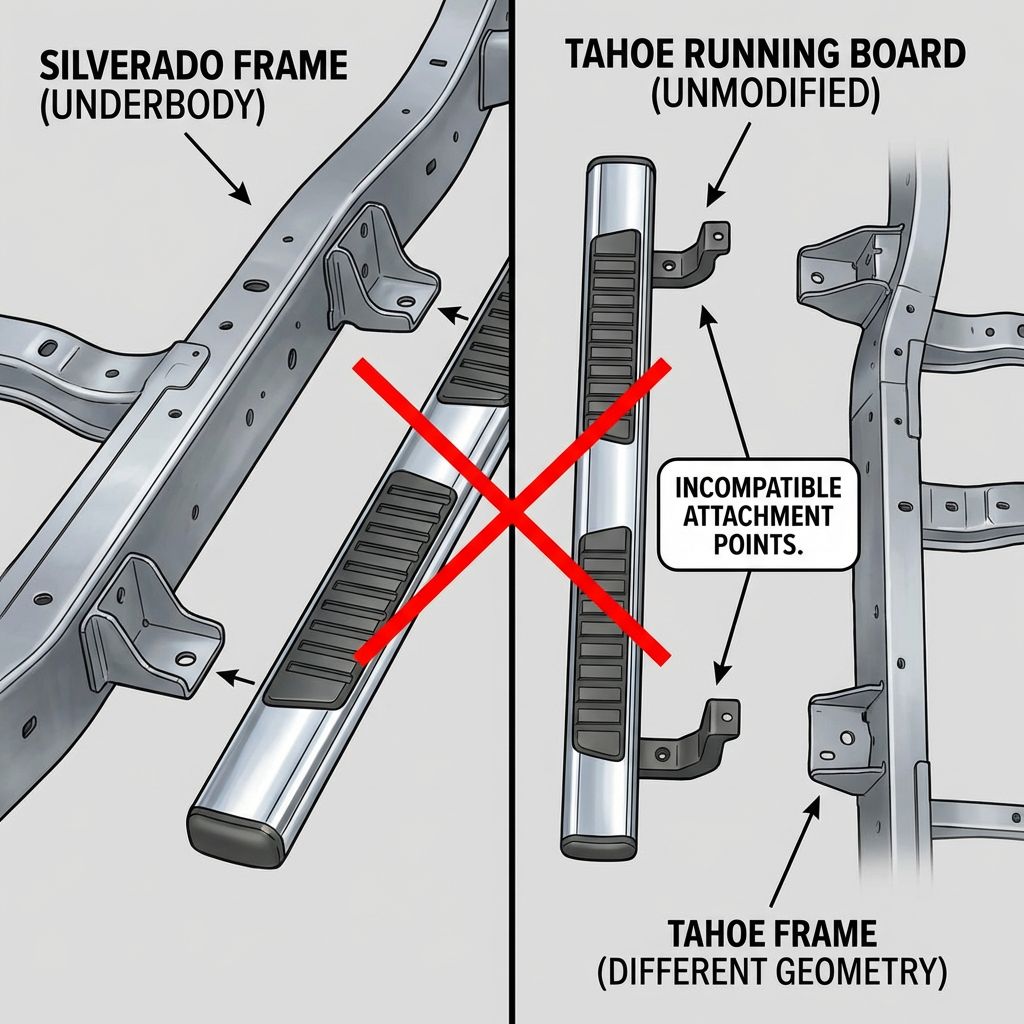
The question “will tahoe running boards fit silverado” usually breaks down into several separate compatibility layers that can each be “close but not quite.” The most common trap is treating running boards as a body-to-body swap. In practice, the attachment points are defined by the frame and bracket geometry, and those relationships can change even when two vehicles look similar from the side.
Even within the same manufacturer family, platform generations matter more than badges. A running board that physically reaches the rocker area can still fail the fitment test if the mounting holes do not align, if the bracket offset places the board too far in or out, or if the cab-to-frame spacing differs enough to create interference when the body flexes.
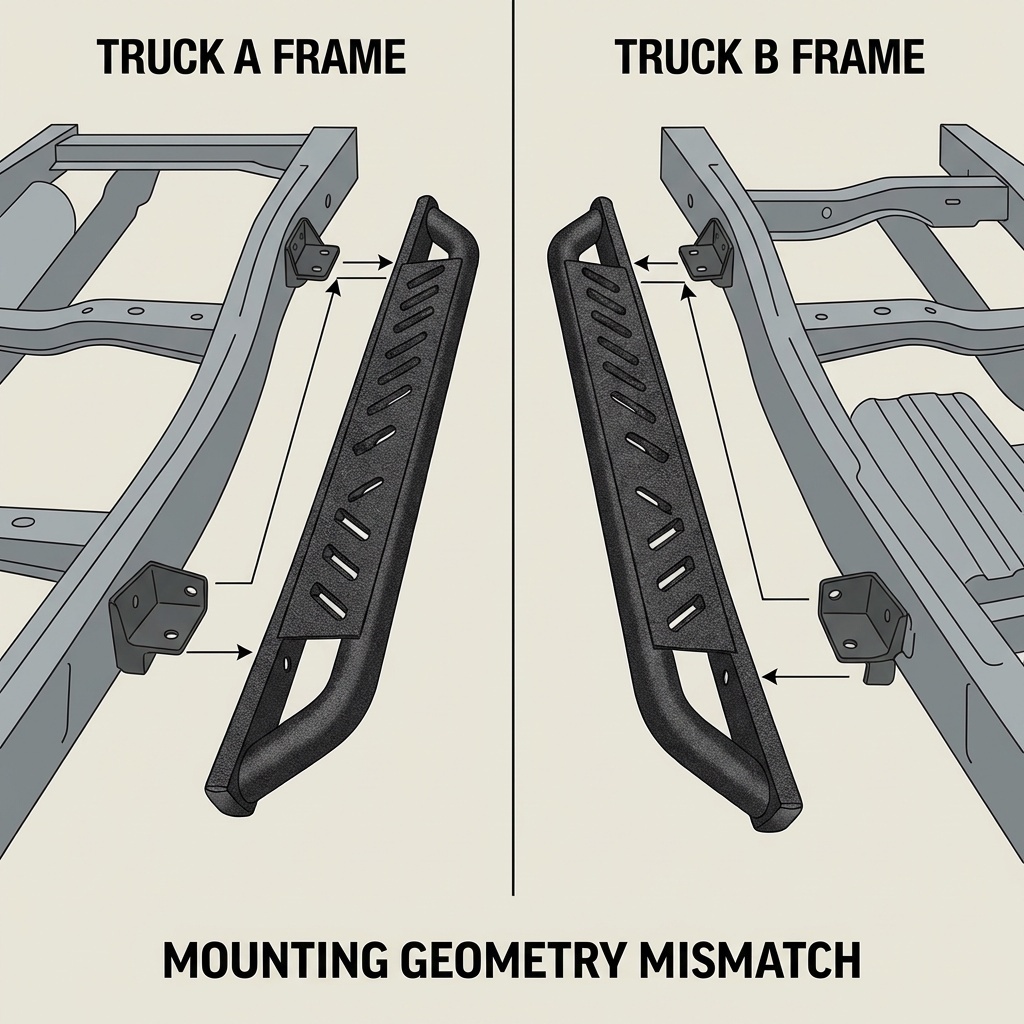
Mounting Geometry: The Real Constraint Behind Running Boards Silverado Fitment
When “Running Boards Silverado” discussions turn into long forum threads, it is usually because people are mixing three different mounting systems without naming them: factory fixed studs, threaded inserts, and clamp-style or bracket-to-frame solutions. The first two depend heavily on exact hole location and thread specification; the third depends on clearance and bracket reach.
Key points that tend to decide whether a Tahoe part can physically mount to a Silverado include:
- Hard points under the rocker: some vehicles use fixed studs in set locations, while others rely on bolts into inserts; a mismatch here is a dead stop.
- Bracket standoff distance: even small differences can shift the step surface inward, which affects door clearance and can create contact under suspension compression.
- Number and spacing of supports: a board designed around fewer supports may flex or sit unevenly if forced onto a different pattern, even if it “bolts up.”
The practical implication: “will tahoe running boards fit silverado” is sometimes answered with “they mount,” but that is not the same as “they mount correctly.”
Model Year Crossovers: Why 2010-to-2003 Questions Get Complicated Fast
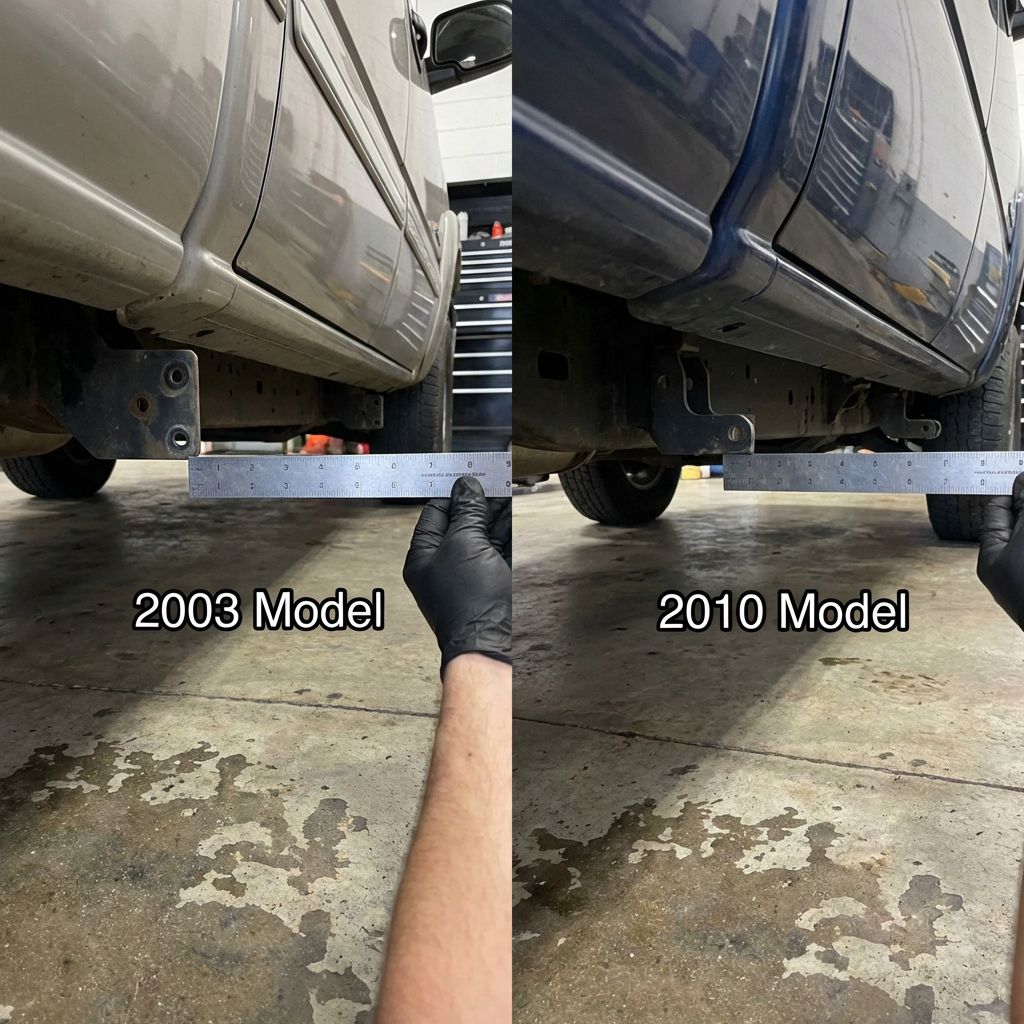
Phrases like “will 2010 chevy tahoe running boards fit 2003” (and the closely related “will 2010 tahoe running boards fit 2003”) tend to surface because the vehicles share a familiar shape language, but the underbody architecture is from different generations. That generational step is where hole placement, bracket angles, and even rocker contour can change.
Older-to-newer swaps also run into tolerance stacking: a board may appear aligned at the front but drift at the rear, or sit level on one side and not the other. That is not always a manufacturing defect; it is often a geometry mismatch that becomes obvious only once the fasteners are tightened.
Sierra and Silverado: The “03 Sierra” Angle and What It Signals
Searches like “will 10 tahoe running boards fit 03 sierra” and “will 2010 chevy tahoe running boards fit 2003 gmc sierra” are useful because they signal a real-world pattern: people are not only swapping between Tahoe and Silverado, but also across GMC equivalents. That tends to increase the odds of near-matches, because some generations share broad frame families, while still leaving room for small bracket differences that matter.
In this context, the most informative checks are not cosmetic. They are dimensional:
- Measure center-to-center distances between mounting points along the rocker area.
- Confirm thread size and fastener type where applicable.
- Check whether the bracket design expects a specific pinch seam or reinforcement location.
Safety and Regulatory Context That Often Gets Ignored
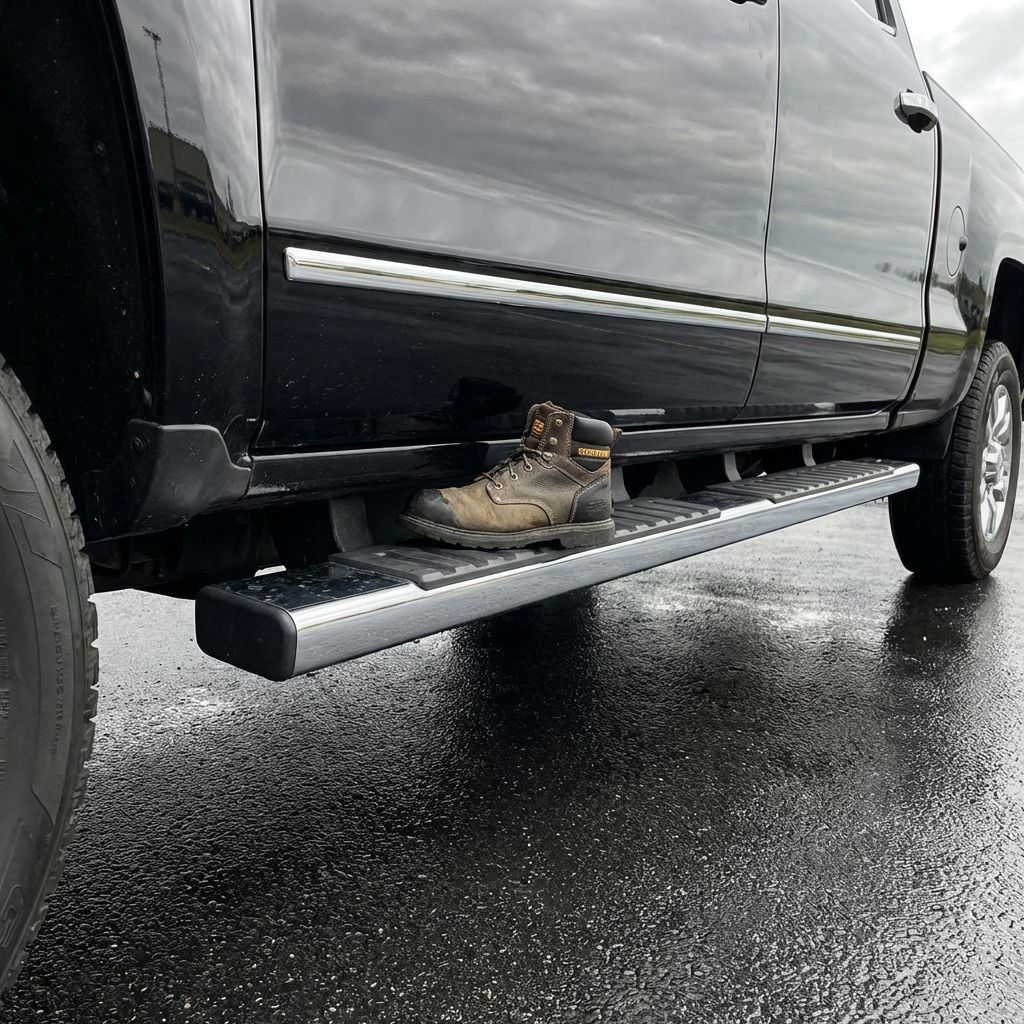
Fitment is not only about whether the part attaches. A poorly positioned step can change how a foot lands, especially in wet conditions, and can alter ground clearance in ways that matter off pavement. For baseline safety framing, the U.S. National Highway Traffic Safety Administration provides consumer-facing information on vehicle equipment and safety-related defects at https://www.nhtsa.gov/, and Transport Canada’s road safety resources offer complementary guidance on vehicle safety expectations at https://tc.canada.ca/en/road-transportation.
For readers asking “what other vehicles will fit 2010 chevy tahoe running boards,” the least risky interpretation is “what vehicles share the same hard-point geometry,” not “what looks similar.” That distinction is where most successful swaps are decided.
Will Tahoe Running Boards Fit Silverado: What Usually Decides Compatibility
What tends to create confusion is that listings and forum replies often mix three different ideas: physical length, door-count/side profile, and the underbody mounting pattern. Length can be close between vehicles, but the mounting pattern is the make-or-break detail.
- Mounting points: The spacing and thread type of factory attachment points is the primary constraint; if those do not match, adaptation becomes a fabrication project rather than a simple swap.
- Cab/body architecture: A pickup cab and an SUV body may share design language but still have different rocker structures and bracket landing zones.
- Model-year changes: A “2010” label can hide mid-cycle updates; bracket revisions and hole locations can change across generations or refresh years.
Why Year and Body Style Questions Keep Coming Up
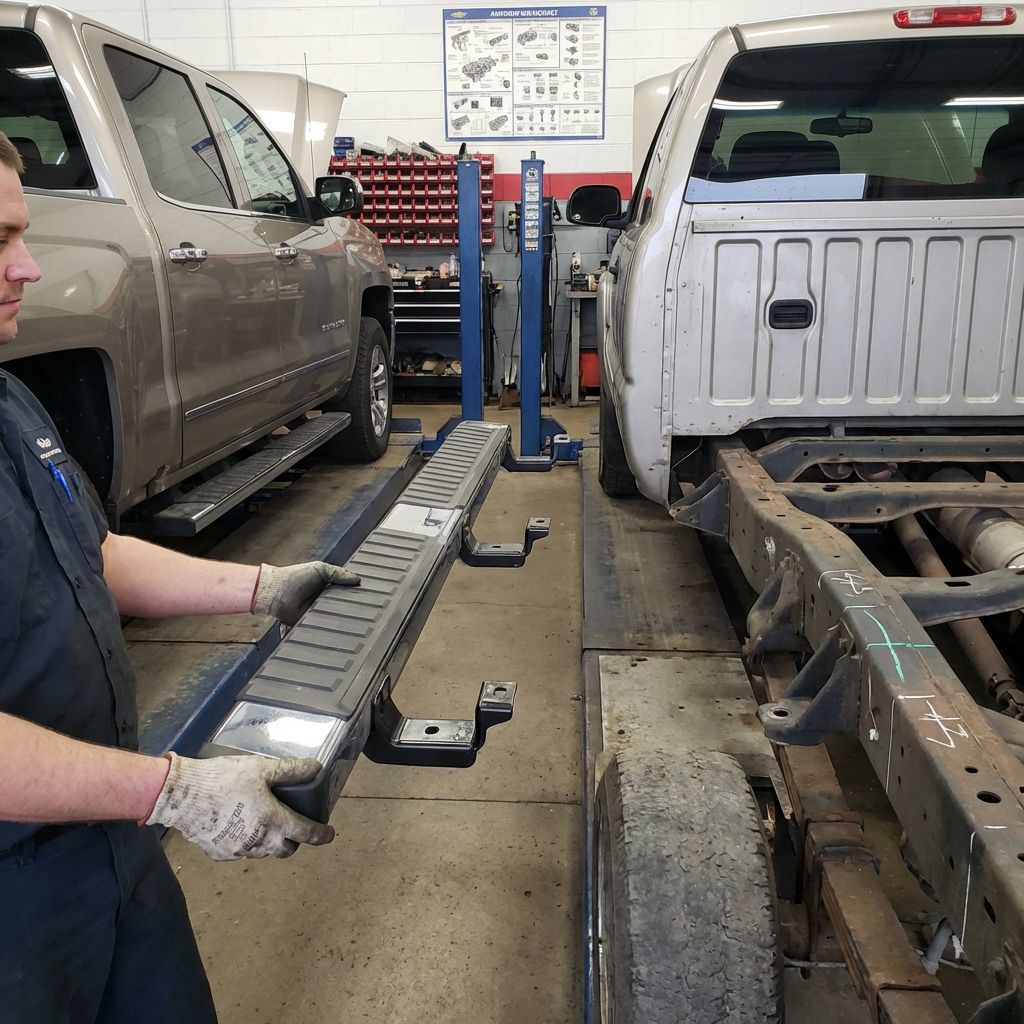
Searches like “will 2010 tahoe running boards fit 2003” or “will 10 tahoe running boards fit 03 sierra” reflect a real pattern: people try to bridge generations because the vehicles are both full-size and from the same broader platform era. The catch is that platform families evolve, and the changes that matter for running boards are often invisible until hardware is held up to the frame or rocker area.
In practical terms, the larger the gap in model years, the more likely it is that the attachment strategy changed (studs vs. threaded inserts, bracket offsets, or the number of mounting stations). That is why “what other vehicles will fit 2010 chevy tahoe running boards” is hard to answer generically without an application chart that specifies exact years and body configurations.
How to Vet Fitment Claims Without Turning It Into a Project
When “will tahoe running boards fit silverado” is answered confidently online, it is worth checking what the answer is actually based on: direct bolt-up experience, a manufacturer application guide, or assumption based on appearance. The most reliable path is cross-referencing official fitment documentation and verifying the vehicle’s mounting provisions.
- Look for an application chart that lists specific years and body styles, not just “fits GM full-size.”
- Confirm whether the vehicle has factory provisions (pre-drilled holes, studs, or threaded inserts) and how many mounting locations per side are present.
- Be cautious with “universal” language; running boards are usually only universal in marketing, not in bracket geometry.
For general context on vehicle equipment standards and modification considerations, the U.S. National Highway Traffic Safety Administration provides consumer-facing material on vehicle safety and equipment categories at https://www.nhtsa.gov/, and the Federal Highway Administration offers guidance on vehicle size/weight and related regulatory context at https://www.fhwa.dot.gov/.
FAQ: Sorting Out the Most Common Fitment Confusions
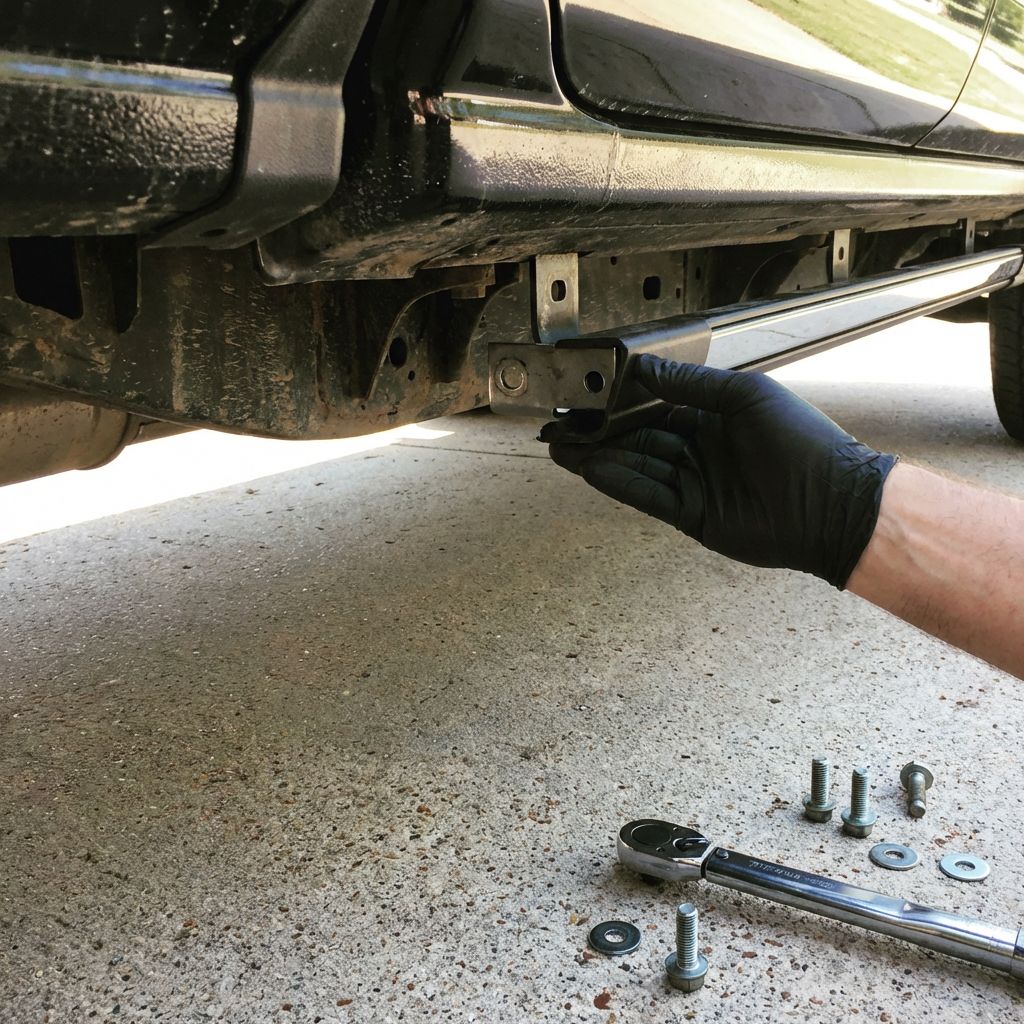
When People Ask “Will Tahoe Running Boards Fit Silverado,” What Are They Usually Missing?
Most are focusing on overall length and ignoring the bracket interface. The mounting pattern and the rocker/frame attachment design are typically the deciding factors.
Is “Close Enough” Fitment Ever Reasonable for This Kind of Swap?
Only if the attachment points line up without forcing hardware or shifting brackets. If it requires drilling, slotting, or improvised fasteners, it changes from a swap into a structural modification with different risks.
Why Do Forum Answers Conflict So Much on Cross-Vehicle Fitment?
Because experiences are often year- and trim-specific, and people generalize from a single vehicle. Two vehicles with similar names can still have different underbody provisions depending on generation and factory equipment.
Does a Shared Manufacturer Automatically Mean Shared Mounting Points?
No. Manufacturers reuse platform elements, but mounting provisions can vary by body style and generation. Treat “same brand family” as a hint to verify, not as proof.