The question “will dodge running boards fit a chevrolet” looks simple, but it sits at the intersection of body architecture, frame geometry, and model-year changes that rarely line up across manufacturers. Interchangeability sometimes happens by coincidence, not by design. That is why confident answers in forums can be both technically “true” and practically misleading.
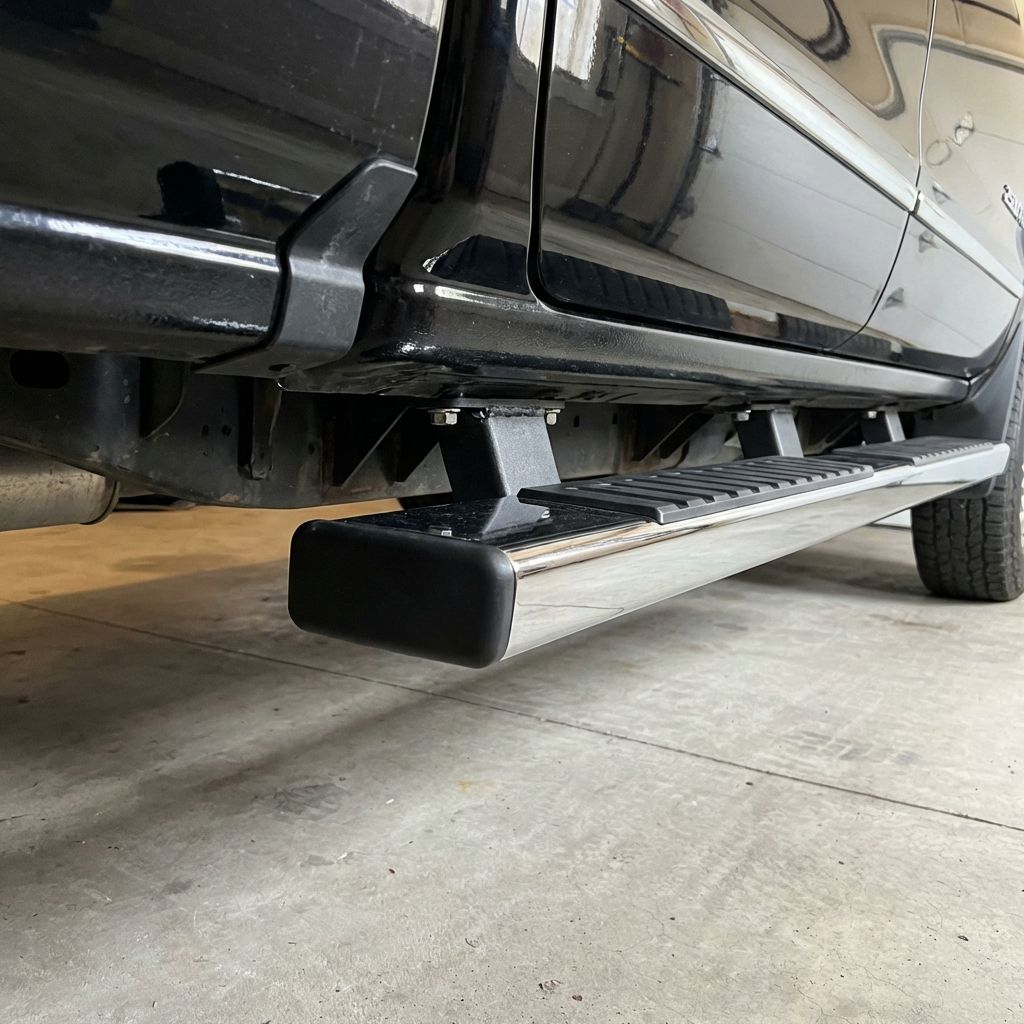
Running boards are not just step surfaces. They are structural add-ons that transfer load into specific mounting points, with tolerances that assume a certain cab length, rocker profile, and underbody layout. A board that appears close in length can still fail at the bracket level, or sit in a way that interferes with pinch weld seams, fuel lines, or factory jacking points.
Quick Orientation for “Will Dodge Running Boards Fit a Chevrolet”
- This is mainly a fitment question, not a materials question: the mounting interface usually decides the outcome.
- People typically encounter it when swapping parts between trucks, buying secondhand, or trying to reuse hardware after a vehicle change.
- A safe assumption: cross-brand “bolt-on” fit is uncommon without drilling or custom brackets. A misleading assumption: similar-looking cab sizes imply direct compatibility.
Why Cross-Brand Fitment Is Rarely Straightforward
Even when two trucks occupy similar size classes, the underbody is engineered around different constraints: crash structure, exhaust routing, fuel tank placement, and production tooling. Manufacturers also revise frames and cabs mid-generation. That means the same nameplate can have different mounting geometries across years, and a swap that worked on one combination can fail on another.
In practical terms, “will dodge running boards fit a chevrolet” usually breaks into two separate questions. First: can the board physically sit under the rocker area without obvious interference? Second: can the brackets land on strong, correctly spaced attachment points without stressing the cab or requiring modifications that introduce corrosion or loosening risk.
What Actually Determines Whether It Fits
The deciding factors are measurable. They are also easy to overlook when judging by photos alone.
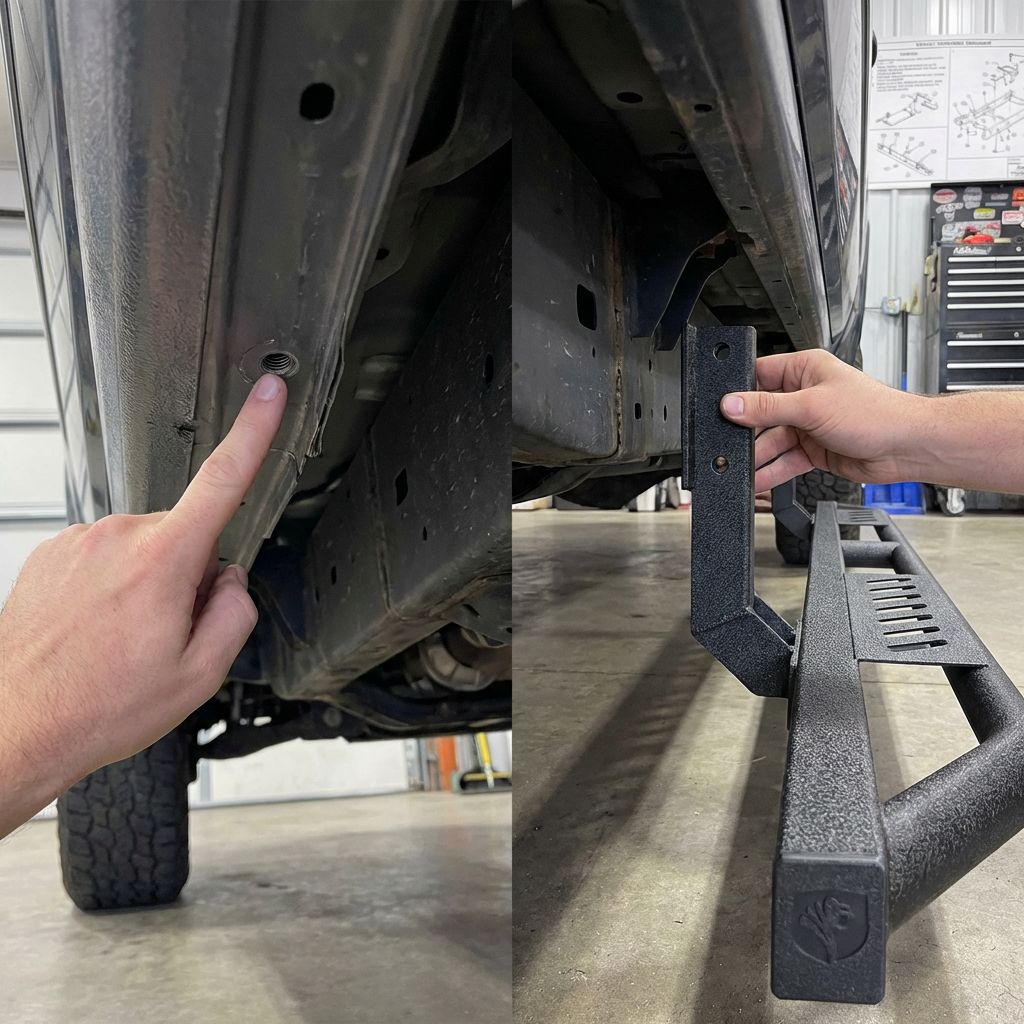
- Mounting-point pattern: hole spacing and the presence of threaded inserts, studs, or nut plates. A mismatch of even a small amount can prevent safe attachment.
- Cab configuration alignment: regular, extended, and crew cabs can share styling cues while using different wheelbase and rocker lengths, shifting bracket locations.
- Bracket stand-off and drop: the distance from the mounting plane to the step surface affects door clearance and how the board “tucks” under the body.
- Rocker and pinch-weld geometry: some designs rely on pinch-weld clamps; others avoid the seam entirely. Mixing systems can create point-loading where it was not intended.
- Underbody interference zones: brake lines, fuel lines, wiring looms, and splash shields can occupy the same space a bracket wants to use.
Where the Confusion Commonly Comes From
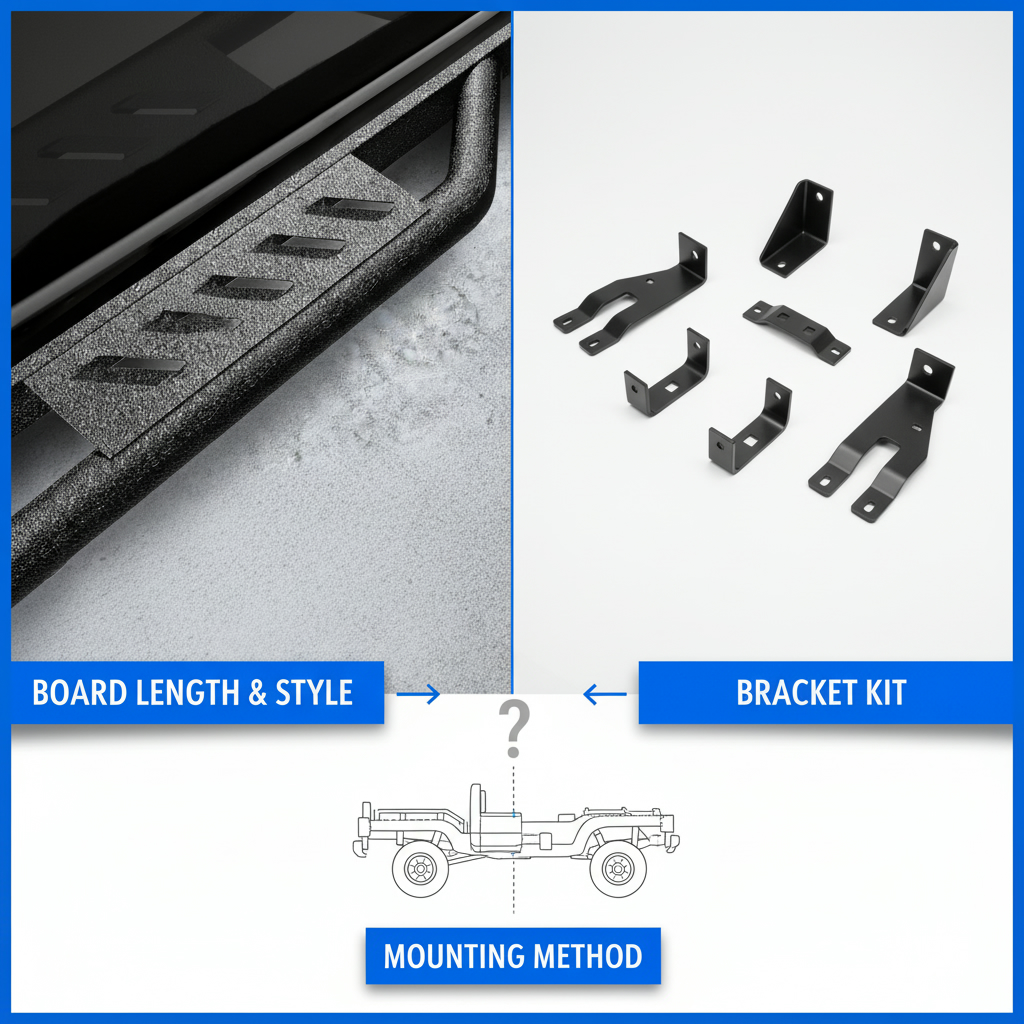
Interchangeability talk often conflates three different things: the board length, the bracket kit, and the mounting method. A board may be long enough and visually “right,” yet its bracket kit is model-specific. Conversely, a fabricator can sometimes make a board work with custom brackets, but that is no longer the same claim as direct fit.
Another recurring point: discussions like “will chevy running boards fit a dodge” tend to assume symmetry. Fitment is not symmetrical across brands because each platform’s mounting points are placed for its own load paths and service clearances.
Safety and Load Path Basics (Why Fitment Matters)
A running board is a lever. A foot placed near the outer edge creates torque that must be resisted by brackets and fasteners. If the board is attached to thin sheet metal in a way the vehicle was not designed for, local deformation and loosening become more likely over time, especially in regions with road salt and temperature cycling. Guidance on vehicle modifications and corrosion considerations is commonly framed around maintaining structural integrity and avoiding unintended weakening; the U.S. National Highway Traffic Safety Administration provides general vehicle equipment and safety context at https://www.nhtsa.gov/.
For readers asking “will dodge ram running boards fit gmc 2500” or similar cross-brand swaps, the same principle applies: treat it as an interface and load-transfer problem first, and a styling match second.
Why Cross-Brand Running Board Fitment Is Rarely Direct
The question “will dodge running boards fit a chevrolet” usually assumes running boards behave like interchangeable accessories. In practice, the attachment system is vehicle-specific. The reason is structural: the running board is only as compatible as the mounting points it relies on, and those points are engineered around a particular frame, cab configuration, and rocker-panel geometry.
Even when two trucks look similar from the side, the underbody packaging is rarely identical. Fuel and brake line routing, emissions hardware, catalytic converter placement, wiring harness paths, and body mount locations change where brackets can safely sit. Manufacturers also revise these layouts across model years, so “same generation” assumptions can break on a mid-cycle update.
Mounting Points and Bracket Geometry Drive Compatibility
Most fitment outcomes come down to a small set of hard constraints. If any one of them is off, the running board may physically bolt up in one spot yet sit wrong overall—tilted, too close to the body, or interfering with a door swing.
Key constraints that make “will dodge running boards fit a chevrolet” a case-by-case question include:
- Hole pattern and thread standard: even when holes exist in similar places, thread pitch, bolt diameter, and captured-nut design can differ, creating false “almost fits” situations.
- Bracket stand-off distance: the distance from the frame to the outer edge of the rocker area affects how far the board must sit out to be usable without contacting the body.
- Longitudinal spacing: front-to-rear bracket spacing is tied to cab length and where the strongest support points are located.
- Vertical clearance envelope: exhaust, transfer case components, and protective shields define how much bracket depth is available without rubbing or rattling.
Cab Style, Wheelbase, and Trim Variations That Change Outcomes
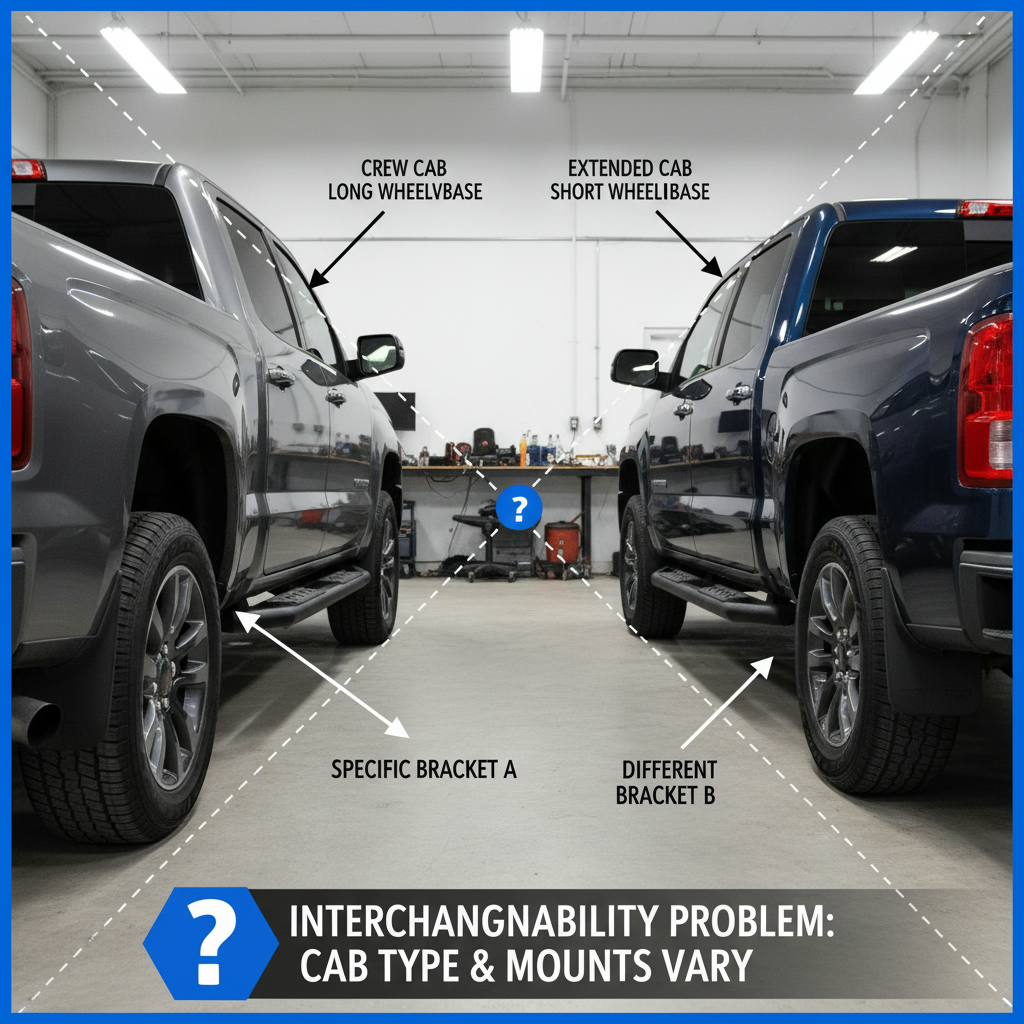
Interchangeability problems are often not “brand vs brand” but “configuration vs configuration.” A crew cab and an extended cab can share a badge yet require different lengths and different bracket locations. That is why questions like “will chevy running boards fit a dodge” rarely have a universal answer; the variables are nested: brand, model, year range, cab, drivetrain packaging, and sometimes even factory options.
Trim packages can matter in subtle ways. Off-road-oriented trims may add skid plates or different rocker protection that occupies the same space as aftermarket brackets. Diesel versus gasoline powertrains can shift exhaust routing. Even if the board length seems right, the brackets may land where an added shield or harness clip lives.
Real-World Edge Cases: When It “Almost Fits” but Still Fails
The most misleading situations are partial matches. A running board can appear to align at the front mount but miss the rear by a small margin, inviting improvised drilling or slotted holes. That kind of modification changes load paths: the bracket may no longer transfer stepping loads into reinforced areas, increasing the chance of fastener loosening or metal fatigue over time. It can also create corrosion points if bare metal is exposed and not properly protected.
Another edge case is door and rocker-panel clearance. A board that sits a few millimeters too high can contact the pinch weld or trim under body flex. A board that sits too far out can catch debris and may be more vulnerable off pavement. These are not cosmetic issues; they are geometry issues that show up only after installation and use.
How to Verify Fitment Without Guesswork
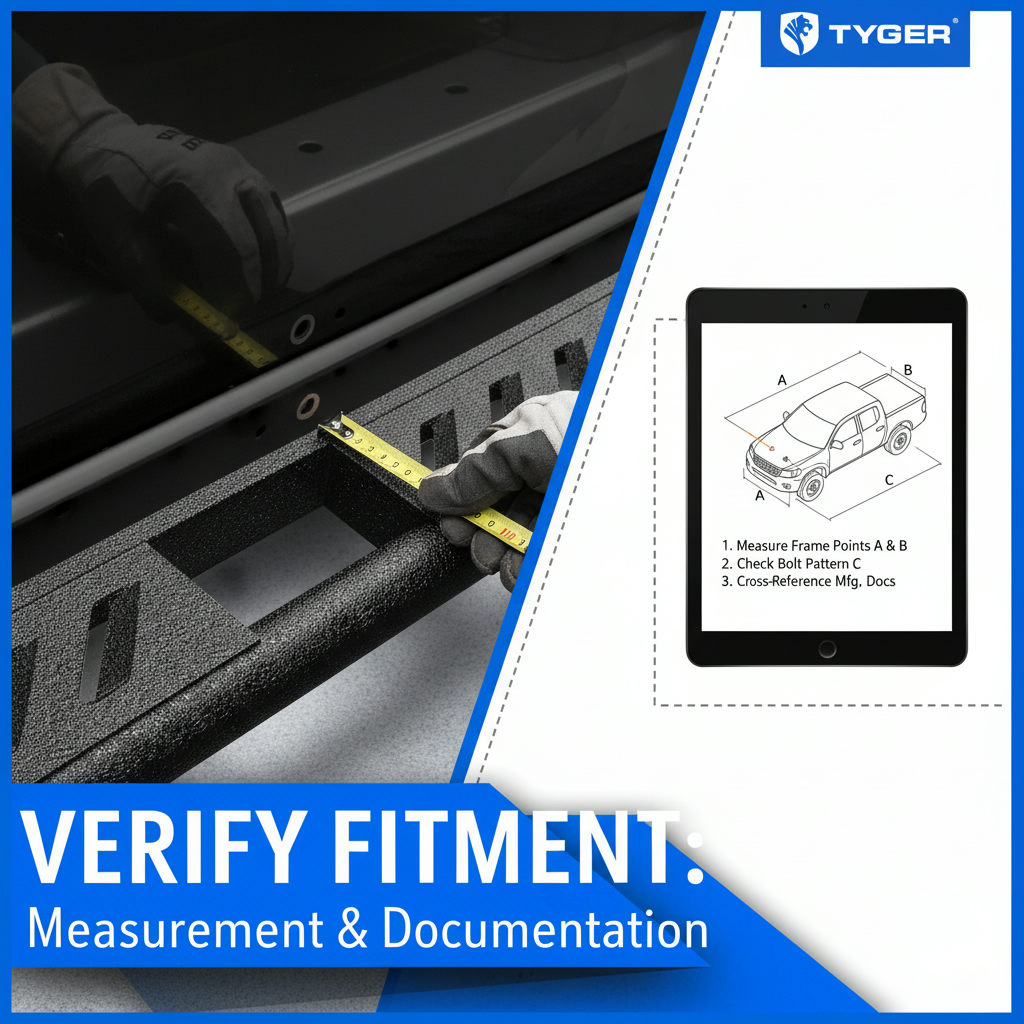
For “will dodge running boards fit a chevrolet” and similar cross-application questions, verification is mostly measurement and documentation, not brand reputation. The most reliable checks are based on physical reference points under the vehicle and the fastener specifications.
- Confirm whether the vehicle has factory-provided mounting bosses or threaded inserts, and map their spacing front-to-rear.
- Compare required bracket locations to underbody obstacles (exhaust, shields, lines) rather than to exterior appearance.
- Validate fastener standards and torque requirements against manufacturer guidance to avoid mismatched hardware assumptions.
For general vehicle modification and safety expectations, official roadworthiness and construction guidance can be a useful baseline; in the UK, the DVSA’s MOT inspection framework outlines how condition and security of externally mounted components can become relevant to inspection outcomes (https://www.gov.uk/guidance/mot-inspection-manual-for-private-passenger-and-light-commercial-vehicles).
Will Dodge Running Boards Fit a Chevrolet: Where Interchangeability Usually Breaks Down
The question “will dodge running boards fit a chevrolet” often sounds simple, but interchangeability tends to fail for reasons that have nothing to do with whether two trucks look similar. Running boards are not universal accessories; they are position-sensitive parts that depend on how a vehicle’s underside is engineered. Even small changes in cab length, rocker panel geometry, or mounting-point spacing can make a direct swap unrealistic without modification.
In practice, fitment usually breaks down in a few predictable places. The running board itself is only one piece of the system; the brackets and attachment method are where compatibility is won or lost.
- Mounting Point Location and Spacing: many vehicles use factory-drilled or factory-threaded points in the body or frame area, but the exact spacing and thread specifications are not standardized across makes.
- Bracket Geometry: even if two vehicles have a similar number of attachment points, the bracket “drop” and offset can differ, changing how far the board sits from the body and where it lands under the doors.
- Cab and Bed Variants: within a single make, different cab configurations can shift door openings and step length needs; across makes, those differences multiply.
- Clearances Under the Vehicle: fuel lines, brake lines, wiring looms, and emissions components can occupy different routes, affecting whether a bracket can sit flat or whether drilling would risk damage.
This is why adjacent queries like “will chevy running boards fit a dodge” come up so often: people are noticing that overall vehicle size does not guarantee shared underbody architecture. The working assumption should be that cross-make swaps are the exception, not the default.
How to Think About Fitment Claims Without Turning It Into a Guess
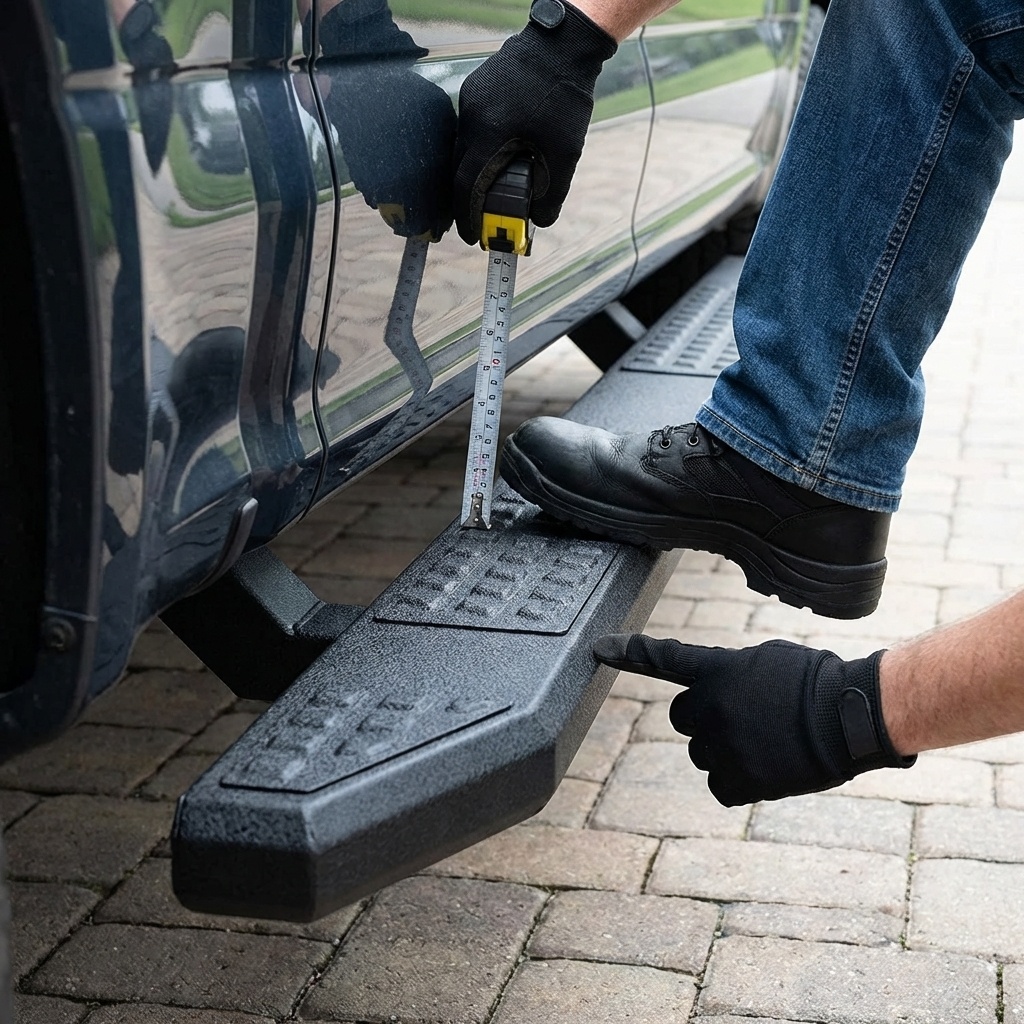
Fitment discussions online often mix three different meanings of “fit”: physically touching the vehicle, bolting on using existing mounting points, and aligning correctly for safe stepping and door clearance. Only the second and third meanings are what most owners actually want.
When reading charts, forum posts, or marketplace Q&A, the most reliable statements tend to be those that specify the vehicle configuration and the attachment method, rather than just the make and model year. If a claim does not mention cab configuration or mounting style, it is usually incomplete information rather than “wrong.”
For safety context, it helps to remember that exterior steps are part of the vehicle’s overall occupant access and can affect stability during entry and exit. Guidance on vehicle modifications and safe maintenance practices is commonly framed at a high level by institutions such as the U.S. National Highway Traffic Safety Administration (NHTSA) at https://www.nhtsa.gov, which is useful for understanding why secure attachment and predictable clearances matter.
Realistic Expectations From Cross-Make Swaps
The most realistic expectation is that a cross-make swap is rarely a straightforward bolt-on. It may be physically possible to adapt parts, but “possible” can still mean extra drilling, custom brackets, or altered positioning—changes that can introduce new failure points if the load path is not well supported.
Situations where the idea tends to feel limiting:
- When the goal is a clean installation using factory points only; cross-make parts typically were not designed around the same attachment layout.
- When corrosion is already present under the vehicle; adding new holes or mixed-metal hardware can accelerate long-term issues if not engineered carefully.
- When door clearance is tight; a few millimeters of misplacement can create rubbing or interfere with weather seals, especially on longer cabs.
Situations where expectations are more realistic:
- When the focus is learning whether two vehicles share a platform or underbody mounting philosophy, rather than assuming brand-to-brand compatibility.
- When measurements and mounting diagrams are available and can be matched to the vehicle’s actual underside, not just the published model name.
Frequently Asked Questions About Will Dodge Running Boards Fit a Chevrolet
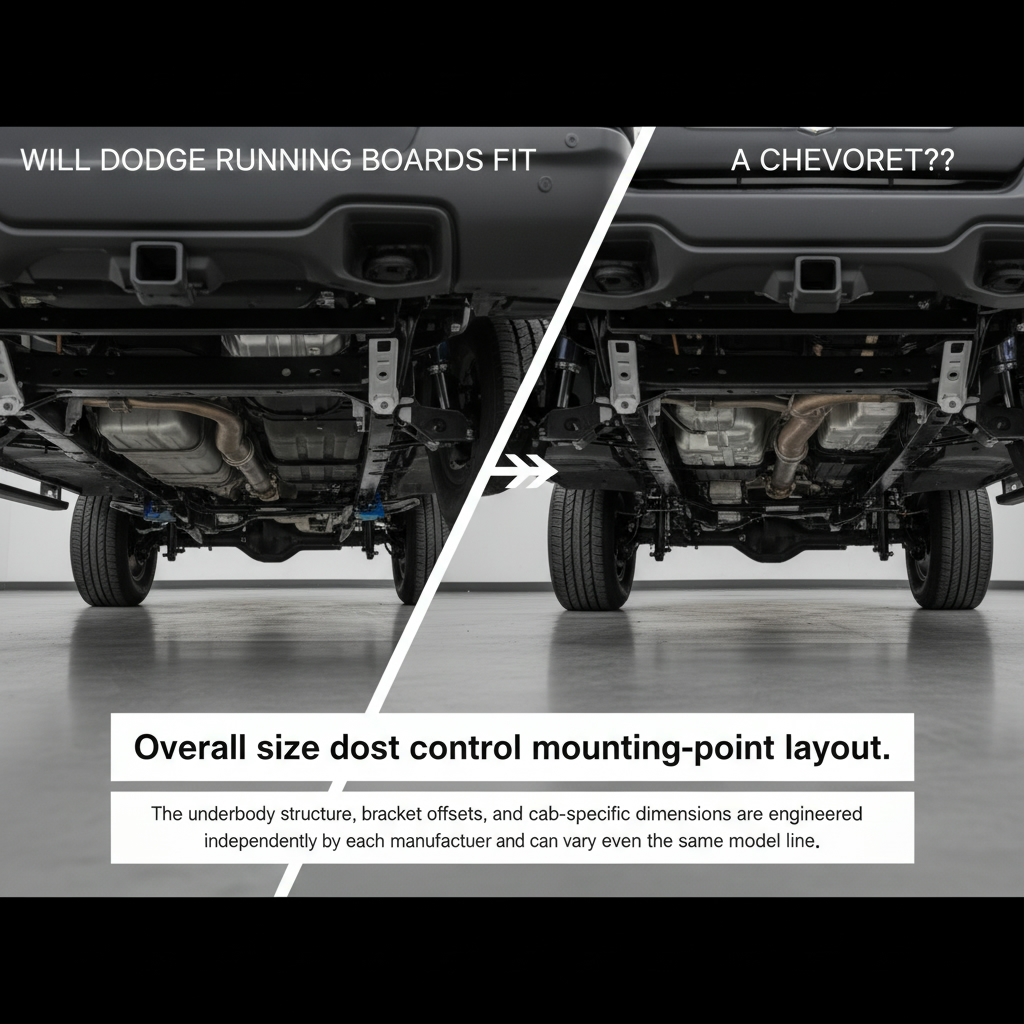
Why Do People Keep Asking “Will Dodge Running Boards Fit a Chevrolet” If the Trucks Seem Similar in Size?
Overall size does not control mounting-point layout. The underbody structure, bracket offsets, and cab-specific dimensions are engineered independently by each manufacturer and can vary even within the same model line.
Is “Fit” the Same as “Bolts On Without Modification”?
Not in most discussions. “Fit” can mean anything from “can be held in place” to “installs using factory mounting points and sits correctly,” and those are very different outcomes.
Do Model Years Matter More Than Brand When It Comes to Compatibility?
Both matter, but model years can be decisive because mounting points and underbody packaging change across redesigns. Even within one brand, a new generation can alter attachment geometry enough to break interchangeability.
Why Are Fitment Charts and Community Answers Sometimes Contradictory?
They often refer to different configurations or different definitions of “fit.” A statement can be true for one cab length or mounting method and misleading for another if the details are not specified.