
The question “will crew cab running boards fit double cab” sounds simple, but it usually hides three separate fitment variables: cab-length labeling, wheelbase-dependent mounting locations, and the bracket style used to attach the board to the truck. Most confusion comes from assuming “crew cab” and “double cab” are interchangeable across brands and model years. They are not.
Running boards are not just a length of material along the rocker. They are a system: the board length and step placement, plus brackets that must land on specific factory holes or studs along the body or frame. If those attachment points do not line up, a board that is “about the right length” can still be the wrong fit.
Quick Orientation (So Assumptions Stay Safe)
- “Crew cab” and “double cab” are manufacturer terms, not universal measurements; they can imply different rear-door length and cab geometry.
- Fitment is usually determined by bracket-to-hole alignment first, then board length and step position second.
- A “yes” answer often depends on the exact truck generation and whether the boards use vehicle-specific brackets or a more adjustable mounting approach.
Why “Crew Cab” Vs “Double Cab” Causes Fitment Confusion
In everyday conversation, cab names get used as if they describe a single, consistent size. In practice, each manufacturer defines cab configurations within a platform generation. “Double cab” may indicate a shorter rear-door opening than “crew cab,” even when both are four-door. That difference changes where a comfortable step should land relative to the doors, and sometimes changes where brackets can be placed without interfering with pinch welds, body mounts, or underbody components.
This is why “will crew cab running boards fit double cab” tends to get different answers depending on whether the discussion is about physical length, door coverage, or bolt pattern compatibility. A board can physically fit under the rocker area yet feel mispositioned in daily use because the step pads sit too far forward or too far back for the door openings.
What Actually Determines Whether Running Boards Fit
Fitment is generally constrained by the truck’s provided attachment locations. On many modern pickups, brackets are designed to use existing factory holes or studs. If a board kit is engineered around one cab configuration, the bracket spacing can be fixed to that pattern. That is the core reason the question “will crew cab running boards fit double cab” is often answered with “only sometimes.”
- Mounting point layout: The number of mounting points and their spacing may differ by cab and generation, even within the same nameplate.
- Bracket geometry: Brackets must clear body mounts, wiring, and underbody shields while keeping the board level and tucked appropriately.
- Board length and step location: Even if brackets can be adapted, door coverage and step usability can end up awkward.
Cab Labels Across Brands: Extended, Quad, Standard
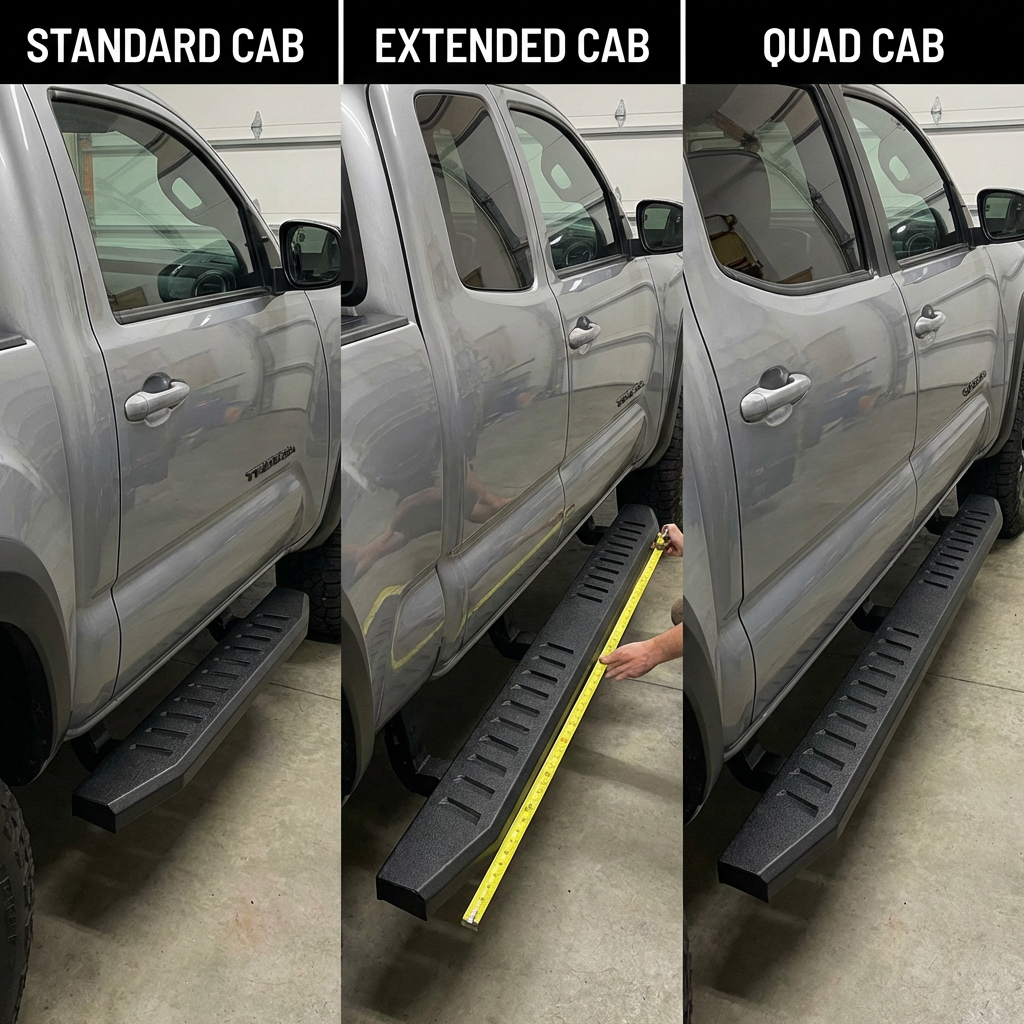
Questions like “will crew cab running boards fit extended cab,” “will crew cab running boards fit quad cab,” or “will crew cab running boards fit standard cab” are variations of the same issue: cab labels are not a universal sizing system. “Standard cab” tends to be the most distinct, but “extended” and “quad” can sit between short and full four-door cabs in ways that change both mounting patterns and practical step placement.
When the query gets even more specific—such as “will crew cab running boards fit standard cab f150” or “will extended cab running boards fit standard cab”—the safest interpretation is that the person is trying to transfer boards between cab types. Transfers are most likely to fail at bracket alignment rather than at raw length.
Where Reliable Fitment Information Comes From
Community discussions can surface patterns, but authoritative guidance is usually rooted in how vehicles are built and identified. Vehicle identification and configuration details can be confirmed through manufacturer and regulatory resources. For example, the National Highway Traffic Safety Administration explains how the VIN is structured and used to identify vehicles, which is a starting point for confirming exact configuration before any fitment claim is treated as reliable (https://www.nhtsa.gov/vin-decoder). For broader context on vehicle equipment and safety-related terminology, NHTSA also maintains consumer-facing guidance that helps keep discussions grounded in standardized definitions (https://www.nhtsa.gov/).
As a single illustration of how listings often phrase compatibility, a product page may state “crew cab” coverage for specific model years, but that wording alone does not prove it answers “will crew cab running boards fit double cab” without confirming the underlying bracket pattern and cab definition for that platform.
Why Cab Labels Rarely Answer “Will Crew Cab Running Boards Fit Double Cab”
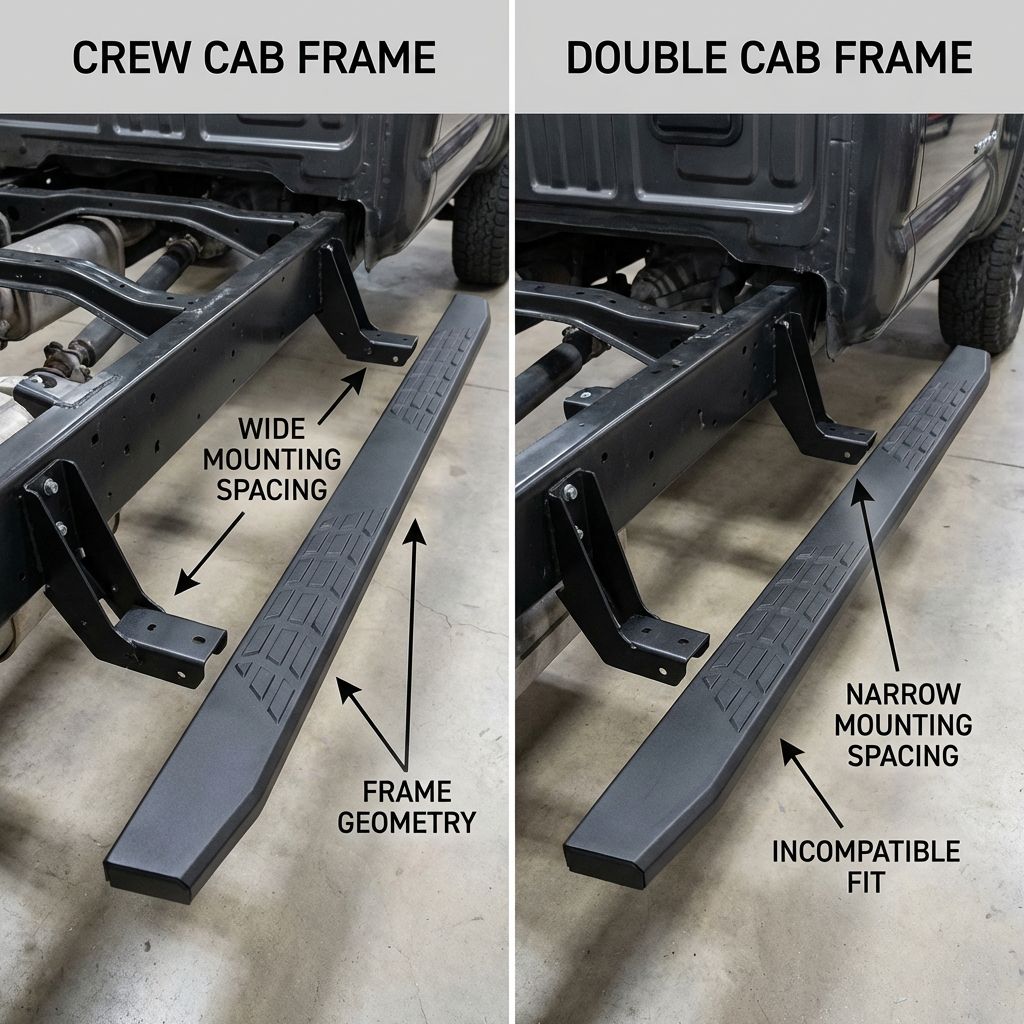
The question “will crew cab running boards fit double cab” keeps surfacing because cab names are marketing shorthand, not engineering drawings. “Crew cab,” “double cab,” “quad cab,” and “extended cab” may describe broadly similar layouts, yet the underbody mounting reality is defined by the frame and rocker geometry: where threaded holes exist, how far apart they are, and what brackets are designed to span.
Even within one manufacturer, a “double cab” can share some frame architecture with a “crew cab,” but differ in cab length, body mount locations, and the position of pinch weld seams. Across manufacturers, the same words can map to different dimensions entirely. That is why the phrase “will crew cab running boards fit extended cab” often has the same answer pattern as “will crew cab running boards fit double cab”: it depends less on the label, more on the mounting points and length envelope.
Mounting Geometry: Hole Spacing, Bracket Count, And Load Paths
Most fitment failures are not mysterious; they are geometric. Underbody brackets are designed around a specific set of attachment points and a specific load path into the body and frame. If the bracket lands between holes, or the load is transferred through an unintended thin sheet area, the installation becomes a compromise.
Three variables tend to decide compatibility more than anything else:
- Attachment point pattern: presence and spacing of factory threaded inserts or studs; if the pattern differs, “close enough” generally is not.
- Bracket architecture: whether the design assumes two mounting locations per side or three; a “two mount” layout may align on one cab style and miss on another, which is why queries like “will 2 mount running boards fit a 2017 ram” show up so often.
- Vertical and lateral offsets: small differences in rocker height or frame-to-body clearance can change whether a bracket sits squarely or twists, which affects long-term loosening and vibration.
For context on how vehicle modifications can interact with safety and compliance expectations, the National Highway Traffic Safety Administration outlines the broader implications of vehicle equipment changes at https://www.nhtsa.gov/vehicle-safety/vehicle-modifications-and-adaptations.
Length Is Not Just A Number: Coverage, Door Sweep, And Wheelbase Effects
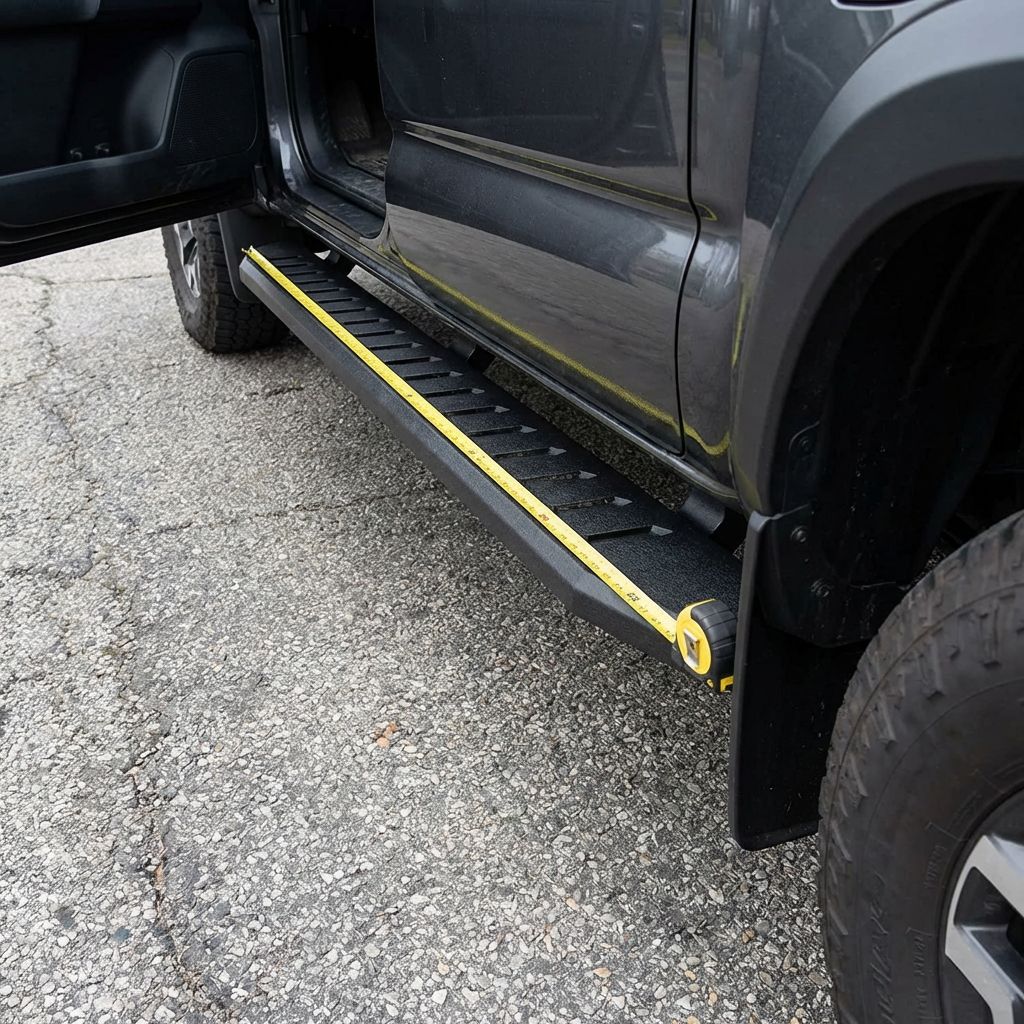
Fitment discussions often collapse into inches: “will 78 inch running boards fit crew cab,” “will 78 running boards fit crew cab,” or even “will 278 running boards fit crew cab.” Length does matter, but mainly because it changes where the ends land relative to doors and wheel openings. A board can be physically mountable yet functionally awkward if it ends under a door edge where foot placement is natural, or if it interferes with mud flap clearance and tire spray zones.
Wheelbase enters indirectly. Two trucks can share a cab type while differing in bed length; the cab-related mounting points may stay constant, but the visual alignment to the wheel arches changes. That is why “looks right” and “bolts on” are separate questions, and why “will 78 inch running boards fit GMC Sierra crew cab” can have different practical outcomes depending on the exact configuration.
Edge Cases That Create Confident But Wrong Answers
Several recurring edge cases produce confident forum replies that do not travel well between trims and model years:
- Model-year transitions where the body is refreshed but the cab naming stays similar; hole locations can shift subtly.
- Trim packages that add factory provisions on some builds but not others, changing what is available to bolt into.
- Aftermarket brackets marketed as “no-drill” that assume a specific insert set; if missing, the same kit may require drilling or becomes non-viable.
One illustrative example seen in fitment discussions is a listing such as COMNOVA Running Boards being described as compatible with specific crew cab year ranges, which highlights how fitment is typically constrained by configuration rather than cab label alone.
How To Interpret “Standard Cab” And Older Fitment Questions
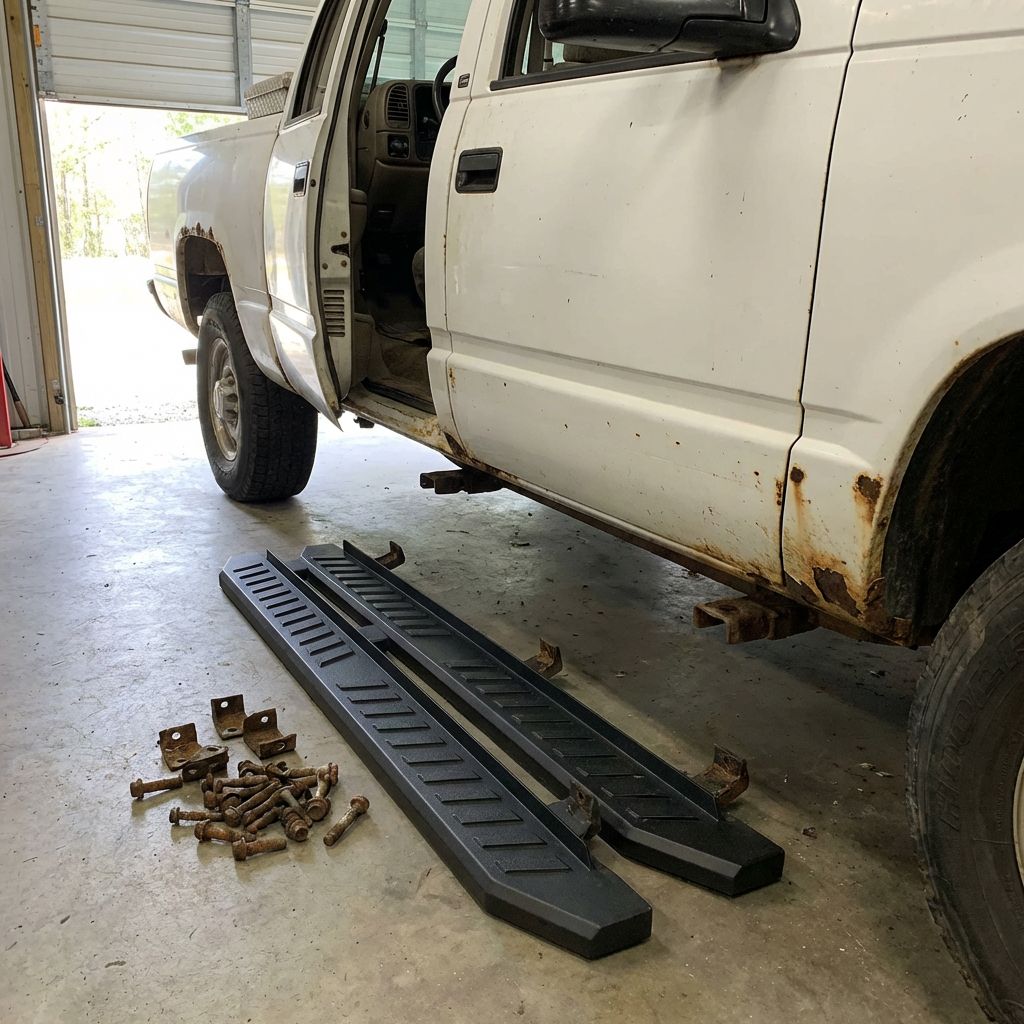
Questions like “will crew cab running boards fit standard cab,” “will extended cab running boards fit standard cab,” or “will crew cab running boards fit standard cab F150” often reflect a hidden mismatch: standard cabs usually have shorter door openings and different step-use patterns, so even if a mounting solution could be improvised, the step placement may land too far forward or too far rearward to feel natural. Older-platform questions such as “will 2001 GMC extended cab running boards fit standard cab” add another complication: corrosion, prior repairs, and missing factory hardware can make the original mounting scheme unreliable as a reference.
At this point, the practical meaning of “will crew cab running boards fit double cab” becomes clearer: it is less a single yes-or-no and more a checklist of geometric and structural alignment that either exists on a specific truck or does not.
Why The Crew Cab Vs Double Cab Swap Often Fails In Practice
When a crew cab setup does not transfer cleanly to a double cab, it is typically one of a few predictable mismatch patterns. The details differ by brand, but the failure modes tend to rhyme.
- Mounting point spacing may differ by an inch or two across cab styles, which is enough to prevent brackets from lining up without forcing fasteners or modifying parts.
- Bracket indexing can be model-year specific; a bracket that fits a later generation may sit at a different angle on an earlier body, creating a tilt or uneven gap.
- End clearance becomes an an issue when the board’s ends extend toward wheel openings; a double cab’s proportions can make the same length look “okay” but interfere under compression or with splash guards.
- Door coverage expectations differ: some drivers expect the step surface to sit directly under each door edge. A crew cab-aimed layout may leave an awkward dead zone on a shorter cab even if it technically bolts on.
In other words, “will crew cab running boards fit double cab” is best treated as a mounting-geometry question first, and a length question second.
What To Verify When Answers Online Conflict
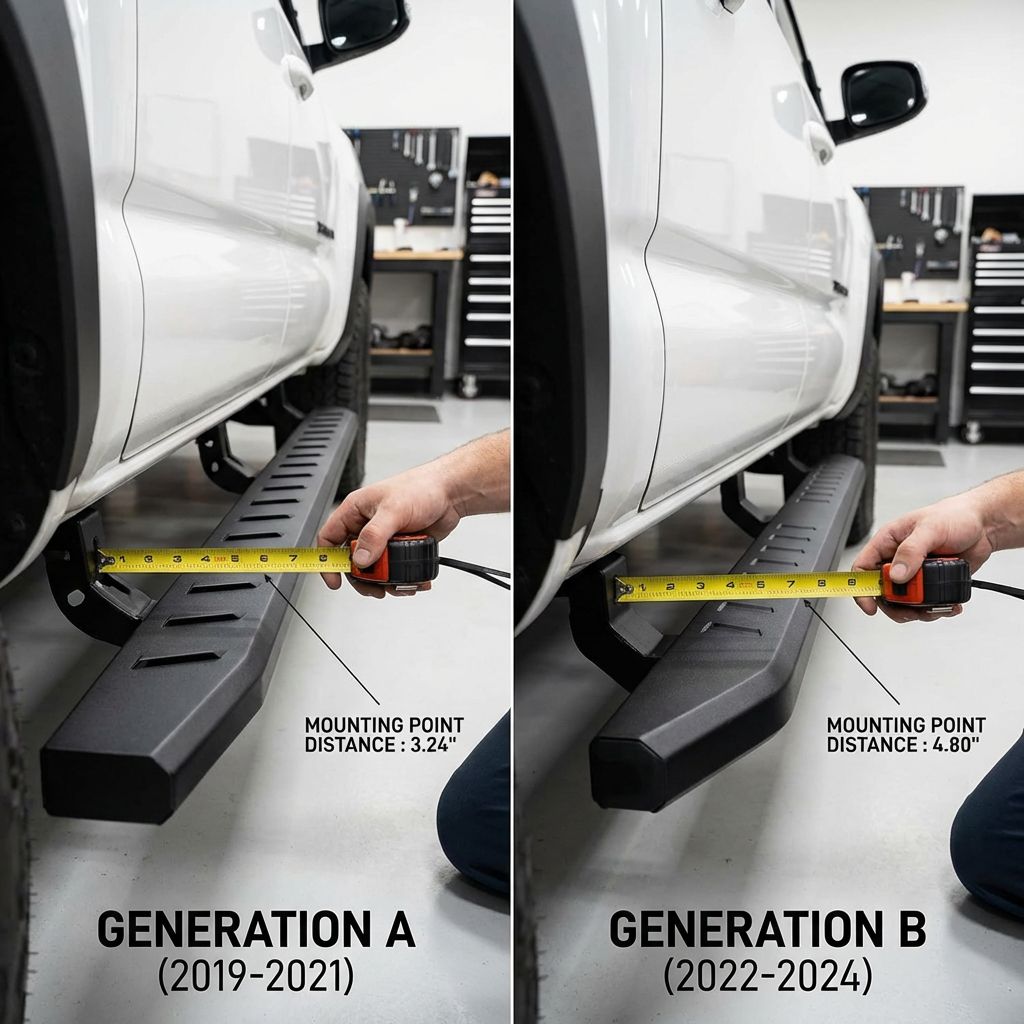
Conflicting forum answers are usually the result of people describing different generations, trims, or installation methods without realizing it. A clean way to reconcile claims is to anchor on objective identifiers rather than labels.
- Match the exact model year range and generation code if available (generation changes are where fitment breaks most often).
- Confirm whether the truck uses factory threaded holes, studs, or clamp-style attachment points; mixing these up causes false “fits for me” reports.
- Look for descriptions of how many mounting points per side were used; phrases like “2 mount” often indicate a different bracket scheme than the factory pattern.
- Separate “bolts up” from “sits correctly”; people may report success even when the board is shifted or the gap is uneven.
These checks also help interpret edge-case searches like “will 2 mount running boards fit a 2017 ram” or length-based questions such as “will 78 inch running boards fit crew cab” where the number sounds decisive but the mounting layout still governs the outcome.
Where The Fitment Question Has Real Limits
Some swaps can be made to work with modifications, but that is no longer the same question as “will crew cab running boards fit double cab” in the everyday sense. Once bracket holes are elongated, custom spacers are added, or attachment points are relocated, the safety margin depends on workmanship, corrosion protection, and load-path integrity. For context on why attachment and loading assumptions matter, the National Highway Traffic Safety Administration (NHTSA) provides background on vehicle-related safety considerations and defect reporting at https://www.nhtsa.gov, and SAE International’s standards portal explains how automotive practices are standardized (access varies) at https://www.sae.org/standards.
The practical takeaway is not that modifications are impossible, but that “fit” should mean correct alignment to intended mounting points with predictable support under load.
FAQ: Clearing Up Common Fitment Confusion
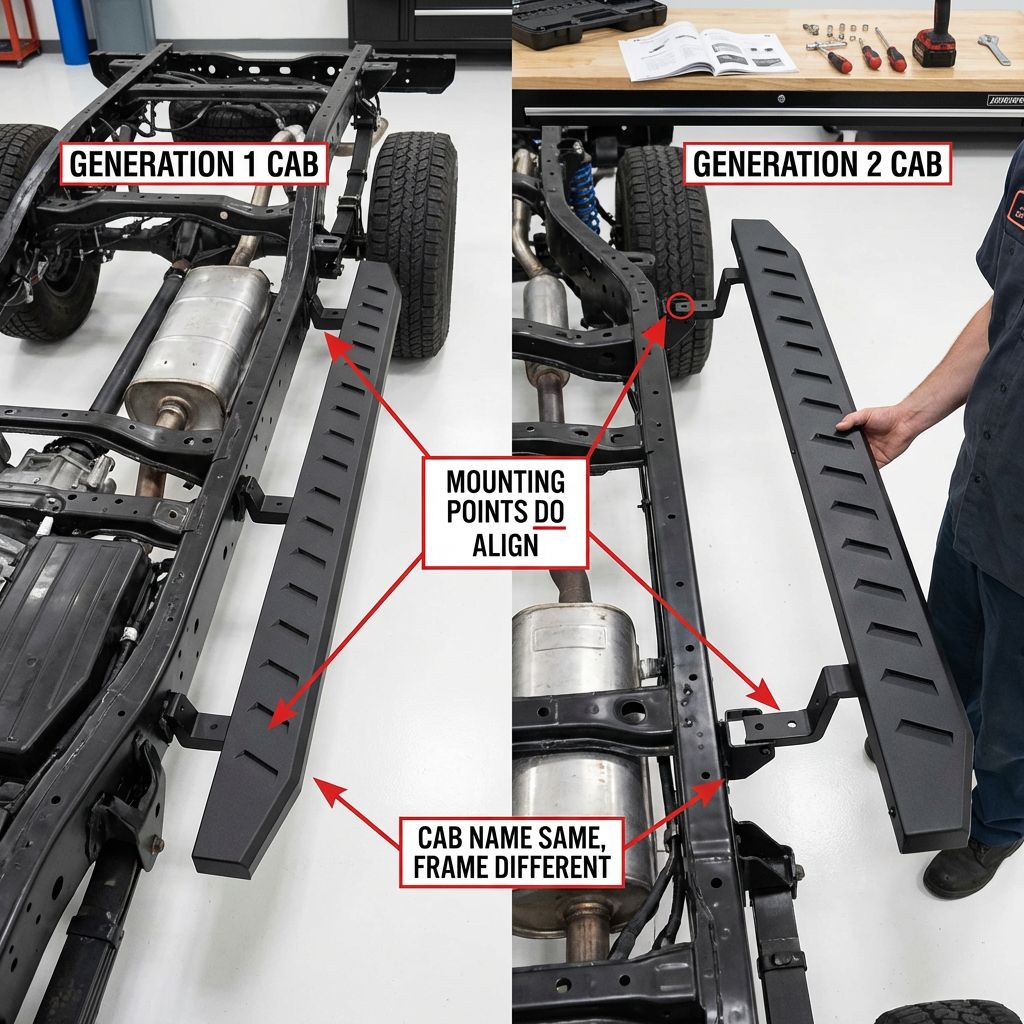
When People Ask “Will Crew Cab Running Boards Fit Double Cab,” What Are They Usually Missing?
Most are assuming cab names imply identical mounting geometry. In reality, the location and type of mounting points can change with cab configuration and model generation, even when the visual difference seems small.
Is Overall Board Length The Main Deciding Factor?
Length matters for door coverage and end clearance, but it does not guarantee bolt-up compatibility. Bracket placement and the truck’s mounting-point spacing are usually the hard constraint.
Why Do Some Owners Say It Fits While Others Say It Does Not?
They may be talking about different model years, different bracket schemes, or accepting a misaligned final position. “Fits” can mean anything from “bolted on” to “sits level with correct gaps,” and those are not the same claim.
Do “Extended Cab,” “Quad Cab,” And “Standard Cab” Labels Translate Across Brands?
Not consistently. Each manufacturer uses its own naming, so the only dependable approach is to match the exact cab/door configuration and the vehicle generation rather than relying on the label alone.
Is It Reasonable To Expect A Clean Swap Between Cab Sizes Within The Same Truck Line?
Sometimes, but it is not a safe assumption. Cab-size changes often come with different mounting-point locations, and that is exactly what the “will crew cab running boards fit double cab” question is trying to resolve.