
The question “can AMP Research running boards be cut to fit” is less about a single modification and more about how modern powered step systems are built. People usually encounter it after a fitment mismatch: wheelbase changes, cab configurations, rocker-panel length differences, or an accessory that interferes with a clean install. The instinct is simple—trim the length and move on. The reality is usually structural.
There is also a vocabulary problem. In many discussions, “running boards” gets used as shorthand for everything from a fixed step to a powered, retracting unit. Those are not interchangeable from a modification standpoint, especially once motors, linkages, wiring looms, and pinch-sensor zones enter the picture.
- What it is in practical terms: a brand ecosystem of powered and fixed side-step systems with vehicle-specific mounting logic.
- How the question comes up: during installation planning, when a kit looks close but not exact for the vehicle’s length or mounting points.
- Safe assumption: cosmetic trim pieces may sometimes be adjustable.
- Misleading assumption: the main structural step can be shortened without changing how it carries load or deploys.
Why “Cut to Fit” Collides With How These Systems Are Engineered
With vehicle steps, length is not just appearance. It is tied to where brackets land on the body, how loads are distributed into factory mounting locations, and how the stepping surface remains stiff when someone plants weight near an end. Shortening a structural member can shift bending stresses, reduce edge support, and introduce new flex points exactly where fatigue tends to start.
On retracting designs, the constraints tighten. The step does not merely sit there; it swings through a path. That path is defined by link arms, pivot geometry, stop points, and clearance to the rocker panel and underbody. Alter the step length and the “ends” may now collide with nearby surfaces, or the unit may twist slightly under load because the structure is no longer balanced around the linkage locations.
What “Running Boards” Can Include, And Why That Matters
When someone asks “can AMP Research running boards be cut to fit,” the answer depends on which part they mean. In real installations, the word might refer to the stepping surface, end caps, trim strips, illumination components, or the bracketry that sets position. Each behaves differently under cutting, drilling, or re-capping.
As a general engineering principle, modifications are less risky when they are limited to non-structural, non-load-bearing trim. They become much more consequential when they touch the main beam, welded or bonded joints, or any area that takes repeated dynamic loading from entry and exit.
Fitment Is Not Only Length: Mounting Points And Vehicle Structure
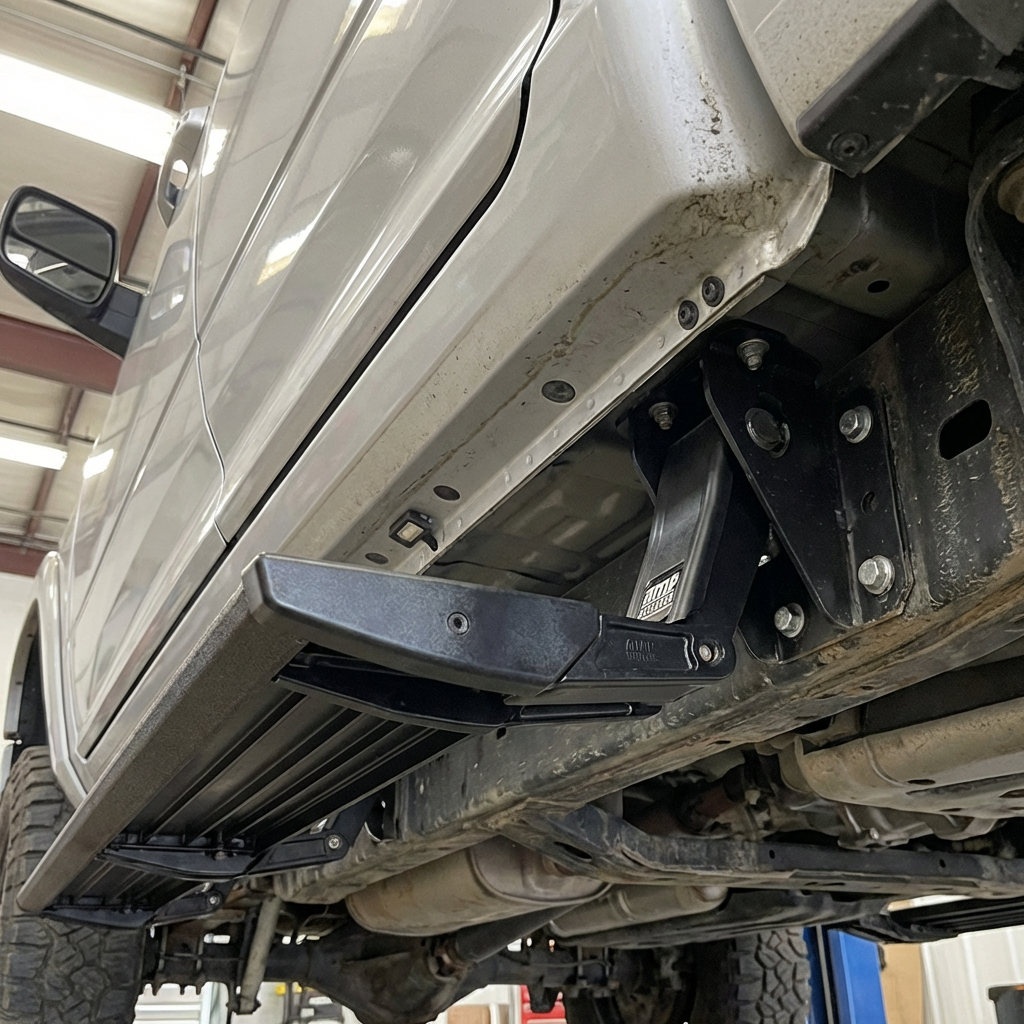
“Fit” often gets treated as a tape-measure problem, but mounting points are usually the governing constraint. Vehicle manufacturers place threaded inserts and attachment locations based on crash structure, corrosion protection, and assembly. A step system that is “almost” right in length can still be wrong in bracket spacing, which leads to improvised drilling or clamping—changes that can compromise corrosion resistance and long-term durability.
In the US, the National Highway Traffic Safety Administration (NHTSA) emphasizes that vehicle modifications can affect safety performance and compliance, especially when changes interact with structural or exterior components; their consumer information on modifications is a useful baseline for thinking about unintended consequences: https://www.nhtsa.gov/vehicle-safety
Early Reality Check: Cutting Versus Adjusting
In practice, “cut to fit” questions often resolve into one of three paths: confirming the correct vehicle-specific kit, limiting changes to trim-only pieces, or deciding that a powered retracting unit is not a flexible platform for length changes. A single example of the kind of system people mean here is the AMP Research PowerStep line, which is typically built around vehicle-specific geometry rather than universal cut-down sizing.
For broader safety framing around aftermarket changes and ensuring modifications do not introduce new hazards, the Federal Trade Commission’s guidance on vehicle-related consumer issues can help set expectations about responsibility and disclosure: https://consumer.ftc.gov/
What Cutting To Fit Usually Means In Practice
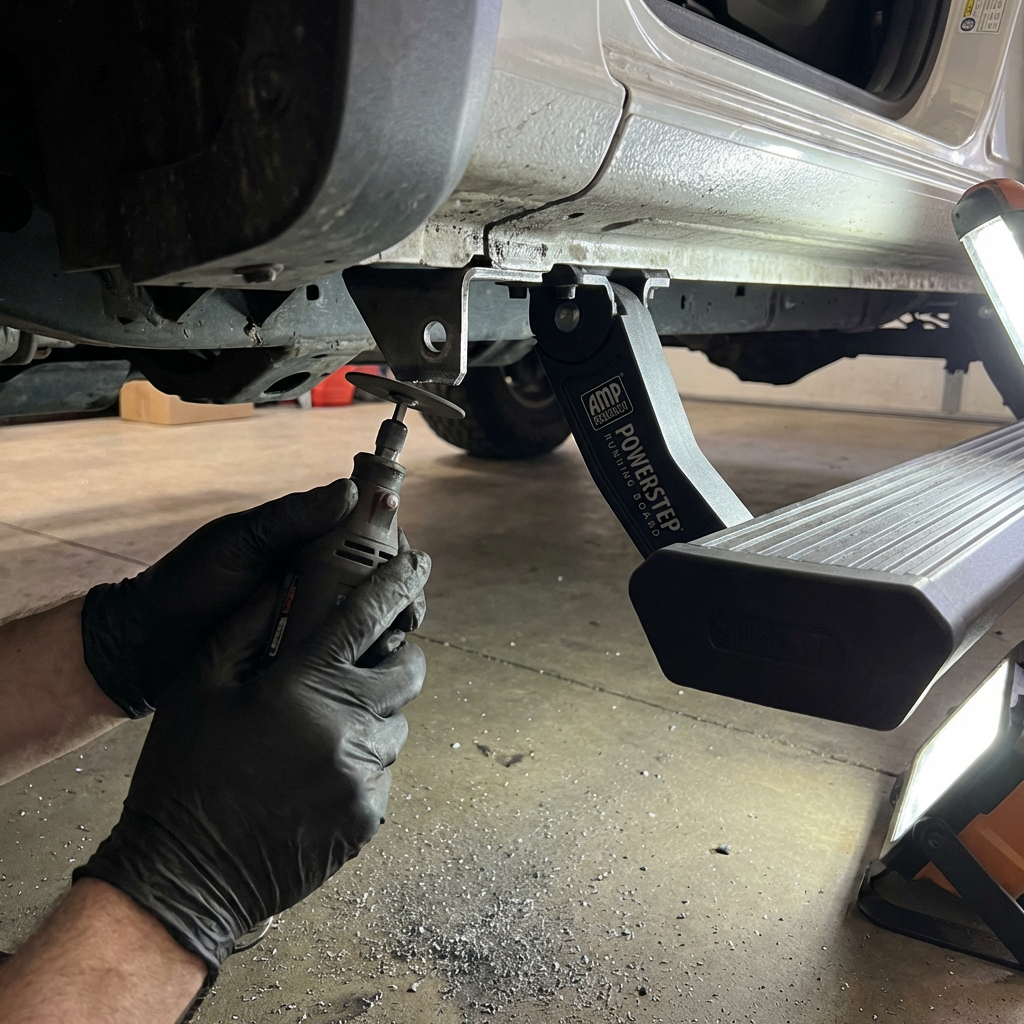
The question “can AMP Research running boards be cut to fit” is rarely about the board surface itself and more about the overall assembly: where the ends land relative to wheel openings, whether the underside clears brackets, and whether trim pieces interfere with body seams. Cutting becomes a proxy for a broader fitment problem—length, mounting geometry, and vehicle-specific attachment points not aligning the way a user expects.
In real installations, “cutting” can refer to several distinct actions with very different consequences. Shortening a non-structural cover is not equivalent to shortening a load-bearing rail. Trimming an edge for clearance is not equivalent to moving the mounting points. The same word gets used for all of it, which is why the topic generates so many AMP Research PowerStep Retractable Electric Truck Steps questions in owner communities.
- Cosmetic trimming tends to involve plastic or rubber-like pieces used to reduce gaps or manage splash; it mainly affects appearance and debris control.
- Clearance trimming is typically about avoiding contact during door movement or suspension travel; it can change how dirt and water are shed.
- Structural modification changes metal components that carry weight or resist torsion; this is where strength, corrosion protection, and fastener integrity become central.
Why “Can AMP Research Running Boards Be Cut To Fit” Depends On Load Paths
Whether modification is sensible depends less on the willingness to cut and more on what that cut does to the load path. Running boards and retractable steps behave like levers: user weight creates bending and twisting that must be carried through brackets into the vehicle structure. If a cut interrupts a reinforced section, removes a welded end, or changes where forces are introduced, the assembly can become more flexible in ways that are hard to see until it is used repeatedly.
Even when a trimmed area is not the primary load-bearing member, it may still matter. Edge geometry can act as a stiffener; removing it can increase vibration or noise. And once a protective coating is breached, corrosion risk increases unless the surface is correctly reprotected—an issue that becomes more relevant in regions that use winter road salt. The US Federal Highway Administration discusses salt use and its infrastructure impacts, which helps explain why exposed metal needs careful attention in salted environments: https://www.fhwa.dot.gov/environment/winter/
Fitment Edge Cases That Trigger Cutting Discussions
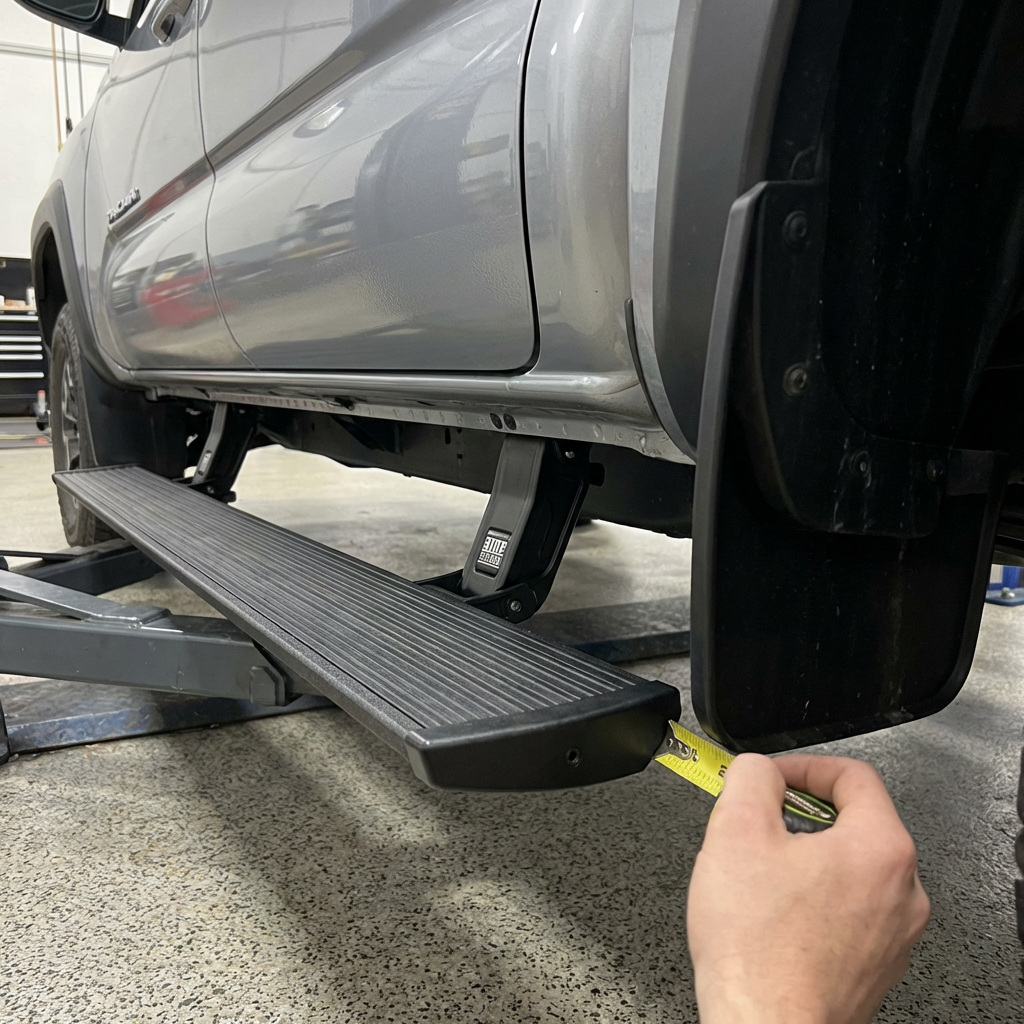
Many “can AMP Research running boards be cut to fit” searches come from edge cases where the vehicle is not stock or the expectations are based on a different configuration. The step may physically mount, yet sit too close to another component or look visually misaligned.
- Body variations within the same model line (cab length, bed length, or trim differences) can shift where clearance is tight.
- Aftermarket mud flaps, liners, or protective cladding can introduce interference that did not exist in the original fitment design.
- Off-road use can amplify contact risk because suspension articulation and debris accumulation change the effective clearance over time.
In these scenarios, modification can feel like a straightforward solution, but it often trades one problem for another: clearance gained in one spot may increase exposure elsewhere, especially around seams where water and grit collect.
Electrical And Sensor Considerations Often Overlooked
With powered retractable systems, the cutting question is sometimes misdirected. What looks like a length problem can be a timing or alignment issue: the mechanism may deploy and retract based on door position sensing and calibrated movement. Altering physical stops, relocating mounts, or changing the geometry can affect how smoothly the unit cycles, potentially increasing motor load or changing how the step settles at full extension.
For general electrical safety practices relevant to add-on vehicle accessories, the National Highway Traffic Safety Administration provides consumer-facing guidance on vehicle equipment and safety recalls that can be useful context when modifications are being considered: https://www.nhtsa.gov/recalls
When Trimming Becomes A Durability Question
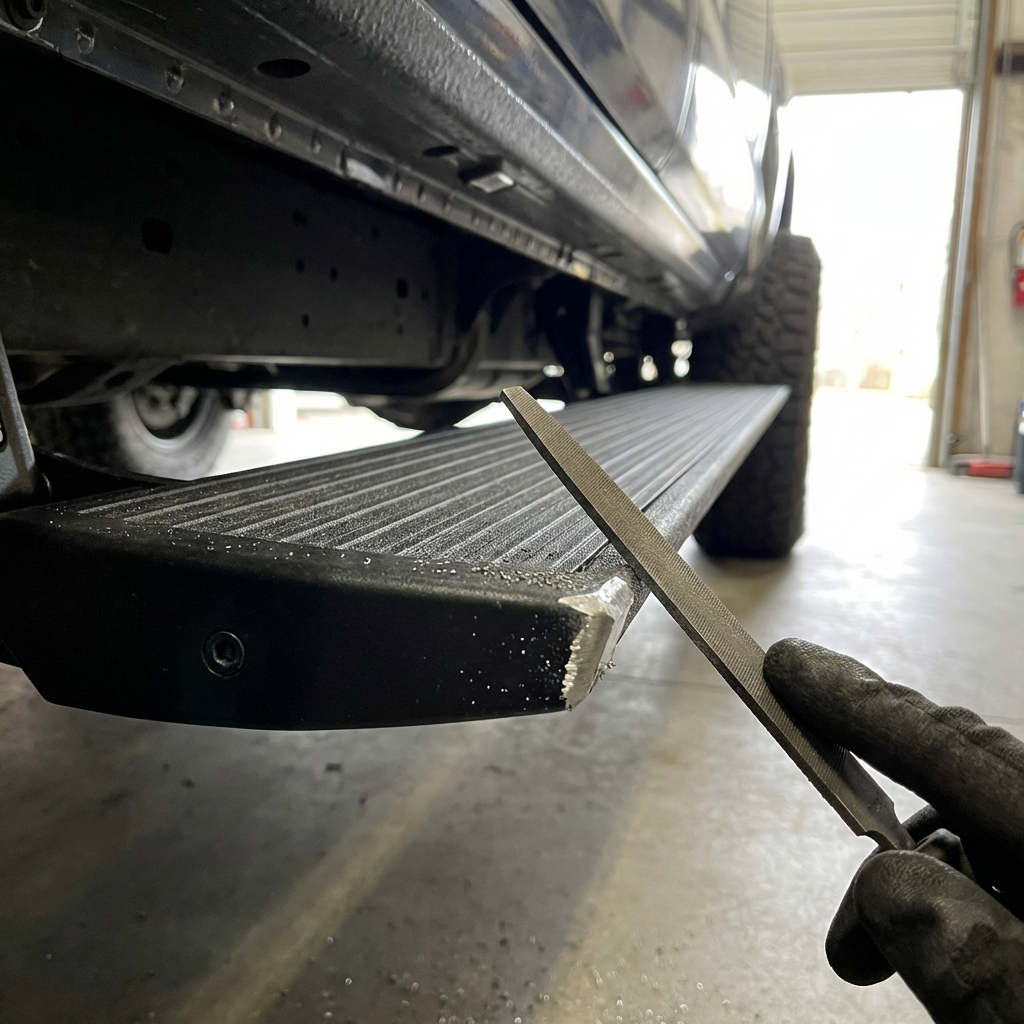
“Can AMP Research running boards be cut to fit” also has a durability dimension. Any cut edge is a stress concentrator unless it is finished properly. Small notches can propagate cracks under repeated loading, particularly if the part sees frequent stepping, vibration, and temperature cycling. Separately, sealing and drainage matter: trimming can change where water exits, sometimes increasing pooling in cavities. Over time, that can shift the maintenance burden from occasional cleaning to active corrosion management.
One reason the question persists is that outcomes are uneven: a minor clearance trim on a non-structural piece may be uneventful, while a seemingly similar cut in a different location can change stiffness, noise, or long-term wear. The variability is the point—“cut to fit” is not one action, and the consequences depend on what function the modified area was quietly performing.
Can AMP Research Running Boards Be Cut to Fit: What That Question Usually Misses
The question “can AMP Research running boards be cut to fit” is often asked as if it were purely about trimming length. In practice, it is usually a proxy for something else: uncertainty about whether a given side-step system is engineered to be altered without changing how loads travel through it, how it aligns, and how it stays safe over time.
In the automotive access-step world, cutting is not just cosmetic. Any change that removes material can change stiffness, shift stress to new points, and alter how fasteners clamp. With powered or retracting systems, the risk expands: clearance, moving envelopes, and wiring paths can become the limiting factor rather than “does it physically fit.” That is why the most reliable answer is rarely a blanket yes or no; it depends on what is being cut, where, and whether the manufacturer designed that component to be field-trimmable.
- If the modification touches a load-bearing member, the change can reduce margin against bending and fatigue even when the part still “looks solid.”
- If the modification changes mounting geometry or stand-off distance, it can introduce misalignment that shows up later as noise, uneven movement, or fastener loosening.
- If the modification exposes raw metal, corrosion protection becomes a structural issue over time, not a finishing detail.
How To Think About Fitment Without Turning It Into A Guessing Game
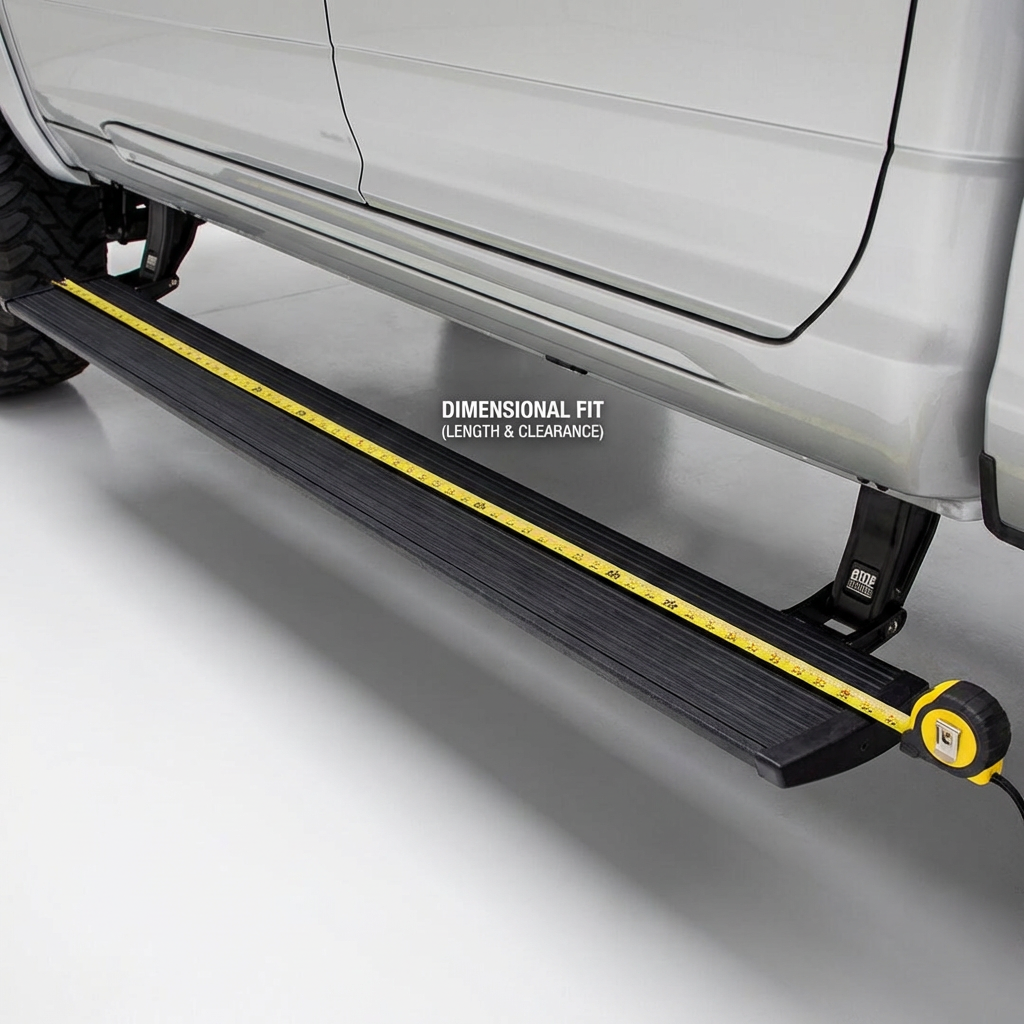
When people search “can AMP Research running boards be cut to fit,” they are often trying to reconcile three different kinds of fit: dimensional fit (length and obstacles), mechanical fit (mounting points and clearances), and functional fit (how the system behaves under repeated use). Dimensional fit is the easiest to visualize and the easiest to overvalue.
A more dependable way to frame the decision is to treat any cutting as engineering change control. If a component was not specified as trimmable, assume the design intent includes the full section thickness, end geometry, and coating continuity. If the brand provides vehicle-specific fitment guidance, that guidance is the primary boundary; improvisation tends to create one-off results that cannot be generalized.
From a safety standpoint, the key question is whether modification changes the way a person’s weight is transferred into the vehicle structure. The U.S. National Highway Traffic Safety Administration (NHTSA) explains how vehicle equipment and modifications interact with safety responsibilities and defects, which is a useful framing even when the part is aftermarket: https://www.nhtsa.gov/equipment
Nuances And Limitations That Matter More Than Most People Expect
Even when a cut seems “minor,” the downstream effects can be non-obvious. Shortening a component can move the highest stress region closer to a fastener, a joint, or an end condition—exactly where fatigue cracks like to start. If coatings are breached, corrosion can accelerate at the cut edge, especially in salted-road regions; the U.S. Federal Highway Administration (FHWA) provides clear context on deicing salts and corrosion mechanisms relevant to underbody hardware: https://highways.dot.gov/research
There is also a liability and serviceability layer. A modified part may no longer match documented specifications, making later troubleshooting ambiguous. If a future issue occurs, it can be difficult to separate normal wear from modification-driven behavior.
Practical Clarity: When Cutting Tends To Be A Poor Fit For The Goal
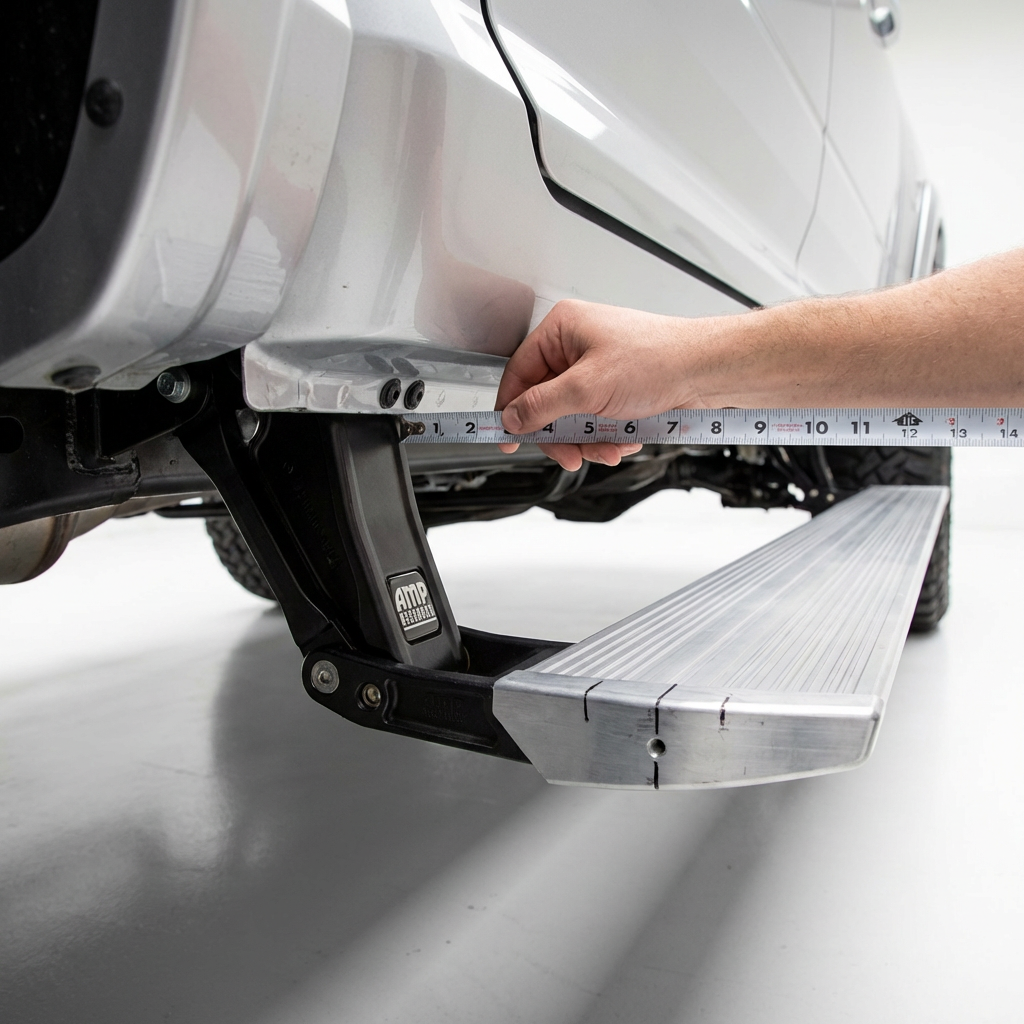
Cutting tends to be least defensible when the goal is simply to “make it fit” across a mismatch in vehicle application, because the mismatch is often about mounting geometry rather than length. It also tends to be a poor fit when the system has moving elements or tight clearances, where millimeters can decide whether something cycles cleanly or intermittently contacts the body or frame.
On the other hand, if a manufacturer explicitly documents a trim allowance, specifies cut locations, and preserves load paths, then “can AMP Research running boards be cut to fit” becomes a different question: not whether cutting is possible, but whether it is being done within defined limits.
FAQ: Common Questions People Ask When Researching “Can AMP Research Running Boards Be Cut to Fit”
When Someone Asks “Can AMP Research Running Boards Be Cut to Fit,” What Are They Usually Trying To Confirm?
Typically, they are trying to confirm whether a fitment mismatch can be solved by trimming rather than changing the underlying application. The phrase often bundles concerns about clearance, mounting alignment, and long-term durability into one short question.
Is Cutting Mainly a Strength Issue or a Corrosion Issue?
It can be both, and which one dominates depends on where material is removed and how the edge is treated afterward. Strength changes can show up as flex or fatigue over time, while corrosion tends to be environment-driven and may appear later but still affects structural integrity.
Does “It Fits After Cutting” Mean It Is Safe and Stable Long Term?
Not necessarily. Initial fit only confirms geometry at rest; it does not validate how loads distribute during repeated stepping, vibration, and seasonal temperature changes.
What Is the Most Common Misconception About Trimming to Fit?
The most common misconception is treating the part as if it were purely cosmetic. In reality, many access-step components function as structural members, and their shape, section, and finish are part of the engineering—not just the appearance.