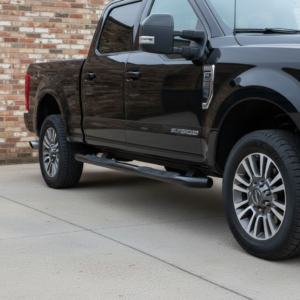
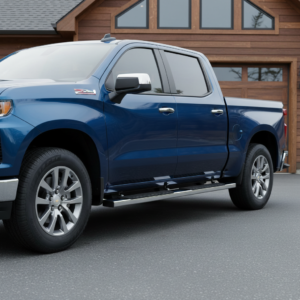
Overview of Heavy Duty Running Boards for Infiniti QX80/QX56 & Nissan Armada (2011-2024)
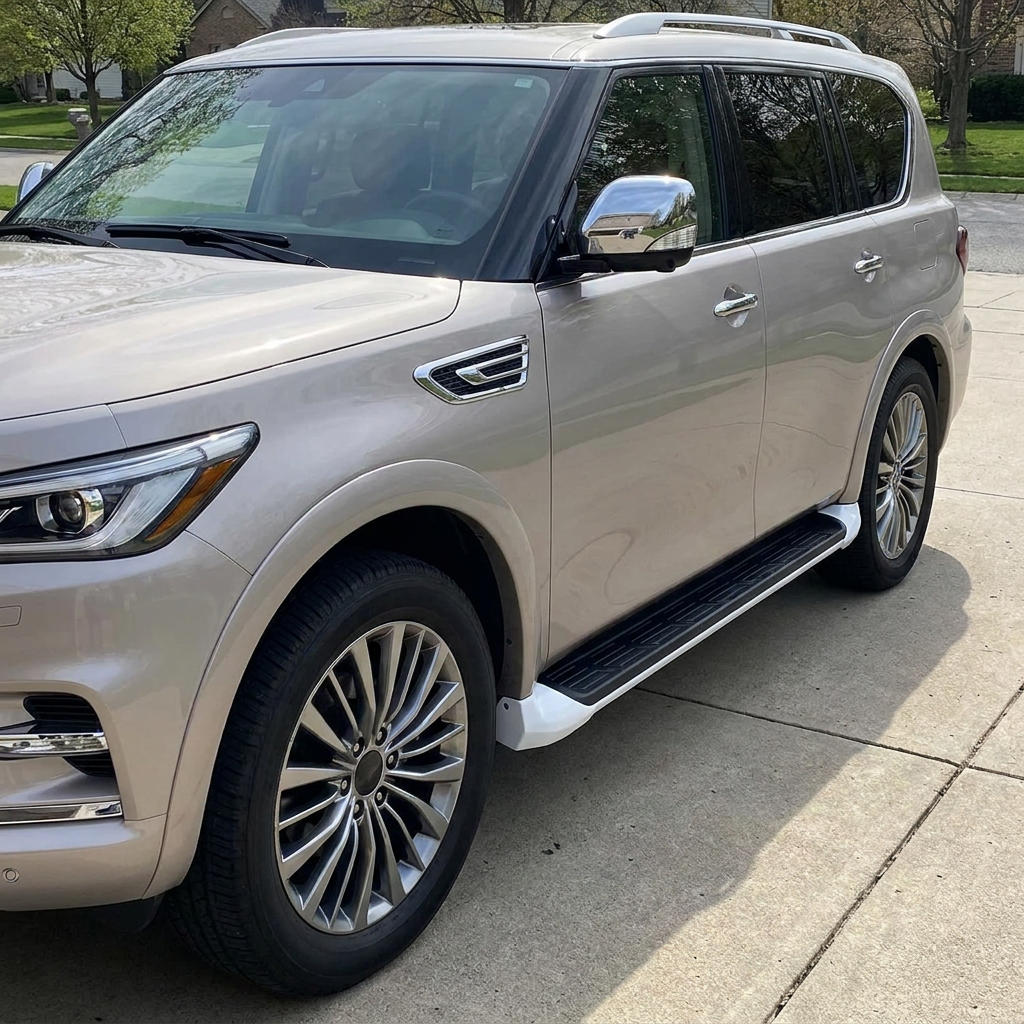
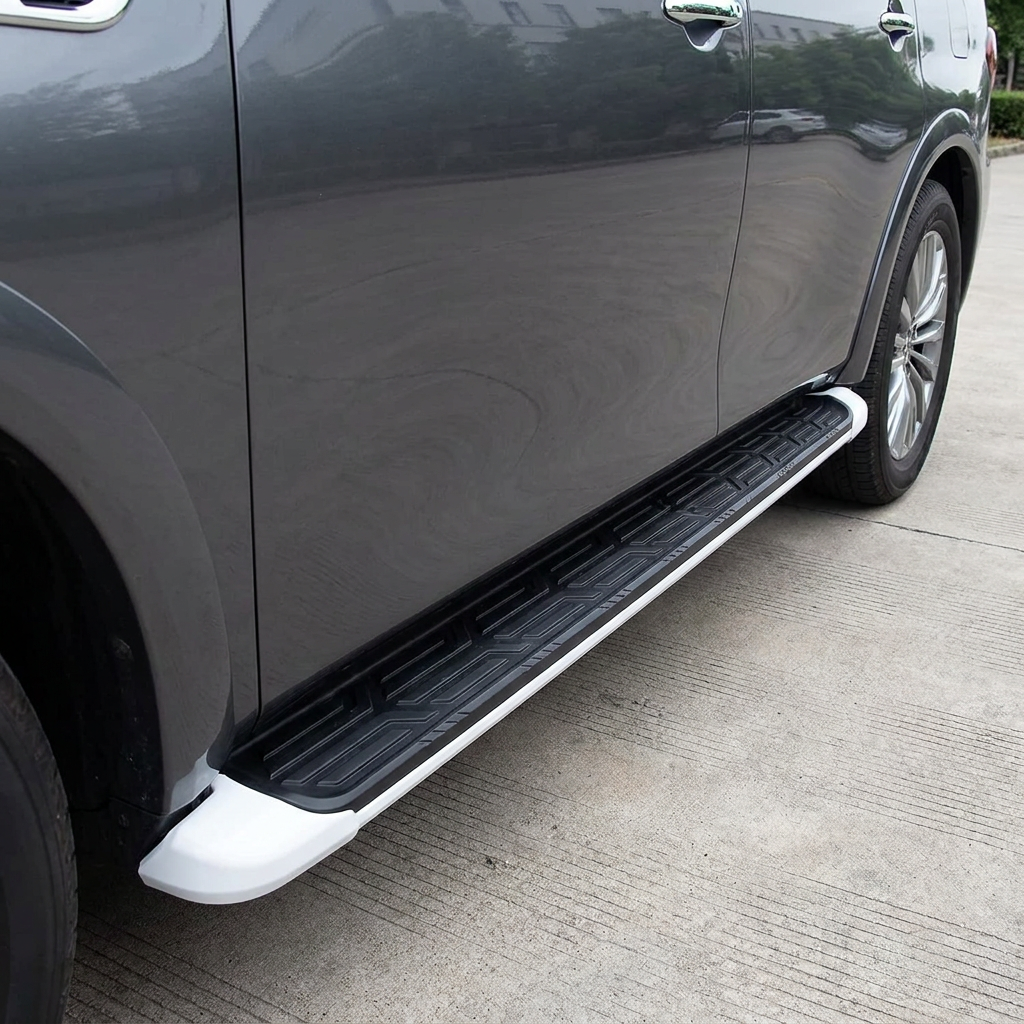
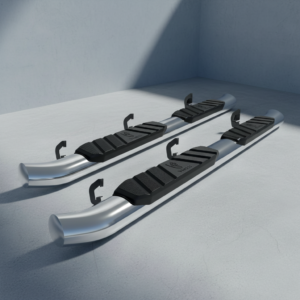
Longyeauto Heavy Duty Running Boards for Infiniti QX80/QX56 & Nissan Armada (2011-2024) are Longyeauto running boards (side steps/nerf bars) designed to add a stable stepping surface along the rocker area for easier entry and exit on full-size SUVs. This set is built as left and right side step rails and ships with mounting brackets, targeting model-year fitment from 2011 through 2024 for the Infiniti QX80/QX56 and 2017 through 2024 for the Nissan Armada.
Key characteristics of Heavy Duty Running Boards for Infiniti QX80/QX56 & Nissan Armada (2011-2024)
- Left and right running boards supplied as a complete side set
- Mounting brackets included for vehicle-specific attachment to the chassis
- Anti-slip step surface to reduce foot movement in wet weather
- Designed around high-load use for frequent daily entry and exit
- Compatible with QX80/QX56 (2011–2024) and Armada (2017–2024)
These Infiniti QX80 running boards 2011-2024 focus on the part that matters in day-to-day use: predictable footing at the moment weight transfers from the ground to the cabin. On tall SUVs like the Infiniti QX80 and QX56, the first step often happens on uneven ground, in rain, or while carrying bags. A running board solves that by creating a consistent “middle step” between the ground and the door sill.
The product is structured as side steps/nerf bars with dedicated mount brackets, so the rails don’t rely on improvised hardware. That keeps alignment consistent along the body line and helps prevent the common issue of a step that feels slightly twisted under load. Fitment coverage is clearly stated by model years, and that’s a practical starting point when checking compatibility.
Because this is a left-and-right set, both sides of the vehicle get the same step height and surface. That consistency is useful for families and for drivers who switch sides often when loading gear or helping passengers in and out.
Benefits of Longyeauto Running boards (side steps/nerf bars)
Longyeauto Running boards (side steps/nerf bars) are mainly about access, but the real benefit shows up in small, repeated moments. A stable step reduces how far the leg has to lift to reach the cabin. That matters for kids climbing into the second row, adults stepping in with a knee brace, or anyone wearing work boots.
Traction is the next point. The anti-slip step surface is intended to keep the shoe from sliding when the board is wet or dusty. That’s relevant in snow-belt states where slush collects along the side of the vehicle, and in dry climates where fine dust can make smooth metal feel slick. It’s a simple feature, but it changes confidence when stepping down.
These side steps also help keep entry cleaner. Shoes tend to contact the board first rather than brushing the lower door sill. Over time, that can reduce scuffs in the threshold area. And for drivers using roof racks, a side step provides a more controlled stance when reaching for cargo, rather than stepping on tyres or door sills.
For buyers searching heavy duty nerf bars for Infiniti QX80, the “heavy duty” angle usually means the board is expected to handle repeated loading without flexing or loosening. Mount brackets play a big role here. They spread load into factory mounting points instead of concentrating it in one spot.
Ingredients and formulation of Longyeauto Running boards (side steps/nerf bars)
Running boards don’t have an “ingredient list” in the skincare sense, but they do have a construction logic that affects how they feel and how they last. This set is described as heavy duty running boards/side steps/nerf bars with mount brackets and an anti-slip surface. That tells you the design is built around three functional layers: the rail structure, the attachment hardware, and the step interface where the shoe lands.
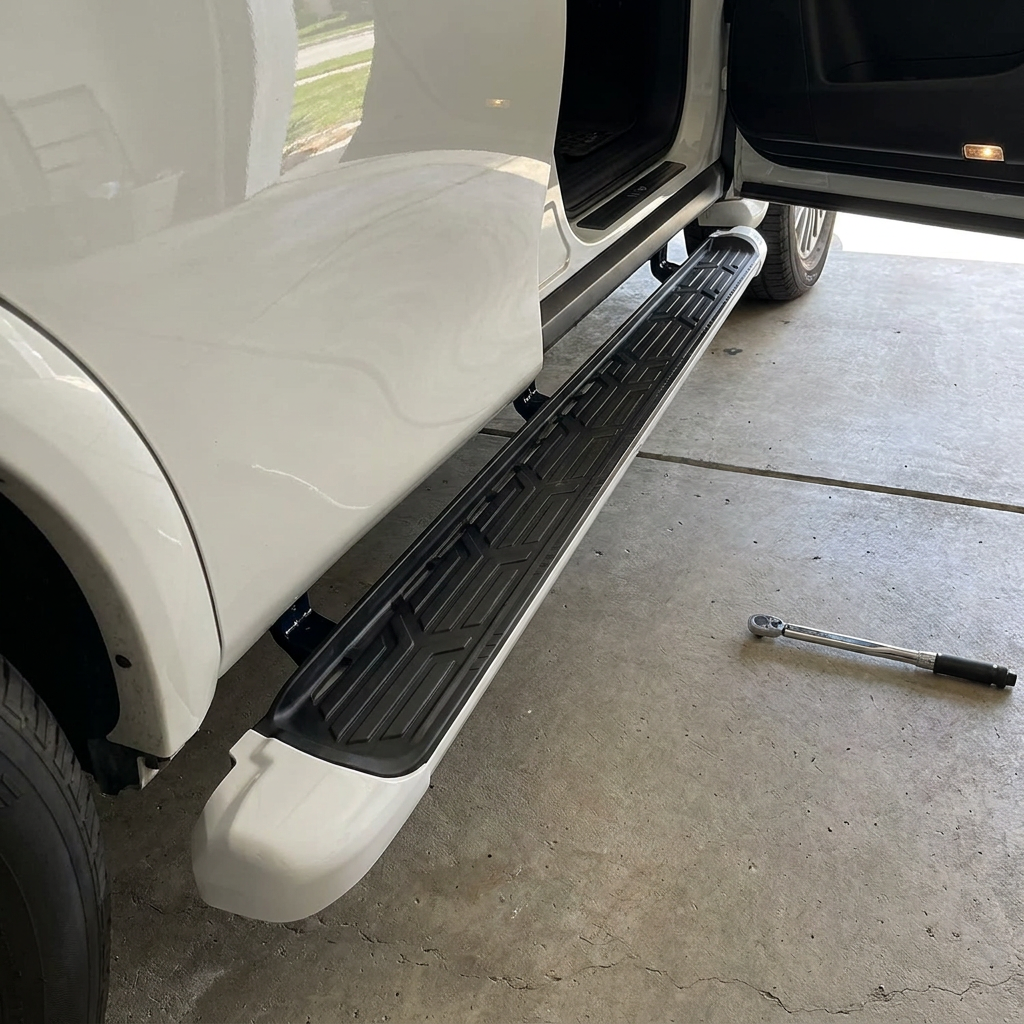
The rail structure is the backbone. It’s the part that spans between brackets and resists bending when a person steps near the middle. A board that’s stiff underfoot feels safer, even before you think about any other feature. The mounting brackets then determine whether that stiffness translates to the vehicle. Brackets that match the chassis mounting points help keep the board square to the body and reduce the chance of gradual shift after repeated entry and exit cycles.
The anti-slip tread is the user-contact surface. Its job is to maintain friction across changing conditions: smooth-soled shoes, wet soles, grit, and winter salt residue. A good tread pattern also sheds debris so the step doesn’t turn into a packed, slippery strip. For anti-slip side step rails for Nissan Armada, that surface detail is often the difference between a step that feels secure and one that demands constant attention.
How to use this Running boards (side steps/nerf bars)
Use starts with confirming vehicle fitment. This set is listed for Infiniti QX80/QX56 model years 2011–2024 and Nissan Armada running boards 2017-2024, so the first step is matching the exact year and trim you’re working with. After that, plan for a clean install area. Dirt trapped between brackets and mounting points can affect alignment and torque consistency.
During installation, keep both rails loosely mounted before final tightening. That allows small adjustments so the boards sit parallel to the rocker line and the door clears naturally. It also helps ensure the left and right sides mirror each other in position. Once aligned, tighten hardware evenly across all brackets rather than fully tightening one bracket at a time.
Daily use is straightforward. Step near the main tread area, keep weight centred, and avoid using the outer edge as a lever point. That reduces stress on the bracket-to-rail connection. For families, it’s worth reminding kids to step down, not jump down, because repeated impact loads can loosen fasteners over time.
Maintenance is simple but important. Rinse the step surface periodically, especially in winter. Road salt and fine grit can pack into anti-slip texture and reduce traction. A quick wash keeps the tread working as intended and makes it easier to spot any loosening hardware during routine vehicle cleaning.
Technical specifications of Heavy Duty Running Boards for Infiniti QX80/QX56 & Nissan Armada (2011-2024)
| Feature |
Details |
| Brand |
Longyeauto |
| Format |
Running boards (side steps/nerf bars) |
| Compatible vehicles |
Infiniti QX80/QX56 (2011–2024); Nissan Armada (2017–2024) |
| Included components |
Left and right side step rails; mounting brackets |
| Step surface |
Anti-slip |
Frequently asked questions about Heavy Duty Running Boards for Infiniti QX80/QX56 & Nissan Armada (2011-2024)
How do Heavy Duty Running Boards for Infiniti QX80/QX56 & Nissan Armada (2011-2024) install, and what should be checked first?
Before installation, confirm the vehicle model and year match the listed fitment range (2011–2024 for Infiniti QX80/QX56 and Nissan Armada). The product is designed to mount using the included brackets, so the first check is whether the factory mounting points on the rocker area are clean, undamaged, and free of heavy rust. During installation, align the brackets loosely first, then center the boards so both sides sit evenly before final tightening. After mounting, recheck fasteners after a short drive to confirm nothing has shifted.
Do Longyeauto Running boards (side steps/nerf bars) fit both Infiniti QX80 and QX56 without drilling?
Longyeauto Running boards (side steps/nerf bars) are listed as compatible with Infiniti QX80 and Infiniti QX56 for model years 2011–2024. Fitment usually depends on the presence of factory threaded holes or studs intended for side steps. If those mounting points exist and match the supplied brackets, drilling typically isn’t needed. If a vehicle has prior body repairs, missing hardware, or corrosion around mounting points, extra work may be required. It’s also smart to compare the bracket layout to the underbody before starting the install.
How much weight can the heavy duty nerf bars for Infiniti QX80 safely support?
The listing describes a “high load” design, but it doesn’t provide a verified weight rating in the product data. Without an explicit load capacity from Longyeauto, a safe approach is to treat the step as an assist for normal entry and exit, not as a platform for jumping or concentrated impact. Load also depends on correct bracket installation and the condition of the vehicle’s mounting points. For households with frequent use, periodically inspect bracket bolts and the underside attachment areas for movement or metal fatigue.
Are anti-slip side step rails for Nissan Armada safe in rain, snow, or muddy conditions?
Anti-slip side step rails for Nissan Armada are intended to add traction underfoot, which helps when shoes are wet or muddy. Even with an anti-slip surface, grip still depends on tread condition and how much debris is packed into the step texture. In winter climates, clear off slush and ice buildup before stepping. After off-road or salted-road driving, rinse the boards and brackets to reduce corrosion risk around hardware. Basic maintenance improves day-to-day safety more than any single surface pattern.
How often should Infiniti QX80 running boards 2011-2024 be inspected or retightened?
For Infiniti QX80 running boards 2011-2024, a practical schedule is to check fastener tightness shortly after installation and then at regular intervals. A good baseline is a quick visual inspection monthly and a hardware check every 3–6 months, especially if the vehicle sees rough roads, frequent car washes, or winter salt. Look for loosened bolts, shifting alignment, and any new rattles. If the step feels like it flexes more than before, stop using it until the mounting points and brackets are inspected.
What’s included with this running boards kit, and is it sold as one side or both?
This product is described as left and right side step rails with mount brackets, which indicates a full set for both sides rather than a single board. The format is running boards (side steps/nerf bars), designed to mount along the rocker area to assist entry and exit. Because the product data doesn’t list every individual hardware piece, it’s best to confirm all brackets and fasteners are present before starting. Lay out parts by side (left/right) to avoid mixing bracket orientations during installation.
How should Longyeauto Running boards (side steps/nerf bars) be cleaned and stored if removed?
For routine cleaning, wash Longyeauto Running boards (side steps/nerf bars) with mild car shampoo and water, then rinse thoroughly to remove grit that can reduce traction. Avoid aggressive solvents that can dull finishes or damage anti-slip surfaces. If the boards are removed for seasonal reasons, dry them fully and store them indoors in a cool, dry place to prevent hardware corrosion. Keep brackets and fasteners together in labeled bags so reinstalling doesn’t lead to mismatched bolts or missing pieces.
User experience with Heavy Duty Running Boards for Infiniti QX80/QX56 & Nissan Armada (2011-2024)
Across owner discussions and repeated marketplace feedback, Heavy Duty Running Boards for Infiniti QX80/QX56 & Nissan Armada (2011-2024) are generally described as a practical add-on that makes daily entry and exit easier on a tall SUV. Comments focus on the feeling of added footing and the confidence that comes from having a stable step in wet conditions. Installation experiences vary by vehicle year and prior underbody exposure, but the overall tone stays positive once the boards are aligned and tightened. Many users also like the way the boards visually “finish” the side profile without looking out of place on a full-size body.
After the initial setup, most feedback centres on day-to-day usability. The step tends to get used constantly. That matters more than looks. In threads discussing Infiniti QX80 running boards 2011-2024, the recurring theme is convenience for families, shorter passengers, and anyone loading roof racks or reaching into the cabin while parked on uneven ground.
Main strengths reported for Heavy Duty Running Boards for Infiniti QX80/QX56 & Nissan Armada (2011-2024)
- More secure footing in routine use, especially when stepping in with groceries, child seats, or work gear.
- Noticeable help for shorter passengers and kids, reducing the “climb” into the cabin on QX80/QX56 and Armada platforms.
- Perceived improvement in side appearance, with the boards looking aligned to the body rather than like a temporary add-on.
Perceived strengths
- Stable step feel after proper tightening and re-checking, with many users recommending a quick re-torque after the first week of driving.
- Useful traction pattern underfoot, often mentioned in rain or after washing the vehicle.
- Better day-to-day practicality for owners who frequently access the rear seats or load items through the doors.
Usage nuances to consider
- Fit and alignment can take time. Users commonly recommend loosely mounting first, then centring and tightening once both sides sit evenly.
- In snow, slush, or muddy conditions, the step surface can collect grime. Regular rinsing keeps the anti-slip step rails for Nissan Armada feeling consistent underfoot.
Who tends to benefit most from Heavy Duty Running Boards for Infiniti QX80/QX56 & Nissan Armada (2011-2024)?
These Longyeauto Running boards (side steps/nerf bars) tend to suit owners who treat their SUV like a daily people-mover. Families with kids benefit quickly, since the step reduces the jump into the cabin and makes it easier to climb in without pulling on trim. Shorter drivers and passengers also tend to appreciate the added intermediate step height on a large-body SUV. That’s a common thread in posts about Infiniti QX56 side steps 2011-2024.
They also fit drivers who load through the doors often. Think sports gear, tools, or pet carriers. For Nissan Armada running boards 2017-2024 discussions, convenience during frequent stops comes up repeatedly. And for anyone using heavy duty nerf bars for Infiniti QX80 as a practical foothold to reach roof-mounted cargo, the added step can reduce awkward reaching and improve stability.
Buyers who expect a quick, no-adjustment install should plan a bit of extra time instead. Most satisfaction appears after careful alignment, a final tighten, and a short follow-up check. Then the boards just become part of the routine.
Recurring sentiment: once installed and aligned, the step gets used constantly and feels like it should’ve been there from the start.