For 2015–2026 Crew Cab trucks, COMNOVA 6 Inches Running Boards offer a wide, easy step for daily entry, but they can reduce ground clearance.
Choosing Chevy Colorado running boards: who the COMNOVA suits
Drivers who prioritize a stable, shoe-friendly step for daily use tend to get the most from a 6-inch running board like the COMNOVA. The width matters when kids climb in, when boots are wet, or when the truck sits even slightly higher than stock. But that same width can sit closer to obstacles and reduce the "tuck" that off-road oriented setups prefer.
Compare products: COMNOVA 6 Inches Running Boards Compatible With 2015-2026 Chevrolet Colorado/GMC Canyon Crew Cab · Tyger Auto 3.5″ Rider Running Boards · YZONA Running Boards Side Steps · 6 Inches Running Boards Side Steps
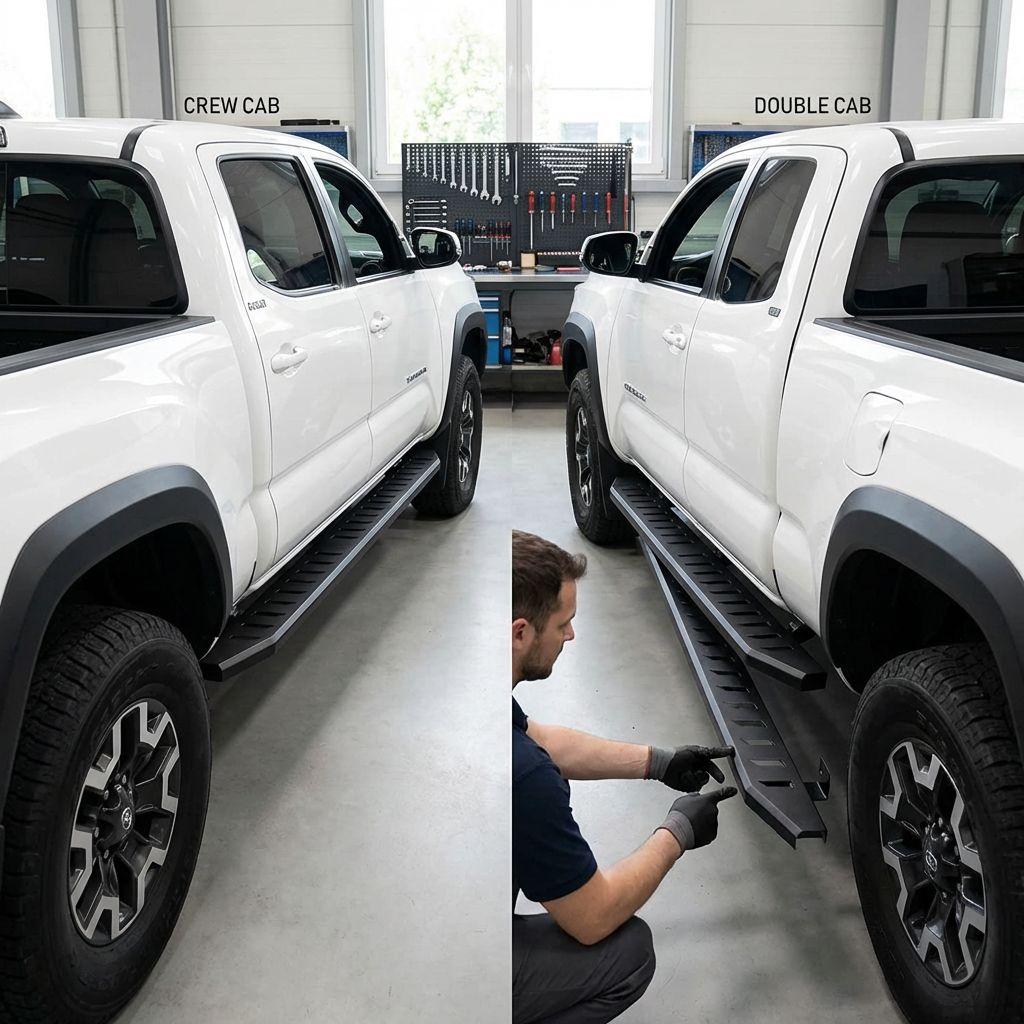
As a quick fit read: it’s aimed at 2015–2026 Chevrolet Colorado and GMC Canyon Crew Cab applications. That cab detail is not a footnote. It decides bracket spacing and where the step lands under the doors.
- Good match for frequent in-and-out driving, shorter passengers, and anyone wanting a wider step surface.
- Less appealing for owners who drag steps on ruts, rocks, or steep driveways and want maximum clearance.
- Most installation problems come from cab mismatch and rushed alignment, not from the board itself.
For readers comparing Chevy Colorado running boards across similar "daily driver" options, the COMNOVA sits in the same practical lane as other wide boards, while narrower rails (often called nerf bars) feel different underfoot.
What the COMNOVA 6-inch running board is trying to do
COMNOVA 6 Inches Running Boards Compatible With 2015-2026 Chevrolet Colorado/GMC Canyon Crew Cab are built around one clear promise: a broader stepping area than a narrow tube-style rail. That changes how the truck feels every day. Entry becomes more like stepping onto a small platform instead of a thin rung.
That platform effect is the point. It’s also the trade. A wider board typically hangs farther outboard, and it can sit lower than a tight-to-body rail depending on bracket geometry. On a Colorado used on forest roads or two-tracks, that difference shows up first at the board’s leading edge.
Three details define how this type of board behaves in real use:
- Step width: 6 inches gives room for a full boot sole, not just the arch.
- Surface texture: traction features matter more than finish when shoes are wet.
- Mount position: closer to the rocker helps clearance, but can reduce "step-out" ease.
The COMNOVA’s positioning makes sense for owners who treat the Colorado or Canyon as a commuter, family truck, jobsite runabout, or road-trip vehicle. It’s not pretending to be a rock slider.
To verify the exact listing details and the included hardware for this model, use the product page for COMNOVA 6 Inches Running Boards Compatible With 2015-2026 Chevrolet Colorado/GMC Canyon Crew Cab.
Fitment realities for 2015–2026 Colorado and Canyon Crew Cab
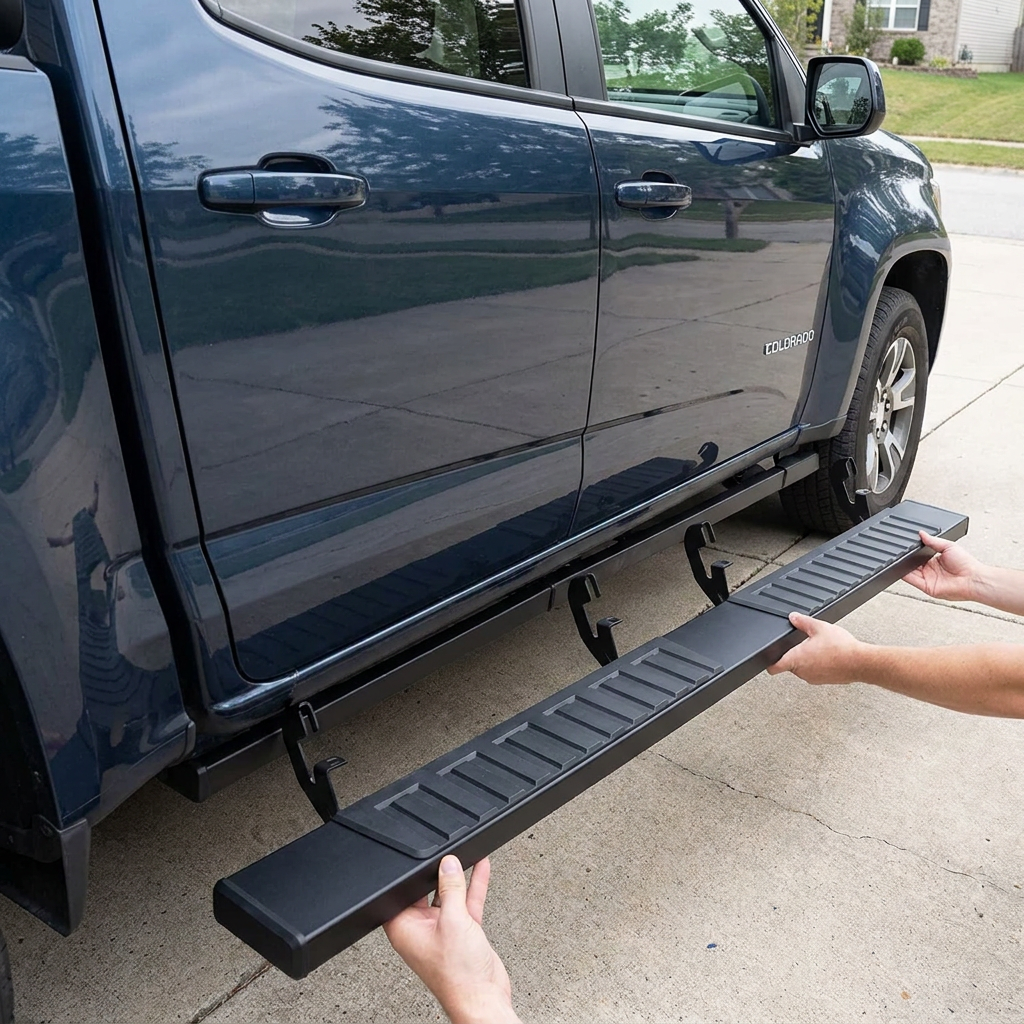
Recommended Colorado/Canyon running boards
Both options are listed for Colorado/Canyon Crew Cab applications, subject to the exact model-year range on each product page.
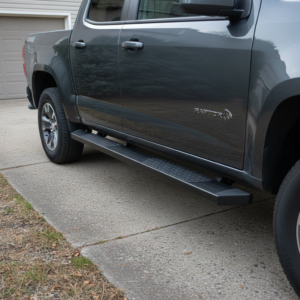
Fitment is where Chevy Colorado running boards either feel "bolt-on simple" or turn into an afternoon of frustration. The first filter is cab type. Crew Cab means four full-size doors. Extended Cab and Regular Cab hardware patterns differ, and listings that look close can still be wrong at the bracket level.
Model-year ranges can also hide generation changes. A 2015 Colorado and a 2026 Colorado are not the same truck underneath. Many aftermarket boards cover both by using revised brackets or multiple hole positions. That can work well, but it increases the chance that the installer chooses the wrong mounting points.
Before assuming anything, confirm three things on the truck, not on the screen:
- Count doors and confirm "Crew Cab" on the door jamb sticker or VIN decode.
- Look for factory mounting points along the rocker area. Many kits use existing threaded holes.
- Check for interference with mud flaps, inner fender liners, or splash guards near the front bracket zone.
GMC Canyon cross-fit is common in this category, and COMNOVA claims compatibility for both Colorado and Canyon Crew Cab across 2015–2026. That’s useful, but it doesn’t eliminate the need to match the exact cab and the bracket layout shipped in the box.
One more practical check gets missed: door swing clearance. A board that sits too far inboard can catch shoe tips, but a board that sits too far outboard can get kissed by an opening door edge in tight spaces if alignment is sloppy.
Clearance, off-road use, and the "wide step" compromise
Wide boards are comfort-first hardware. That’s not a criticism. It’s a design choice. The compromise shows up when the truck is used like a truck.
On stock-height Colorados, a 6-inch step often clears speed bumps and parking blocks fine. Steep driveway transitions and rutted trails are more revealing. The lowest point tends to be the bracket line or the outer edge of the board, depending on the kit’s geometry.
Drivers with ZR2 trims or trucks that see rocky terrain often regret low-hanging steps. A drop-style or dual-step design can be even more exposed. That’s where a tighter, narrower rail or a true slider-style product makes more sense. But those options feel less stable for smaller passengers, and the step can be harder to "find" with the foot.
Two usage profiles help clarify the decision without overselling either side:
- Daily entry comfort: wide boards win when the step is used dozens of times per week.
- Obstacle clearance: narrower rails or higher-tucked steps reduce contact on uneven ground.
Nothing about the COMNOVA concept is wrong for light dirt roads. The limitation appears when the board becomes a contact point. Scrapes happen first. Then loosened hardware and rattles show up if bolts aren’t re-checked.
A simple habit reduces that risk: re-torque fasteners after the first 100–200 miles. Vibration and bracket settling are normal on new installs. For general fastener safety guidance and torque best practices, OSHA’s hand and power tools guidance is a solid baseline reference: OSHA Hand and Power Tools Guidance.
Material choices and corrosion: what lasts on Chevy Colorado running boards
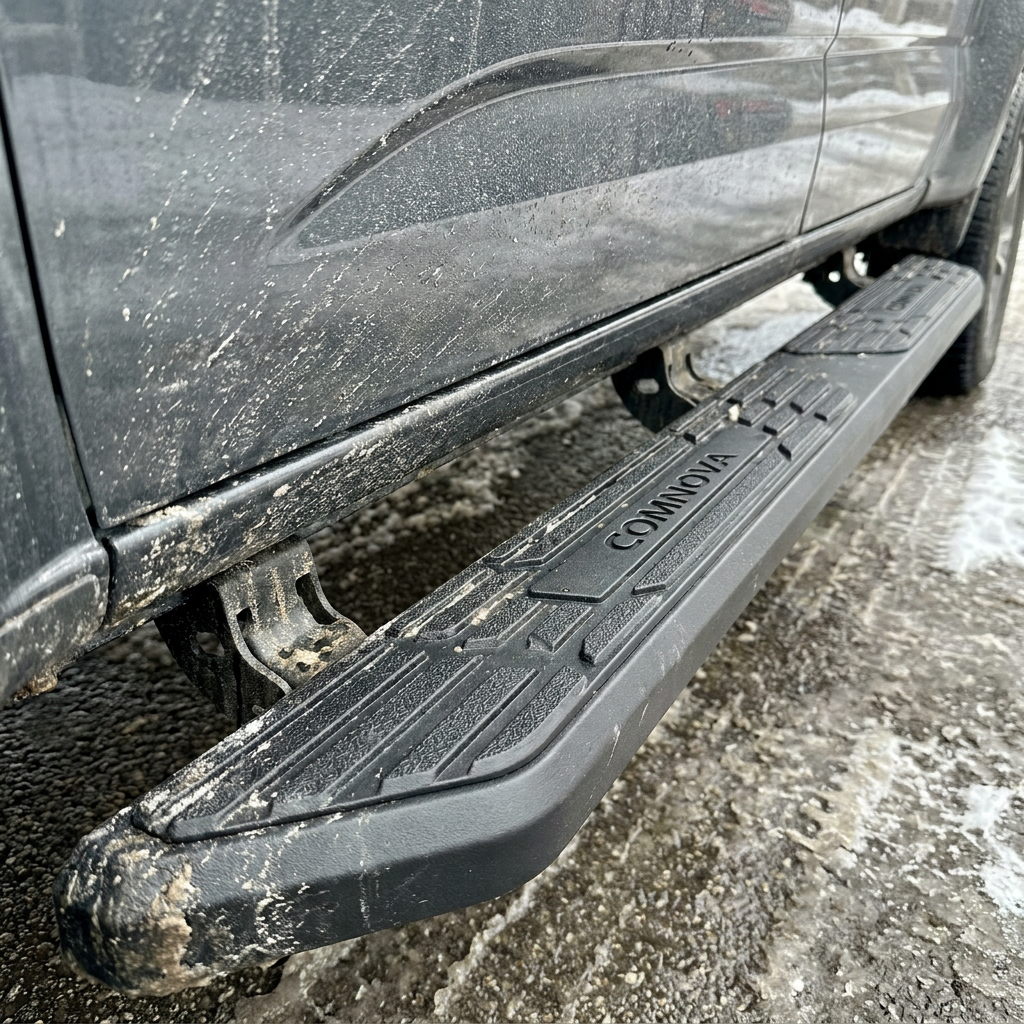
On a Colorado that sees rain, road spray, and winter grit, material and coating decide whether a running board stays quiet and solid or turns into a rust-and-rattle project. The COMNOVA is positioned as a wide, daily-use board, so long-term finish behavior matters as much as the step feel.
Aluminum boards with a textured black surface typically resist red rust better than steel platforms, but they still rely on good hardware. Steel brackets and fasteners are the usual weak point. In salt-belt states, the first visible wear often shows up at bolt heads, bracket edges, and any spot where the coating got nicked during installation.
Step width also changes the wear pattern. A 6-inch platform catches more road spray than a narrow rail. That extra exposure doesn’t automatically mean early corrosion, but it raises the value of two details: sealed end caps and a finish that doesn’t chip easily when hit by small stones.
Three practical inspection points help separate "looks good in the box" from "holds up over seasons":
- Coating continuity at edges: sharp edges and bracket corners are where powder coat thins first.
- Hardware quality: zinc-plated fasteners can haze and seize after one winter; stainless hardware reduces that risk but isn’t always included.
- Drainage and dirt traps: textured step pads grip shoes, and they also hold fine dirt. Regular rinsing helps.
For owners who want a narrower rail with less exposed surface area, the Tyger Auto 3.5" Rider Running Boards take a different approach. The product page for Tyger Auto 3.5" Rider Running Boards is useful for checking its rail-style layout and how it differs from a full-width board.
Traction and step geometry: where a 6-inch board feels better (and where it doesn’t)
Wide Chevy Colorado running boards earn their keep when the foot lands imperfectly. That happens with kids, work boots, muddy soles, or a passenger stepping out while holding a bag. A 6-inch surface gives more margin. It’s closer to a small platform than a tube.
Traction is less about the marketing word "textured" and more about how the pattern behaves when wet. Deep grooves can shed water but hold sand. Shallow stippling can feel secure in sneakers and slick in hard-soled boots. For a daily driver, the best traction is predictable, not aggressive.
Geometry matters too. A board can be wide and still feel awkward if the stepping zone sits too far outboard. That forces a longer "step out" before stepping up. Shorter passengers notice it first. Taller drivers sometimes clip the board with the heel on exit, especially if the board sits close to the rocker and the stride is narrow.
Two common fit-and-feel outcomes show up with wide boards like the COMNOVA:
- More confidence in bad weather: the foot finds a stable surface even when the door opens into a puddle or slush.
- More contact in tight maneuvers: the outer edge is easier to brush against shins when walking close to the truck, and it can catch pant legs in narrow parking spots.
Drivers who want a "step down" effect without giving up a large target sometimes look at dual-step designs. The trade is complexity and more edges to catch debris. YZONA Running Boards Side Steps use a two-stairs layout, and the listing for YZONA Running Boards Side Steps helps confirm whether that geometry matches the entry height and clearance expectations for a specific Crew Cab setup.
Installation realities that change the outcome (time, tools, and noise prevention)
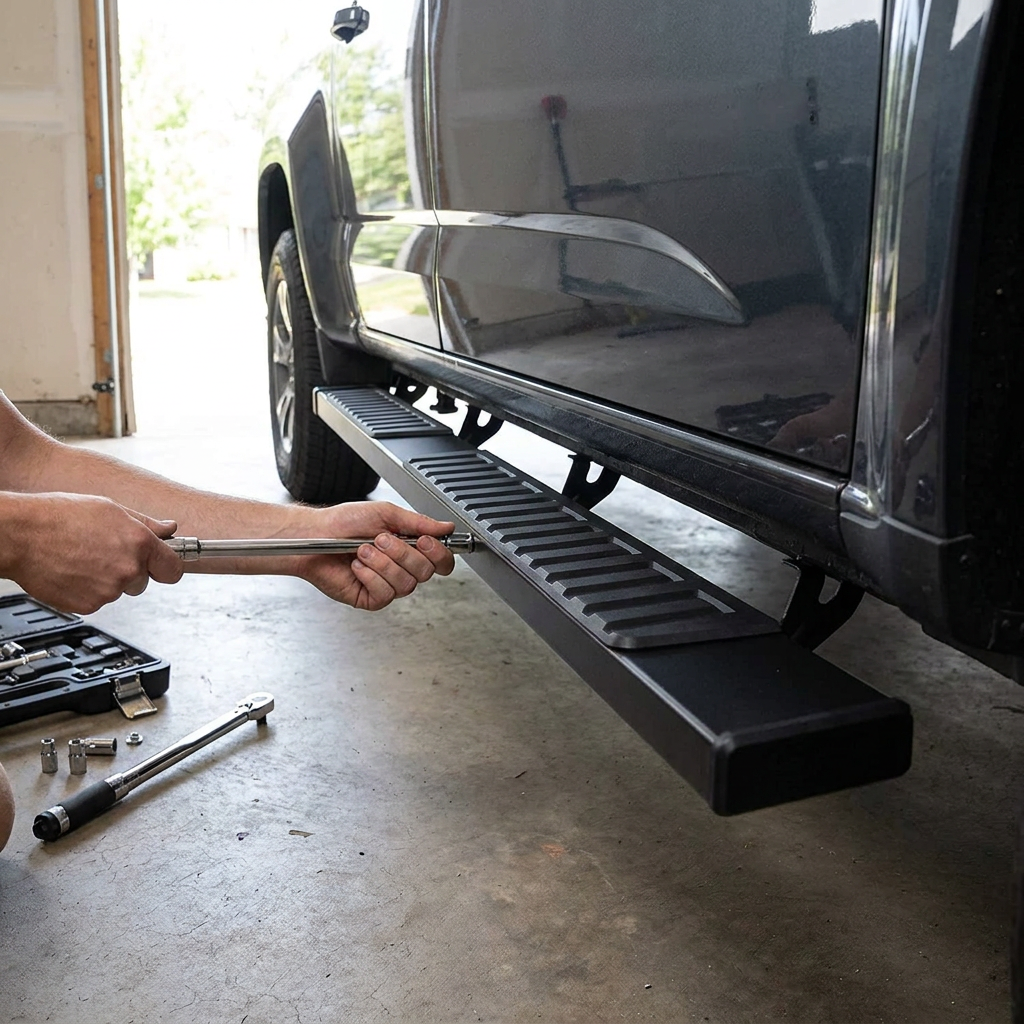
Most running boards marketed for 2015–2026 Colorado/Canyon Crew Cab installs are "bolt-on," but the install quality still decides long-term satisfaction. Plan on 60–120 minutes for a careful first-time install with hand tools. Rushing is where boards end up slightly twisted, too far forward, or sitting at different heights side to side.
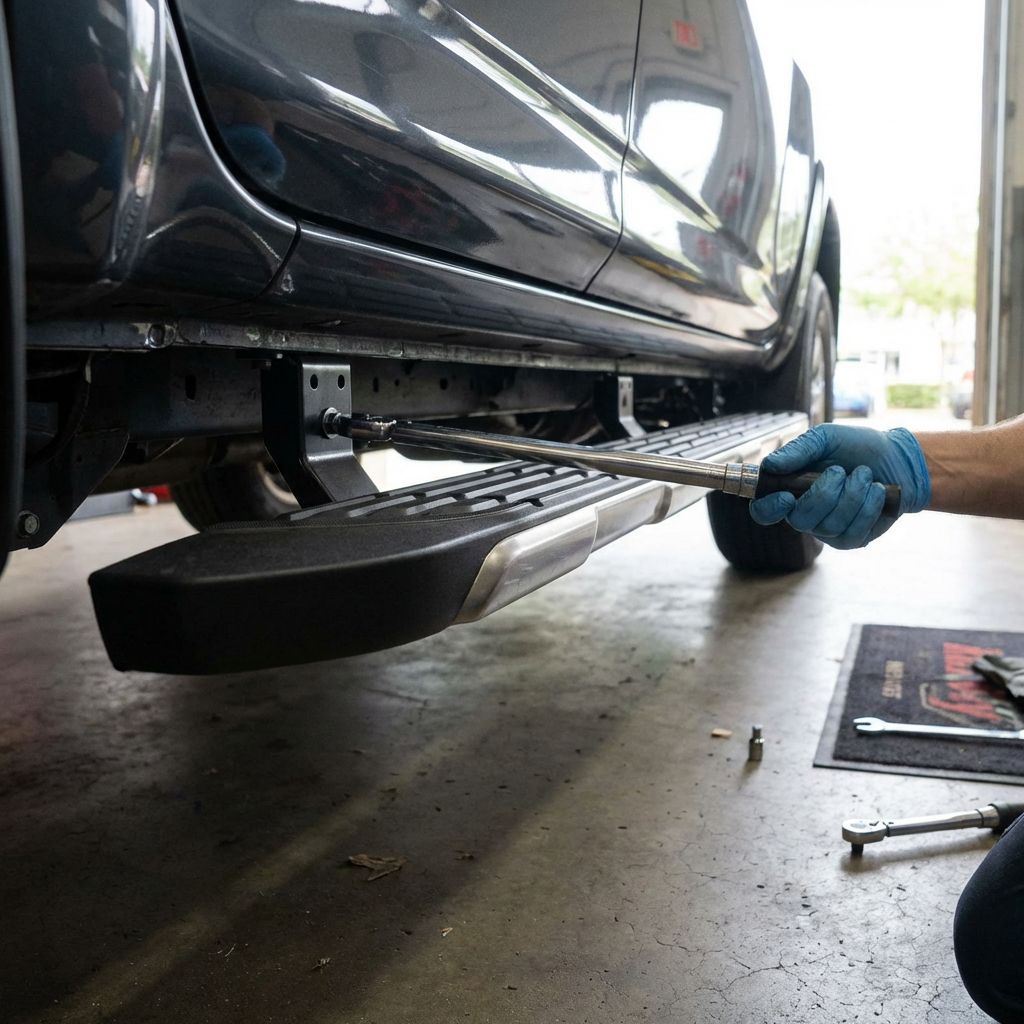
A basic tool set covers most kits: sockets, a torque wrench, and a trim tool for moving liners if needed. A torque wrench matters. Under-torqued fasteners back off and rattle. Over-torqued fasteners can strip threads in factory mounting points or deform brackets.
Noise prevention is mostly alignment and re-checks. After the first drive, the brackets settle against paint and seam sealer. That can create a small gap that wasn’t there on the floor. A second torque check after 100–200 miles was already mentioned earlier, and it’s still the most practical "quiet truck" step.
Small choices during installation also change the final stance:
- Leave bolts finger-tight until all brackets are started: it keeps the board from "locking in" crooked.
- Set a consistent fore-aft position: many owners center the board under the door openings to make rear entry feel natural.
- Confirm door clearance at full swing: check both front and rear doors before final tightening.
For a non-commercial baseline on fastener torque practice and tool use safety, NIOSH guidance on hand tools and safe work practices is a solid reference point: NIOSH Guidance on Hand Tools.
Positioning the COMNOVA against similar-width alternatives without turning it into a catalog
COMNOVA’s 6-inch running board approach sits in a crowded part of the market: wide, comfort-first boards built for daily entry on Crew Cab trucks. That context matters because the decision often isn’t "running boards or nothing." It’s picking the compromise that matches how the truck is actually used.
Two other wide-board options in the same general lane are the 6 Inches Running Boards Side Steps (textured aluminum) and SMANOW Running Boards Side Steps. They share the same basic promise: a larger stepping target than a narrow rail. Where they tend to differ is step geometry, bracket design, and the feel of the surface texture under different shoes.
| Real-World Situation | Option | Why It Tends to Fit |
|---|---|---|
| Family use, frequent entry, wet shoes | COMNOVA 6-Inch Board | Wide stepping area feels easy to hit and stable. |
| Mostly paved driving, wants less "hang" | Tyger Auto 3.5" Rail | Narrower rail often tucks in tighter than a platform. |
| Needs a clearer step-down for shorter passengers | YZONA Dual-Step Layout | Two-level design can make the first contact easier. |
| Wants wide aluminum platform feel but is price-sensitive | 6 Inches Running Boards Side Steps (Textured Aluminum) | Similar width concept, check bracket layout and texture pattern. |
The table is a positioning tool, not a ranking. Small differences in bracket offset and pad texture can matter more than brand name at this price tier. For readers comparing Chevy Colorado running boards in the "wide platform" category, the most useful next step is verifying how each kit’s bracket geometry places the board relative to the rocker and door line.
To check the listing details for the other 6-inch aluminum option discussed here, the product page for 6 Inches Running Boards Side Steps is the quickest way to confirm its stated compatibility and surface style.
OEM-style expectations vs. aftermarket reality on a Colorado
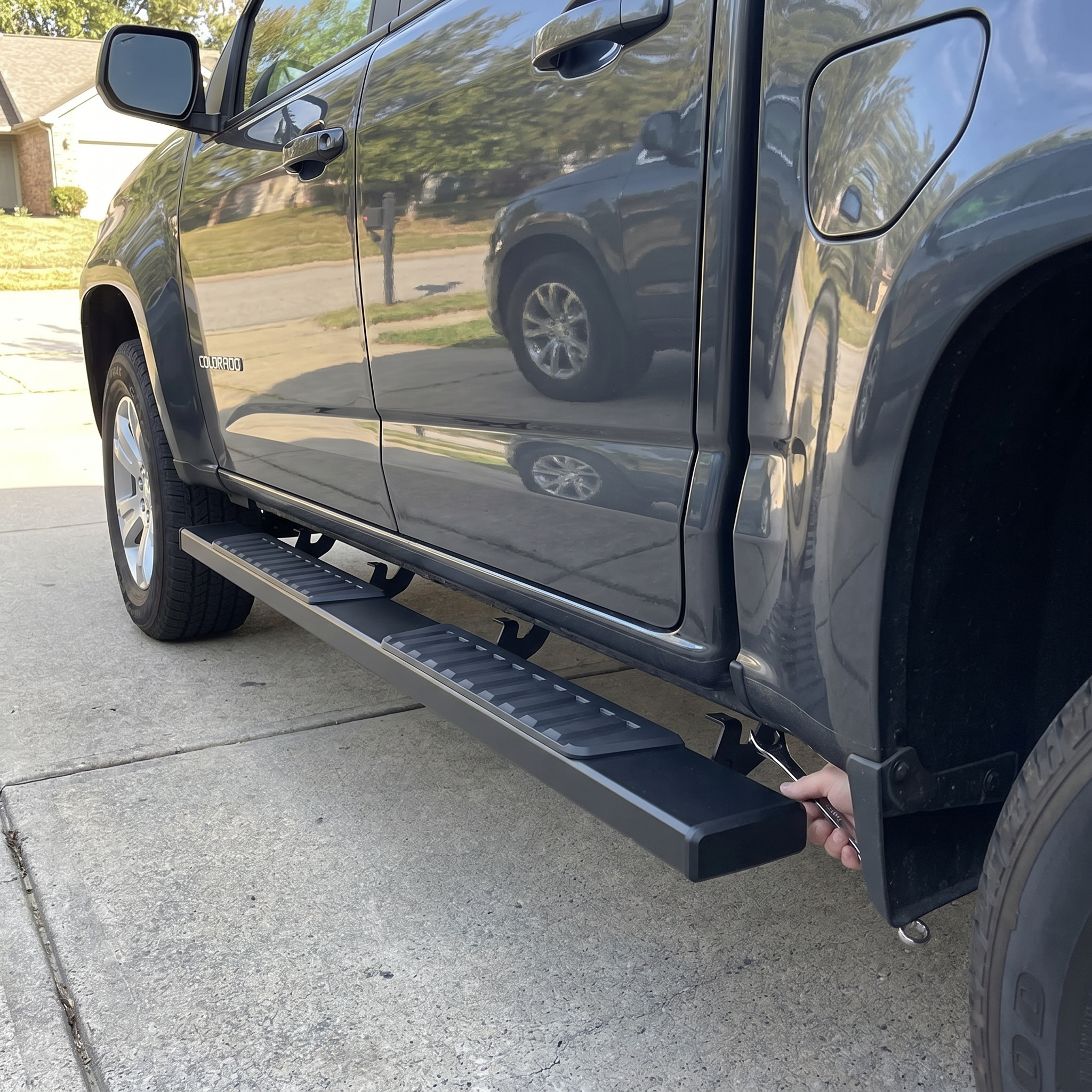
Most people shopping Chevy Colorado running boards are trying to get an "OEM-like" result: even gaps, no door interference, and a step that doesn’t look bolted on as an afterthought. Aftermarket boards can deliver that look, but consistency depends on bracket tolerances and how carefully the board is set before final tightening. A small height difference side to side is the most common tell. It’s fixable during install, but it’s rarely fixed later.
Finish match is the other expectation gap. Factory accessories often sit closer to satin and use coatings that look uniform under harsh sun. Many black aftermarket boards look slightly glossier or more textured. That’s not automatically worse. It just shows up next to factory black trim, especially on newer trucks.
Resale perception tends to follow two rules. A clean, straight install looks like a useful accessory. A crooked board with chipped brackets looks like the truck was used hard, even if it wasn’t. That’s why alignment and careful handling during installation matter more than tiny spec differences on the listing page.
Who the COMNOVA 6-inch board fits well, and who it doesn’t
It fits a Colorado or Canyon Crew Cab (2015–2026) that lives on pavement and sees lots of entries and exits each week. It makes sense with kids, shorter passengers, or work boots because the wide platform forgives imperfect steps and feels easy from day one.
It’s not the right pick for frequent ruts, rocks, or aggressive ramps, and it’s a tough match for ZR2 owners protecting every inch of clearance. In those cases, a 6-inch platform can become a contact point, and that wear tends to matter more than the comfort benefit.
Details that usually decide satisfaction after six months
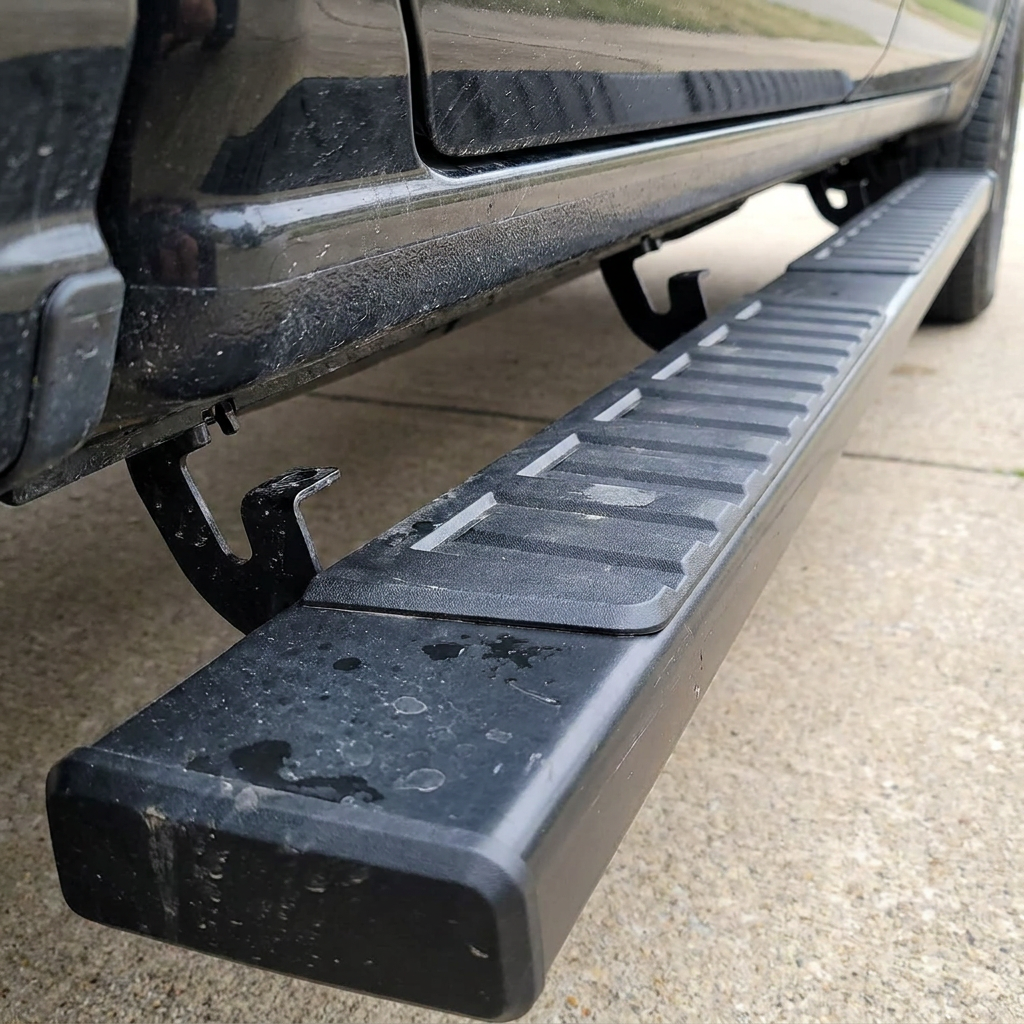
The first month is usually easy. You notice the entry improvement, and the truck looks more "finished." If issues show up, they tend to arrive later, and they’re usually small.
Intermittent noise is the most common one. It rarely comes from the board itself. It’s more often a bracket that settled, a washer that didn’t sit perfectly flat, or a bracket contact point that shifted against paint over time. If the install was marginal, chassis vibration makes it obvious.
Real use matters too. A wide platform invites a full-foot step. That’s good. But in tight parking, that same width can get in the way when you walk close to the truck. Shins and pant legs "learn" it fast. Family use tolerates it. Dense urban use can make it annoying.
If the Colorado sees broken terrain regularly, a wide platform like the COMNOVA is a comfort bet, not a protection bet. Anyone trying to have the truck’s side take hits should be looking at a different product category, not a different brand in the same format.
Frequently asked questions about Chevy Colorado running boards
Do 2015–2026 Chevy Colorado running boards fit the GMC Canyon too?
Many kits are listed for both, but you still need to verify cab type and the truck’s real mounting points. On a Crew Cab, bracket pattern and placement under the doors decide everything.
Does a 6-inch board get in the way when stepping down?
It can if the board sits too far outboard or if the driver exits with a narrow stride. Positioning before final tightening makes a noticeable difference.
How much does clearance matter on a Colorado ZR2?
It matters a lot. An exposed step becomes a contact point on rocks, ruts, and sharp breakovers, and wear shows up sooner than it does on-road.
What usually causes vibration or rattles after installation?
Bracket settling and fasteners that need a re-torque are the usual causes, not a broken board. If noise starts, check alignment and torque at the mounts.
Verdict and use case
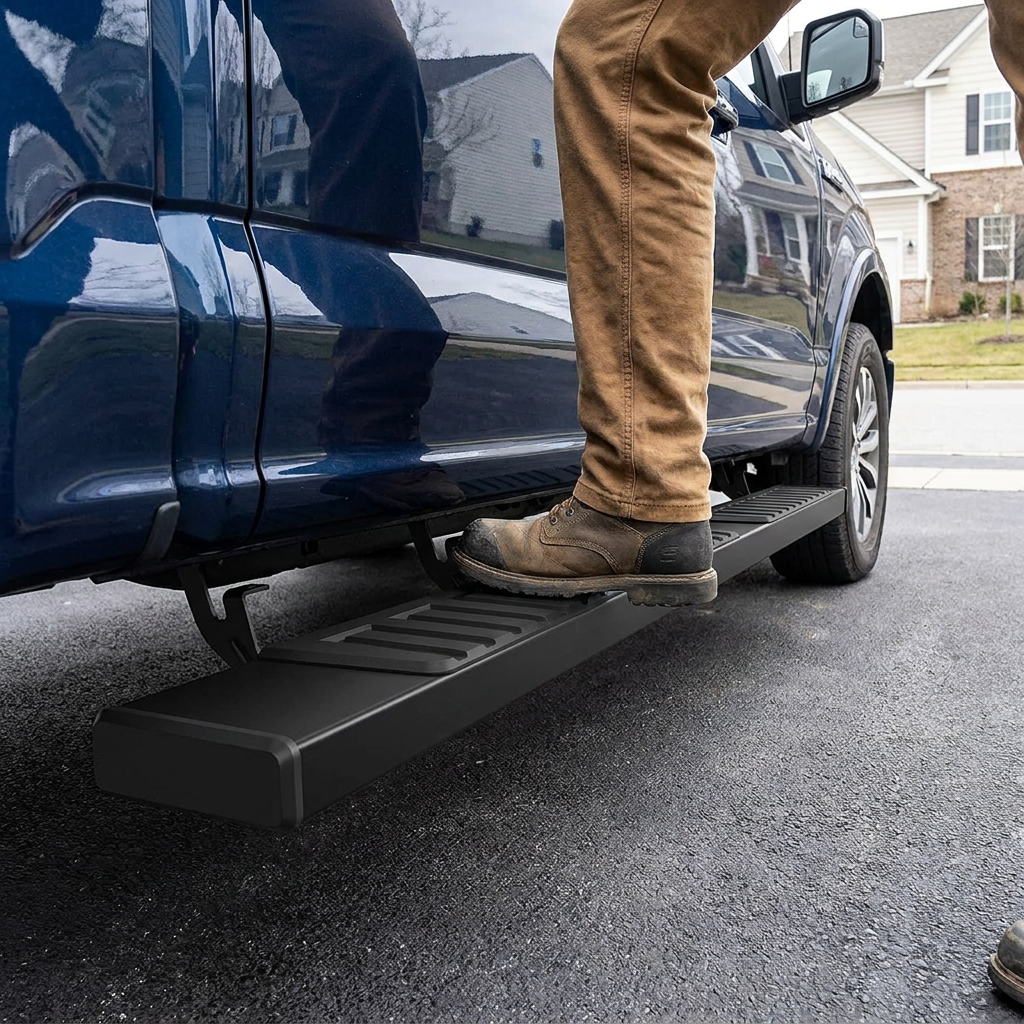
The COMNOVA 6 Inches Running Boards are a good fit when the real priority is a wide, comfortable step on a daily-driven Crew Cab, and you accept that it won’t tuck as high as some narrower options.
It makes the most sense on a family Colorado or a light-duty work truck that does city and highway miles, with passengers climbing in and out all day. In that scenario, the wide platform pays you back every week, and the clearance cost rarely turns into a practical problem.