
On the 2008 Mercedes ML 320 CDI 4MATIC, “running boards” usually refers to the fixed side steps mounted below the doors, spanning along the rocker area. They sit outside the cabin, take daily contact from shoes, road spray, and occasional curb proximity, and they change how the vehicle is approached—literally—every time someone gets in or out.
They are often discussed as if they are a single, interchangeable add-on. In reality, the term gets used loosely, and that is where confusion starts: some people mean a wide, flat step; others mean a narrower bar-like step; and some mix up running boards with side protection pieces that are not intended as a step.
Quick Orientation For “Running Boards For 2008 Mercedes ML 320 CDI 4MATIC”
-
What it is: an exterior step surface mounted to the vehicle’s side structure, intended to be stepped on while entering or exiting.
-
How people encounter it: as factory equipment on some trims, as a retrofit idea, or after noticing scuffs and dirt patterns on the lower door area.
-
Safe assumption: fit depends on the vehicle platform and mounting points, not only on model year wording.
-
Misleading assumption: “ML is ML” across years—platform changes and sub-variants can affect compatibility and clearances.
Where Running Boards Sit And What They Interface With
Running boards for 2008 Mercedes ML 320 CDI 4MATIC mount along the lower side of the body, typically near the rocker panels and underbody attachment points. That location matters because it is a high-exposure zone: water, salt, grit, and airflow-driven spray repeatedly impact the underside and the forward edges. Over time, this environment tends to punish poor drainage and weak corrosion protection more than the visible top surface does.
From a vehicle-structure standpoint, the key idea is load path. A step that is safe to use must transfer a person’s weight into the vehicle through brackets and fasteners designed for that kind of loading. When that load path is marginal—or when fasteners loosen—small movements can become squeaks, then deformation, then damage to attachment points.
Why Fitment Language Can Be Slippery On The W164 ML Class
The 2008 Mercedes ML 320 CDI 4MATIC sits within the W164 generation of the M-Class. Fitment claims often reference the platform code rather than the exact trim because the mounting geometry is generally platform-driven. Still, assumptions can fail at the edges: regional equipment differences, prior repairs, and underbody shields can change what is actually accessible.
Authoritative vehicle identifiers—such as the VIN and the manufacturer’s platform information—are the cleanest way to avoid “close enough” interpretation. For background on VIN structure and why it reliably encodes vehicle attributes, the U.S. National Highway Traffic Safety Administration provides a clear primer: https://www.nhtsa.gov/vin-decoder
Core Design Variables That Change Real-World Behavior
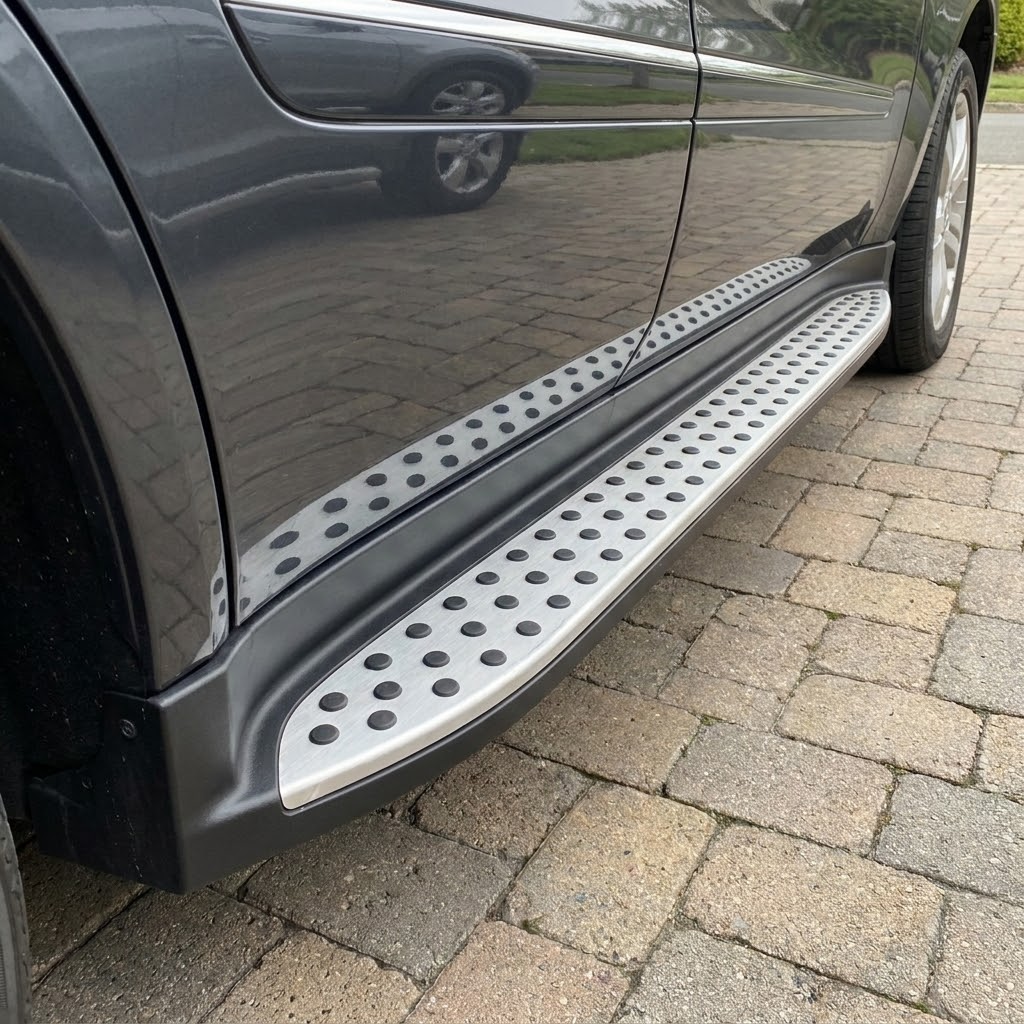
Later-model Mercedes-Benz boards to compare
These products cover later GLE and GLS platforms, not a 2008 ML 320. They are included only as current Mercedes-Benz format comparisons.
Even without naming specific product lines, the same category—running boards for 2008 Mercedes ML 320 CDI 4MATIC—can behave very differently depending on design choices that are easy to overlook in photos.
-
Step width and outer edge position: a wider surface can feel more natural underfoot, but pushing the outer edge outward may increase the chance of curb contact or catching debris.
-
Surface texture: aggressive texture can improve wet-shoe grip, yet can also trap fine grit that acts like sandpaper over time.
-
Bracket count and spacing: more support points can reduce flex, but also adds more interfaces that must stay tight and corrosion-resistant.
-
Ground clearance and approach to obstacles: anything hanging lower can change how the vehicle interacts with ruts, snow buildup, and steep driveways.
For readers who want a standards-based lens on traction and slip risk as a general safety concept (not vehicle-specific), the U.S. Centers for Disease Control and Prevention outlines how slips occur and how surface conditions influence them: https://www.cdc.gov/niosh/topics/slipsfalls/
As a single example of how listings are commonly phrased, some aftermarket descriptions group W164 years together and call out “factory style” running boards, which can sound more standardized than the underlying mounting and clearance details actually are.
Fitment Reality For Running Boards For 2008 Mercedes ML 320 CDI 4MATIC
With running boards for 2008 Mercedes ML 320 CDI 4MATIC, “fitment” is rarely a single yes-or-no. The W164 platform spans multiple model years and small running changes, and listings often compress that complexity into a broad range. The practical risk is not only that mounting holes fail to align, but that the board sits slightly off-plane: close enough to bolt up, yet far enough to interfere with trim, underbody covers, or door swing in muddy conditions.
It helps to treat fitment as three separate checks rather than one label: vehicle-side mounting points, side-skirt geometry, and door-clearance envelope. A board can match the chassis points but still sit too proud under the sill, effectively narrowing the step area or creating a contact point for road debris.
- Mounting Interface tends to be the first constraint: threaded inserts, captive nuts, and bracket indexing can vary subtly, and “universal” slotting sometimes trades clean alignment for adjustability.
- Body Line Compatibility becomes visible only once installed: if the board’s upper edge does not track the rocker contour, it can look acceptable from distance while accumulating grime in a gap that is hard to wash out.
- Clearance Under Load matters in real use: a board that clears when stationary may flex toward the body when stepped on, especially if bracket spacing is wide.
Material Choices And Why They Behave Differently
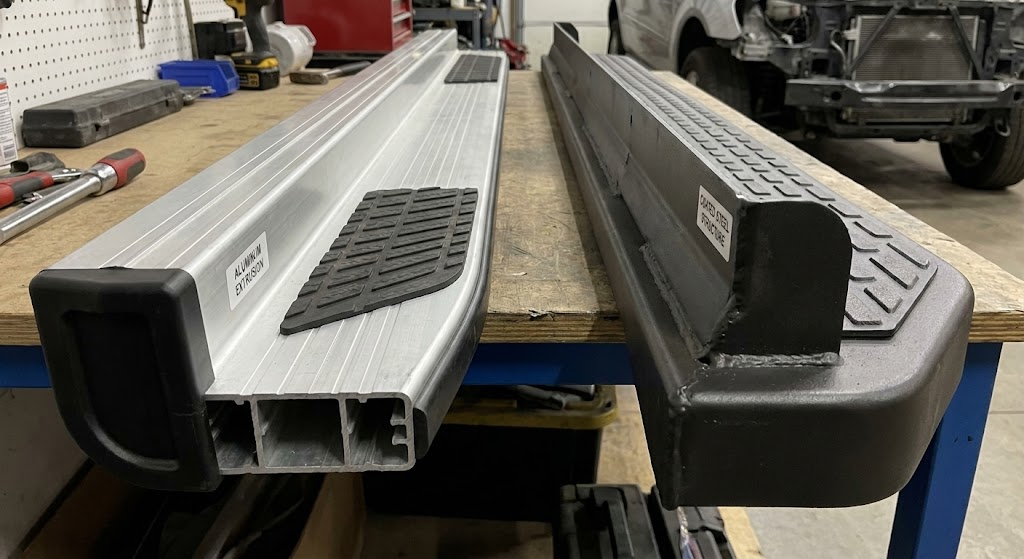
Most running boards for 2008 Mercedes ML 320 CDI 4MATIC are built around aluminum or steel structures with polymer end caps and a textured step surface. The headline material matters less than how it is formed and supported. Extruded aluminum can be stiff along its length but less tolerant of point loading if the internal ribbing is minimal. Steel can offer higher impact tolerance but brings corrosion management into the long-term picture, particularly where coatings are scratched during installation or by winter grit.
Surface texture is not just cosmetic. A more aggressive pattern can shed water and slush, but it can also trap fine sand that behaves like abrasive paste. Over time, that tends to dull finishes and can make the step feel less predictable when wet—less because it is “slippery,” more because contamination changes friction from day to day.
Bracket Geometry, Load Paths, And The “Solid Step” Feeling
The difference between a stable step and a board that feels springy is usually bracket geometry. A longer cantilever from the chassis to the outer edge increases leverage, so even small deflection at the bracket becomes noticeable at the step. Wider stance boards can feel more supportive, but only if the brackets keep the outer rail from acting like a diving board.
In practice, stiffness depends on the whole load path: fasteners, bracket thickness, and how well the bracket’s contact faces seat against the vehicle. If paint, undercoating, or minor burrs prevent full contact, fasteners may tighten while the bracket still “rocks” microscopically—enough to create squeaks later.
Ground Clearance And The Hidden Trade-Off In Daily Driving

Running boards for 2008 Mercedes ML 320 CDI 4MATIC inevitably occupy space that used to be open air. That can be inconsequential on smooth roads, yet it starts to matter on steep driveways, rutted parking lots, or when snow packs under the sill. Boards mounted lower are easier to step on; boards tucked higher preserve clearance but can feel like a narrow ledge. Neither approach is universally superior, but the consequences are predictable: lower mounting increases the chance of scraping, while higher mounting increases the chance that users “miss” the step and plant on the ground anyway.
Weather, Corrosion, And Long-Term Maintenance Nuances
In wet and salted environments, the vulnerable points are rarely the broad visible surfaces. Corrosion typically begins at fasteners, bracket edges, and any dissimilar-metal junction where coatings are compromised. Guidance on controlling corrosion mechanisms and protective practices is well summarized by the U.S. Federal Highway Administration’s materials and corrosion resources at https://www.fhwa.dot.gov/publications/ and by NACE International’s educational materials (now under AMPP) at https://www.ampp.org/education.
One contextual example seen in the market is a factory-style aluminum running board marketed for the W164 ML-Class; regardless of brand, the same maintenance logic applies: keep drainage paths clear, rinse winter residue, and periodically confirm fasteners remain properly seated.
Running Boards For 2008 Mercedes ML 320 CDI 4MATIC: Practical Clarity Without Overpromising
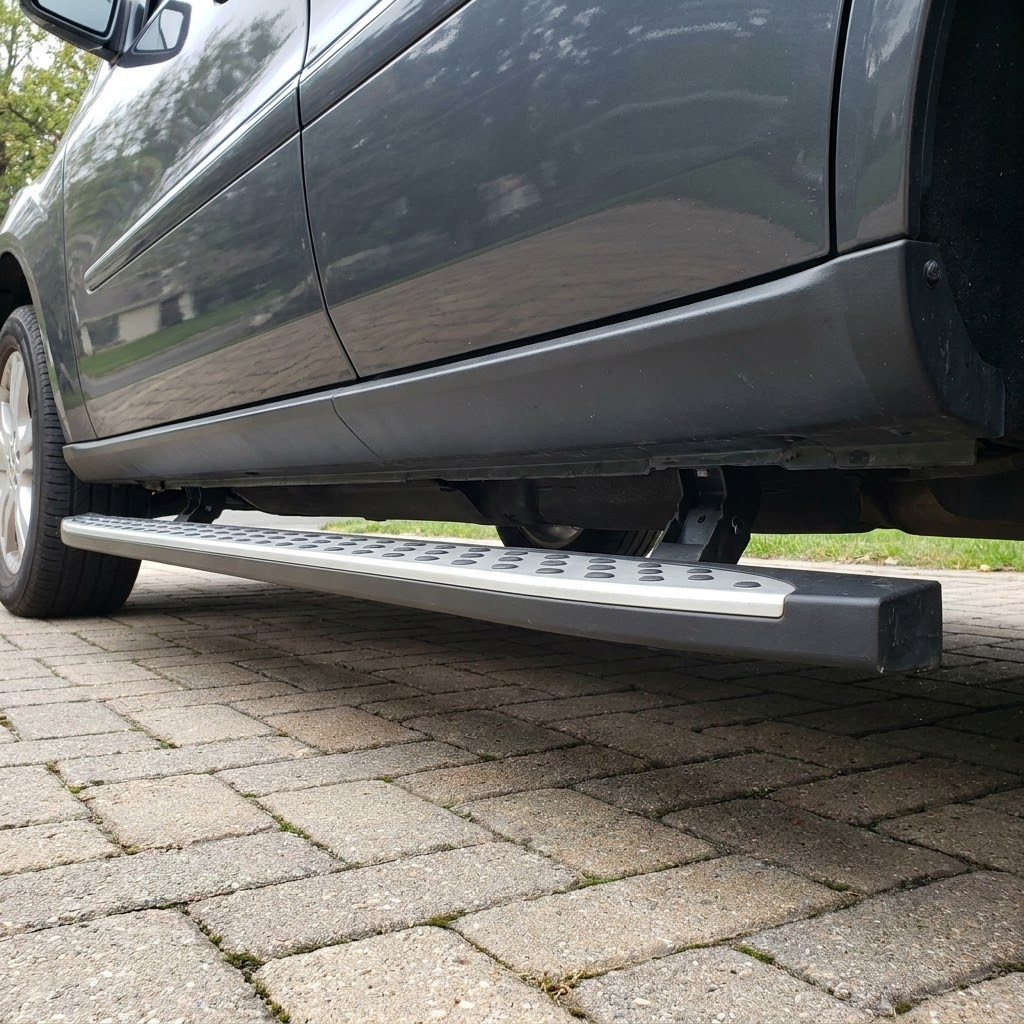
A useful way to stay grounded is to think in constraints rather than claims: ground clearance is finite, underside packaging is fixed, and the vehicle’s jacking points and structural rails exist for specific loads. When a step sits lower or farther outboard, access may feel easier, but exposure to contact typically rises. When a step tucks closer to the body, it may preserve clearance, but the “landing area” can feel narrower. None of that is automatically right or wrong; it is context-sensitive.
Three real-world factors usually drive satisfaction or frustration with running boards for 2008 Mercedes ML 320 CDI 4MATIC:
- Clearance trade-offs: Lower edges can meet steep driveways, speed humps, or uneven tracks sooner than expected, especially when the vehicle is loaded or suspension height varies.
- Human factors: Step depth, surface friction, and how far the step sits from the door opening influence whether it feels natural or awkward, particularly for shorter passengers or anyone with limited hip or knee mobility.
- Environmental exposure: Winter road salt, grit, and standing water can accelerate corrosion or make surfaces slippery; drainage and surface texture help, but conditions still dominate outcomes.
Where People Misread Fitment Signals
Fitment tends to be interpreted as a simple “yes/no,” but many problems sit in the grey zone: a part can physically bolt on yet still create compromises that were not anticipated. Common misreads include assuming that “factory style” guarantees identical dimensions, or assuming that a stated model-year range automatically reflects every regional configuration.
For running boards for 2008 Mercedes ML 320 CDI 4MATIC, the most reliable mental model is: fitment claims are a starting point, and verification should focus on attachment locations and vehicle-specific constraints (including any underbody protection, towing equipment, or prior repairs). The U.S. National Highway Traffic Safety Administration’s guidance on vehicle modifications and safety recalls is a helpful reminder that changes to a vehicle can have safety implications beyond the immediate goal of the change (https://www.nhtsa.gov/).
Nuances That Matter More Than Brand Names
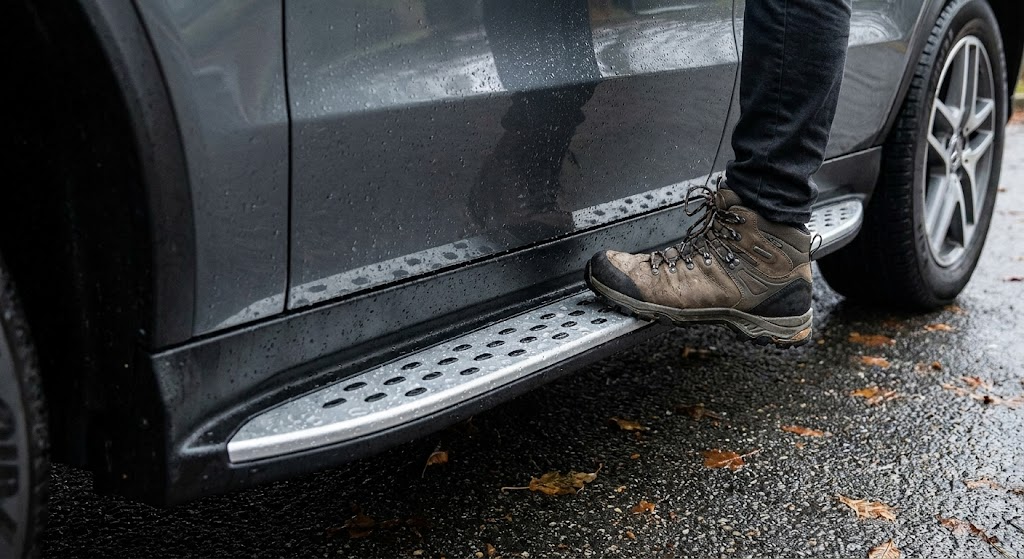
It is tempting to anchor the decision to labels, but day-to-day experience is usually determined by basics: stiffness under load, surface grip when wet, and how the assembly behaves over time with vibration. For any exterior step, two issues deserve calm attention: whether it introduces snag points, and whether it changes how safe entry and exit feels in bad weather.
On slip risk and walking surfaces, institutional guidance is broader than vehicle accessories but still relevant: the U.S. Centers for Disease Control and Prevention notes how traction, moisture, and surface condition drive slips and falls (https://www.cdc.gov/). The same logic applies to any step surface exposed to rain, frost, or mud.
FAQ: Running Boards For 2008 Mercedes ML 320 CDI 4MATIC
What Do People Usually Mean When They Search “Running Boards For 2008 Mercedes ML 320 CDI 4MATIC”?
Most are trying to confirm two things: whether a step can be attached to the vehicle without fabrication, and whether the result will feel natural for entry and exit. The search phrasing often signals uncertainty about compatibility details rather than a desire for a specific design.
Why Can Two Listings Both Say They Fit, Yet Sit Differently On The Vehicle?
“Fit” can mean bolt pattern compatibility, not identical position or profile. Small differences in bracket geometry and step width can change where the edge sits relative to the rocker area and the ground.
Are Running Boards Mostly About Convenience, Or Do They Change How The Vehicle Is Used?
They can be both, depending on driving environment. In urban use they often function as a consistent step; in rougher conditions they may become a clearance consideration because they occupy space where the vehicle might otherwise pass unobstructed.
What Makes A Step Surface Feel Secure In Bad Weather?
Texture and drainage matter, but so does maintenance and local climate. Mud, ice, and road salt can overwhelm a good pattern, so expectations should assume periodic cleaning and seasonal variability.
Is It Normal To Worry About Safety Or Compliance After Modifying Exterior Access?
Yes; it is a reasonable concern because modifications can change how people enter and exit and how the vehicle behaves when contacting obstacles. When in doubt, consult manufacturer documentation and reputable safety authorities such as NHTSA for general modification considerations (https://www.nhtsa.gov/).