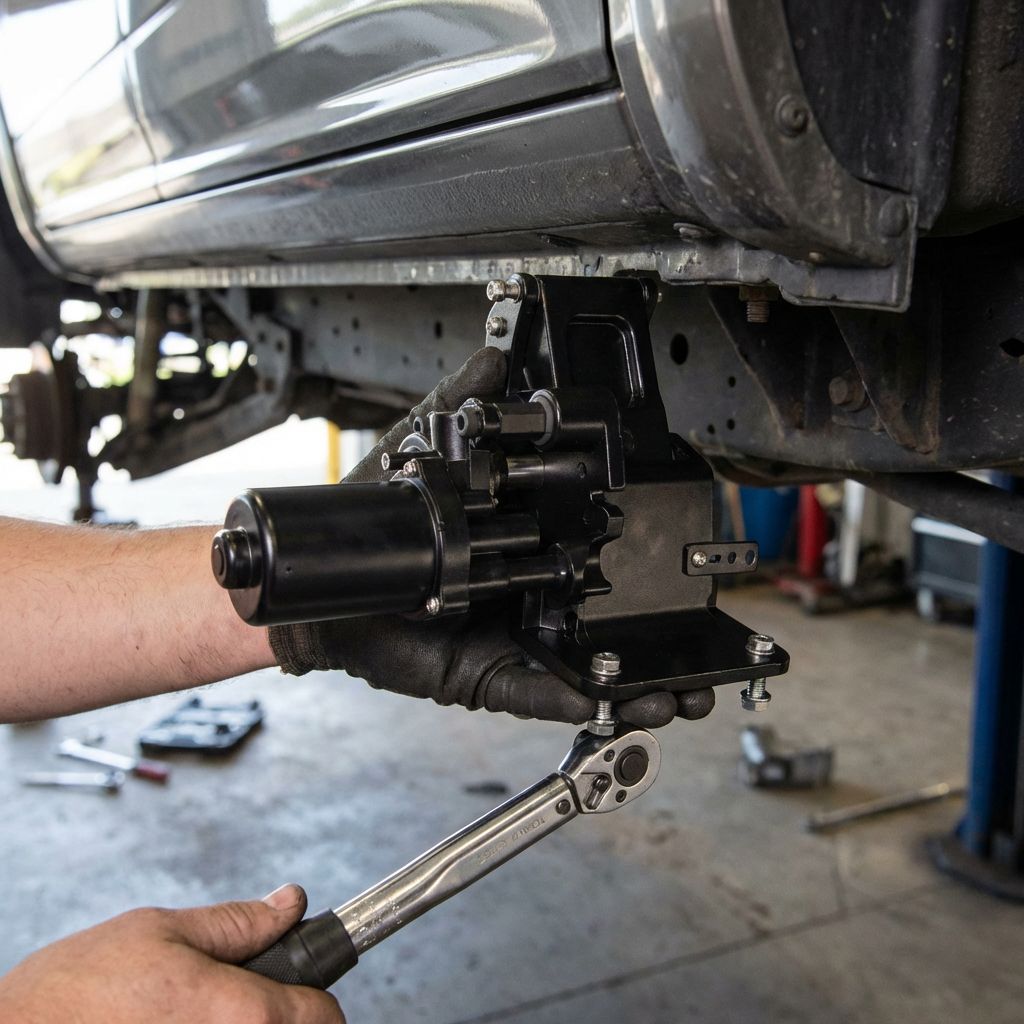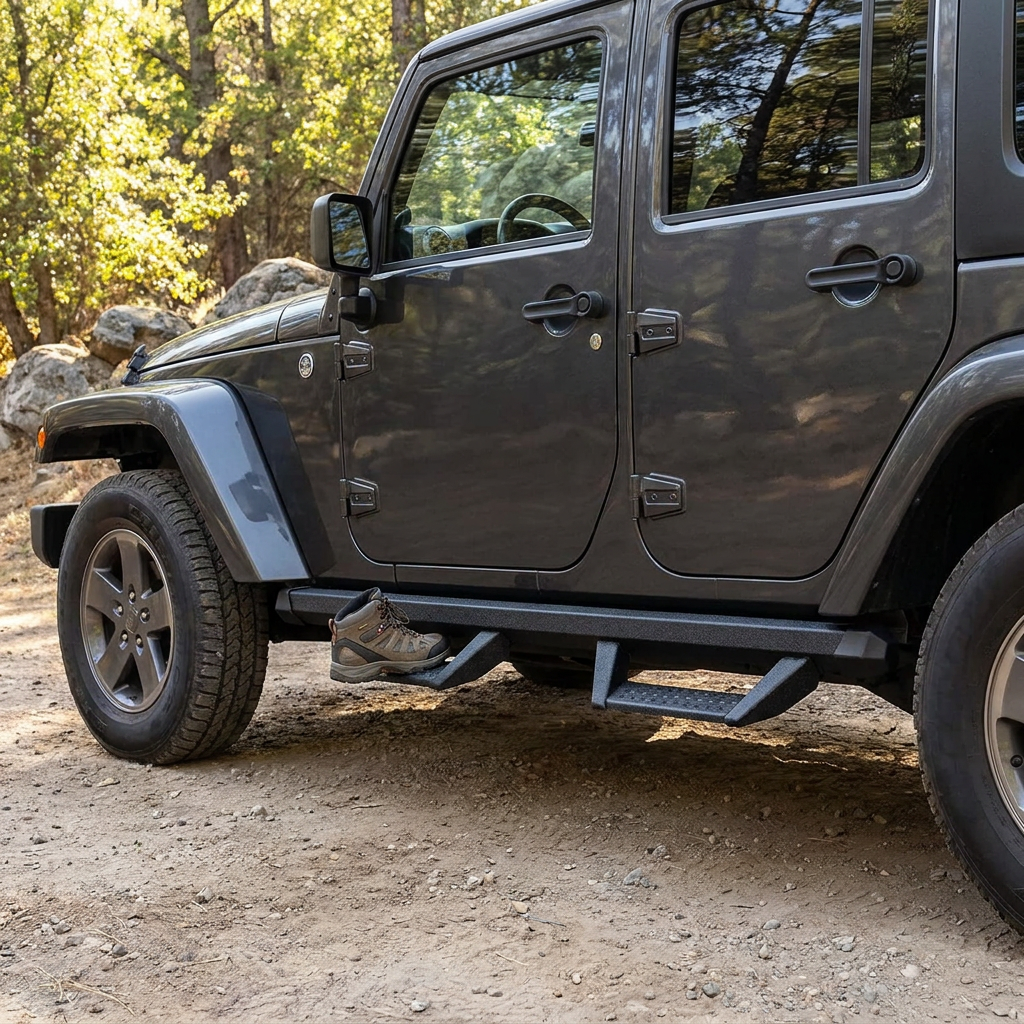
The question “will JK running boards fit a JL” comes up because the parts look similar at a glance, the vehicles share a nameplate, and photos online rarely show the mounting points closely. In practice, the answer is usually decided by what sits under the rocker area: brackets, holes, and the way the body and frame interfaces were engineered for each generation.
Running boards live in an awkward space on a JEEP. They are partly about access height, partly about protecting the rocker area from incidental contact, and partly about how the vehicle carries accessories without creating noise, vibration, or corrosion problems. Fitment is not just length and width; it is geometry and attachment strategy.
Quick Orientation For “Will JK Running Boards Fit a JL”:
- JK and JL are different Wrangler generations, with different body and mounting layouts.
- Most “fits” claims hinge on whether the board uses factory mounting points and whether those points exist in the same places.
- Safe assumption: a direct bolt-on swap is uncommon unless a part is explicitly designed for both generations.
- Misleading assumption: “4-door to 4-door” automatically means compatible.
Why JK Versus JL Fitment Is Often Non-Transferable
The JK Wrangler and the JL Wrangler are close enough in overall silhouette that many exterior add-ons appear interchangeable. Underneath, the details that matter for running boards are less forgiving. Mounting points may be on the body, on the frame, or on intermediate brackets, and small changes in hole position or bracket offset can translate into large alignment issues at the pinch seam or rocker.
Another friction point is clearance. A running board that sits tight to one generation’s rocker can interfere with a different generation’s body lines, splash shields, or bracket paths. Even when a physically similar location exists, the standoff distance and angle can be different enough to cause contact, rattles, or a board that sits visibly “off.”
What People Mean When They Ask If JK Running Boards Fit a JL
Most of the time, “fit” is being used in a practical, not technical, sense. It usually means: can the board be installed without drilling, cutting, or fabricating brackets; will doors open normally; will it sit level; and will it stay quiet over bumps.
That framing matters because a part can be made to attach in many ways, but modifications introduce trade-offs: exposed bare metal, fasteners that loosen, or brackets that concentrate loads in places the body was not designed to take them.
Key Mechanical Variables That Decide Compatibility
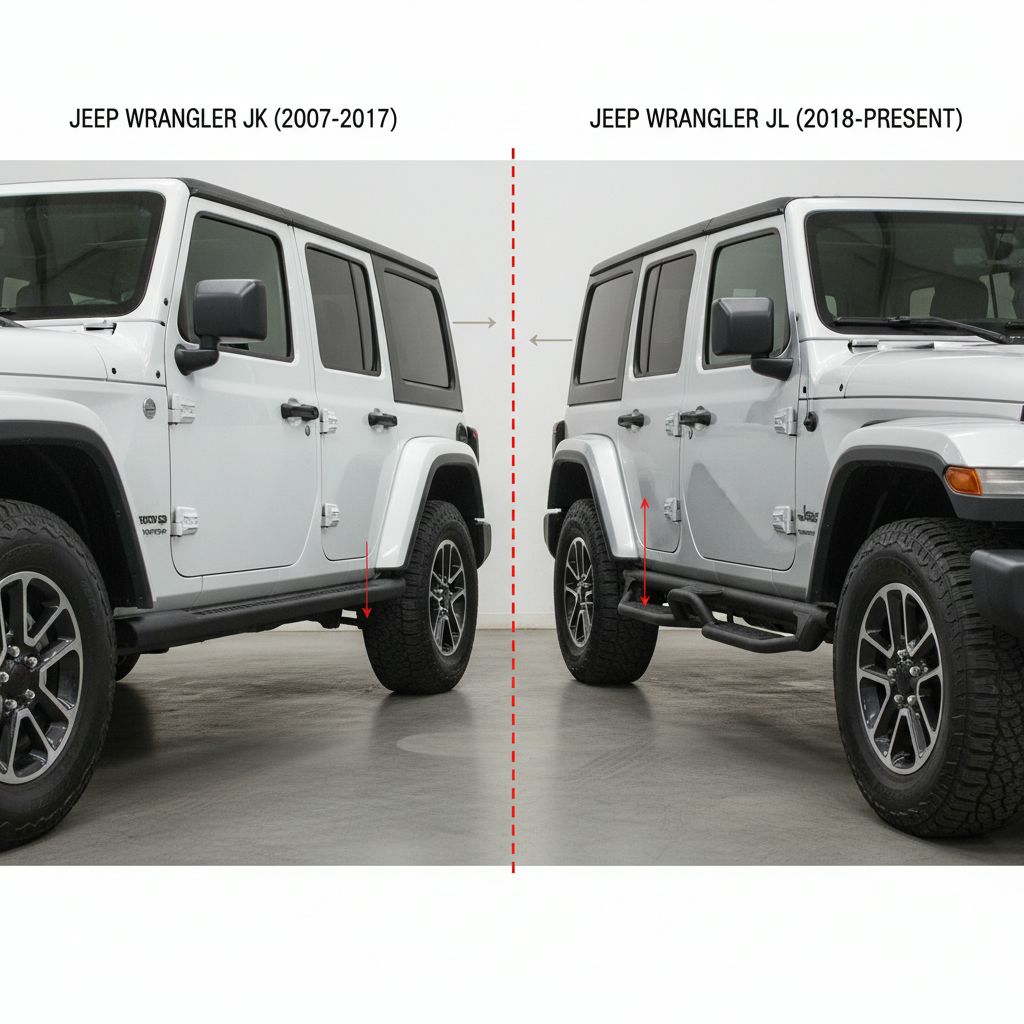
When the “will JL running boards fit a JK” question is flipped, the same variables apply. The generation change is the issue, not the direction of the swap.
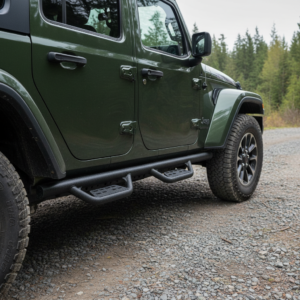
Recommended JK and JL running boards
These two options use different model-year ranges and mounting layouts. Choose the generation that matches the vehicle; JK and JL hardware is not interchangeable.
- Mounting architecture: whether the design expects body-side threaded inserts, pinch-seam clamps, or frame brackets.
- Bracket spacing and indexing: the distance between brackets and whether they must land on fixed points.
- Load path: how step loads travel into the vehicle structure; mismatches can create flex or squeaks.
- Corrosion control: drilling or scraping coatings can accelerate rust where road salt and water collect.
For background on corrosion mechanisms relevant to exposed metal and fasteners, the National Park Service provides a plain-language overview of corrosion processes and why they accelerate in harsh environments.
How To Think About “Bolt-On” Without Turning It Into Guesswork
“Bolt-on” is often treated as a universal promise, but it only means something when the intended vehicle has the matching attachment points. If a running board is described as bolt-on for a specific Wrangler generation, that wording is typically anchored to that generation’s factory holes and bracket locations. A single listing might describe a bolt-on design intended for a particular model year range of Wrangler JL, but that does not generalize to JK without the same mounting layout.
From a safety perspective, anything that changes how a step supports weight should be treated as structural. The National Highway Traffic Safety Administration’s consumer resources are a useful reference point for how vehicle equipment and modifications intersect with safety expectations, even when a specific accessory is not singled out: https://www.nhtsa.gov/vehicle-safety.
Where The Confusion Starts In Real Conversations
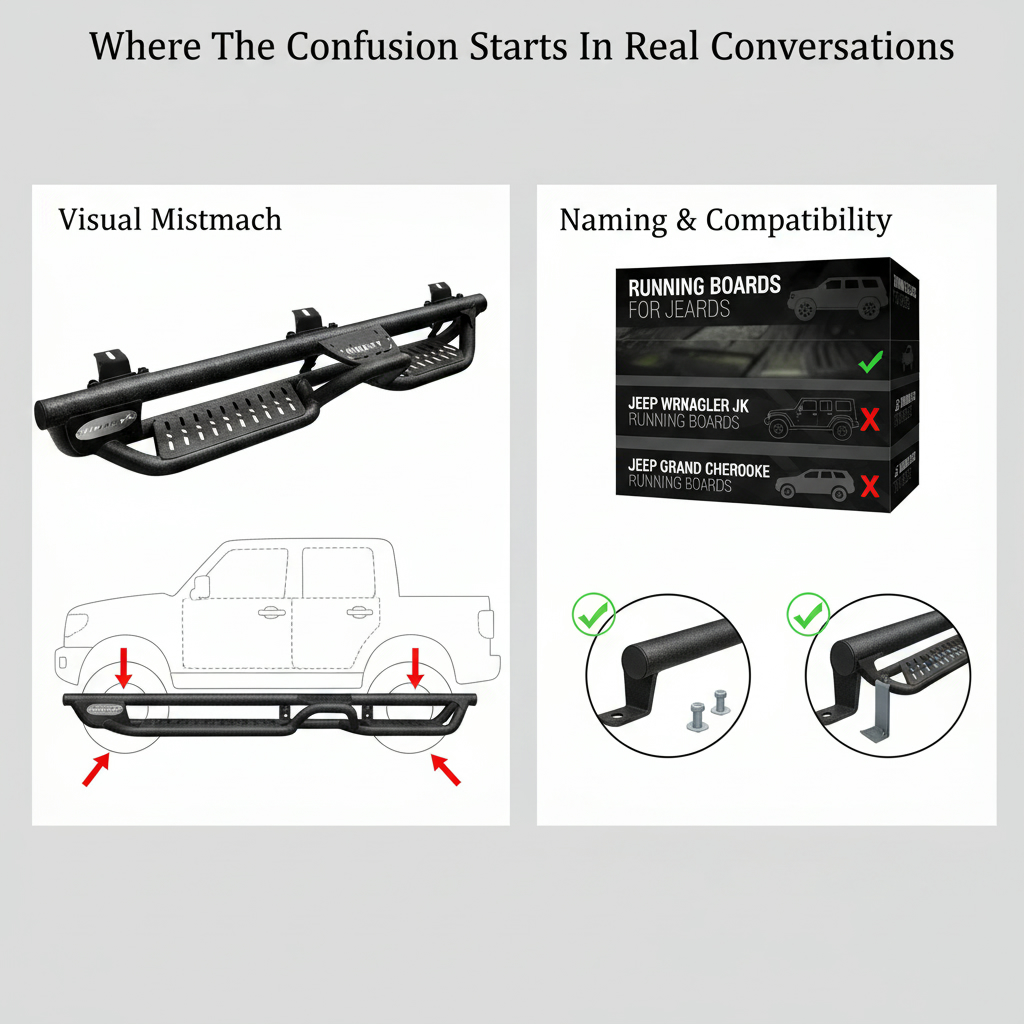
Confusion usually starts with visual matching: a board looks like it should line up, or a photo shows it “installed” without showing the bracketry. The second source of confusion is naming: “Running Boards JEEP” gets used casually across multiple models, while the actual compatibility is often Wrangler-generation-specific. The third is that some installations that technically “work” do so by accepting compromises—extra holes, improvised spacers, or bracket bending—that are not visible once the vehicle is on the ground.
Why JK Running Boards Rarely Transfer Cleanly To A JL
The question will JK running boards fit a JL tends to sound like a simple bolt-pattern check. In practice, fitment is usually governed by how the running board system interfaces with the vehicle’s structure: the location and spacing of body mounts, the geometry of the rocker area, and the way the bracketry indexes to factory holes. The JK and JL generations differ enough in these reference points that an assembly designed to “land” on JK mounting locations often ends up misaligned on a JL even when the overall length looks similar.
A second layer is tolerance stacking. Running boards sit across multiple attachment points; a small offset at each bracket becomes a visible twist, a door-clearance issue, or a step surface that is no longer level. That is why forum answers to will JK running boards fit a JL often describe “almost fits” situations that still create real-world problems once tightened down.
Mounting Architecture: Holes, Brackets, And Load Paths
Running boards are not purely cosmetic; they are a load-bearing interface that must move occupant loads into the body structure without concentrating stress in thin sheet metal. On many JEEPs, the intended load path runs through reinforced areas and factory-provided attachment points. When a JK-specific design is forced onto a JL, the load path can shift unintentionally—sometimes onto less reinforced areas or onto hardware not designed for repeated stepping loads.
Common fitment frictions behind will JK running boards fit a JL include the following:
- Indexing mismatch: brackets may not align to the JL’s threaded inserts or holes, encouraging drilling or slotting that changes how the bracket seats.
- Bracket stand-off: a bracket designed around JK rocker geometry can sit too close or too far from the JL body, affecting door clearance and perceived rigidity.
- Uneven load distribution: if one attachment point is “pulled” into position, another may carry more load than intended, which can increase loosening over time.
For readers trying to interpret compatibility claims, it helps to treat fitment as structural alignment, not just “it can be bolted on.” Guidance on safe vehicle modifications and inspection practices can be cross-checked through resources such as the U.S. National Highway Traffic Safety Administration (NHTSA) at https://www.nhtsa.gov/ and the U.S. Federal Highway Administration (FHWA) at https://highways.dot.gov/ for general safety context around vehicle equipment and roadway safety considerations.
Two-Door Vs Four-Door: Length Is Not The Only Variable
Even within the same generation, two-door and four-door layouts change where brackets can land, and how long a step surface can be without interfering with wheel openings or body features. This is why the inverse question—will JL running boards fit a JK—often runs into similar constraints. A board that physically spans the side may still have bracket points that land in the wrong place, or it may crowd approach angles near the front wheel area depending on the design.
In real use, “close enough” fitment tends to show up as subtle issues rather than immediate failure: a step that flexes more than expected, fasteners that need re-tightening, or a board that sits slightly proud and catches road spray. Those are not guaranteed outcomes, but they are plausible when alignment is achieved by forcing parts into position rather than matching the intended mounting architecture.
Modification Scenarios: What Changes, And What It Does Not Solve
When people ask will JK running boards fit a JL, the unspoken follow-up is often whether modification is reasonable. Drilling, slotting holes, or using spacer stacks can sometimes make an assembly attach, but the key question becomes whether the modified system still transfers load predictably and maintains corrosion protection at the altered interfaces. Once factory coatings are breached, corrosion risk becomes a practical concern—especially in wet or salted-road environments.
In addition, modification does not automatically resolve geometric conflicts:
- Spacers may level a step surface but can increase leverage on fasteners, which may change how often hardware loosens.
- Slotting holes can allow alignment but may reduce the bracket’s ability to “lock” into position under repeated side loads.
- Relocating brackets can avoid one interference point while creating another near pinch seams, drains, or trim.
As a single contextual illustration only, some listings explicitly state compatibility by generation and wheelbase (for example, a listing may specify “2018–2026 Wrangler JL 4 Door”), which is typically a signal that bracket geometry is matched to that platform rather than adapted.
Why The “Will JK Running Boards Fit a JL” Question Stays Tricky
The persistent confusion around will JK running boards fit a JL usually comes from the fact that the vehicles look similar at a glance, while the underlying attachment points and underbody packaging can differ in ways that matter. In practice, “fit” is not a single yes-or-no concept: it can mean alignment to factory mounting points, clearance to body and chassis components, door and rocker-panel geometry, and how loads are transferred when someone steps on the board.
Even when two generations share a broadly comparable silhouette, small dimensional changes—hole spacing, bracket offsets, pinch seam shape, or the way a body mount sits relative to the rocker—tend to decide compatibility. That is why the same discussion often appears in the reverse form too: will JL running boards fit a JK. The symmetry of the question does not imply symmetrical results.
Running Boards JEEP Fitment: What “Compatible” Usually Means In Real Terms
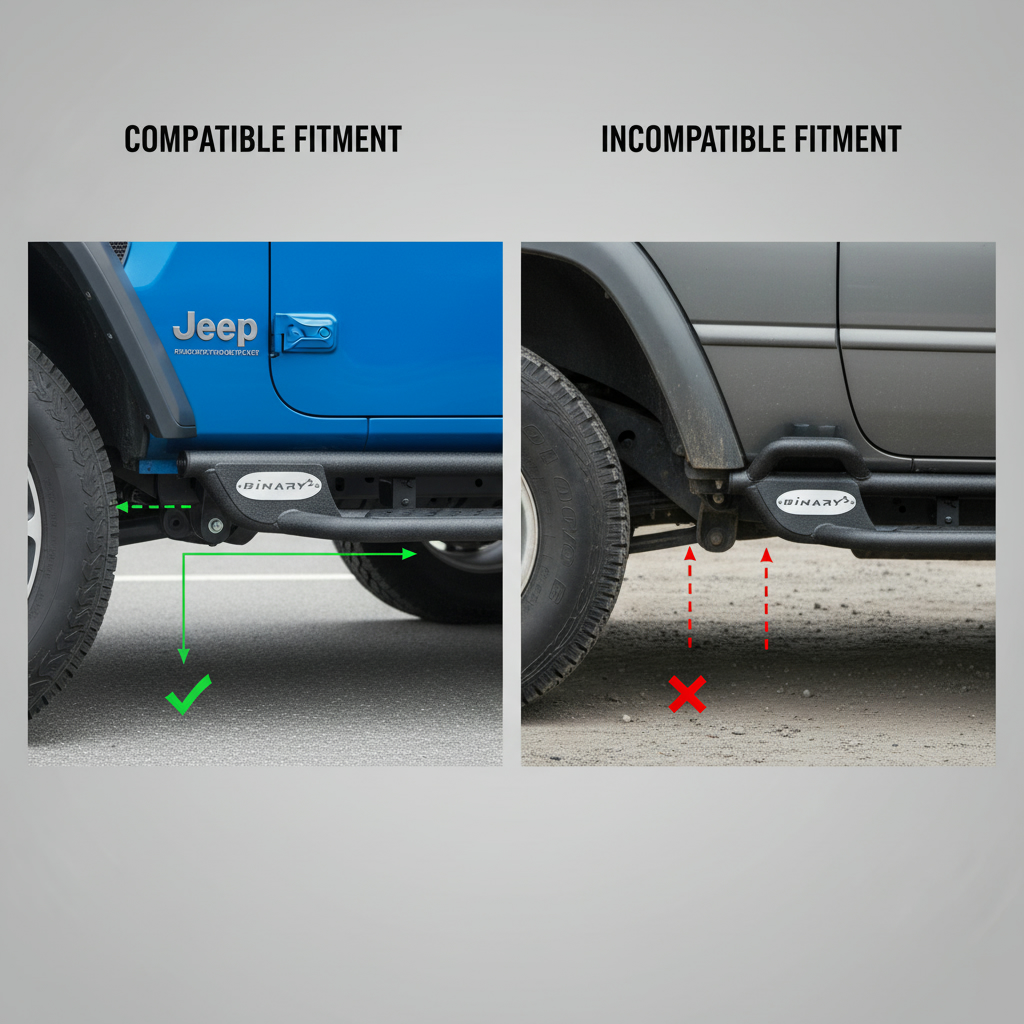
When people search Running Boards JEEP fitment questions, they are often trying to decode what a compatibility claim truly covers. Compatibility may be based on a specific set of assumptions about mounting locations, allowable tolerances, and the presence or absence of factory options that change the underside layout.
- Mounting interface matters most: if the intended mounting points do not exist in the same location, any “fit” claim becomes conditional.
- Clearance is not cosmetic: a board that sits a little closer can foul trim, interfere with a seal, or create contact under flex.
- Load path is safety-relevant: a sturdy step depends on brackets landing where the vehicle structure can take repeated point loads without loosening over time.
- Variation within a generation can be enough to change outcomes, especially across body styles and option packages.
Because of these layers, the most reliable way to interpret will JK running boards fit a JL is to treat it as a question about mounting geometry and load handling, not about visual similarity.
JEEP Running Boards Side Steps: Common Misconceptions That Cause Wrong Assumptions
JEEP running boards side steps are often discussed as if they are interchangeable accessories. That assumption tends to ignore how tightly these components are designed around specific underbody reference points.
A common misconception is that “minor modification” is automatically straightforward. In reality, the moment a component is adapted, the risk shifts from simple fitment to questions of structural integrity, corrosion protection at altered points, and long-term fastener stability. Another misconception is that a mismatch will be obvious immediately; sometimes the board appears to sit correctly but develops issues later—rattles, shifting, or uneven loading—because the bracket geometry is working outside its intended range.
JEEP Running Boards For Wrangler JL: What To Expect From Cross-Generation Swaps
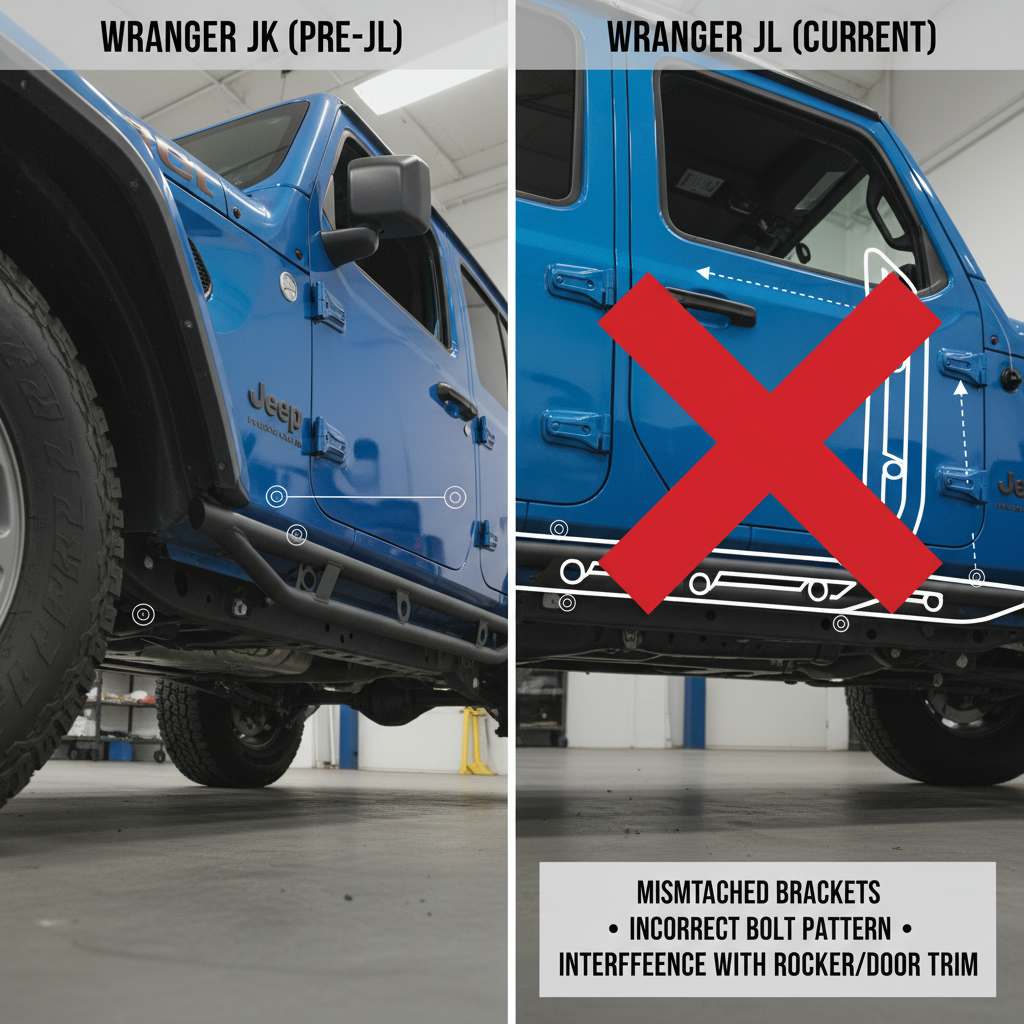
For readers focused on JEEP running boards for Wrangler JL, the realistic expectation is that cross-generation swaps are often less predictable than the name similarity suggests. The deciding factors are typically hidden: where brackets land, whether they share the same bolt patterns, and how the board’s position interacts with doors and rocker trim during normal use and chassis movement.
From a decision standpoint, the cleanest outcome is when the attachment system matches the vehicle’s existing mounting architecture without forcing alignment. If the question will JK running boards fit a JL is being asked because a set is already on hand, it helps to think in constraints: if the mount points do not line up, the project stops being a fitment question and becomes a fabrication and responsibility question.
For general context on why vehicle modifications can change safety and compliance responsibilities, the UK Driver and Vehicle Standards Agency (DVSA) outlines how vehicle changes can affect roadworthiness expectations: https://www.gov.uk/vehicle-approval
FAQ: Interpreting Fitment Claims And Compatibility Discussions
Why Do Compatibility Claims Differ Between Sources For JEEP Running Boards?
Different sources may be using different definitions of “fits,” ranging from “can be attached somehow” to “bolts on using intended mounting points.” Forum posts may reflect individual outcomes, while formal fitment statements tend to assume a specific configuration.
What Is The Most Reliable Way To Verify Whether A Part From One Vehicle Generation Fits Another?
The most reliable method is matching mounting-point locations and bracket geometry to the vehicle’s structure, not relying on appearance. In UK terms, any change that affects safety-critical behavior should be considered against roadworthiness principles described by DVSA: https://www.gov.uk/check-vehicle-safe
Does “Minor Modification” Usually Mean Low Risk For Stepped Accessories?
Not necessarily. Small changes can alter the load path, fastener retention, and corrosion protection, which may show up only after repeated use and exposure to weather.
Is “Will JK Running Boards Fit a JL” Always A Simple Yes-Or-No Question?
It usually is not. The outcome depends on whether “fit” means direct bolt-on compatibility, acceptable clearance, and stable load handling under real stepping forces.