
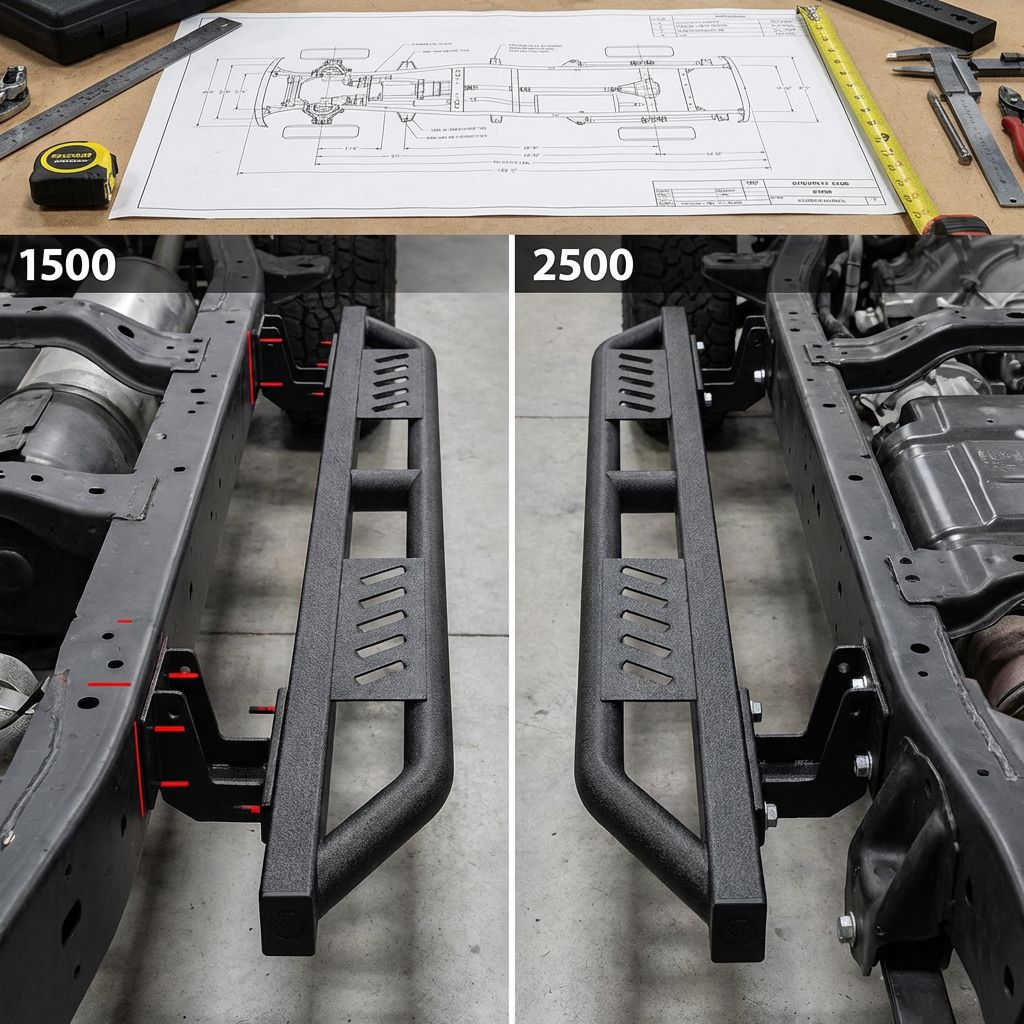
The question “will 2500 running boards fit 1500” comes up because Silverado 1500 and Silverado 2500HD can look nearly interchangeable from the side—until mounting points, cab dimensions, and trim packaging turn “should fit” into “almost fits.” Running boards are simple parts in use, but not always simple in fitment.
Most confusion is created by two assumptions: that “Silverado is Silverado,” and that model-year overlap guarantees identical underbody provisions. Neither is consistently safe.
Quick Orientation: When asking will 2500 running boards fit 1500, the real issue is rarely the board itself. It is usually one of these:
-
Cab configuration mismatch (crew cab vs double/extended cab) changing overall length and bracket spacing.
-
Different factory mounting locations or hardware styles between light-duty and heavy-duty frames.
-
Model-year and generation changes that move holes, studs, or reinforcement points even when the trucks appear similar.
Why The “Will 2500 Running Boards Fit 1500” Question Is Harder Than It Sounds
Fitment lives under the rocker panel, not in the badge on the fender. Even within Chevy, the Silverado 1500 and 2500HD families can diverge in how the body is supported and how accessory mounting points are provided. Some trims use threaded holes in the body pinch seam; others rely more on body mounts or frame-adjacent brackets. A running board kit that expects one style may physically reach the other but sit at the wrong height, angle, or fore-aft position.
That is why related questions—will 1500 running boards fit 2500, will Chevy 1500 running boards fit on 2500, or will Chevy 1500 running boards fit a 2500—often get conflicting answers. Many answers are true for a specific cab, year, and bracket design, then fail when any one variable changes.
Core Fitment Variables That Decide Interchangeability
Interchangeability tends to hinge on geometry and attachment, not brand compatibility language.
-
Cab Length And Door Count: Crew cab boards are longer than double/extended cab boards, and bracket locations follow that length. A “close” length can still leave a bracket landing where there is no mounting point.
-
Generation And Model Year Breaks: A mid-cycle refresh can alter rocker panel contours, splash shielding, or the placement of studs and holes. “Same year range” claims should be treated as unverified until the mounting map matches.
-
Mounting Architecture: Some setups use multiple brackets tied to factory holes; others clamp or bolt along the pinch seam. Heavy-duty variants may have different clearances due to frame height, skid-related components, or underbody packaging.
-
Ride Height And Step Position: Even if the holes line up, the step can end up higher or lower than expected, affecting door clearance and how natural the step feels in daily entry.
Where People Typically Get Misled
Silverado running boards to compare
These examples show different Silverado generations and cab configurations. They are not proof that a 2500 board fits a 1500; verify year, cab, wheelbase and mounting points.
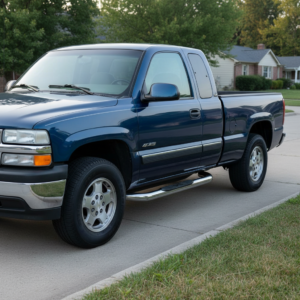
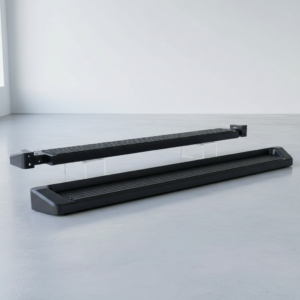
The most common trap is treating “Silverado 1500 vs 2500HD” as the deciding factor, when the deciding factor is usually the cab and the mounting provisions. Another trap is relying on side-profile similarity; rocker panel shape and the seam flange can differ subtly, which changes whether a bracket sits flush or twists under load.
Some listings claim cross-fitment between 1500 and 2500HD crew cabs across shared years (for example, COMNOVA Running Boards are sometimes presented this way), but the only reliable check is whether the bracket pattern and hardware match the truck’s factory mounting points.
What Counts As A Reliable Fitment Check (Without Turning It Into A Purchase Decision)
For a clean answer to will 2500 running boards fit 1500, the most defensible approach is to treat it like a mounting-point verification problem.
-
Confirm the exact cab type using the vehicle identification information and door configuration, not just the model name.
-
Verify whether the truck has factory threaded inserts, studs, or only a pinch seam suitable for certain attachment styles.
-
Check whether bracket count and bracket spacing match the available mounting locations; “universal” language is not a substitute for a mounting map.
For background on vehicle modification safety and the importance of correct attachment methods, the National Highway Traffic Safety Administration provides consumer guidance on equipment and vehicle safety considerations at https://www.nhtsa.gov/vehicle-safety.
Why “Will 2500 Running Boards Fit 1500” Rarely Has A Single Answer
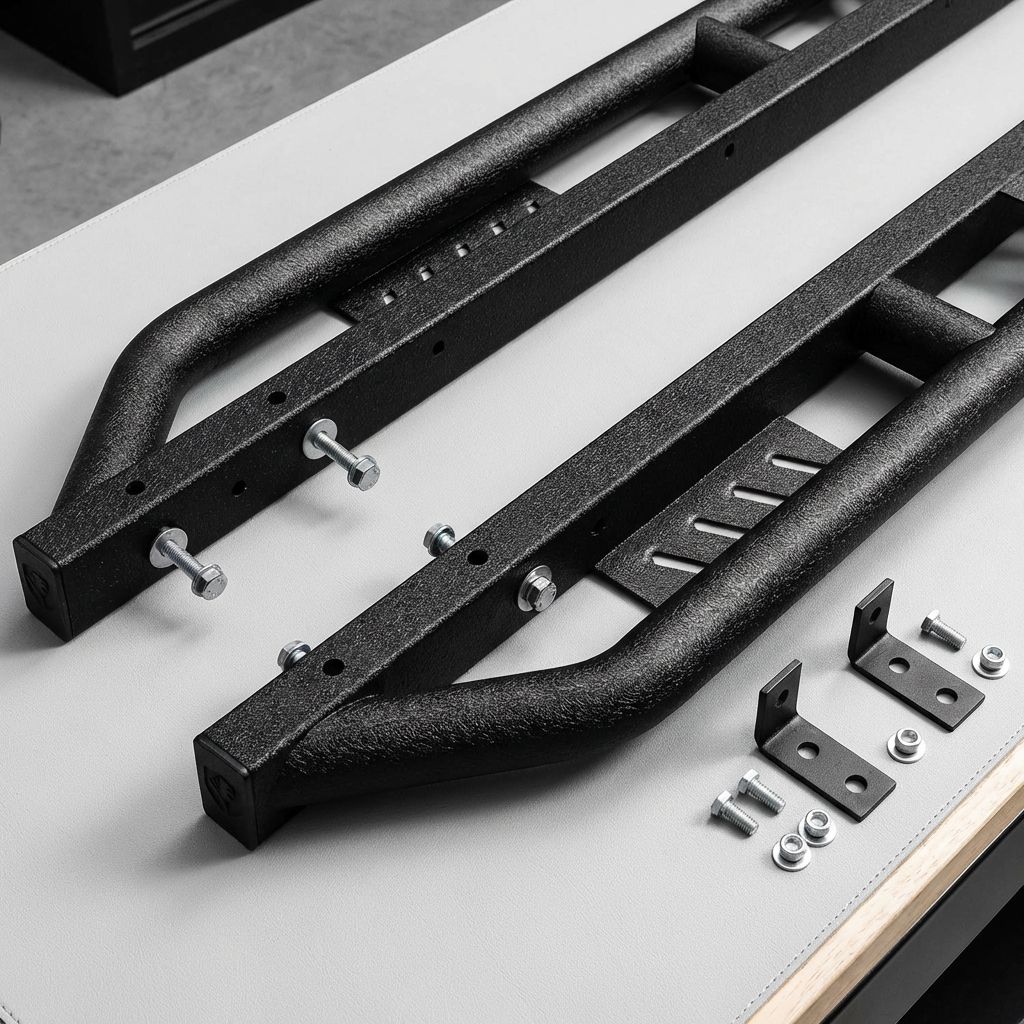
The question will 2500 running boards fit 1500 sounds like a simple interchangeability check, but running boards sit at the intersection of frame geometry, cab configuration, and mounting strategy. Even within the same brand family, small dimensional shifts can change where brackets land relative to welded studs, threaded inserts, or factory holes. That is why forum answers often disagree: two trucks can share a nameplate while differing in wheelbase, rocker profile, or underbody shielding.
When the reciprocal question appears—will Chevy 1500 running boards fit on 2500—the same logic applies in reverse. The heavier-duty chassis may place mounting points differently, or the clearance to exhaust and drivetrain components can change enough that a board that “bolts up” in one case becomes a contact or rattle issue in another.
Cab And Wheelbase: The Fitment Variables That Get Missed
Interchangeability discussions often collapse everything into “1500 vs 2500,” but cab style and wheelbase tend to be the real gatekeepers. Running boards are effectively length-matched to door spacing; if the board length and bracket spacing assume a different cab, the ends can sit awkwardly or the brackets miss their targets.
- Cab Configuration matters because the distance between the front and rear doors changes the usable length and the ideal step locations.
- Wheelbase Differences can shift underbody features and shielding, affecting bracket access and the ability to tighten hardware without interference.
- Model-Year Updates can introduce subtle changes in rocker contours or mounting provisions even when the truck looks “the same” externally.
Mounting Architecture: Holes, Studs, And Brackets
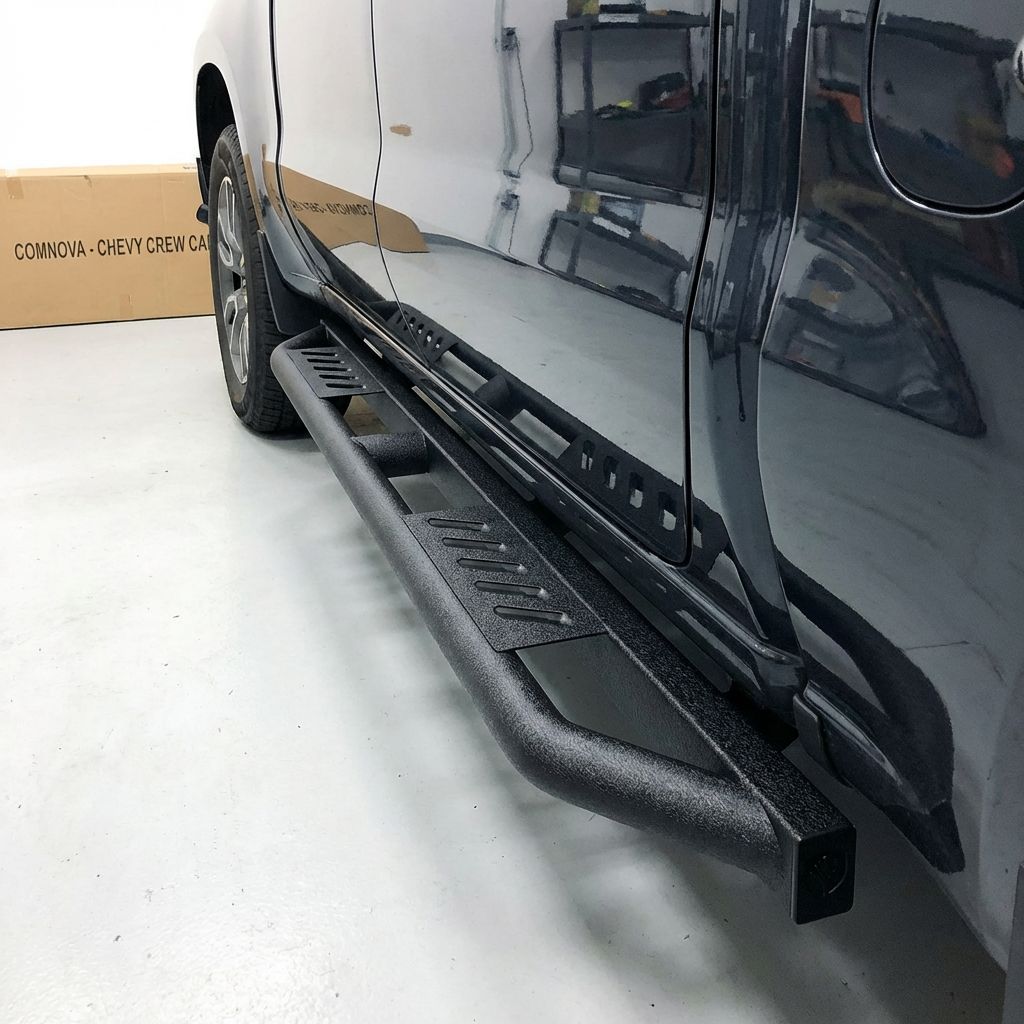
Most real-world outcomes hinge on how the board is designed to attach. Some setups rely on factory-provided threaded holes; others expect studs or require separate brackets that index to specific locations. If a 2500 board is engineered around a bracket pattern that does not exist on a 1500, the question will 2500 running boards fit 1500 becomes less about the board and more about whether safe, repeatable attachment points exist.
From a safety perspective, attachment is not just “can it be installed,” but whether it can carry dynamic loads—people stepping at the outer edge, in wet conditions, with uneven weight transfer. For a general overview of how automotive equipment is regulated and why secure installation matters, the U.S. National Highway Traffic Safety Administration (NHTSA) provides consumer-facing safety information at https://www.nhtsa.gov.
Clearance And Real-World Use: Where “Fits” Can Still Feel Wrong
Even when bracket holes line up, clearance can be the quiet problem. A board that sits slightly lower or farther out can change how it behaves around curbs, snow ruts, and off-road crown. It can also change how easily occupants place a foot on the step without catching the heel on the rocker or the pant leg on the edge.
Common edge cases that shape whether will 2500 running boards fit 1500 ends in satisfaction tend to be practical rather than theoretical:
- Ground Clearance Trade-Offs become more noticeable on trucks used on uneven terrain, where a small drop in height can lead to more frequent contact.
- Door Swing And Step Placement can feel “off” if the step pad is not aligned with typical entry points, especially for shorter passengers.
- Winter Buildup (ice, slush) can change effective grip and step height; designs with tighter gaps may pack more debris.
How To Interpret Compatibility Claims Without Overreading Them
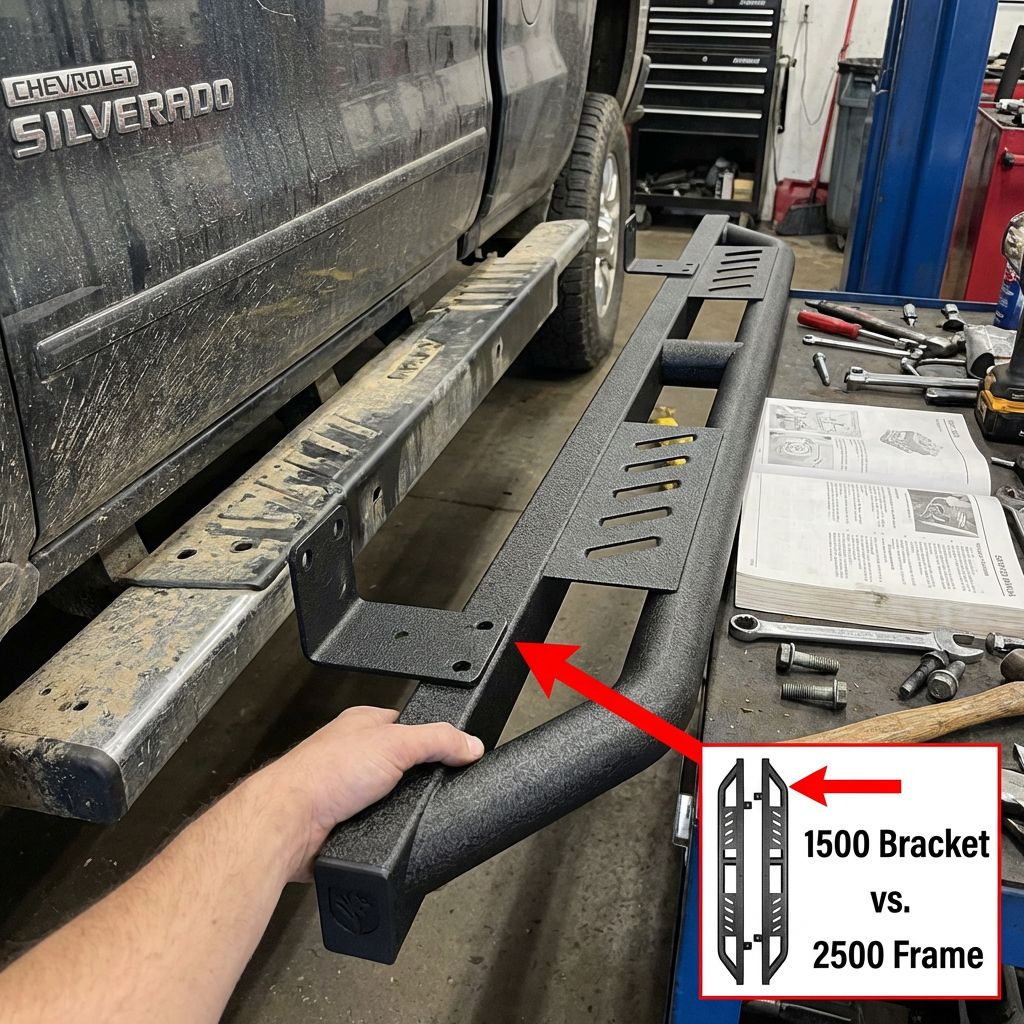
Compatibility language can be broad, and it often assumes a specific cab type and model-year range. A listing might state cross-fitment across 1500 and 2500 for certain years, but that does not automatically generalize to all trims, all wheelbases, or all factory underbody packages; one example is the COMNOVA Running Boards Chevy compatibility wording that explicitly ties fitment to specific year ranges and crew-cab configurations.
For readers trying to answer will 1500 running boards fit 2500 (or the reverse) with fewer surprises, the most reliable mental model is to treat “1500 vs 2500” as a starting filter, then verify cab, wheelbase, and mounting-point type as the decisive checks. That framing tends to explain why two owners can report opposite outcomes while both are describing their experience accurately.
When “Will 2500 Running Boards Fit 1500” Has No Single Answer
The question “will 2500 running boards fit 1500” often sounds like a simple swap. In practice, it is a fitment question that lives at the intersection of cab geometry, mounting architecture, and model-year changes. Two trucks can share a nameplate and still differ in where mounting points land, how far the rocker area sits from the frame, and how wheelbase and cab length shift the usable span.
It also helps to separate “physically bolts on” from “fits correctly.” A part can attach yet sit too far inboard or outboard, interfere with factory trim, or leave awkward gaps at the ends. That difference is why forum threads about interchangeability tend to disagree: people are answering different definitions of “fit.”
When the mirror question comes up—will 1500 running boards fit 2500—the same logic applies in reverse. The platform relationship may be close enough to tempt a swap, but the mounting and clearances decide the outcome, not the badge on the fender.
Where Fitment Usually Breaks Down In Real Trucks
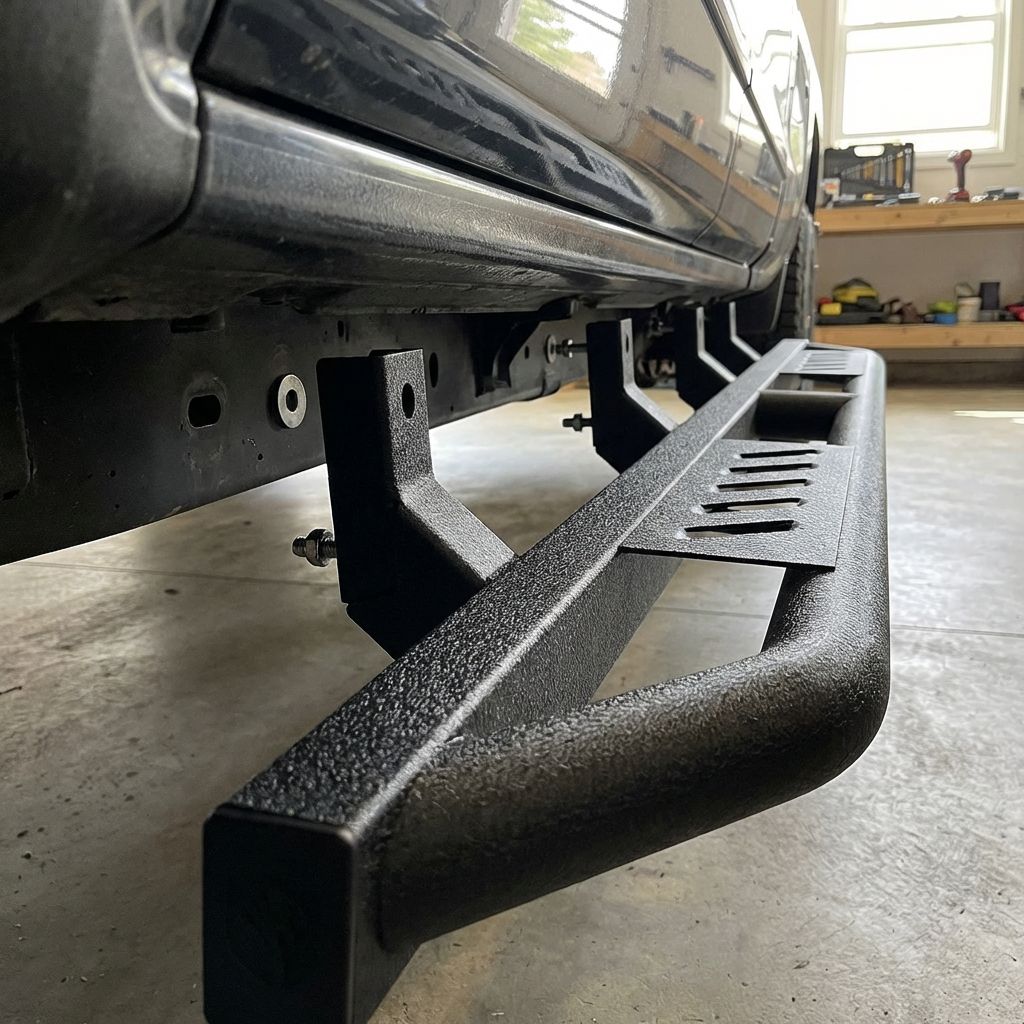
Most incompatibilities trace back to a few repeat patterns rather than one exotic detail. If the goal is to reduce uncertainty around “will 2500 running boards fit 1500,” these are the mismatches that most commonly decide the outcome:
- Mounting Point Location And Thread Type: Even small shifts in hole spacing or changes in fastener spec can turn an apparent match into a no-go without fabrication.
- Cab Configuration Length: “Crew” versus “double/extended” cab differences change the required span; an attached part can still look short, long, or misaligned relative to the doors.
- Rocker And Pinch-Weld Geometry: Some designs index off the body seam; if the seam profile or trim coverage differs, the same brackets may not seat cleanly.
- Clearance Around Mud Flaps And Lower Trim: A setup that clears on one truck can contact plastic trim or deflectors on another, especially across year refreshes.
- Frame-To-Body Relationship: Heavy-duty and light-duty trucks can differ in ride height and relative spacing, changing how “tucked” or “dropped” the step surface ends up.
These are not “pros and cons” so much as the usual reasons a swap becomes conditional. They also explain why application charts and community reports can conflict when they are not controlling for the same cab, year range, and mounting style.
What A Careful “Yes” Or “No” Actually Means
A careful “yes” to “will 2500 running boards fit 1500” typically means: same generation and year-range assumptions, same cab length, and the mounting strategy lines up without forcing the brackets into tension. A careful “no” usually means: at least one of those variables changes, and the mismatch is structural rather than cosmetic.
In the real world, uncertainty remains because manufacturers revise mounting points during refreshes, and sellers sometimes label compatibility at a high level. A single listing might claim broad coverage across light-duty and heavy-duty trucks; that claim still depends on the exact cab and model year.
For a neutral baseline on why vehicle equipment fitment is treated as a safety and compliance topic, the U.S. National Highway Traffic Safety Administration outlines how vehicle equipment and modifications intersect with safety expectations and responsibility (https://www.nhtsa.gov/vehicle-safety). For a broader engineering context on fasteners and joint integrity—relevant when brackets and bolts are involved—NASA’s fastener design guidance illustrates why clamping, thread engagement, and loading matter even when parts appear superficially compatible (https://ntrs.nasa.gov/).
FAQ: Clearing Up Common Confusion
People Ask “Will 2500 Running Boards Fit 1500” Like It’s One Truck—What Details Change The Answer?
Cab length and model year usually matter more than trim level. Mounting point spacing, bracket style, and rocker-area trim differences are the typical deal-breakers.
Why Do Some Threads Say A Swap Works While Others Say It Doesn’t?
Many reports are true within their own context but omit a key variable, such as cab configuration or a mid-cycle mounting change. Different definitions of “fit” (bolts on versus aligns cleanly) also drive disagreement.
Is “Bolts On” Enough To Call It Compatible?
Not always. A correct fit also implies stable bracket seating, no forced alignment, and reasonable clearance from body trim and wheel-area components.
Does The Reverse Question—Will 1500 Running Boards Fit 2500—Follow The Same Rules?
Yes, the same variables govern the outcome. The direction of the swap does not remove the need to match cab length, year range, and mounting architecture.